

Last Updated: July 30, 2026
Evidence-Based Review: Reviewed using current recommendations from the World Health Organization (WHO), National Institutes of Health (NIH), PubMed indexed literature and public health guidelines.
Estimated Reading Time: 10–12 Minutes
What Is the Definition of Health?
Many people proudly say, “I’m perfectly healthy—I don’t have any disease.” Yet, in my clinical experience as a physiotherapist, I often meet individuals who have no diagnosed medical condition but struggle with chronic back pain, poor sleep, stress, fatigue, obesity, anxiety, or reduced mobility. They are surviving—not truly thriving.
This is one of the biggest misconceptions about health.
Ignoring early warning signs because “nothing serious has happened yet” can gradually affect your energy, work performance, relationships, and long-term quality of life. Small lifestyle habits practiced today often determine your health years later.
As a rehabilitation specialist, I have seen countless patients whose conditions could have been prevented through early lifestyle changes, regular exercise, and better awareness. That’s why understanding the true meaning of health is one of the most important steps toward living a longer and healthier life.
⚡ Quick Summary
- Main Concern: Many people wrongly believe health only means being disease-free.
- Key Sign: Poor physical, mental or social well-being can exist even without diagnosed illness.
- Best Solution: Maintain balanced nutrition, regular physical activity, good mental health and preventive healthcare.
- Prevention Tip: Build healthy daily habits instead of waiting until illness develops.
📊 Did You Know?
Small lifestyle habits have a huge impact on your long-term health.
🚶 Physical Inactivity
Physical inactivity contributes to approximately 2 million deaths worldwide every year, making it one of the leading preventable health risk factors.
🌍 Global Activity Levels
More than 1 in 4 adults worldwide do not achieve the recommended level of physical activity, increasing their risk of heart disease, diabetes, certain cancers, and premature death.
🪑 Sitting Too Much
Long periods of sitting are associated with a higher risk of obesity, cardiovascular disease, musculoskeletal pain, and early mortality—even among people who exercise regularly.
💪 WHO Recommendation
The World Health Organization (WHO) recommends at least 150 minutes of moderate-intensity physical activity per week to maintain good physical and mental health.
✅ The good news: Even small daily habits—walking more, improving posture, sleeping well, reducing screen time, and eating a balanced diet—can significantly improve your long-term health.
Sources: World Health Organization (WHO) – Guidelines on Physical Activity and Sedentary Behaviour (2020), WHO Health Promotion, U.S. Department of Health and Human Services – Physical Activity Guidelines for Americans (2nd Edition).
👥 Who Should Read This?
This guide is especially useful for people who want to understand what true health really means and how small daily habits can prevent future health problems.
💡 If you recognize yourself in any of these groups, this article will help you understand the true definition of health and practical ways to improve your long-term well-being.
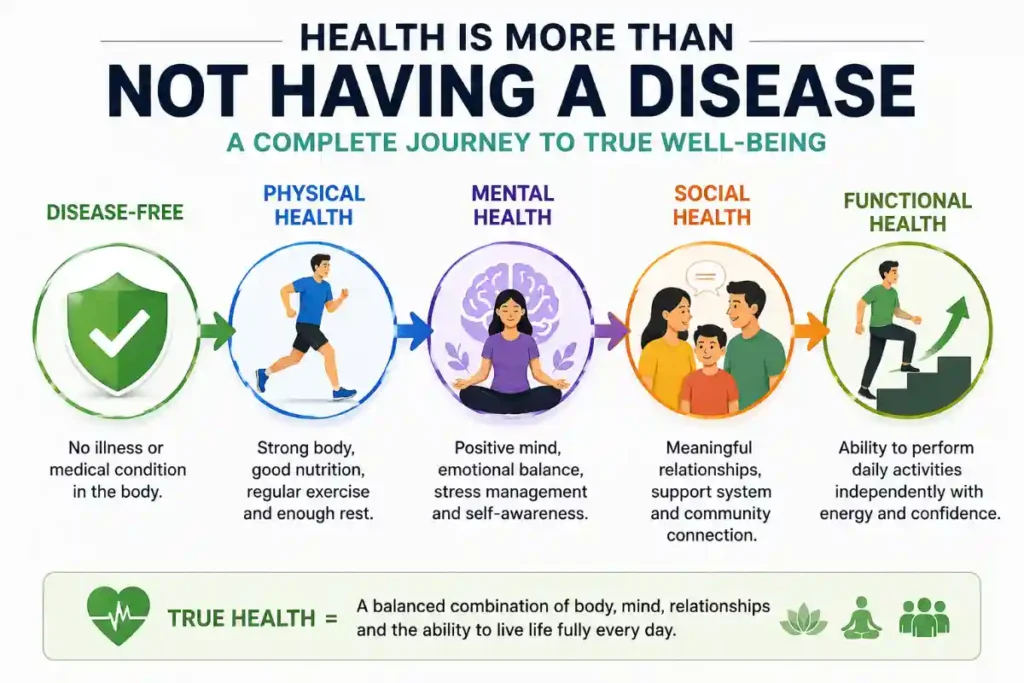
What Is Health?
According to the World Health Organization (WHO), health is:
“A state of complete physical, mental and social well-being and not merely the absence of disease or infirmity.”
This definition highlights that health is a dynamic state involving much more than simply avoiding illness. A person may have normal blood test results but still experience chronic stress, poor physical fitness, social isolation, or emotional burnout—all of which can negatively affect overall health.
Modern medicine also recognizes health as the ability to adapt to physical, emotional and social challenges while maintaining a meaningful and productive life.
From a physiotherapy perspective, health includes:
- Efficient movement without unnecessary pain
- Strong muscles and flexible joints
- Good balance and coordination
- Mental resilience
- Healthy sleep
- Nutritious eating habits
- Positive social connections
- Independence in daily activities
True health means your body and mind work together to help you enjoy life—not simply avoid disease.
Doctor Explains
Why Most People Misunderstand Health
One common pattern I observe in physiotherapy practice is that many patients judge their health based only on medical reports.
They often tell me,
“Doctor, all my tests are normal, so why do I still feel tired?”
The answer is that laboratory tests represent only one part of health.
Personally, I have treated office workers who could barely sit for 20 minutes because of poor posture, despite having no diagnosed illness. I’ve also seen young adults with severe neck pain caused by excessive smartphone use, and elderly individuals who avoided exercise until simple activities like climbing stairs became difficult.
Clinically, many patients ignore gradual declines in mobility, strength, flexibility, and mental well-being because these changes happen slowly over time.
Real health means paying attention to how your body functions every day—not just whether a disease has been diagnosed.
Why This Problem Is Becoming More Common
The modern Indian lifestyle has changed dramatically over the past decade.
Students spend hours attending online classes and preparing for competitive examinations while sitting continuously. Working professionals often remain at their desks for eight to ten hours daily. Long commutes in traffic, increasing screen time, work-from-home routines, and reduced physical activity have become the norm.
In my clinical experience, one of the biggest contributors to declining health is prolonged sitting. Many people spend more time looking at screens than engaging in physical movement.
Poor posture while using smartphones and laptops frequently leads to neck stiffness, back pain, shoulder discomfort, and reduced physical fitness. At the same time, high work pressure, irregular sleep schedules, unhealthy eating habits, and limited social interaction contribute to chronic stress and emotional exhaustion.
Hidden Dangers Most People Don’t Realize
Poor health often develops silently.
Many individuals don’t notice the warning signs until routine daily activities become difficult.
A person may gradually lose muscle strength, gain excess body weight, develop persistent fatigue, experience anxiety, or struggle with poor sleep—all without recognizing these as indicators of declining health.
In real rehabilitation settings, I frequently meet patients who delayed seeking help because they assumed occasional discomfort was “normal.”
Over time, untreated lifestyle problems may contribute to:
- Obesity
- Type 2 diabetes
- High blood pressure
- Heart disease
- Chronic back and neck pain
- Depression and anxiety
- Reduced mobility
- Poor balance
- Increased risk of falls in older adults
These conditions don’t just affect physical health—they influence work productivity, independence, family life, and overall happiness.
The encouraging news is that many of these problems are preventable through early awareness and consistent healthy habits.
Common Mistakes People Make
One of the biggest mistakes I observe clinically is waiting until symptoms become severe before making lifestyle changes.
Many patients postpone exercise because they “don’t have time,” rely on painkillers instead of identifying the underlying problem, or follow unverified health advice from social media influencers.
Another common mistake is believing that expensive supplements can replace balanced nutrition and regular physical activity. In reality, no supplement can compensate for poor lifestyle habits.
Some individuals also begin intense exercise routines without proper guidance, leading to injuries that could have been avoided with gradual progression and correct technique.
Good health is built through consistent daily habits—not quick fixes.
Recent Research Highlights
Recent research continues to reinforce that lifestyle choices have a profound impact on long-term health.
Studies published in leading medical journals have shown that regular physical activity can significantly reduce the risk of cardiovascular disease, type 2 diabetes, certain cancers, and premature death. Even moderate exercise, such as brisk walking for 150 minutes per week, provides substantial health benefits.
Emerging evidence also highlights the harmful effects of prolonged sitting. Research suggests that extended sedentary behavior is associated with increased risks of obesity, metabolic disorders, musculoskeletal pain, and all-cause mortality—even among individuals who exercise regularly.
Mental health has become another major area of concern. Global public health reports indicate rising levels of stress, anxiety, and depression, particularly among young adults and working professionals. These psychological factors can negatively influence sleep quality, immune function, and physical recovery.
From a rehabilitation perspective, one surprising finding is that small, sustainable lifestyle changes often produce better long-term outcomes than short periods of intense effort followed by inactivity.
Clinically, patients who combine regular movement, healthy nutrition, quality sleep, stress management, and preventive healthcare consistently achieve better overall health and functional independence than those relying solely on medical treatment.
Early Warning Signs
Health problems rarely appear overnight. The body often provides subtle warning signs long before serious disease develops.
Early symptoms may include persistent fatigue, poor sleep, reduced physical stamina, unexplained weight changes, frequent headaches, muscle stiffness, or difficulty concentrating.
As health declines further, people may experience breathlessness during simple activities, recurring body aches, digestive problems, increased stress, reduced flexibility, or loss of motivation to remain physically active.
Advanced symptoms can include chronic pain, reduced mobility, frequent illness, difficulty performing daily activities, depression, and a significantly lower quality of life.
Treatment & Physiotherapy Management
Improving health is not about finding a single treatment—it is about creating sustainable habits that support the entire body.
Physiotherapy plays an essential role in maintaining mobility, preventing disability, reducing pain, and improving physical function. Treatment is always individualized according to a person’s age, fitness level, medical history, and lifestyle.
Evidence-based rehabilitation may include posture correction, strengthening exercises, flexibility training, balance exercises, aerobic conditioning, breathing exercises, and ergonomic education.
Manual therapy may be beneficial for selected patients experiencing joint stiffness or soft tissue restrictions, while pain management techniques such as therapeutic exercise, heat therapy, or electrotherapy may be used when clinically appropriate.
Lifestyle modification remains the foundation of long-term health. Patients are encouraged to:
- Perform at least 150 minutes of moderate physical activity each week.
- Eat a balanced diet rich in vegetables, fruits, whole grains, lean protein, and healthy fats.
- Sleep for 7–9 hours each night.
- Manage stress through relaxation techniques, yoga, meditation, or hobbies.
- Stay adequately hydrated.
- Avoid smoking and excessive alcohol consumption.
- Undergo regular preventive health check-ups.
Recovery expectations vary depending on the individual’s starting health, but consistent healthy habits generally produce noticeable improvements in energy, strength, mobility, and overall well-being within weeks to months.
Myth vs Fact
| Myth | Fact |
|---|---|
| Health simply means not having a disease. | True health includes physical, mental, and social well-being. |
| Young people don’t need health check-ups. | Preventive screening can identify risk factors early. |
| Exercise is only for weight loss. | Exercise benefits the heart, brain, bones, muscles, and mental health. |
| Painkillers solve health problems. | They may reduce symptoms but rarely address the underlying cause. |
| Healthy people never feel stressed. | Mental health is an essential part of overall health. |
| Supplements alone can make you healthy. | Healthy habits remain the foundation of long-term wellness. |
Real Patient Scenario
A 34-year-old IT professional visited my clinic complaining of persistent neck pain, poor posture, fatigue, and difficulty concentrating at work. He believed he was healthy because all his blood reports were normal.
During assessment, it became clear that he was sitting for nearly ten hours each day, sleeping less than six hours, rarely exercising, and frequently skipping meals.
We introduced ergonomic corrections, posture training, strengthening exercises, regular walking, stretching breaks, breathing exercises, and gradual lifestyle modifications.
Within eight weeks, his neck pain had significantly improved, his energy levels increased, and he reported better sleep and improved work productivity.
This case highlights an important lesson: normal laboratory results do not always reflect optimal health. Functional health matters just as much.
Expert Clinical Insights
Over the past eight years of physiotherapy practice, one consistent pattern has become very clear.
Many patients delay making lifestyle changes because they wait for obvious illness before taking action.
In my clinical experience, early intervention almost always leads to faster recovery and better long-term outcomes.
Another surprising observation is that patients who make small, realistic improvements—such as walking daily, improving posture, sleeping on time, and reducing screen time—often achieve greater success than those attempting extreme lifestyle transformations.
Clinically, I also observe that educating patients about healthy movement empowers them to take control of their own well-being rather than becoming dependent on repeated treatments.
When to See a Doctor Immediately
Seek urgent medical attention if you experience:
- Sudden chest pain
- Difficulty breathing
- Sudden weakness on one side of the body
- Difficulty speaking
- Loss of consciousness
- Severe head injury
- Persistent high fever
- Sudden vision changes
- Severe unexplained weight loss
- Intense pain following trauma
These symptoms may indicate serious medical conditions requiring immediate evaluation.
Conclusion
Health is not a destination—it is a lifelong journey built through consistent daily habits.
True health extends beyond the absence of disease. It includes physical fitness, emotional resilience, mental well-being, social connections, and the ability to enjoy everyday life.
As a physiotherapist, I have seen firsthand how early lifestyle changes can transform a person’s quality of life. Small improvements practiced consistently are often far more powerful than dramatic short-term efforts.
Whether you are a student, working professional, homemaker, or older adult, it is never too early—or too late—to invest in your health.
Start with one positive habit today. Your future self will thank you.
✅ Key Takeaways
- Health means complete physical, mental, and social well-being—not just the absence of disease.
- Regular exercise, healthy eating, quality sleep, and stress management are essential for long-term health.
- Early lifestyle changes can prevent many chronic diseases and improve quality of life.
- Poor posture, prolonged sitting, and inactivity are common but preventable health risks.
- Routine health check-ups and physiotherapy assessments can identify problems before they become serious.
Frequently Asked Questions
1. What is the simplest definition of health?
Health is a state of complete physical, mental, and social well-being—not merely the absence of disease.
2. Can a person have a disease and still be healthy?
Yes. Many people with chronic conditions maintain excellent health through proper treatment, exercise, healthy eating, and emotional well-being.
3. Why is mental health considered part of overall health?
Mental health affects how we think, feel, make decisions, manage stress, and interact with others.
4. How much exercise is recommended for adults?
Most adults should aim for at least 150 minutes of moderate-intensity physical activity each week.
5. Why are regular health check-ups important?
They help detect risk factors and diseases early, when treatment is often more effective.
6. Can physiotherapy improve overall health?
Yes. Physiotherapy enhances mobility, strength, balance, posture, pain management, and functional independence while encouraging long-term healthy habits.
7. What are the biggest threats to health today?
Physical inactivity, poor nutrition, chronic stress, inadequate sleep, tobacco use, and prolonged sitting are among the leading lifestyle-related health risks.
⚕️ Medical Disclaimer
This article is intended for educational and public health awareness purposes only. It should not be considered a substitute for professional medical advice, diagnosis, or treatment.
Every individual has unique health needs. If you have persistent symptoms, underlying medical conditions, or concerns about your health, consult a qualified healthcare professional for a comprehensive evaluation and personalized treatment plan.
This article has been medically reviewed to improve public understanding of health and healthy lifestyle practices but does not establish a doctor-patient relationship.
References
- World Health Organization. (1948). Constitution of the World Health Organization. https://www.who.int/about/governance/constitution
- World Health Organization. (2025). Health Promotion. https://www.who.int/health-topics/health-promotion
- World Health Organization. (2020). Guidelines on Physical Activity and Sedentary Behaviour. https://www.who.int/publications/i/item/9789240015128
- National Institutes of Health. MedlinePlus: Wellness and Lifestyle. https://medlineplus.gov
- Centers for Disease Control and Prevention. Healthy Living. https://www.cdc.gov/healthy-weight-growth
- U.S. Department of Health and Human Services. (2018). Physical Activity Guidelines for Americans (2nd Edition). https://health.gov

Dr. Shabbir Hussain, BPT Licensed Physiotherapist | Clinical Rehabilitation SpecialistMaharashtra OTPT Council Reg. No. PR-2021/08/PT/009532Society of Onco Physiotherapists Reg. No. SOP/00033/LM
He is a licensed physiotherapist with over 8 years of experience in physiotherapy, kidney rehabilitation, oncological rehabilitation, and lymphedema management. He specializes in balance disorders, pain management, musculoskeletal rehabilitation, strengthening programs, and VR-based rehabilitation.
Dr. Shabbir Hussain (BPT)