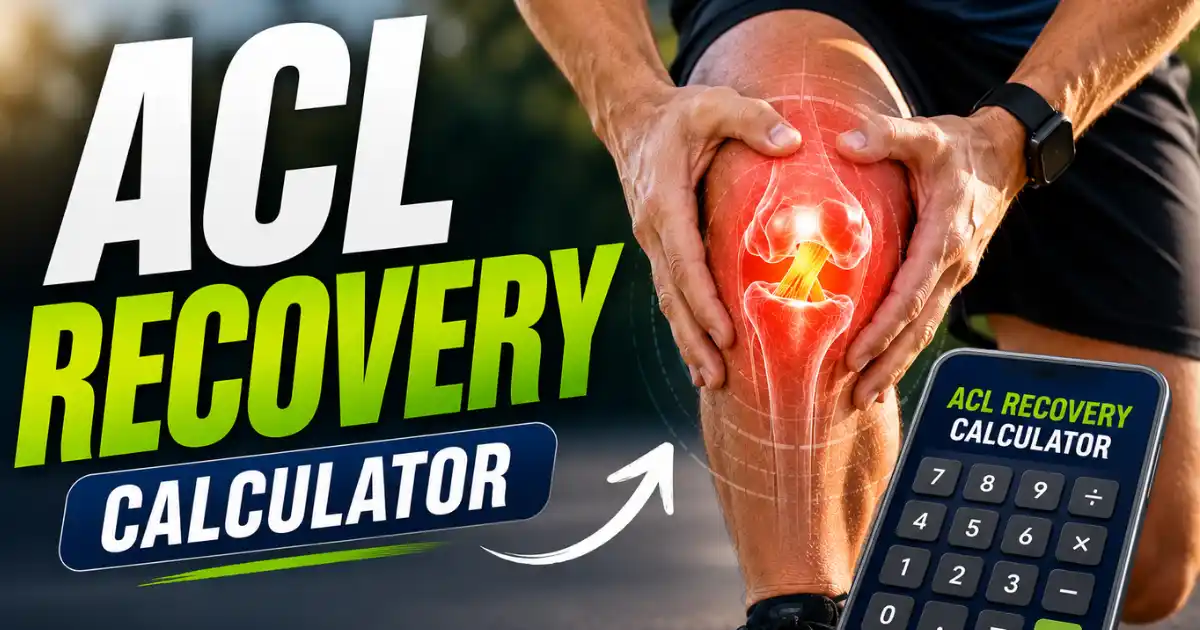
Many ACL patients worry about one question: ‘When will I walk normally again?’ This ACL Recovery Calculator helps estimate rehabilitation progress based on recovery stage, mobility, pain, and function.”
Anterior Cruciate Ligament (ACL) injuries are among the most common knee injuries seen in athletes, gym-goers, football players, and active individuals. One of the biggest questions patients ask after ACL injury or surgery is:
“How long will ACL recovery take?”
The answer depends on several factors including surgery type, physiotherapy progress, muscle strength, knee stability, swelling, and return-to-sports goals.
According to the American Academy of Orthopaedic Surgeons (AAOS), ACL injuries are among the most common knee ligament injuries seen in athletes and physically active individuals.
To help patients better understand their rehabilitation journey, we created this free ACL Recovery Calculator. This interactive tool estimates recovery stage and rehabilitation progress after ACL injury or ACL reconstruction surgery.
Whether you are recovering from surgery or starting physiotherapy after an ACL tear, this calculator can help you estimate where you currently stand in your recovery process.
As a physiotherapy professional, I commonly see ACL patients struggle more with confidence and quadriceps weakness than pain after the first few months.
Quick Answer
ACL recovery usually takes 6–12 months depending on injury severity, surgery type, physiotherapy consistency, muscle strength, and return-to-sports goals. Use the ACL Recovery Calculator below to estimate your rehabilitation stage and recovery progress after ACL injury or reconstruction surgery.
ACL Recovery Calculator
Based on common rehabilitation principles used in ACL physiotherapy and sports rehabilitation programs.
What Is ACL Injury?
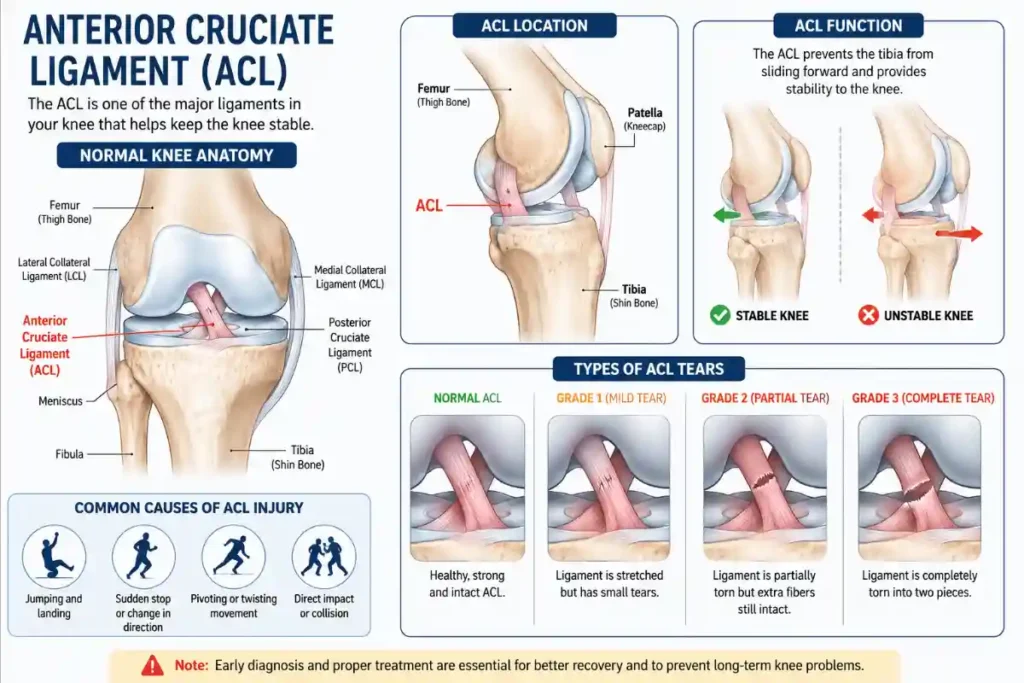
The ACL (Anterior Cruciate Ligament) is one of the major ligaments inside the knee joint that helps stabilize the knee during movement, jumping, cutting, and running activities.
Mayo Clinic explains that ACL injuries commonly occur during sudden stopping, twisting, pivoting, or landing movements during sports and physical activity.
ACL injuries commonly occur during:
- Football
- Cricket
- Basketball
- Gym workouts
- Sudden twisting movements
- Road traffic accidents
Common symptoms include:
- Knee popping sound
- Swelling
- Knee instability
- Difficulty walking
- Pain while twisting
Severe ACL tears often require surgery followed by extensive physiotherapy rehabilitation.
⚠️ Common ACL Recovery Mistakes
Skipping physiotherapy, returning to sports too early, ignoring swelling, weak quadriceps rehabilitation, and poor exercise compliance are some of the most common reasons ACL recovery gets delayed. Proper rehabilitation and guided physiotherapy are essential for safe return to daily activities and sports.
Factors Affecting ACL Recovery
Several important factors influence ACL rehabilitation outcomes.
1. Severity of ACL Tear
Partial ACL tears may recover faster than complete ligament ruptures.
2. Surgery Type
ACL reconstruction using patellar tendon or hamstring graft may affect recovery timeline.
3. Physiotherapy Consistency
Patients who regularly attend rehabilitation sessions usually recover faster.
4. Muscle Strength
Quadriceps and hamstring strength are extremely important for knee stability.
5. Swelling & Pain
Persistent swelling may delay rehabilitation progression.
6. Return-to-Sports Goals
Athletes returning to sports require advanced rehabilitation and neuromuscular training.
Role of Physiotherapy in ACL Recovery
Physiotherapy is one of the most important parts of ACL rehabilitation.
A physiotherapist helps patients improve:
- Knee range of motion
- Quadriceps strength
- Hamstring activation
- Balance
- Walking pattern
- Jump mechanics
- Sports performance
Common ACL rehabilitation exercises include:
- Straight leg raises
- Mini squats
- Step-ups
- Balance training
- Resistance band exercises
- Functional movement drills
Proper rehabilitation reduces the risk of re-injury and improves long-term knee function.
As a physiotherapist, I commonly see ACL patients rush back to sports before regaining proper knee stability. This increases re-injury risk significantly.
ACL Recovery Timeline
First 2 Weeks
- Swelling control
- Pain management
- Gentle range-of-motion exercises
- Walking with support
2–6 Weeks
- Improved knee bending
- Basic strengthening begins
- Walking gradually improves
6–12 Weeks
- Balance and strengthening progress
- Cycling and functional exercises start
3–6 Months
- Advanced strengthening
- Jogging progression
- Functional sports drills
6–12 Months
- Return-to-sports rehabilitation
- Plyometric training
- Agility exercises
In my rehabilitation practice, many ACL patients improve pain earlier than muscle strength, which is why continued strengthening remains extremely important even when walking feels normal.
Medical Disclaimer
This ACL Recovery Calculator is for educational and informational purposes only. It does not diagnose ligament injuries or replace professional orthopedic, physiotherapy, or medical advice. Always consult a qualified healthcare professional for personalized rehabilitation guidance after ACL injury or surgery.
Frequently Asked Questions
How long does ACL recovery take?
ACL recovery commonly takes 6–12 months depending on surgery, rehabilitation, and return-to-sports goals.
Can ACL heal without surgery?
Partial ACL tears may improve with rehabilitation, but complete tears often require surgery in active individuals.
Is physiotherapy necessary after ACL surgery?
Yes, physiotherapy is essential for restoring strength, balance, knee stability, and safe return to activity.
When can I walk normally after ACL surgery?
Many patients gradually return to normal walking within several weeks depending on rehabilitation progress.
Can athletes return to sports after ACL reconstruction?
Yes, many athletes successfully return to sports after proper rehabilitation and strength recovery.

Dr. Shabbir Hussain (BPT)
Dr. Shabbir Hussain is a physiotherapy professional and medical content creator focused on orthopedic rehabilitation, ACL injury recovery, pain management, sports physiotherapy, and evidence-based rehabilitation education through Physio Talk Official.
References
- American Academy of Orthopaedic Surgeons (AAOS) – ACL Injury Overview
https://orthoinfo.aaos.org/en/diseases--conditions/anterior-cruciate-ligament-acl-injuries/ - Mayo Clinic – ACL Injury Symptoms and Treatment
https://www.mayoclinic.org/diseases-conditions/acl-injury/symptoms-causes/syc-20350738 - Cleveland Clinic – ACL Tear Recovery Timeline
https://my.clevelandclinic.org/health/diseases/16576-acl-tear - NIH – Anterior Cruciate Ligament Rehabilitation Guidelines
https://www.ncbi.nlm.nih.gov/pmc/articles/PMC5577427/ - Physiopedia – ACL Rehabilitation
https://www.physio-pedia.com/Anterior_Cruciate_Ligament_(ACL)_Rehabilitation
As a physiotherapy professional, Dr. Shabbir Hussain commonly works with rehabilitation-focused recovery education related to ACL injuries, knee rehabilitation, mobility restoration, and post-surgical physiotherapy.
Dr. Shabbir Hussain, BPT
Registered Physiotherapist | Clinical Rehabilitation Specialist
Maharashtra OTPT Council Reg. No.: PR-2021/08/PT/009532
Society of Onco Physiotherapists Reg. No.: SOP/00033/LM
Dr. Shabbir Hussain, BPT, Registered Physiotherapist with over 8 years of experience in physiotherapy, kidney rehabilitation, oncological rehabilitation, and lymphedema management. He specializes in balance disorders, pain management, musculoskeletal rehabilitation, strengthening programs, and VR-based rehabilitation.