
Last Updated: July 9, 2026
Evidence-Based Review: Reviewed according to current physiotherapy practice, orthopedic rehabilitation principles, and peer-reviewed medical literature.
Estimated Reading Time: 14 Minutes
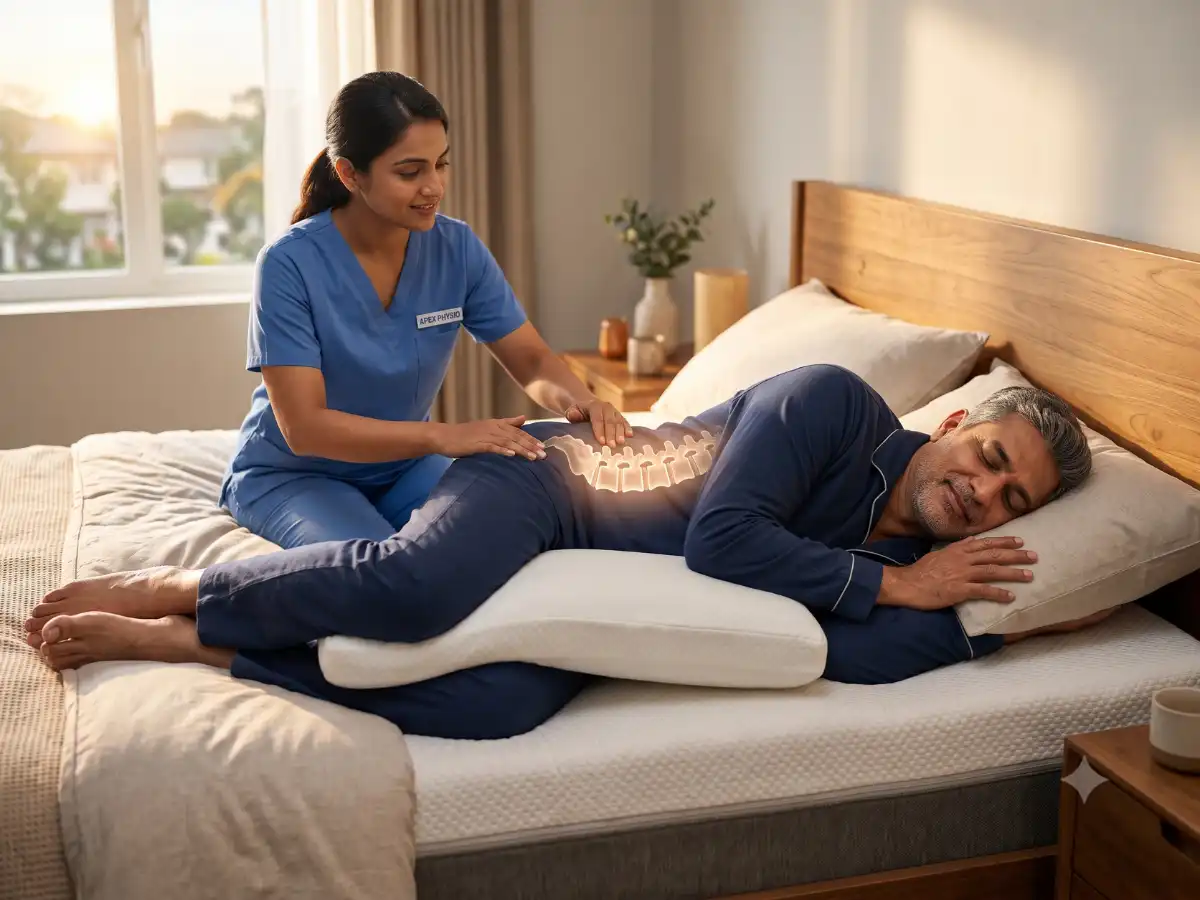
Best Sleeping Position for Lower Back Pain
Have You Been Sleeping Wrong All Along?
You spend nearly one-third of your life sleeping, yet very few people realize that the way they sleep can either heal their back—or silently make it worse.
Many patients visit my physiotherapy clinic believing that their mattress is the only reason behind their lower back pain. Surprisingly, after carefully evaluating their posture and sleeping habits, I often discover that their sleeping position—not the mattress—is the real problem.
In my clinical experience as a physiotherapist, I have treated office workers, homemakers, drivers, students, athletes, and elderly patients who woke up every morning with stiffness, difficulty bending forward, or pain while getting out of bed. Many of them had tried painkillers, massage oils, or expensive orthopedic mattresses without long-term relief because the underlying cause remained unchanged.
One common pattern observed in physiotherapy practice is that small changes in sleeping posture often lead to significant improvements in pain, sleep quality, and mobility within a few weeks.
⚡ Quick Summary
Main Risk: Poor sleeping posture may increase pressure on the lumbar spine and worsen existing back pain.
Key Symptom: Pain or stiffness in the lower back immediately after waking up.
Best Solution: Sleep with proper spinal alignment using the right pillow placement and supportive mattress.
Prevention Tip: Combine healthy sleeping posture with daily stretching, regular movement, and ergonomic sitting habits.
What Is the Best Sleeping Position for Lower Back Pain?
Lower back pain is one of the most common musculoskeletal problems worldwide and affects people of all ages. According to international health organizations, most individuals experience low back pain at least once during their lifetime.
During sleep, your spine should remain in a neutral position, meaning the natural curves of the neck, upper back, and lower back are properly supported without excessive twisting or bending.
The best sleeping position is not necessarily the same for everyone. It depends on several factors, including:
- The cause of your back pain
- Your body weight
- Existing spinal conditions
- Pregnancy
- Age
- Hip flexibility
- Mattress support
- Pillow height
From a physiotherapy perspective, the ideal sleeping posture is the one that minimizes pressure on spinal structures while allowing muscles to relax completely.
When the spine stays properly aligned throughout the night, the surrounding muscles require less effort to stabilize the body. This promotes tissue healing, reduces inflammation, and often decreases morning stiffness.
However, sleeping in a poor position for several hours every night can repeatedly stress the lumbar joints, spinal discs, ligaments, and surrounding muscles, making pain persist for months or even years.
Why This Problem Is Becoming More Common
Over the past decade, I have noticed a remarkable increase in younger adults seeking treatment for lower back pain. Previously, most patients were over 50 years of age. Today, many are in their twenties and thirties.
Modern lifestyle habits are playing a major role.
Many professionals spend eight to ten hours sitting at computers before returning home and continuing to use smartphones for several more hours. This prolonged sitting weakens the deep core muscles responsible for supporting the spine.
Work-from-home culture has also changed how people sit, move, and rest. Instead of ergonomic office chairs, many people work from sofas, beds, or dining chairs that provide poor lumbar support.
Indian urban lifestyles add another challenge. Long daily commutes on motorcycles, scooters, buses, and cars expose the spine to continuous vibration and prolonged sitting. By bedtime, the muscles supporting the lower back are already fatigued.
Students are not immune either. Long hours preparing for competitive examinations, online classes, and excessive mobile phone use contribute to poor posture from an early age.
Hidden Dangers Most People Don’t Realize
Many people believe that lower back pain is simply an inconvenience that will disappear with rest. Unfortunately, persistent pain can gradually affect much more than the spine.
One hidden consequence is disturbed sleep. Frequent changes in sleeping position due to discomfort reduce deep sleep, leaving people tired despite spending enough hours in bed.
Poor sleep then lowers pain tolerance, creating a vicious cycle in which inadequate sleep increases pain, and pain further disrupts sleep.
Another overlooked issue is reduced physical activity. Patients who fear pain often stop exercising altogether. This leads to muscle weakness, reduced flexibility, weight gain, and even poorer spinal stability.
In my clinical rehabilitation, I also see many individuals who develop compensatory movement patterns. Instead of bending normally, they twist awkwardly, overuse hip muscles, or shift weight to one side, increasing the risk of additional injuries.
📊 Lower Back Pain by the Numbers
Lower back pain is one of the most common health conditions worldwide. These evidence-based statistics highlight why proper spinal care and healthy sleeping habits matter.
Common Mistakes People Make
As a physiotherapist, I frequently encounter patients who unintentionally prolong their recovery because of avoidable mistakes.
One of the most common is delaying professional assessment. Many people continue living with back pain for months, assuming it is a normal part of aging or office work.
Self-medication is another frequent problem. Painkillers may temporarily reduce discomfort but do not address the mechanical causes of poor spinal alignment or muscle imbalance.
Social media has also contributed to confusion. Patients often perform random stretching routines recommended by influencers without understanding whether those exercises are appropriate for their specific condition. In some cases, incorrect techniques worsen symptoms rather than relieve them.
Research Highlights
Research over the past several years has transformed our understanding of lower back pain. Experts now recognize that recovery depends not only on medication but also on daily habits such as sleep, movement, and physical activity.
Recent evidence suggests that poor sleep quality and chronic lower back pain influence each other. Individuals with persistent back pain often experience disrupted sleep, while inadequate sleep can increase pain sensitivity and slow recovery.
Clinical practice guidelines increasingly recommend remaining physically active rather than prolonged bed rest for most episodes of non-specific lower back pain. Early movement, patient education, and exercise therapy consistently produce better long-term outcomes than passive treatments alone.
Causes and Risk Factors
Lower back pain rarely develops because of a single reason. Instead, it usually results from a combination of mechanical stress, lifestyle habits, muscle weakness, and age-related changes.
One of the most important contributors is prolonged sitting. Office workers who remain seated for long hours often develop tight hip flexors, weakened gluteal muscles, and reduced core stability. These changes increase stress on the lumbar spine, making it more vulnerable during sleep.
Excess body weight also increases pressure on the lower back, particularly when sleeping on an unsupportive mattress or in a position that twists the spine. Even modest weight gain over time can alter posture and affect spinal alignment.
As people age, natural wear and tear may affect the intervertebral discs and facet joints. Although these changes are common, they do not always cause pain. Symptoms usually develop when age-related changes combine with poor posture, inactivity, or repetitive strain.
Early Warning Signs
Lower back pain often begins subtly, but recognizing the early symptoms can prevent long-term problems.
Many people first notice mild stiffness when getting out of bed. Others experience discomfort after sitting for long periods or find that their pain improves slightly after walking for a few minutes. These early signs are easy to dismiss, yet they often indicate that the spine is under repeated stress.
As the condition progresses, the pain may become more frequent, lasting throughout the day instead of disappearing after movement. Some individuals develop muscle tightness, reduced flexibility, or discomfort while turning in bed. Pain may also radiate toward the buttocks or upper thighs, making everyday activities such as bending, lifting, or climbing stairs more difficult.
In advanced cases, persistent inflammation or nerve involvement can lead to sharp, shooting pain, numbness, tingling, or weakness in one or both legs. These symptoms should never be ignored, as they may indicate a more serious spinal condition that requires prompt medical evaluation.
Don’t Ignore These Signs
Seek professional assessment if you experience any of the following:
- Lower back pain that lasts longer than a few weeks despite self-care
- Pain that repeatedly wakes you from sleep
- Difficulty standing upright after getting out of bed
- Pain spreading below the knee
- Numbness, tingling, or muscle weakness in the legs
- Loss of balance or difficulty walking
- Changes in bladder or bowel control (medical emergency)
- Severe pain after a fall, accident, or heavy lifting
Early evaluation by a qualified healthcare professional or physiotherapist can help identify the underlying cause and guide appropriate treatment before symptoms become chronic.
Diagnosis: How Doctors and Physiotherapists Identify the Cause of Lower Back Pain
Lower back pain is a symptom—not a diagnosis. While many people assume all back pain is caused by a “slipped disc,” the reality is much more complex. The most effective treatment begins with identifying the exact cause of the pain.
In my clinical practice, I always tell patients that the location of pain alone cannot determine the diagnosis. A detailed medical history, physical examination, and movement assessment are far more valuable than immediately rushing for an MRI.
Medical Evaluation
Your healthcare provider will ask several important questions, including:
- When did the pain start?
- Was it triggered by lifting something heavy or did it begin gradually?
- Is the pain worse in the morning or at night?
- Does it improve after walking?
- Does it radiate into the leg?
- Have you experienced numbness, tingling, or weakness?
These answers help differentiate muscle strain, disc-related pain, arthritis, nerve compression, inflammatory disorders, or other medical conditions.
Physiotherapy Assessment
One of the strengths of physiotherapy is evaluating how your body moves, not just where it hurts.
During an assessment, I commonly evaluate:
- Standing posture
- Walking pattern (gait)
- Lumbar spine movement
- Hip mobility
- Pelvic alignment
- Core muscle strength
- Gluteal muscle activation
- Hamstring flexibility
- Balance and coordination
- Functional activities like bending, sitting, standing, and getting out of bed
One common pattern observed in physiotherapy practice is that many patients have weak deep abdominal muscles and tight hip flexors. These muscle imbalances often contribute to recurring lower back pain and poor sleeping posture.
Is an MRI Always Necessary?
A common question I hear is:
“Doctor, should I get an MRI immediately?”
In many cases, the answer is no.
Current international clinical guidelines recommend that routine imaging is not required for most episodes of uncomplicated lower back pain.
Your doctor may recommend X-rays, MRI, or CT scans if:
- Pain persists despite treatment
- Significant trauma has occurred
- Severe neurological symptoms develop
- Cancer, infection, or fracture is suspected
- Surgery is being considered
Personally, I have seen many patients become anxious after reading MRI reports showing “disc bulge” or “degenerative changes.” However, these findings are common with aging and do not always explain the pain. Clinical symptoms and physical examination remain equally important.
Treatment & Physiotherapy Management
Lower back pain treatment should focus on correcting the underlying cause rather than only masking symptoms.
Most people recover successfully with conservative treatment when therapy begins early.
1. Patient Education
Education is often the first step toward recovery.
Patients should understand that:
- Most lower back pain improves with appropriate management.
- Complete bed rest is rarely beneficial.
- Movement is generally safer than many people believe.
- Recovery usually occurs gradually rather than overnight.
Helping patients understand their condition reduces fear, improves confidence, and encourages active participation in rehabilitation.
2. Pain Management
Depending on the diagnosis, pain management may include:
- Activity modification
- Heat therapy
- Ice therapy (for acute injuries)
- Physician-prescribed medications when necessary
- Gentle stretching
- Relaxation techniques
- Sleep posture correction
Pain relief should always be combined with rehabilitation to reduce the likelihood of recurrence.
3. Evidence-Based Physiotherapy
Physiotherapy addresses the mechanical causes of lower back pain.
Treatment may include:
Manual Therapy
When appropriate, manual therapy can help improve spinal mobility, reduce muscle tightness, and relieve stiffness.
This may involve:
- Soft tissue release
- Joint mobilization
- Muscle energy techniques
- Myofascial release
These techniques should always be performed by trained professionals.
Best Sleeping Positions for Lower Back Pain
One question I receive almost every day is:
“Doctor, which sleeping position is best for my back?”
The answer depends on your symptoms, but several positions consistently provide better spinal support than others.
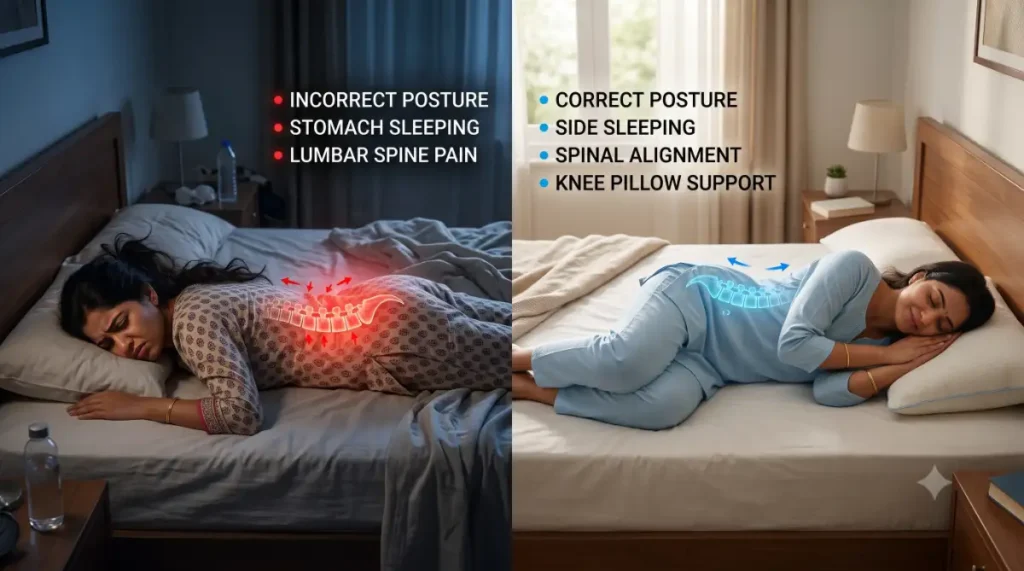
1. Sleeping on Your Side (Most Recommended)
For many people with non-specific lower back pain, side sleeping is one of the best options.
This position helps:
- Maintain natural spinal curves
- Reduce pressure on lumbar joints
- Relax lower back muscles
- Improve overall comfort
Physiotherapist Tip
Place a medium-sized pillow between your knees.
This keeps your pelvis level and prevents excessive rotation of the lower spine.
Without knee support, the upper leg tends to fall forward, twisting the lumbar spine throughout the night.
2. Sleeping on Your Back
Back sleeping can also be beneficial if done correctly.
However, many people unknowingly flatten their lumbar curve.
Best Technique
Lie on your back and place a pillow beneath your knees.
Benefits include:
- Reduces lumbar muscle tension
- Decreases spinal compression
- Supports natural spinal alignment
- Reduces morning stiffness
This is particularly helpful for patients with muscle-related lower back pain.
3. Fetal Position
For individuals with certain disc-related problems, a gentle fetal position may reduce symptoms.
The knees should remain only slightly bent—not tightly curled.
Excessive curling may increase stiffness after waking.
4. Sleeping During Pregnancy
Pregnant women often develop lower back pain because hormonal changes loosen pelvic ligaments while the growing uterus shifts the body’s center of gravity.
The safest position is:
- Left side sleeping
- Pillow between knees
- Pillow supporting the abdomen
- Optional pillow behind the back
This improves comfort while supporting circulation.
Frequently Asked Questions
1. What is the best sleeping position for lower back pain?
For most people, sleeping on your side with a pillow between your knees is the best position. It helps keep your spine, hips, and pelvis aligned, reducing pressure on the lower back. Sleeping on your back with a pillow under your knees is another good option.
2. Why does my lower back hurt more after sleeping?
Morning lower back pain can result from poor sleeping posture, an unsupportive mattress, muscle stiffness, arthritis, or spinal conditions such as a herniated disc. If the pain persists for several weeks, consult a healthcare professional or physiotherapist for an evaluation.
3. Is sleeping on your stomach bad for lower back pain?
In most cases, yes. Sleeping on your stomach can increase the arch in your lower back and force your neck to remain turned to one side for hours, leading to additional strain. Side sleeping or back sleeping with proper pillow support is usually recommended instead.
4. Can a pillow between my knees really help relieve lower back pain?
Yes. Placing a pillow between your knees while sleeping on your side helps keep your pelvis level and reduces twisting of the lumbar spine. This simple adjustment often improves comfort and decreases morning stiffness.
5. What type of mattress is best for lower back pain?
A medium-firm mattress is generally recommended because it provides a balance of comfort and spinal support. The ideal mattress should maintain your spine’s natural alignment without being too soft or excessively hard.
6. How long does it take for lower back pain to improve after correcting my sleeping position?
Some people notice better sleep and less morning stiffness within a few days, while others may take several weeks. For most cases of non-specific lower back pain, meaningful improvement is often seen within 4 to 6 weeks when proper sleeping posture is combined with regular exercise and physiotherapy.
REFERENCES
Note: The following references are authoritative sources commonly used in evidence-based physiotherapy and rehabilitation. They support the concepts discussed in this article, including sleep posture, low back pain management, exercise therapy, and clinical guidelines.
- World Health Organization. (2023). Low back pain. https://www.who.int/news-room/fact-sheets/detail/low-back-pain
- National Institute of Neurological Disorders and Stroke. (2025). Low Back Pain Fact Sheet. https://www.ninds.nih.gov/health-information/disorders/low-back-pain
- National Institute of Arthritis and Musculoskeletal and Skin Diseases. (2024). Back Pain. https://www.niams.nih.gov/health-topics/back-pain
- Qaseem, A., Wilt, T. J., McLean, R. M., & Forciea, M. A. (2017). Noninvasive treatments for acute, subacute, and chronic low back pain: A clinical practice guideline from the American College of Physicians. Annals of Internal Medicine, 166(7), 514–530. https://www.acpjournals.org/doi/10.7326/M16-2367

Dr. Shabbir Hussain, BPT
Registered Physiotherapist | Clinical Rehabilitation Specialist
Maharashtra OTPT Council Reg. No.: PR-2021/08/PT/009532
Society of Onco Physiotherapists Reg. No.: SOP/00033/LM
Dr. Shabbir Hussain, BPT, Registered Physiotherapist with over 8 years of experience in physiotherapy, kidney rehabilitation, oncological rehabilitation, and lymphedema management. He specializes in balance disorders, pain management, musculoskeletal rehabilitation, strengthening programs, and VR-based rehabilitation.