
Experience: 8+ years | Physiotherapy & Rehabilitation
Last Updated: 9 June 2026
Medically Reviewed By: Dr. Shabbir Hussain (BPT)
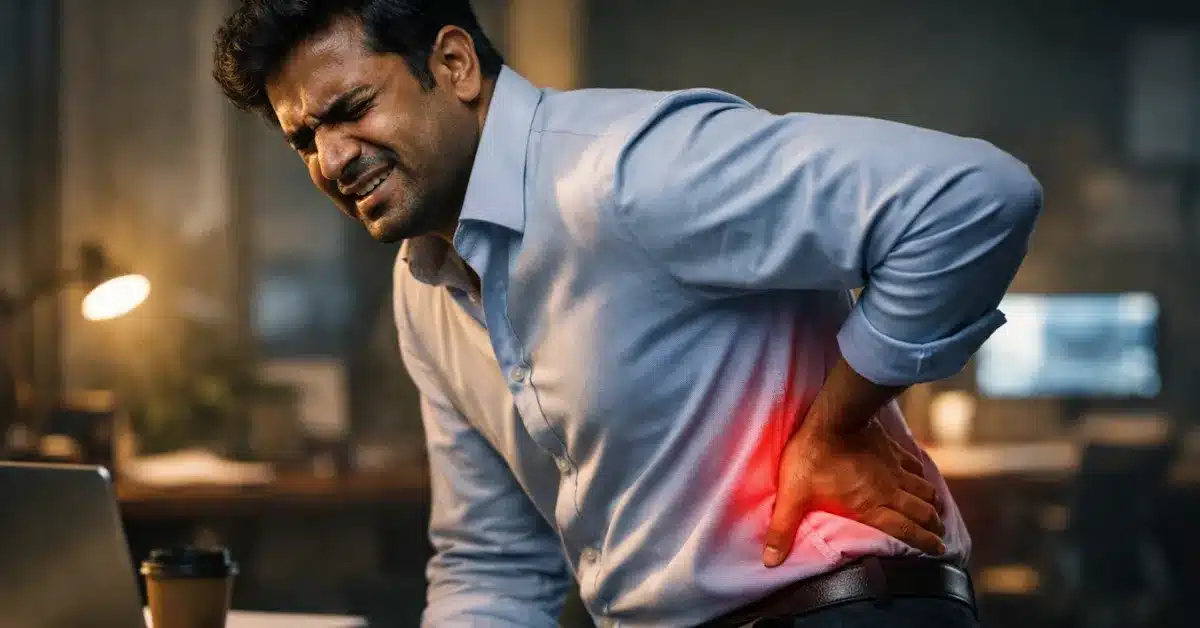
How to recover from lower back pain? – It often starts as a mild discomfort — a slight pull after sitting too long. Most people ignore it, pop a painkiller, or blame “age” or “sleeping wrong.”
But here’s the dangerous truth:
Lower back pain is not always harmless.
In India and globally, millions unknowingly worsen their condition by delaying treatment, using wrong postures, or relying on temporary fixes. What begins as minor pain can quietly progress into chronic disability, nerve damage, or even permanent mobility issues.
If you’re ignoring it — you might be making the biggest mistake for your spine.
What I Commonly See in Clinical Practice
As a physiotherapist, I frequently meet patients who ignore lower back pain for weeks or months, hoping it will disappear on its own. Many eventually develop stiffness, reduced mobility, or nerve-related symptoms that become harder to treat. In my experience, early assessment, movement-based rehabilitation, and posture correction often lead to faster recovery and better long-term outcomes.
Medical Disclaimer: This content is for educational purposes only and does not replace professional medical advice, diagnosis, or treatment. Always consult a qualified healthcare provider or physiotherapist for personalized guidance regarding your condition.
What Is Lower Back Pain?
Lower back pain refers to discomfort in the lumbar region of the spine, which supports most of your body weight.
According to the World Health Organization (WHO), low back pain is the leading cause of disability worldwide, affecting people of all ages.
It can be:
- Acute (lasting <6 weeks)
- Subacute (6–12 weeks)
- Chronic (>12 weeks)
It may arise from muscles, discs, nerves, or joints — making proper diagnosis essential.
Real-Life Example
A 38-year-old office worker visited our clinic after experiencing lower back pain for several months. Long sitting hours and poor workstation setup were major contributors. After guided exercises, posture correction, and activity modification, symptoms improved significantly within a few weeks.
What Happens If You Ignore It?
Ignoring lower back pain isn’t just risky — it can be life-altering.
Potential Complications:
- Chronic pain syndrome
- Herniated disc progression
- Sciatica (nerve compression causing leg pain)
- Muscle weakness and imbalance
- Reduced mobility and independence
- Mental health issues (anxiety, depression)
Global Data Insight:
WHO reports that 619 million people suffered from low back pain in 2020, projected to rise to 843 million by 2050.
A PubMed study shows untreated back pain increases the risk of long-term disability by 2–3x.
The biggest mistake?
Waiting for pain to “go away on its own.”
What is the cause of lower back pain?
Lifestyle Causes
- Prolonged sitting (desk jobs, mobile use)
- Poor posture
- Lack of physical activity
Medical Causes
- Herniated disc
- Degenerative disc disease
- Spinal stenosis
Age-related Factors
- Muscle weakening
- Bone density loss
Occupational Risks
- Heavy lifting jobs
- Long driving hours
- Repetitive movements
Warning Signs & Symptoms
Don’t Ignore These Signs:
Early Symptoms:
- Dull ache in lower back
- Stiffness after sitting
- Pain on bending
Advanced Symptoms:
- Radiating pain to legs (sciatica)
- Numbness or tingling
- Weakness in legs
- Difficulty walking or standing
Seek Immediate Medical Care If You Notice:
- Loss of bladder or bowel control
- Progressive leg weakness
- Severe night pain
- Unexplained weight loss
- Pain after significant trauma
Diagnosis & Clinical Standards
Doctors follow structured clinical guidelines:
Common Tests:
- Physical examination
- MRI (gold standard for soft tissue)
- X-ray (bone-related issues)
- CT scan (complex cases)
According to NIH and WHO guidelines, imaging is recommended only when:
- Symptoms persist >6 weeks
- Neurological deficits are present
What Actually Works
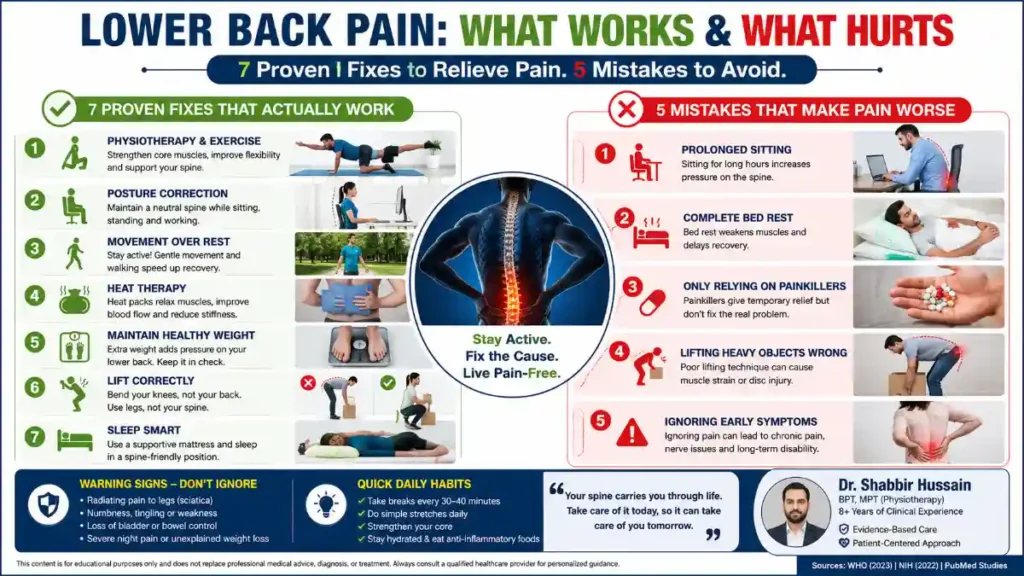
✅ Evidence-Based Recovery Plan
1. Physiotherapy (Most Effective)
- Core strengthening exercises
- McKenzie method
- Manual therapy
Studies in PubMed confirm physiotherapy reduces pain and improves function significantly.
2. Posture Correction
- Neutral spine sitting
- Ergonomic workstation setup
- Avoid slouching
3. Movement Over Rest
Bed rest is outdated advice
Controlled movement speeds recovery
4. Medical Support (If Needed)
- NSAIDs (short-term use)
- Muscle relaxants
- Injections (severe cases only)
5. Heat Therapy & Lifestyle Fixes
- Heat packs improve blood flow
- Weight management reduces load
MYTH BUSTER:
- ❌ “Complete bed rest is best”
- ❌ “Painkillers fix the problem”
- ❌ “Exercise worsens pain”
Truth: Movement + guided therapy heals faster
Common Recovery Mistake I See
One of the most common mistakes I see is patients avoiding movement completely because they fear worsening the pain. In many non-serious cases, prolonged inactivity can actually slow recovery. Guided movement and gradual exercise are often more beneficial than extended bed rest.
Prevention & Daily Habits
Protect Your Spine Daily:
- Sit with back support
- Take breaks every 30–40 minutes
- Strengthen core muscles
- Maintain healthy weight
- Lift objects correctly (bend knees, not back)
- Sleep on a supportive mattress
WHO emphasizes active lifestyle + ergonomic awareness as key prevention strategies.
FAQs
Is lower back pain reversible?
Yes, most cases are reversible with physiotherapy, posture correction, and lifestyle changes.
How long does recovery take?
Acute pain: 2–6 weeks
Chronic cases: Several months with consistent treatment
Can physiotherapy really help?
Yes, it is one of the most evidence-backed treatments for lower back pain.
What mistakes delay recovery?
- Bed rest
- Ignoring pain
- Poor posture
- Self-medication
When should I see a doctor?
If pain lasts >2 weeks or includes nerve symptoms.
Is walking good for back pain?
Yes, gentle walking improves circulation and reduces stiffness.
REFERENCES
- World Health Organization. (2023). Low back pain fact sheet. https://www.who.int/news-room/fact-sheets/detail/low-back-pain
- National Institutes of Health (NIH). (2022). Low back pain overview. https://www.ninds.nih.gov
- Maher, C. et al. (2017). Non-specific low back pain. The Lancet. https://doi.org/10.1016/S0140-6736(16)30970-9
- Foster, N. et al. (2018). Prevention and treatment of low back pain. Lancet.
- PubMed Study: Hayden, J. et al. (2021). Exercise therapy for chronic low back pain.

Dr. Shabbir Hussain, BPT
Registered Physiotherapist | Clinical Rehabilitation Specialist
Maharashtra OTPT Council Reg. No.: PR-2021/08/PT/009532
Society of Onco Physiotherapists Reg. No.: SOP/00033/LM
Dr. Shabbir Hussain, BPT, Registered Physiotherapist with over 8 years of experience in physiotherapy, kidney rehabilitation, oncological rehabilitation, and lymphedema management. He specializes in balance disorders, pain management, musculoskeletal rehabilitation, strengthening programs, and VR-based rehabilitation.