

📅 Article Information
Last Updated: June 6, 2026
Evidence-Based Review: Yes
Reading Time: 12–15 Minutes
Licensed Physiotherapist
Founder, Physio Talk
8+ Years Clinical Experience in Physiotherapy, Rehabilitation, Posture Correction & Pain Management.
Best Pillow for Neck Pain: A Physiotherapist’s Complete Guide
You may be blaming your posture, work desk, or mobile phone for your neck pain. But many physiotherapists say the real problem could be much closer—your pillow.
An unsupportive pillow can place your neck in an awkward position for 6–8 hours every night, leading to stiffness, headaches, and poor sleep.
One of the most common mistakes I see in clinical practice is that people spend thousands of rupees on medicines, massages, or gadgets but continue sleeping on a pillow that does not support their neck properly.
What surprises many patients is that neck pain often develops gradually. A poor pillow may not cause severe symptoms overnight, but months or years of poor support can contribute to muscle strain, joint irritation, disturbed sleep, headaches, and reduced daily productivity.
As a physiotherapist, I have treated countless patients who were convinced their neck pain was caused solely by office work or mobile phone use. However, after detailed assessment, their sleeping posture and pillow choice turned out to be a major contributing factor.
The good news is that choosing the right pillow is often a simple and affordable step that can significantly improve comfort, sleep quality, and neck health.
✅ Quick Answer
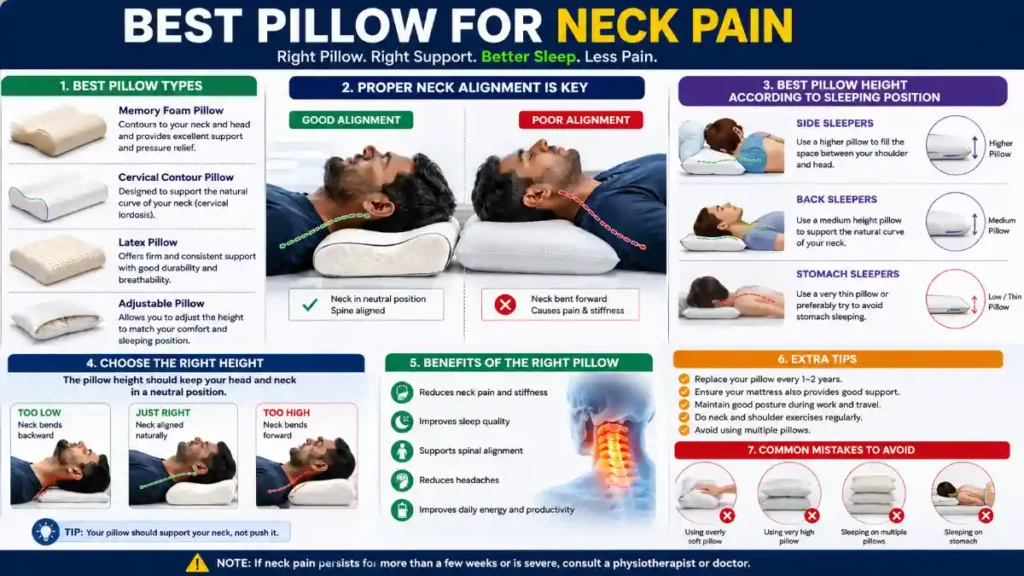
The best pillow for neck pain is one that maintains neutral cervical alignment while you sleep. A properly supportive pillow helps keep your head, neck, and spine in a natural position, reducing strain on muscles and joints. Depending on your sleeping position, body type, and comfort preferences, memory foam pillows, cervical contour pillows, latex pillows, and adjustable pillows are among the most commonly recommended options by physiotherapists.
What Is the Best Pillow for Neck Pain?
The best pillow for neck pain is not necessarily the most expensive pillow.
Instead, it is a pillow that keeps the neck in a neutral position throughout the night.
Your neck naturally has a gentle inward curve called cervical lordosis. A good pillow supports this curve without pushing the head too far forward or allowing it to fall backward.
In simple terms, your pillow should help maintain proper spinal alignment while sleeping.
The ideal pillow varies depending on:
- Sleeping position
- Shoulder width
- Body size
- Existing neck conditions
- Mattress firmness
- Personal comfort preferences
This is why one pillow may work perfectly for one person but cause discomfort in another.
Doctor Explains
Many people believe that a soft pillow is automatically better for neck pain.
Clinically, this is one of the biggest misconceptions.
In my clinical experience, excessive softness often allows the head to sink too deeply. This creates abnormal stress on cervical joints, muscles, and ligaments.
Another misunderstanding is that higher pillows provide more support. In reality, very high pillows frequently push the neck into prolonged flexion, similar to looking down at a smartphone for several hours.
Personally, I have seen many patients improve significantly after simply correcting pillow height and sleeping posture.
The earlier these issues are addressed, the easier recovery tends to be.
Why Neck Pain Is Becoming More Common
Neck pain has become increasingly common across India.
Several lifestyle changes are contributing to this trend.
Smartphone use is one of the biggest factors. Many people spend hours daily looking down at screens, placing repeated stress on neck muscles.
Work-from-home culture has also increased sedentary behavior. Improvised workstations often encourage poor posture throughout the day.
Long commuting hours add another challenge. Spending significant time traveling with poor sitting posture places additional stress on the cervical spine.
Students are also experiencing neck pain earlier than previous generations. Prolonged study sessions, online classes, and excessive screen exposure contribute to muscle fatigue and postural strain.
When these daytime stresses are combined with an unsupportive pillow at night, the neck rarely gets adequate recovery time.
Hidden Dangers Most People Don’t Realize
Many people assume neck pain is simply an inconvenience.
Unfortunately, persistent neck pain can affect far more than comfort.
Over time, poor cervical support may contribute to:
- Chronic muscle tightness
- Frequent headaches
- Sleep disturbances
- Reduced concentration
- Shoulder pain
- Upper back pain
- Reduced work productivity
In real rehabilitation settings, I often observe patients whose neck pain gradually begins affecting everyday activities such as driving, reading, computer work, and even household tasks.
Poor sleep quality can further increase pain sensitivity, creating a cycle that becomes difficult to break.
Common Mistakes People Make
Ignoring Early Symptoms
Many individuals wait until pain becomes severe before seeking professional advice.
By that stage, muscle dysfunction and movement limitations may already be established.
Self-Medicating Repeatedly
Painkillers may temporarily reduce symptoms but rarely address the underlying cause.
Following Social Media Advice
Not every exercise shown online is appropriate for every individual.
Some exercises can aggravate symptoms when performed incorrectly.
Using Extremely High Pillows
This is one of the most common mistakes I see among patients.
High pillows often place the neck in a sustained flexed position for several hours every night.
Sleeping in Poor Positions
Sleeping on the stomach frequently forces the neck into prolonged rotation, increasing strain on cervical structures.
Shocking Findings & Recent Research
Recent research has highlighted the relationship between sleep posture, pillow characteristics, and neck discomfort.
Several studies suggest that maintaining neutral cervical alignment during sleep may help reduce morning pain and stiffness.
Researchers have also found that sleep quality and musculoskeletal pain are closely connected. Poor sleep can increase pain perception, while pain can negatively affect sleep quality.
One surprising finding is that pillow comfort alone does not always predict effectiveness. Some pillows may feel comfortable initially but fail to provide adequate cervical support over time.
Clinical evidence increasingly supports individualized pillow selection rather than a one-size-fits-all approach.
Causes and Risk Factors
Neck pain rarely develops because of a single factor.
Instead, multiple contributors often work together.
Lifestyle habits play a major role. Prolonged mobile phone use, excessive screen exposure, and limited physical activity can gradually weaken postural endurance.
Occupational factors are equally important. Office workers, drivers, students, healthcare professionals, and individuals who spend long hours sitting may experience increased cervical stress.
Age-related changes can also influence symptoms. As people age, spinal structures naturally undergo wear and tear, making proper support more important.
Medical conditions such as cervical spondylosis, disc degeneration, arthritis, previous injuries, and chronic muscle imbalance may increase susceptibility.
In India, traditional sleeping arrangements sometimes contribute to the problem. Extremely thin pillows, multiple stacked pillows, or folded blankets used as pillows can create poor cervical alignment.
🚨 Warning Signs Your Pillow May Be Wrong
Many people continue using the same pillow for years without realizing it may be contributing to their neck pain. If you regularly experience any of the following symptoms, your pillow could be failing to provide proper cervical support:
- ✅ Neck stiffness immediately after waking up
- ✅ Frequent headaches in the morning
- ✅ Shoulder pain or discomfort while sleeping
- ✅ Feeling the need to constantly adjust your pillow during the night
- ✅ Waking up multiple times because you cannot find a comfortable position
- ✅ Neck pain that improves as the day progresses
- ✅ Tingling, tightness, or soreness around the neck and upper shoulders
- ✅ Visible flattening, sagging, or loss of pillow shape
If you consistently wake up with neck pain, stiffness, or headaches, your sleeping posture and pillow support deserve attention. In clinical practice, many patients notice meaningful improvement after switching to a pillow that maintains proper neck alignment throughout the night.
Diagnosis
Proper diagnosis involves more than simply identifying pain.
A healthcare professional will evaluate:
- Symptom history
- Sleep habits
- Pillow characteristics
- Postural alignment
- Neck movement
- Muscle strength
- Functional limitations
As a physiotherapist, I also assess movement patterns that may contribute to recurring symptoms.
Imaging tests such as X-rays or MRI scans are generally reserved for situations involving trauma, neurological symptoms, persistent pain, or suspected structural pathology.
The gold standard remains a thorough clinical examination combined with patient history and functional assessment.
Treatment & Physiotherapy Management
Effective treatment focuses on addressing the root cause rather than masking symptoms.
Physiotherapy often plays a central role.
Treatment may include:
Postural Correction
Improving daytime posture reduces cumulative stress on cervical structures.
Therapeutic Exercise
Specific exercises help restore mobility, strength, and endurance.
Manual Therapy
When appropriate, manual techniques may reduce muscle tension and improve movement quality.
Ergonomic Modifications
Adjustments to workstations, mobile phone use, and sleeping habits can significantly improve outcomes.
Pillow Optimization
The right pillow should support the neck while maintaining spinal alignment.
Pain Management
Heat therapy, movement-based rehabilitation, and education may help reduce symptoms.
Many patients improve faster when treatment combines exercise, posture correction, ergonomic changes, and proper sleep support rather than relying on a single intervention.
Which Pillow Types Are Usually Best for Neck Pain?
Memory Foam Pillows
Often recommended because they conform to the neck’s natural shape while providing support.
Cervical Contour Pillows
Designed specifically to support cervical lordosis.
Many patients with chronic neck pain find these helpful.
Latex Pillows
Provide consistent support with less sinking compared to traditional pillows.
Adjustable Pillows
Allow users to customize height according to body size and sleeping position.
Pillows Usually Less Suitable
Very flat pillows, extremely soft pillows, or excessively high pillows may fail to maintain proper alignment.
| Pillow Type | Support | Best For |
|---|---|---|
| Memory Foam | Excellent | Most neck pain sufferers |
| Cervical Contour | Excellent | Chronic neck pain |
| Latex | Good | Combination sleepers |
| Adjustable | Very Good | Custom support |
Best Pillow According to Sleeping Position
Side Sleepers
Usually benefit from a thicker pillow that fills the gap between shoulder and neck.
Back Sleepers
Generally require medium-height support that maintains natural cervical curvature.
Stomach Sleepers
Often experience the highest risk of neck strain.
If possible, transitioning away from stomach sleeping may help reduce symptoms.
Real Patient Scenario
A 34-year-old IT professional visited my clinic after experiencing neck pain for nearly eight months.
He had already tried painkillers, massages, and multiple online exercises.
During assessment, one detail stood out immediately.
He was sleeping on two stacked pillows every night because he believed higher pillows provided better support.
After modifying his pillow setup, correcting workstation ergonomics, and beginning a structured exercise program, his morning stiffness improved significantly within a few weeks.
This case illustrates how overlooked sleep habits can sometimes contribute substantially to persistent neck pain.
Myth vs Fact: Best Pillow for Neck Pain
| Myth | Fact |
|---|---|
| A softer pillow is always better for neck pain. | Excessively soft pillows may allow the head to sink too deeply and reduce neck support. |
| The most expensive pillow is the best pillow. | Proper fit and support matter more than price. |
| A high pillow provides better neck support. | High pillows may place the neck in an unhealthy forward-flexed position. |
| Neck pain is always caused by poor posture during the day. | Sleeping posture and pillow selection can also contribute significantly. |
| If a pillow feels comfortable initially, it must be good for your neck. | Comfort and proper cervical support are not always the same thing. |
| Changing a pillow alone will completely cure neck pain. | Most people benefit from a combination of posture correction, exercise, and proper sleep support. |
⚠️ Doctor’s Clinical Insight
One pattern I repeatedly observe in physiotherapy practice is that patients often replace chairs, buy expensive gadgets, or try multiple treatments before evaluating their pillow. In many cases, correcting sleep support becomes an important part of long-term neck pain management.
Who Should Avoid Certain Exercises or Treatments?
While exercise is beneficial for many people with neck pain, some situations require caution.
Recent Neck or Spine Surgery
Individuals recovering from surgery should only perform exercises approved by their surgeon or rehabilitation team.
Severe Acute Pain
If neck pain is severe enough to significantly restrict movement, aggressive stretching may worsen symptoms.
Neurological Symptoms
Exercises should be modified if symptoms include:
- Numbness
- Tingling
- Arm weakness
- Hand weakness
- Loss of coordination
High-Risk Medical Conditions
People with conditions such as rheumatoid arthritis, spinal instability, fractures, infections, or certain neurological disorders require specialized evaluation.
Red Flag Situations
Avoid self-treatment and seek medical evaluation if symptoms are severe, progressive, or accompanied by systemic warning signs.
Related Articles
Conclusion
Neck pain can significantly affect sleep, productivity, mood, and quality of life. However, one important fact many people overlook is that recovery often starts with correcting simple daily habits—including how you sleep.
The best pillow for neck pain is not defined by brand name, marketing claims, or price. It is the pillow that keeps your neck in a neutral, supported position throughout the night.
In my clinical experience, patients often focus on treatments while overlooking sleep ergonomics. Yet many notice meaningful improvements after optimizing pillow height, sleeping posture, and cervical support.
If you regularly wake up with stiffness, headaches, or neck discomfort, take a closer look at your pillow and sleeping habits. Small changes made consistently can have a significant impact over time.
Remember: neck pain is often manageable, especially when addressed early. Investing in proper support today may help protect your neck health for years to come.
✅ Key Takeaways
- The best pillow maintains neutral neck alignment.
- Higher pillows are not always better.
- Morning stiffness may indicate poor sleep support.
- Memory foam and cervical contour pillows often help many patients.
- Proper posture and exercise are equally important.
- Seek professional evaluation if symptoms persist or worsen.
💤 When Should You Replace Your Pillow?
Even the best pillow won’t last forever. Over time, pillows lose their shape, support, and ability to maintain proper neck alignment. Using an old or worn-out pillow may contribute to neck stiffness, poor sleep quality, and recurring discomfort.
Consider replacing your pillow if:
- ✅ It is more than 2 years old
- ✅ It feels flattened or compressed
- ✅ It has become lumpy or uneven
- ✅ It no longer provides adequate neck support
- ✅ You regularly wake up with neck stiffness or pain
- ✅ You frequently fold or adjust it for extra support
- ✅ It has lost its original shape after washing or prolonged use
Frequently Asked Questions (FAQs)
1. What type of pillow is best for neck pain?
A pillow that keeps your neck in a neutral position is generally best. Memory foam, latex, and cervical contour pillows are commonly recommended.
2. Can a bad pillow cause neck pain?
Yes. Poor support can place unnecessary stress on neck muscles and joints throughout the night.
3. How often should I replace my pillow?
Most pillows should be replaced every 1–2 years, depending on material quality and loss of support.
4. Is memory foam good for neck pain?
For many individuals, memory foam provides good support because it conforms to the shape of the neck and head.
5. Are cervical pillows worth buying?
For people with recurring neck pain, cervical contour pillows may provide better support than conventional pillows.
6. Should side sleepers use a thicker pillow?
Generally, yes. Side sleepers often need additional height to fill the space between the shoulder and neck.
Medical Disclaimer
This article is intended for educational and informational purposes only. It should not be considered a substitute for professional medical advice, diagnosis, or treatment. Individual medical conditions require personalized assessment by a qualified healthcare professional. Always consult your doctor or physiotherapist regarding specific symptoms or treatment decisions.
REFERENCES
World Health Organization (WHO)
World Health Organization. (2023). Musculoskeletal Health.
National Institutes of Health (NIH)
National Institutes of Health. (2024). Neck Pain Overview.
PubMed
Reviewed by Dr. SHABBIR HUSSAIN (BPT)
Senior Physiotherapist | Rehabilitation Specialist | Medical Health Writer
This article has been medically reviewed and written by Dr. Shabbir Hussain, a practicing physiotherapist with over 8 years of clinical experience treating patients with neck pain, back pain, musculoskeletal disorders, sports injuries, and rehabilitation conditions.
The content is based on current scientific evidence, clinical guidelines, rehabilitation principles, and real-world patient care experience to provide accurate, trustworthy, and practical health information.

Dr. Shabbir Hussain, BPT
Licensed Physiotherapist | Clinical Rehabilitation Specialist
Maharashtra OTPT Council Reg. No.: PR-2021/08/PT/009532
Society of Onco Physiotherapists Reg. No.: SOP/00033/LM
Dr. Shabbir Hussain, BPT, Registered Physiotherapist with over 8 years of experience in physiotherapy, kidney rehabilitation, oncological rehabilitation, and lymphedema management. He specializes in balance disorders, pain management, musculoskeletal rehabilitation, strengthening programs, and VR-based rehabilitation.