
Reviewed & Evidence-Based
Written By: Physio Talk Editorial Team
Reviewed By: Dr. SHABBIR HUSSAIN (BPT)
Clinical Experience: Orthopedic & Neuro Physiotherapy Rehabilitation
Published: May 24, 2026
Last Updated: May 24, 2026
This article has been reviewed by a qualified physiotherapist for medical accuracy and public health awareness.
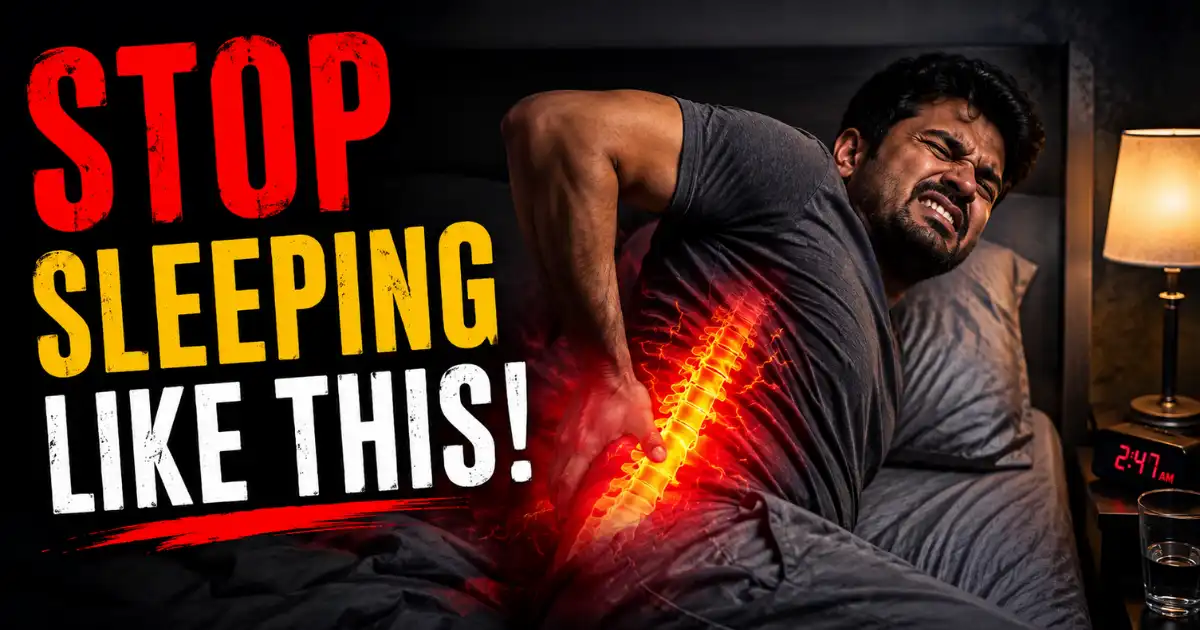
Every night your sleeping position may be worsening your slip disc pain without you realizing it.
If your lower back pain becomes unbearable at night, your sleeping position may be making your slip disc worse without you realizing it.
Last night, you probably shifted from one side to another trying to find a comfortable position. Maybe you placed a pillow under your knees. Maybe you slept sitting halfway up because lying flat felt unbearable.
And yet, the moment you woke up, the pain was still there.
What I Notice in Most Slip Disc Patients
In my physiotherapy practice, this is one of the most common frustrations patients describe after a slip disc diagnosis. Many people spend money on medicines, belts, or mattresses, but unknowingly continue sleeping in positions that keep irritating the spine throughout the night.
Pain at Night
What surprises many patients is that the wrong sleeping posture can silently increase pressure on spinal discs for hours at a time. Over weeks, this may worsen stiffness, nerve irritation, and even leg pain.
The good news is that small nighttime adjustments can sometimes make a dramatic difference in recovery.
In my clinical physiotherapy practice, many patients report severe morning stiffness due to poor sleeping posture.
Quick Summary
Main Risk: Sleeping in poor posture can increase pressure on the slipped disc.
Key Symptom: Morning stiffness, shooting leg pain, or worsening back pain after sleep.
Best Solution: Side sleeping with a pillow between the knees is often most comfortable.
Prevention Tip: Avoid stomach sleeping and prolonged twisted positions.
What Is a Slip Disc?
A slip disc, medically known as a herniated disc or prolapsed intervertebral disc, happens when the soft inner material of a spinal disc pushes outward through its outer covering.
The spine contains cushioning discs between vertebrae that absorb shock during movement. When these discs weaken because of age, poor posture, repetitive strain, or sudden lifting, they may bulge outward and irritate nearby nerves.
Despite the name “slip disc,” the disc usually does not literally slip out. Instead, it bulges or ruptures.
Clinically, many patients with slip disc complain of lower back pain radiating into the buttock or leg. Some feel burning, tingling, numbness, or weakness. In severe cases, even coughing or sneezing becomes painful.
According to the World Health Organization and spinal rehabilitation guidelines, lifestyle-related spinal disorders are rising globally because of prolonged sitting and reduced physical activity.
Why Sleeping Position Matters So Much
Most people don’t realize the spine remains under mechanical stress even during sleep.
In my clinical experience, patients who continue sleeping on their stomach or in twisted postures often wake up with increased stiffness and nerve irritation. During sleep, muscles relax and spinal alignment depends entirely on body positioning.
One common pattern observed in rehabilitation settings is that patients sleep in positions that excessively arch or rotate the lower back. This keeps pressure concentrated on already irritated discs.
Over time, this may slow healing.
The goal of sleeping posture is simple:
keep the spine in a neutral, supported position while reducing nerve compression.

Best Sleeping Position for Slip Disc
Side Sleeping With Pillow Between Knees
For most patients, this is the safest and most comfortable position.
Lie on your side and place a soft pillow between your knees. This helps align the pelvis and reduces twisting stress on the lumbar spine.
Personally, I’ve observed many patients improve faster when they consistently maintain spinal neutrality at night. This position is especially helpful for people with sciatica symptoms running into the leg.
Patients who commute long hours in Indian cities or sit at desks for extended periods often already have tight hip muscles. Side sleeping with support helps reduce overnight strain.
Sleeping on Back With Pillow Under Knees
This is another effective position.
When you place a pillow beneath the knees, the lower back slightly relaxes, reducing pressure on lumbar discs.
Many elderly patients or individuals with severe morning stiffness find this position easier than side sleeping.
A medium-firm mattress usually works best. Extremely soft mattresses may cause the pelvis to sink unevenly.
Sleeping Mistakes That Make Slip Disc Worse
Avoid This Position
Stomach sleeping is usually the worst position for slip disc patients.
It forces the neck into rotation and increases lower back arching. In real rehabilitation settings, stomach sleepers frequently report severe morning pain.
Sleeping curled tightly in a fetal posture may also aggravate symptoms in some people because of prolonged spinal flexion.
⚠️ Doctor Insight
Many patients ignore early nighttime discomfort until daily activities like bending, walking, or even standing become painful. Persistent morning stiffness should never be ignored.
Hidden Dangers of Ignoring Slip Disc Symptoms
Many people continue normal routines hoping the pain will disappear on its own.
Unfortunately, untreated disc irritation may gradually worsen.
In physiotherapy clinics, we often see patients who initially had mild back pain but later developed radiating leg pain, muscle weakness, or difficulty standing for long periods.
Ignoring symptoms can affect:
Walking endurance
Sleep quality
Work productivity
Mental health
Daily independence
For Indian office workers spending 8–10 hours on laptops, prolonged sitting combined with poor sleep posture creates a damaging cycle.
Some patients even develop fear of movement because every motion feels painful.
Causes and Risk Factors
Modern lifestyle patterns play a major role.
Long smartphone usage, work-from-home setups, poor ergonomic chairs, lack of exercise, obesity, and sudden gym injuries are increasingly common contributors.
One major issue seen in younger adults is prolonged sitting with rounded posture. Many students and IT employees remain seated for hours without spinal support.
Clinically, another overlooked factor is long-distance commuting. Continuous vibration and poor sitting posture during bike or car travel may aggravate spinal discs over time.
Heavy lifting with incorrect technique also remains a common trigger.
Smoking, stress, weak core muscles, and poor sleep quality may further delay recovery.
Warning Signs You Should Not Ignore
Many people notice their pain becomes unbearable exactly when they try to sleep.
Some people feel mild lower back stiffness after waking up. Others notice pain while bending forward or getting out of bed.
As the condition progresses, symptoms may include:
Pain radiating into the leg
Burning or tingling sensations
Numbness in foot or toes
Muscle weakness
Difficulty standing straight
Pain while coughing or sneezing
If bowel or bladder changes occur alongside severe weakness, immediate medical attention is necessary because this could indicate serious nerve compression.
Diagnosis
A proper diagnosis begins with clinical examination.
Physiotherapists and spine specialists assess posture, movement restrictions, muscle strength, reflexes, and nerve tension signs.
In many cases, MRI is considered the gold-standard imaging investigation because it clearly shows disc bulging and nerve involvement.
However, not every patient requires immediate MRI.
In real practice, many mild-to-moderate cases improve with conservative rehabilitation.
Treatment and Physiotherapy Management
Most slip disc cases improve without surgery.
Treatment focuses on reducing pain, restoring movement, and gradually strengthening the spine.
Initially, patients may require temporary activity modification, pain management, posture correction, and guided physiotherapy.
In physiotherapy rehabilitation, we commonly focus on:
Core stabilization
McKenzie-based exercises
Nerve mobility techniques
Postural correction
Hip flexibility
Gradual walking programs
One common misconception is that complete bed rest helps recovery. In reality, prolonged inactivity often worsens stiffness and muscle weakness.
Many patients improve faster when gentle movement is started early under professional guidance.
Recovery timelines vary. Mild cases may improve within weeks, while severe nerve compression can take months.
Real Patient STORY
A 34-year-old IT employee visited the clinic after experiencing severe lower back pain for nearly three months. He noticed his symptoms were worst every morning despite taking painkillers regularly.
During assessment, it became clear he was sleeping on his stomach with one leg twisted outward. He also spent nearly 10 hours daily working on a laptop.
After correcting his sleeping posture, starting guided lumbar stabilization exercises, and improving workstation ergonomics, his morning pain reduced significantly within a few weeks.
This is a very common rehabilitation pattern seen in younger urban professionals today.
Prevention Strategy
Spinal health depends heavily on daily habits.
Regular walking, weight management, posture awareness, and core strengthening play major roles in prevention.
Indian lifestyle habits such as prolonged floor sitting, slouched sofa posture, and excessive smartphone use often increase spinal stress.
Simple changes matter.
Use lumbar support while sitting. Avoid lifting heavy objects suddenly. Change posture frequently during work hours.
Sleeping on a supportive mattress and maintaining proper pillow height can also reduce long-term spinal strain.
Consistency matters more than temporary treatment.
When to See a Doctor
Medical evaluation is important if:
Pain lasts more than a few weeks
Leg weakness develops
Numbness worsens
Walking becomes difficult
Sleep is severely disturbed
Symptoms spread below the knee
Immediate emergency care is necessary if bladder or bowel symptoms appear.
Who Should Avoid Certain Exercises or Treatments?
Not every exercise suits every patient.
Individuals with severe nerve compression, spinal fractures, osteoporosis, uncontrolled diabetes, recent trauma, or advanced neurological symptoms should avoid unsupervised exercises.
High-impact workouts, aggressive twisting movements, or heavy gym lifting may worsen symptoms in some patients.
In physiotherapy practice, personalized rehabilitation plans always produce safer outcomes than copying exercises from social media.
Key Takeaways
Sleeping posture directly affects spinal disc pressure throughout the night.
Side sleeping with knee support is often the safest option.
Morning stiffness should not be ignored repeatedly.
Prolonged sitting and smartphone posture worsen spinal stress.
Most patients improve with conservative physiotherapy rehabilitation.
Early intervention usually prevents long-term complications.
Frequently Asked Questions
Can sleeping wrong worsen a slip disc?
Yes. Poor sleeping posture can increase pressure on spinal discs and aggravate nerve irritation overnight.
Is walking good for slip disc patients?
Gentle walking is usually beneficial because it improves circulation and reduces stiffness, but intensity should be guided professionally.
Which mattress is best for slip disc?
Medium-firm mattresses are generally preferred because they support spinal alignment better than extremely soft mattresses.
Can a slip disc heal naturally?
Many mild-to-moderate cases improve with physiotherapy, posture correction, and lifestyle changes.
Is surgery always necessary?
No. Most patients recover without surgery unless severe neurological symptoms develop.
Why is slip disc pain worse in the morning?
Poor sleep posture, prolonged immobility, and overnight inflammation can increase morning stiffness and pain.
Can gym exercises worsen slip disc?
Improper lifting techniques or heavy loading may aggravate symptoms, especially during acute stages.
How long does slip disc recovery take?
Recovery varies widely. Some improve within weeks, while others require several months depending on severity and lifestyle habits.
Medical Disclaimer
This article is intended for educational and public health awareness purposes only. It should not replace professional medical diagnosis, physiotherapy assessment, or individualized treatment planning. Consult a qualified healthcare professional for persistent or severe symptoms.
References
- World Health Organization – Musculoskeletal Conditions
- NIH – Herniated Disk Overview
- PubMed – Lumbar Disc Herniation and Conservative Management
- Mayo Clinic – Herniated Disk Symptoms and Treatment
- American Academy of Orthopaedic Surgeons

Dr. Shabbir Hussain, BPT
Registered Physiotherapist | Clinical Rehabilitation Specialist
Maharashtra OTPT Council Reg. No.: PR-2021/08/PT/009532
Society of Onco Physiotherapists Reg. No.: SOP/00033/LM
Dr. Shabbir Hussain, BPT, Registered Physiotherapist with over 8 years of experience in physiotherapy, kidney rehabilitation, oncological rehabilitation, and lymphedema management. He specializes in balance disorders, pain management, musculoskeletal rehabilitation, strengthening programs, and VR-based rehabilitation.