
Updated October 20, 2026 — Written by Dr. Shabbir Hussain, BPT, Registered Physiotherapist | Clinical Rehabilitation Specialist
Quick Answer
Recovery after a spinal cord injury involves more than surgery. Neuro-rehabilitation combines physiotherapy, occupational therapy, medical care and functional training to help people maximise their remaining abilities, improve mobility, manage complications and work towards greater independence. Outcomes depend on factors such as the injury’s level and severity, neurological completeness and associated complications. Some people regain significant function, but complete recovery cannot be guaranteed.
Why Is Rehabilitation Important After a Spinal Cord Injury?
A fall, road accident or sports injury can damage the spinal cord and disrupt communication between the brain and the body. Depending on the injury, a person may experience weakness, paralysis, sensory changes or difficulties controlling bladder and bowel function.
Surgery may be necessary to stabilise the spine or relieve pressure on the spinal cord. However, surgery alone cannot address every functional difficulty that follows an injury.
This is where neuro-rehabilitation becomes essential. Its purpose is to help patients make the best possible use of their remaining abilities, develop new skills and reduce the risk of secondary complications.
What Does Neuro-Rehabilitation Involve?
Rehabilitation is a structured, goal-oriented process led by an appropriate rehabilitation specialist, often a physical medicine and rehabilitation physician.
The multidisciplinary team may include physiotherapists, occupational therapists, rehabilitation nurses, psychologists and other healthcare professionals.
Treatment may focus on:
- Improving muscle strength and movement where possible.
- Developing sitting balance and safe transfer techniques.
- Practising standing or walking when appropriate.
- Learning dressing, bathing and other daily activities.
- Managing muscle stiffness, pain and positioning difficulties.
- Preventing pressure injuries and joint contractures.
- Supporting bladder and bowel management.
- Addressing emotional well-being and adapting to changes in daily life.
Not every patient will achieve the same milestones. Rehabilitation goals must reflect the person’s neurological status, medical stability and individual needs.
Can a Person Walk Again After a Spinal Cord Injury?
Walking may be possible for some people, but it cannot be predicted from the diagnosis alone. The level and severity of the injury, whether the spinal cord damage is complete or incomplete, and changes in neurological function all influence recovery.
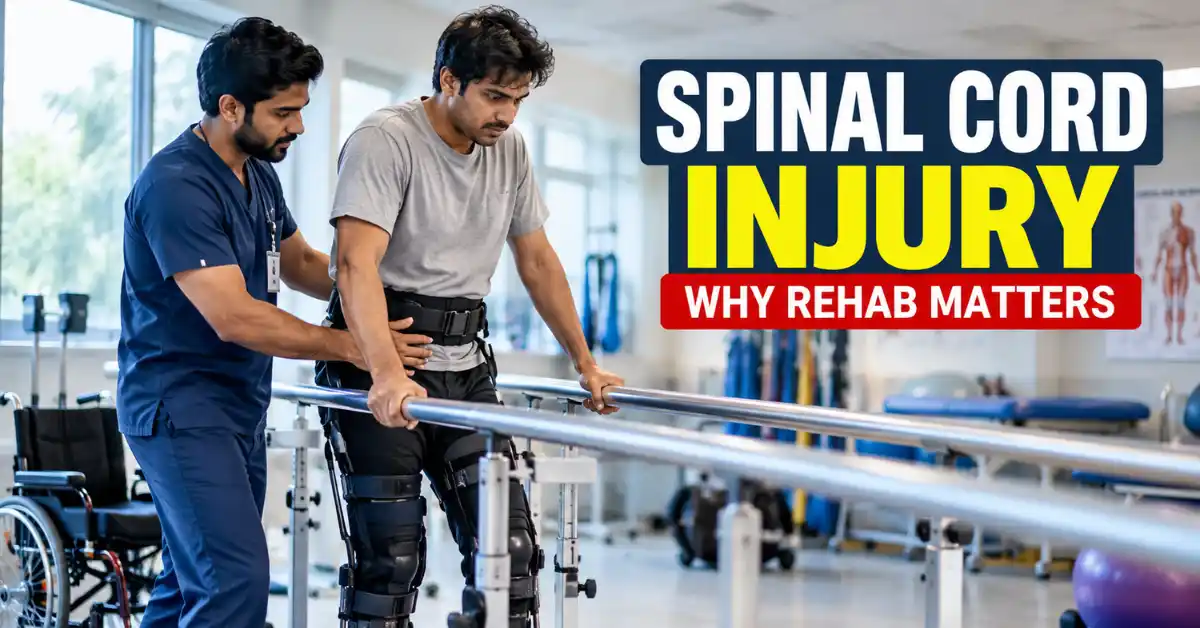
Some patients may progress from assisted sitting to supported standing and walking with supervision or assistive devices. Others may benefit more from wheelchair mobility, transfer training and strategies for independent daily living.
Progress should be measured by meaningful improvements in function and independence, not walking alone.
How Physiotherapy Can Help
Physiotherapy plays an important role in spinal cord injury rehabilitation. Depending on the patient’s condition, treatment may include therapeutic exercises, balance training, positioning, mobility practice, transfer training and supported gait training.
The physiotherapist also helps assess movement limitations, recommend appropriate assistive devices and adapt exercises as the patient’s abilities change.
Rehabilitation should begin when the treating team considers it medically safe. Patients should not attempt unsupported standing, walking or strenuous exercises without professional guidance, particularly when spinal stability remains a concern.
What Does Progress Look Like During Spinal Cord Injury Rehabilitation?
Recovery goals vary according to neurological impairment, medical stability and individual circumstances. Rehabilitation does not follow the same timetable for everyone.
| Rehabilitation goal | What it involves |
|---|---|
| Early positioning and mobility | Appropriate positioning, bed mobility and prevention of avoidable complications |
| Sitting balance | Improving trunk control and safe sitting where possible |
| Transfers | Practising safe movement between a bed, wheelchair and other surfaces |
| Daily activities | Developing skills for dressing, personal care and other routine tasks |
| Standing and walking | Supported practice when clinically appropriate |
| Long-term independence | Using assistive devices, adapting the home environment and developing self-management skills |
Important: These are examples of rehabilitation goals, not a fixed recovery sequence. Some patients may work on several goals simultaneously, while others require a different approach.
A Physiotherapist’s Perspective: Rehabilitation Must Be Individualised
From a physiotherapy perspective, spinal cord injury rehabilitation should begin with a comprehensive assessment rather than a fixed exercise programme. Every person has different rehabilitation needs depending on the level and severity of the injury, preserved motor and sensory function, associated medical complications, and pre-injury abilities.
Rehabilitation goals should be realistic, measurable, and tailored to the individual’s priorities. For one person, the immediate goal may be improving sitting balance or transferring safely from a bed to a wheelchair. For another, it may involve strengthening the available muscle function, practising daily activities, or working towards standing and walking when clinically appropriate.
Progress should be assessed through functional ability, not just muscle strength. Relevant measures include sitting and standing balance, transfer safety, wheelchair mobility, independence in daily activities, and the ability to perform tasks with less assistance. Clinicians also monitor complications such as pressure injuries, joint stiffness, pain, and changes in muscle tone.
Recovery varies considerably, and walking is not the only meaningful rehabilitation outcome. Improving self-care, mobility, safety, participation in daily life, and independence can also represent important progress. Regular reassessment helps the rehabilitation team adjust treatment as the person’s abilities and needs change.
The Road to Recovery: What Matters Most
Recovery after a spinal cord injury requires an individualised rehabilitation plan based on the level and severity of the injury, the person’s medical condition, and their functional goals. A multidisciplinary team—including rehabilitation physicians, physiotherapists, occupational therapists, nurses, and other specialists as needed—can help address mobility, daily activities, complications, and long-term care needs.
The goal of rehabilitation is not simply to help a person walk again; it is to maximise functional independence, safety, participation in daily life, and quality of life. Progress may involve improving balance, transferring safely, using a wheelchair independently, managing daily activities, or regaining standing and walking ability when appropriate.
Rehabilitation should continue and be adjusted according to clinical needs, functional progress, and regular professional reassessment. Patients and caregivers should work closely with the rehabilitation team to establish realistic goals and address complications early. Although recovery varies from person to person, a structured, multidisciplinary approach can help individuals make the most of their available abilities and work towards greater independence.
Medical Sources
- World Health Organization (WHO) — Spinal Cord Injury: Information on treatment, rehabilitation, complications and long-term management. WHO Spinal Cord Injury Fact Sheet
- National Institute of Neurological Disorders and Stroke (NINDS) — Spinal Cord Injury: Information on rehabilitation teams, physical therapy, occupational therapy and assistive devices. NINDS Spinal Cord Injury
- World Health Organization (WHO) — Rehabilitation: Overview of rehabilitation goals, multidisciplinary care and the importance of individualised treatment. WHO Rehabilitation Overview
- Original news report — The Times of India: The Road to Recovery After Spinal Cord Injury: Why Neuro-Rehabilitation Matters
Medical Disclaimer
This article is for general educational and informational purposes only. It is not a substitute for professional medical diagnosis, treatment, or individualised medical advice. Rehabilitation after spinal cord injury requires assessment by qualified healthcare professionals. Seek urgent medical care for new or worsening weakness, breathing difficulties or other sudden neurological symptoms.

Dr. Shabbir Hussain, BPT
Registered Physiotherapist | Clinical Rehabilitation Specialist
Maharashtra OTPT Council Reg. No.: PR-2021/08/PT/009532
Society of Onco Physiotherapists Reg. No.: SOP/00033/LM
Dr. Shabbir Hussain, BPT, Registered Physiotherapist with over 8 years of experience in physiotherapy, kidney rehabilitation, oncological rehabilitation, and lymphedema management. He specializes in balance disorders, pain management, musculoskeletal rehabilitation, strengthening programs, and VR-based rehabilitation.