
✓ Medically Reviewed Content
Written & Reviewed By: Dr. SHABBIR HUSSAIN (BPT)
Clinical Expertise: Physiotherapy, Musculoskeletal Rehabilitation & Spine Care
Evidence-Based Review: This article has been reviewed by a qualified physiotherapist for medical accuracy and public health awareness.
Doctor Explains: Why This Condition Often Goes Unnoticed
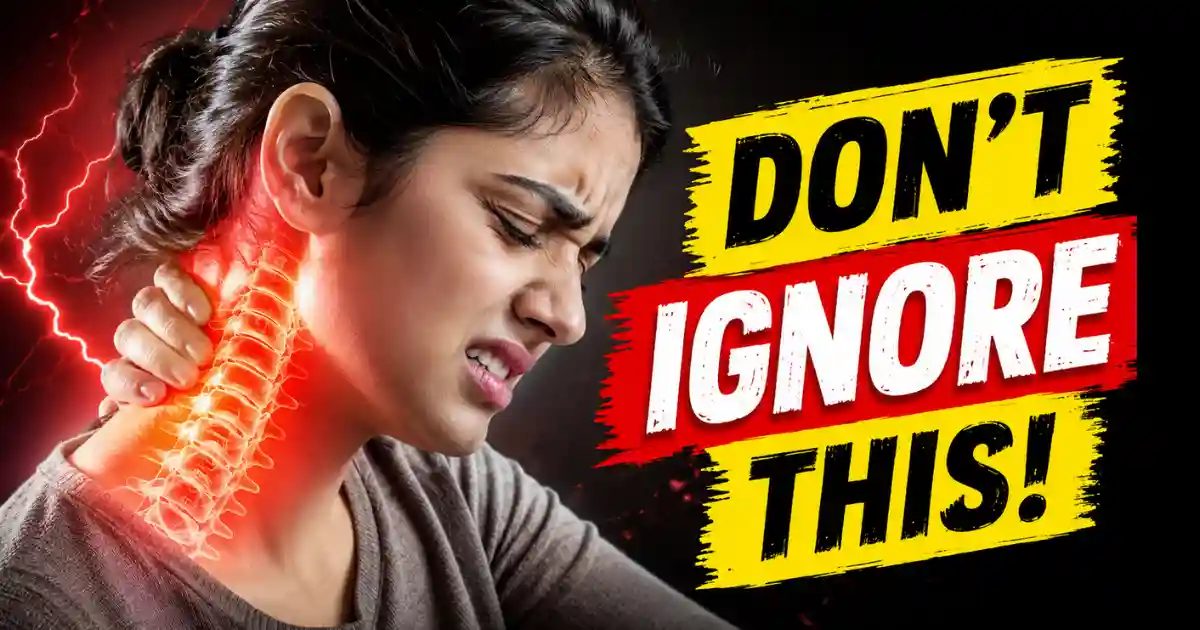
Many people assume their Neck Symptoms is simply due to sleeping in the wrong position or spending a long day at work. They massage the area, apply pain-relief gels, and continue their routine.
Weeks become months.
The stiffness returns.
The headaches become frequent.
Sometimes tingling starts traveling down the arm.
What many people don’t realize is that these may be some of the earliest warning signs of cervical spondylosis.
In my physiotherapy practice, one common pattern observed is that patients often ignore mild neck symptoms until daily activities such as driving, working on a computer, or even turning the head become uncomfortable.
The earlier the condition is identified, the easier it is to manage.
Many patients come to physiotherapy after months of ignoring arm tingling and neck stiffness. By that stage, nerve irritation is often much harder to manage.
Quick Summary
Main Risk: Progressive wear and tear in the neck can irritate nerves and affect daily activities.
Key Symptom: Persistent neck stiffness, headaches, or tingling in the arms.
Best Solution: Early physiotherapy, posture correction, and targeted exercises.
Prevention Tip: Avoid prolonged mobile phone and laptop use without breaks.
What Is Cervical Spondylosis?
Cervical spondylosis is an age-related degenerative condition affecting the cervical spine, which consists of the seven vertebrae in the neck.
Over time, the intervertebral discs gradually lose water content and elasticity. The joints and surrounding structures may undergo wear and tear. Bone spurs may also develop.
According to evidence from major medical organizations and musculoskeletal research, cervical spondylosis becomes increasingly common with age. However, modern lifestyle habits are causing symptoms to appear much earlier than previously seen.
Clinically, many patients in their 20s and 30s now present with symptoms traditionally associated with older adults.
The Hidden 5 Dangers of Ignoring Neck Symptoms
Many people focus only on neck pain.
The real concern is what may happen if the underlying problem continues progressing.
Persistent degeneration can lead to nerve irritation, reduced neck mobility, chronic headaches, shoulder pain, arm weakness, and impaired quality of life.
In severe situations, compression of the spinal cord may occur, resulting in balance issues, coordination problems, and difficulty performing everyday activities.
In my clinical experience, patients often seek treatment only after symptoms begin affecting work productivity, sleep quality, or household responsibilities.
👨⚕️ Doctor Insight
Many patients ignore neck stiffness for months because the pain comes and goes. In clinical practice, early intervention often prevents long-term complications and helps patients recover faster.
Why Are More People Developing Cervical Spondylosis?
One major reason is lifestyle change.
Modern work environments require prolonged screen exposure. Office workers frequently spend eight to ten hours in front of laptops. Students often remain bent over books and smartphones for extended periods.
Indian urban lifestyles have further contributed to the problem.
Long commuting hours, sedentary desk jobs, smartphone addiction, inadequate exercise, and poor workstation ergonomics place continuous stress on the cervical spine.
Personally, I’ve observed that many patients spend more time looking downward at mobile devices than they realize.
This repetitive posture significantly increases strain on the neck structures.
Early Warning Signs of Cervical Spondylosis
The body often provides subtle signals before significant problems develop.
A feeling of neck stiffness in the morning is one of the earliest signs.
Some individuals notice difficulty turning their head while driving.
Others experience recurring discomfort after long hours of laptop work.
Frequent headaches originating from the back of the head may also indicate cervical involvement.
A dull aching sensation between the neck and shoulders is commonly reported.
Many patients describe a sensation of heaviness around the upper trapezius region.
Another warning sign is tingling, numbness, or a pins-and-needles sensation extending into the shoulder, arm, or fingers.
Occasional clicking or grinding sounds during neck movement may occur as degeneration progresses.
Do not ignore symptoms such as arm weakness, loss of hand coordination, balance problems, or persistent numbness. These symptoms require medical evaluation.
How Is Cervical Spondylosis Diagnosed?
Diagnosis begins with a detailed clinical assessment.
A physiotherapist or physician evaluates posture, movement patterns, muscle strength, flexibility, reflexes, and neurological function.
In real rehabilitation settings, movement analysis often reveals significant postural abnormalities contributing to symptoms.
Imaging is not always necessary initially.
However, X-rays, MRI scans or CT scans may be recommended if nerve compression, severe symptoms, trauma, or progressive neurological deficits are suspected.
MRI remains the preferred imaging method for assessing disc degeneration and nerve involvement.
Real Patient Story
A 34-year-old IT employee visited the clinic after experiencing neck stiffness for nearly eight months.
Initially, he ignored the symptoms because they appeared only after long working days.
Gradually, headaches became frequent. He also noticed tingling in his right hand during prolonged computer use.
Assessment revealed poor sitting posture, reduced neck mobility, weakened deep neck flexor muscles, and prolonged forward-head posture.
After six weeks of structured physiotherapy, ergonomic modifications, strengthening exercises, and activity adjustments, his symptoms improved significantly.
This scenario reflects a pattern commonly seen among young professionals today.
Treatment and Physiotherapy Management
The good news is that most cases respond well to conservative treatment when addressed early.
Physiotherapy plays a central role in recovery.
Treatment typically focuses on reducing pain, restoring mobility, improving posture, strengthening supporting muscles, and preventing recurrence.
Manual therapy techniques may help improve joint mobility and reduce muscle tension.
Targeted exercises strengthen deep neck stabilizers and scapular muscles.
Postural retraining helps reduce excessive stress on cervical structures.
Many patients improve faster when exercise therapy is combined with ergonomic correction.
Lifestyle modifications are equally important.
Reducing continuous screen time, taking movement breaks, improving sleep posture, and maintaining physical activity levels contribute substantially to recovery.
Recovery timelines vary depending on severity.
Mild cases may improve within several weeks, whereas chronic conditions often require several months of consistent rehabilitation.
📌 Key Takeaways
- Early neck stiffness should never be ignored.
- Frequent headaches can sometimes originate from the neck.
- Poor smartphone posture increases cervical spine stress.
- Physiotherapy is highly effective when started early.
- Regular movement breaks reduce neck strain.
- Most patients improve without surgery.
Myth vs Fact
Many people believe cervical spondylosis means permanent disability.
That is a myth.
Most individuals can continue leading active and productive lives with proper management.
Another misconception is that complete bed rest helps recovery.
In reality, prolonged inactivity often worsens stiffness and muscle weakness.
Appropriate movement is generally beneficial.
Prevention Strategy
Prevention starts with awareness.
Maintaining proper sitting posture can dramatically reduce neck stress.
Laptop screens should be positioned near eye level whenever possible.
Regular movement breaks every 30 to 45 minutes help prevent sustained loading of cervical structures.
Physical activity should become a daily habit rather than an occasional activity.
Neck strengthening exercises, shoulder mobility work, and overall fitness training contribute to long-term spinal health.
For Indian office workers and students, reducing excessive smartphone use may be one of the most effective preventive measures.
Simple changes practiced consistently often produce meaningful results.
When Should You See a Doctor?
Seek professional evaluation if neck pain persists beyond a few weeks, repeatedly returns, or progressively worsens.
Immediate medical attention is recommended if symptoms include arm weakness, persistent numbness, balance problems, difficulty walking, bowel or bladder changes, or severe neurological symptoms.
Early diagnosis often prevents complications.
Who Should Avoid Certain Exercises or Treatments?
Individuals with recent trauma, spinal fractures, severe osteoporosis, active infections, inflammatory spinal diseases, suspected spinal cord compression, or significant neurological deficits should avoid unsupervised neck exercises.
Aggressive neck manipulation is not suitable for everyone.
A proper clinical assessment should always guide treatment decisions.
Frequently Asked Questions (FAQs)
Can cervical spondylosis occur in young adults?
Yes. Poor posture, prolonged screen use, and sedentary lifestyles are causing symptoms to appear earlier than before.
Is cervical spondylosis curable?
Degenerative changes cannot be completely reversed, but symptoms can often be effectively managed.
Can physiotherapy help cervical spondylosis?
Yes. Physiotherapy is one of the most effective conservative treatment options.
Does mobile phone use worsen cervical spondylosis?
Excessive smartphone use can increase neck strain and aggravate symptoms.
Can cervical spondylosis cause headaches?
Yes. Cervicogenic headaches commonly occur due to neck dysfunction.
Is surgery always necessary?
No. Most cases improve with conservative treatment and rehabilitation.
Which sleeping position is best?
Sleeping on the back or side with proper neck support is generally recommended.
🔍 Fact Checked
This article is based on current evidence from:
- World Health Organization (WHO)
- National Institutes of Health (NIH)
- PubMed Indexed Research
- International Physiotherapy Guidelines
REFERENCES
World Health Organization. Musculoskeletal Conditions. https://www.who.int/news-room/fact-sheets/detail/musculoskeletal-conditions
National Institute of Neurological Disorders and Stroke. Cervical Spondylosis Information Page. https://www.who.int/news-room/fact-sheets/detail/musculoskeletal-conditions
National Institutes of Health. MedlinePlus: Cervical Spondylosis. https://medlineplus.gov/ency/imagepages/9852.htm
Binder AI. Cervical Spondylosis and Neck Pain. BMJ. https://www.bmj.com/content/334/7592/527.abstract
PubMed Database. Cervical Spondylosis Clinical Management Literature. https://pmc.ncbi.nlm.nih.gov/articles/PMC9609507/
⚠️ Medical Disclaimer
This content is intended for educational and public health awareness purposes only. It should not be used as a substitute for professional medical advice, diagnosis, or treatment. Always consult a qualified healthcare professional regarding any health concerns.

Dr. Shabbir Hussain, BPT
Licensed Physiotherapist | Clinical Rehabilitation Specialist
Maharashtra OTPT Council Reg. No.: PR-2021/08/PT/009532
Society of Onco Physiotherapists Reg. No.: SOP/00033/LM
Dr. Shabbir Hussain, BPT, Registered Physiotherapist with over 8 years of experience in physiotherapy, kidney rehabilitation, oncological rehabilitation, and lymphedema management. He specializes in balance disorders, pain management, musculoskeletal rehabilitation, strengthening programs, and VR-based rehabilitation.