
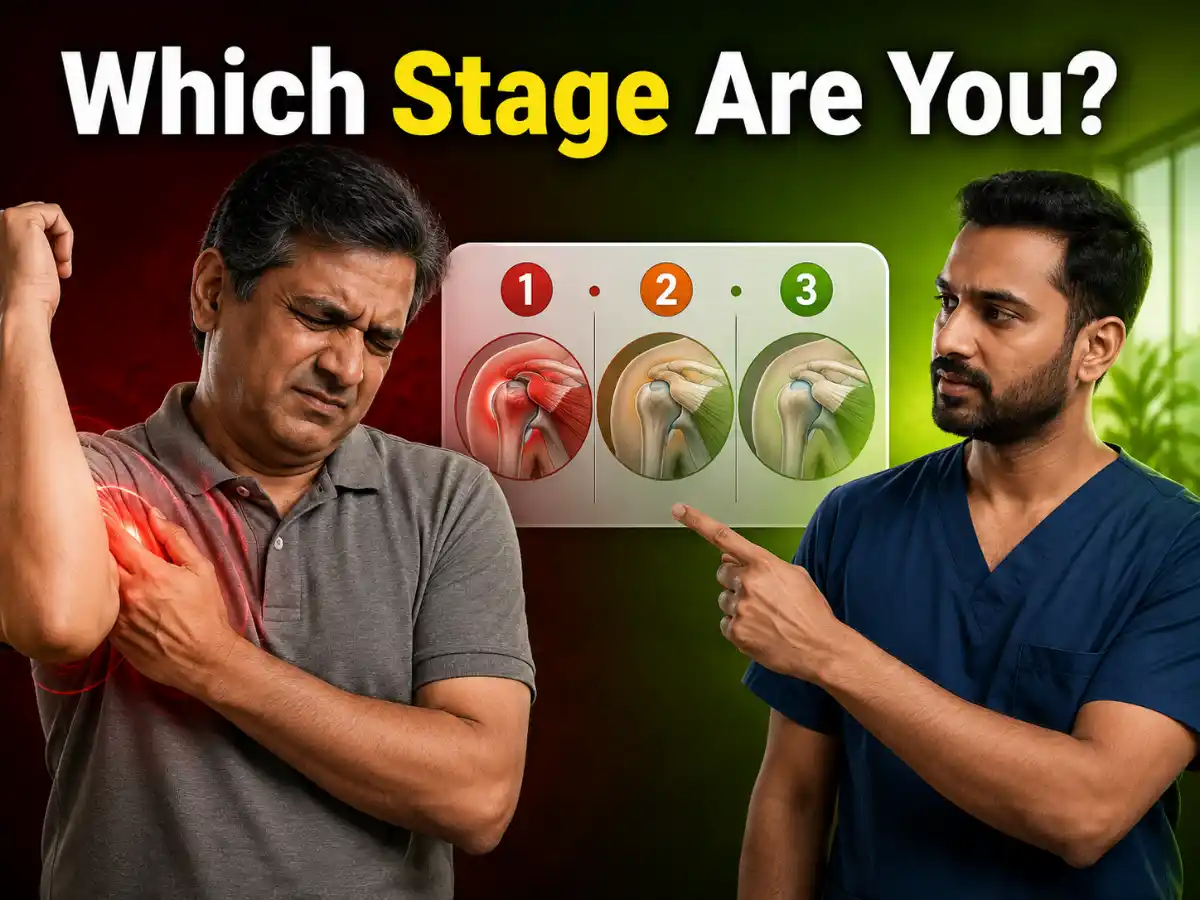
Published: July 25, 2026
Last Updated: July 25, 2026
Evidence-Based Review: Reviewed using current clinical guidelines, peer-reviewed literature and physiotherapy best practices.
Estimated Reading Time: 12 Minutes
Frozen Shoulder Stage Checker (Calculator): Find Your Stage & Learn the Right Recovery Plan
Introduction
You wake up one morning and notice something unusual—you can’t reach the top shelf as easily as before. A few weeks later, wearing a shirt becomes painful. Soon, even sleeping on one side feels impossible.
Many people assume this is simply “age-related shoulder pain” and wait for it to improve on its own. Unfortunately, delaying treatment is one of the biggest mistakes I see in physiotherapy practice. By the time some patients visit my clinic, their shoulder has already become significantly stiffer, making rehabilitation longer and more challenging.
In my clinical experience as a physiotherapist, frozen shoulder rarely develops overnight. It progresses gradually through different stages, each requiring a slightly different treatment approach. Understanding which stage you may be in can help you seek appropriate care earlier and avoid unnecessary disability.
Our Frozen Shoulder Stage Checker Calculator is designed as an educational tool to help estimate the stage of your symptoms. While it cannot replace a physical examination, it can guide you toward understanding your condition and encourage timely medical evaluation.
⚡ Quick Summary
Main Risk: Progressive shoulder stiffness leading to loss of movement.
Key Symptom: Pain while reaching overhead, behind the back or during sleep.
Best Solution: Early diagnosis, stage-specific physiotherapy and regular shoulder mobility exercises.
Prevention Tip: Keep the shoulder moving after injury or surgery and manage conditions like diabetes promptly.
💡 Did You Know?
People with diabetes are up to 4 times more likely to develop frozen shoulder than those without diabetes. Poor blood sugar control can increase inflammation and stiffness around the shoulder joint, making early diagnosis and physiotherapy especially important.
What Is a Frozen Shoulder Stage Checker?
A Frozen Shoulder Stage Checker is an educational calculator that estimates which phase of adhesive capsulitis, commonly known as frozen shoulder, your symptoms most closely resemble.
Rather than providing a medical diagnosis, it evaluates common features such as:
- Pain intensity
- Shoulder stiffness
- Difficulty lifting the arm
- Pain during sleep
- Duration of symptoms
- Functional limitations
Based on your answers, the calculator estimates whether your symptoms are more consistent with:
- Stage 1 – Freezing Stage
- Stage 2 – Frozen Stage
- Stage 3 – Thawing Stage
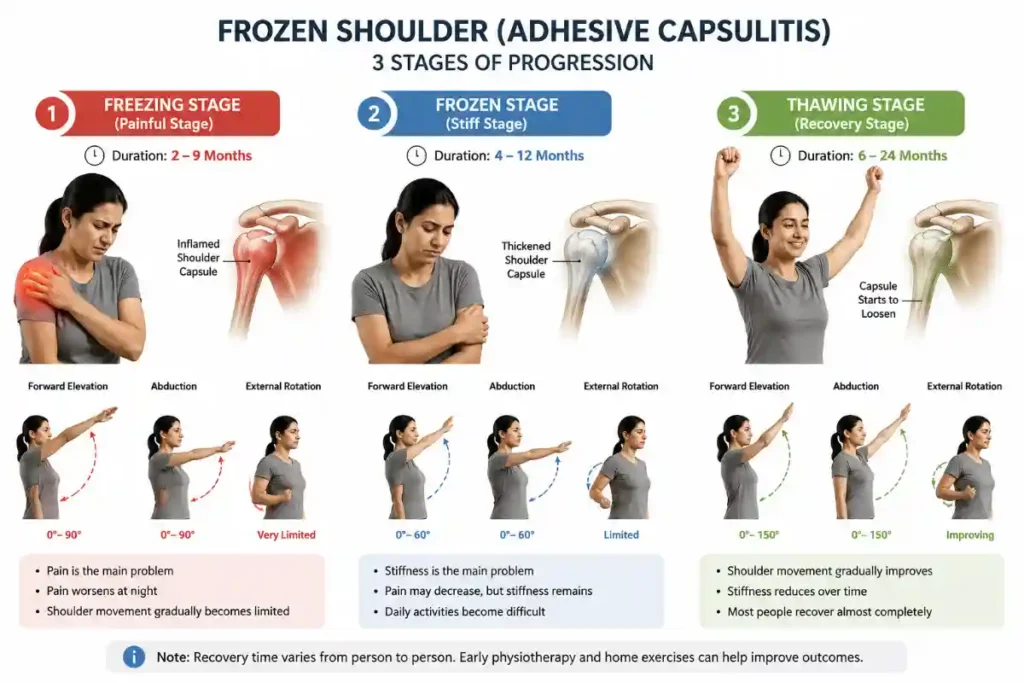
This information can help you understand why your shoulder behaves differently over time and why treatment recommendations change as the condition progresses.
According to guidance from major orthopedic and rehabilitation organizations, frozen shoulder is characterized by gradually increasing pain followed by progressive restriction of shoulder movement, often without a major injury.
🩺 Frozen Shoulder Stage Checker
1. Shoulder Pain
2. Shoulder Stiffness
3. Can you lift your arm overhead?
📖 Want to Learn More About Shoulder Pain?
Your calculator result is only an educational estimate. To better understand your symptoms, explore our evidence-based guide covering the 7 warning signs of shoulder pain, frozen shoulder symptoms, common causes, diagnosis, physiotherapy treatment, recovery timeline, and when you should see a doctor.
💡 Tip: Early diagnosis and timely physiotherapy can help improve shoulder mobility and reduce long-term stiffness.
Why Frozen Shoulder Is Becoming More Common
Modern lifestyles have unintentionally created the perfect environment for shoulder problems.
Across India, many professionals spend eight to ten hours daily using laptops. Students often study for prolonged periods with poor posture. Work-from-home culture has also increased sedentary behavior, with many people working from sofas or beds instead of ergonomically designed workstations.
Although poor posture does not directly cause frozen shoulder, it may contribute to shoulder dysfunction, muscle imbalance, and delayed recognition of early symptoms.
Another growing concern is the increasing prevalence of diabetes, thyroid disorders, and obesity—conditions strongly associated with adhesive capsulitis.
Long daily commutes, reduced physical activity, and prolonged smartphone use further limit natural shoulder movement, making stiffness more noticeable once symptoms begin.
In real rehabilitation settings, I often observe that patients who remain physically active generally maintain better shoulder mobility than those with highly sedentary routines.
Hidden Dangers Most People Don’t Realize
Frozen shoulder affects much more than shoulder movement.
As stiffness progresses, routine activities become frustrating.
Many patients struggle with:
- Dressing independently
- Wearing a seat belt
- Washing hair
- Reaching overhead cupboards
- Sleeping comfortably
- Carrying shopping bags
- Driving for long periods
Ignoring symptoms may also lead to muscle weakness because patients instinctively avoid moving the painful shoulder.
🔄 Before vs After Physiotherapy
Many people delay treatment hoping the pain will disappear on its own. The comparison below shows how early physiotherapy can positively influence recovery and daily life.
| ❌ Without Treatment | ✅ With Physiotherapy |
|---|---|
| Increasing shoulder pain | Reduced pain through stage-specific rehabilitation |
| Progressive shoulder stiffness | Improved shoulder mobility and flexibility |
| Difficulty sleeping because of pain | More comfortable sleep as pain decreases |
| Trouble dressing, driving and reaching overhead | Greater independence in daily activities |
| Weakness from avoiding shoulder movement | Improved strength with guided exercises |
| Longer recovery due to delayed treatment | Earlier recovery when treatment starts promptly |
Starting physiotherapy during the early stages of frozen shoulder often helps preserve shoulder movement, reduce pain, and improve recovery compared with waiting until stiffness becomes severe.
Common Mistakes People Make
One of the reasons frozen shoulder becomes difficult to treat is not the condition itself—but the decisions people make during its early stages.
In my clinical experience, these mistakes are extremely common:
Many people wait several months hoping the pain will disappear naturally. While some cases eventually improve, delayed rehabilitation often prolongs recovery.
Others rely entirely on painkillers without addressing the underlying stiffness. Medication may temporarily reduce pain, but it does not restore lost shoulder mobility.
Social media has also increased self-treatment. Patients frequently follow random exercise videos that are not appropriate for their stage of frozen shoulder. Aggressive stretching during highly painful phases may increase discomfort instead of helping recovery.
Recent Research Highlights
Recent clinical research has improved our understanding of adhesive capsulitis.
Studies suggest that frozen shoulder affects approximately 2–5% of the general population, with a substantially higher prevalence among individuals with diabetes.
Emerging evidence indicates that inflammatory changes occur early in the disease, followed by fibrosis and tightening of the joint capsule. This explains why pain is often severe during the early stage, while stiffness becomes the dominant problem later.
Several systematic reviews have shown that structured physiotherapy, combined with appropriate education and home exercise programs, can improve pain and function for many patients.
Early Warning Signs
Frozen shoulder often begins subtly before significant stiffness develops.
Early symptoms may include intermittent shoulder pain, especially at night or when reaching overhead. Many patients notice discomfort while wearing clothes, fastening undergarments, or reaching behind the back.
As the condition progresses, movements become increasingly restricted. Turning the steering wheel, placing objects on high shelves, or washing hair may become difficult.
During advanced stages, stiffness becomes the dominant complaint. Although pain may gradually reduce, the shoulder remains remarkably difficult to move.
Treatment & Physiotherapy Management
One of the most common questions I hear from patients is:
“Doctor, can frozen shoulder be cured?”
My answer is usually reassuring: Yes, most people recover significantly with the right treatment, but recovery takes patience and stage-specific rehabilitation.
Many patients expect complete recovery within two or three weeks. Unfortunately, frozen shoulder behaves differently from a simple muscle strain. Recovery often takes several months, and in some cases more than a year, depending on when treatment begins and the severity of stiffness.
In my clinical experience, patients who begin physiotherapy during the early stages generally regain shoulder function faster than those who wait until movement becomes severely restricted.
1. Pain Management
The first goal is reducing pain so the shoulder can move more comfortably.
Depending on individual needs, your healthcare provider may recommend:
- Activity modification
- Cold or heat therapy
- Prescription or over-the-counter pain medication
- Corticosteroid injection (in selected patients)
- Gentle movement rather than complete rest
Patients often ask whether they should stop using the shoulder completely. The answer is usually no. Complete immobilization may worsen stiffness.
2. Stage-Specific Physiotherapy
Physiotherapy is considered one of the most important components of frozen shoulder management.
Treatment changes depending on the stage.
During the Freezing Stage
The shoulder is painful and inflamed.
The focus is on:
- Pain reduction
- Gentle mobility exercises
- Patient education
- Maintaining available movement
- Avoiding aggressive stretching
During the Frozen Stage
Pain usually decreases, but stiffness becomes the major problem.
Treatment includes:
- Progressive stretching
- Joint mobilization
- Shoulder capsule mobility exercises
- Scapular strengthening
- Functional movement retraining
During the Thawing Stage
Movement gradually returns.
The rehabilitation program shifts toward:
- Restoring full range of motion
- Rotator cuff strengthening
- Functional strengthening
- Postural correction
- Return to sports and work activities
3. Therapeutic Exercises
Exercises should always match the stage of recovery.
Common physiotherapy exercises include:
- Pendulum exercise
- Finger wall climbing
- Towel stretch
- Cross-body stretch
- External rotation stretch
- Shoulder blade retraction
- Assisted overhead elevation
- Isometric strengthening
In my clinical practice, consistency matters far more than intensity.
Patients who perform gentle daily exercises usually progress better than those performing aggressive stretching only once a week.
Myth vs Fact
| Myth | Fact |
|---|---|
| Frozen shoulder only affects elderly people. | It commonly affects adults between 40–60 years. |
| Rest is the best treatment. | Prolonged rest may worsen stiffness. |
| Pain always means more damage. | Pain often reflects inflammation and stiffness rather than ongoing injury. |
| Surgery is always required. | Most patients improve with conservative treatment and physiotherapy. |
| Stretching harder speeds recovery. | Overstretching may aggravate symptoms, especially during the painful stage. |
| Frozen shoulder and rotator cuff injury are the same. | They are different conditions requiring different treatment strategies. |
Real Patient Story
A 48-year-old IT professional visited my clinic after experiencing shoulder pain for nearly six months.
Initially, he noticed mild discomfort while reaching for files placed on high shelves. He assumed poor sleeping posture was responsible and ignored the pain.
Over time, lifting his laptop bag became difficult.
Soon he was unable to tuck in his shirt or fasten his seat belt comfortably.
When he finally sought physiotherapy, shoulder movement had reduced significantly.
Assessment revealed classical adhesive capsulitis with marked restriction in external rotation.
We started stage-specific rehabilitation including pain education, gentle mobilization, progressive stretching, strengthening, and a structured home exercise program.
After approximately four months of consistent therapy, he regained most daily activities and returned comfortably to work.
Expert Clinical Insights
In my clinical experience…
One surprising observation is that many patients fear movement more than the condition itself.
Because shoulder pain becomes severe during everyday activities, they begin protecting the arm excessively.
Unfortunately, avoiding movement often contributes to increasing stiffness.
Conclusion
Frozen shoulder can feel overwhelming, especially when simple daily activities suddenly become painful.
However, the good news is that most people improve with appropriate treatment, patience, and structured rehabilitation.
If your shoulder has been becoming progressively stiffer or more painful, don’t ignore it or assume it is simply part of aging.
Our Frozen Shoulder Stage Checker Calculator can help you understand where your symptoms may fit in the recovery journey, but it should be viewed as an educational guide rather than a diagnosis.
As a physiotherapist, I have seen many patients regain independence after following a personalized rehabilitation plan. The earlier treatment begins, the greater the opportunity to preserve movement and reduce long-term disability.
✅ Key Takeaways
- Frozen shoulder develops gradually through freezing, frozen and thawing stages.
- Early physiotherapy often leads to faster recovery and better shoulder mobility.
- Avoid complete rest or aggressive stretching without professional guidance.
- People with diabetes have a higher risk of developing frozen shoulder.
- Daily home exercises and posture correction are essential for long-term improvement.
- The Frozen Shoulder Stage Checker is an educational tool and does not replace medical diagnosis.
Frequently Asked Questions
1. Can the Frozen Shoulder Stage Checker diagnose my condition?
No. It is an educational calculator that estimates the likely stage based on your symptoms. A healthcare professional must confirm the diagnosis.
2. How long does frozen shoulder usually last?
Recovery varies, but many people improve over 12–24 months with appropriate treatment and physiotherapy.
3. Is frozen shoulder permanent?
Most patients regain substantial shoulder function. Some may have mild residual stiffness, but permanent severe disability is uncommon with proper management.
4. Is physiotherapy necessary?
For many patients, physiotherapy plays a central role in improving pain, restoring movement, and returning to daily activities.
5. Can diabetes cause frozen shoulder?
Diabetes is one of the strongest known risk factors. People with diabetes are more likely to develop adhesive capsulitis than the general population.
⚠️ Medical Disclaimer
This article and the Frozen Shoulder Stage Checker Calculator are intended for educational and informational purposes only. They are not designed to diagnose, treat, cure, or prevent any medical condition.
Individual symptoms vary, and an accurate diagnosis requires assessment by a qualified healthcare professional. If you have severe pain, recent trauma, fever, progressive weakness, numbness, or any concerning symptoms, seek prompt medical evaluation.
Always consult your physician or licensed physiotherapist before beginning any exercise or rehabilitation program.
References
Use only high-authority, evidence-based sources.
- American Academy of Orthopaedic Surgeons. (2025). Frozen Shoulder (Adhesive Capsulitis). https://orthoinfo.aaos.org/en/diseases–conditions/frozen-shoulder/
- National Institute of Arthritis and Musculoskeletal and Skin Diseases (NIAMS). (2024). Frozen Shoulder. https://www.niams.nih.gov/
- National Institutes of Health (NIH). MedlinePlus: Frozen Shoulder. https://medlineplus.gov/
- World Health Organization. (2022). Rehabilitation 2030 Initiative. https://www.who.int/
- Kelley, M. J., et al. (2013). Clinical practice guidelines for adhesive capsulitis. Journal of Orthopaedic & Sports Physical Therapy, 43(5), A1–A31. https://www.jospt.org/
- Challoumas, D., et al. (2020). Comparison of treatments for frozen shoulder: A systematic review and meta-analysis. JAMA Network Open. https://jamanetwork.com/

Dr. Shabbir Hussain, BPT
Licensed Physiotherapist | Clinical Rehabilitation Specialist
Maharashtra OTPT Council Reg. No.: PR-2021/08/PT/009532
Society of Onco Physiotherapists Reg. No.: SOP/00033/LM
Dr. Shabbir Hussain, BPT, Registered Physiotherapist with over 8 years of experience in physiotherapy, kidney rehabilitation, oncological rehabilitation, and lymphedema management. He specializes in balance disorders, pain management, musculoskeletal rehabilitation, strengthening programs, and VR-based rehabilitation.