

- Published: July 24, 2026
- Last Updated: September 13, 2026
- Medically reviewed by Dr. Shabbir Hussain, BPT, Licensed Physiotherapist & Clinical Rehabilitation Specialist
- Estimated Reading Time: 12 Minutes
Why Pain During Sex Happens
Many women silently tolerate pain during sex, believing it is “normal,” temporary, or simply something they must live with. Unfortunately, this is one of the biggest misconceptions I encounter while educating patients about pelvic health. Persistent pain during intimacy is not considered a normal part of sexual activity, and ignoring it can delay the diagnosis of treatable medical conditions.
In my clinical experience as a physiotherapist, I’ve met women who waited months—or even years—before discussing painful intercourse with a healthcare professional. Some feared embarrassment, while others assumed stress or aging was to blame. By the time they sought help, the pain had started affecting their relationships, confidence, emotional well-being, and even everyday activities like prolonged sitting or exercising.
The encouraging news is that many causes of pain during sex are identifiable and treatable. Whether the discomfort stems from vaginal dryness, pelvic floor muscle tension, infection, endometriosis, childbirth-related changes, or another medical condition, early assessment often leads to better outcomes. Understanding what your body is trying to tell you is the first step toward recovery.
⚡ Quick Summary
| Main Risk | Untreated pelvic pain, relationship stress, reduced quality of life and delayed diagnosis of underlying conditions. |
| Key Symptom | Pain, burning, or deep discomfort during or after sexual intercourse. |
| Best Solution | Early medical evaluation combined with appropriate treatment and pelvic floor physiotherapy when indicated. |
| Prevention Tip | Don’t ignore recurring pain. Address infections, dryness, pelvic floor dysfunction, and lifestyle factors early. |
💡 Did You Know?
Many women wait months—or even years before seeking help for pain during sex because they assume it’s normal. In reality, persistent pain during intercourse is not normal. Early medical evaluation can identify treatable causes and help prevent chronic pelvic pain, relationship stress, and reduced quality of life.
What Is Pain During Sex?
Pain during sex, medically known as dyspareunia, refers to persistent or recurrent pain that occurs before, during, or after sexual intercourse. The discomfort may be felt at the vaginal opening, deep inside the pelvis, or in surrounding muscles and tissues. While the condition is more commonly reported by women, men can also experience painful sexual intercourse due to various medical conditions.
The pain can vary considerably from one person to another. Some describe a burning or stinging sensation, while others experience sharp, deep, aching, or cramping pain. For some women, discomfort occurs only during penetration, whereas others continue to experience pelvic pain long after intercourse has ended.
According to international medical organizations, including the World Health Organization (WHO) and the U.S. National Institutes of Health (NIH), persistent pain during sex deserves proper medical evaluation because it may signal infections, hormonal changes, pelvic floor dysfunction, gynecological disorders, or chronic pain conditions.
From a rehabilitation perspective, the pelvic floor muscles play a much larger role than many people realize. These muscles support the bladder, uterus, and bowel while also helping coordinate comfortable sexual function. When they become excessively tight, weak, painful, or uncoordinated, intercourse may become uncomfortable despite otherwise normal medical tests.
One common pattern observed in physiotherapy practice is that patients often focus only on the pain itself rather than the underlying muscular, neurological, or psychological factors contributing to it. Treating the root cause—not simply masking symptoms—is usually the key to long-term improvement.
Doctor Explains
What Most People Misunderstand About Pain During Sex
One of the biggest myths I hear from patients is, “Pain is just part of being sexually active.” In reality, ongoing pain during intercourse is a symptom—not a normal experience.
Clinically, many patients initially blame themselves. They assume they are overly sensitive, anxious, or simply “not relaxed enough.” While emotional stress can certainly influence pelvic muscle tension, it is rarely the only explanation.
Personally, I have seen many patients whose pain was linked to treatable conditions such as pelvic floor muscle overactivity, scar tissue following childbirth, endometriosis, hormonal changes after menopause, or chronic pelvic pain syndromes. Once the correct diagnosis was made and targeted rehabilitation began, many experienced significant improvement in both comfort and confidence.
Why This Problem Is Becoming More Common
Today’s urban lifestyle often involves sitting for long hours at a computer, working remotely, commuting in traffic, and spending much of the day using smartphones. Prolonged sitting can increase stiffness around the hips, lower back, and pelvic floor muscles. Over time, these muscles may become less flexible and more prone to tension, which can contribute to pelvic discomfort in some individuals.
Work-related stress is another important factor. Many Indian professionals juggle demanding careers, long working hours, family responsibilities, and inadequate sleep. Chronic stress activates the body’s protective muscle response, and the pelvic floor is no exception. In real rehabilitation settings, I frequently observe that patients with persistent pelvic pain also report elevated stress levels, fatigue, or anxiety.
Among students and young adults, sedentary study habits, reduced physical activity, irregular sleep schedules, and prolonged screen time may indirectly contribute to poor posture, reduced core stability, and increased muscular tightness. While these factors alone do not cause painful intercourse, they can influence pelvic health when combined with medical conditions or hormonal changes.
In addition, greater public awareness has encouraged more women to speak openly about symptoms that were once considered too embarrassing to discuss. This is a positive change because early conversations often lead to earlier diagnosis and more effective treatment.
🩺 Symptom Checker
Do You Have These Symptoms?
- ☐ Burning during penetration
- ☐ Deep pelvic pain
- ☐ Pain after intercourse
- ☐ Urinary urgency
- ☐ Constipation
- ☐ Pain during gynecological exam
✔ If you checked two or more symptoms, consult a qualified healthcare professional for evaluation.
Hidden Dangers Most People Don’t Realize
Pain during sex is often dismissed as a temporary inconvenience, but recurring pain can affect far more than intimate relationships. Left untreated, it may become a chronic pain condition that influences physical health, emotional well-being, and day-to-day functioning.
In my clinical experience, patients who delay seeking help often report that the pain gradually extends beyond intimacy. Some begin experiencing discomfort while sitting for long periods, exercising, cycling, using the toilet, or even during routine gynecological examinations.
Another overlooked consequence is reduced physical activity. Chronic pelvic pain can discourage women from walking, exercising, or participating in recreational activities, ultimately affecting cardiovascular health, muscle strength, and overall quality of life.
Common Mistakes People Make
One pattern I frequently observe in physiotherapy practice is that many patients unintentionally delay their recovery by making decisions based on myths rather than evidence.
The first mistake is waiting too long before seeking medical advice. Because discussing sexual pain can feel embarrassing, many women tolerate symptoms for months or even years. Early diagnosis often makes treatment simpler and more effective.
Another common mistake is self-medicating without identifying the underlying cause. Painkillers may temporarily reduce discomfort, but they cannot treat conditions such as endometriosis, pelvic inflammatory disease, pelvic floor muscle dysfunction, vaginal infections, or hormonal changes.
Recent Research Highlights
Research over the past decade has significantly improved our understanding of painful sexual intercourse, revealing that it is much more common—and more treatable—than previously believed.
Large population studies estimate that approximately 10–20% of women experience persistent pain during intercourse at some point in their lives, although prevalence varies depending on age, underlying health conditions, and research methods. Many experts believe the true number may be even higher because embarrassment often prevents women from discussing symptoms with healthcare providers.
Causes and Risk Factors
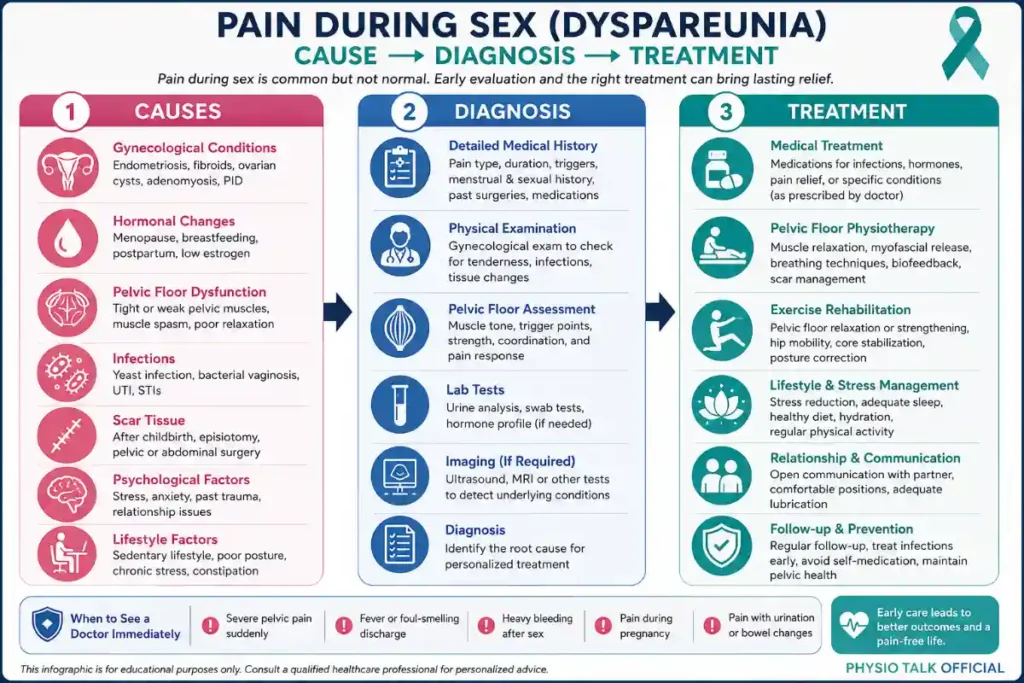
Pain during sex rarely has a single cause. More often, it results from a combination of physical, hormonal, muscular, neurological, and psychological factors.
One of the most common contributors is vaginal dryness, which may occur after menopause, during breastfeeding, after childbirth, or as a side effect of certain medications. Reduced lubrication increases friction and can cause burning or tearing sensations during intercourse.
Gynecological conditions such as endometriosis, adenomyosis, pelvic inflammatory disease, uterine fibroids, and ovarian cysts may produce deep pelvic pain during penetration. These conditions often require evaluation by a gynecologist.
Pelvic floor muscle dysfunction is another important yet underrecognized cause. The pelvic floor muscles may become excessively tight after childbirth, pelvic surgery, chronic constipation, trauma, or prolonged stress. Tight muscles restrict normal movement and can make penetration uncomfortable.
Previous surgeries—including cesarean section, hysterectomy, or pelvic reconstructive procedures—may leave scar tissue that affects tissue mobility and contributes to pain.
Certain infections, including yeast infections, bacterial vaginosis, and sexually transmitted infections, may produce inflammation that makes intercourse painful until the infection is treated.
Early Warning Signs
Recognizing symptoms early allows treatment to begin before pain becomes chronic.
Some women initially notice only mild discomfort during penetration. Others describe a burning sensation that appears occasionally and gradually becomes more frequent.
As the condition progresses, pain may become sharper, deeper, or continue even after intercourse has ended. Some women experience aching in the lower abdomen, pelvis, hips, or lower back.
Pelvic floor muscle dysfunction may also produce symptoms unrelated to sexual activity, including constipation, urinary urgency, painful urination without infection, difficulty emptying the bladder, or persistent pelvic heaviness.
Relationship avoidance due to fear of pain is another important warning sign that deserves attention, even if physical symptoms appear relatively mild.
Diagnosis
Accurate diagnosis begins with listening carefully to the patient’s story. In my experience, understanding where the pain occurs, when it started, what triggers it, and whether other symptoms are present often provides valuable clues before any examination takes place.
A gynecological examination may be recommended to identify infections, tissue changes, inflammation, endometriosis, vulvar disorders, or structural abnormalities.
From a physiotherapy perspective, assessment goes beyond the reproductive organs. We evaluate posture, breathing mechanics, hip mobility, lumbar spine movement, abdominal muscle coordination, pelvic alignment, and pelvic floor muscle function. One common pattern observed in rehabilitation is that restricted hip mobility and poor core muscle coordination often coexist with pelvic floor dysfunction.
Functional testing may include assessment of muscle strength, flexibility, trigger points, scar mobility, and pain response during movement.
Treatment & Physiotherapy Management
The treatment for pain during sex (dyspareunia) depends entirely on the underlying cause. There is no single medication or exercise that works for everyone. A personalized treatment plan, developed after a proper medical evaluation, offers the best chance of long-term improvement.
In my clinical experience, patients recover faster when treatment addresses not only the painful symptom but also the muscular, hormonal, psychological, and lifestyle factors contributing to it.
Medical Treatment
If an infection is responsible, your doctor may prescribe antibiotics, antifungal medication, or antiviral treatment depending on the diagnosis.
For vaginal dryness associated with menopause or hormonal changes, lubricants, vaginal moisturizers, or estrogen therapy (when medically appropriate) may significantly improve comfort.
Conditions such as endometriosis, pelvic inflammatory disease, ovarian cysts, or fibroids often require management by a gynecologist and may involve medication, hormonal therapy, or surgery in selected cases.
When chronic pain has affected the nervous system, a multidisciplinary pain management approach may be recommended.
Myth vs Fact
| Myth | Fact |
|---|---|
| Pain during sex is normal. | Persistent pain is not considered normal and should be evaluated. |
| It only happens after menopause. | Women of any age can experience painful intercourse. |
| It’s all psychological. | Physical, hormonal, muscular, neurological, and emotional factors may all contribute. |
| Painkillers solve the problem. | Pain medication may reduce symptoms but rarely treats the underlying cause. |
| Pelvic floor exercises always help. | Some patients require relaxation rather than strengthening because overly tight muscles can worsen pain. |
| If scans are normal, nothing is wrong. | Pelvic floor dysfunction and nerve-related pain may not appear on routine imaging. |
Real Patient Story
A 34-year-old software engineer visited my clinic after experiencing pain during intercourse for nearly eight months. Initially, she assumed stress from long working hours was the only reason. She searched online, tried multiple home remedies, and even avoided intimacy altogether because she feared the pain would return.
During assessment, we found significant pelvic floor muscle overactivity, poor posture from prolonged sitting, restricted hip mobility, and reduced diaphragmatic breathing. She was referred to a gynecologist to rule out underlying medical conditions, while pelvic floor rehabilitation began simultaneously.
Her treatment included breathing exercises, pelvic floor relaxation techniques, posture correction, hip mobility training, and gradual exposure to comfortable movement. Within several weeks, her pain reduced noticeably, and over the following months she reported improved confidence, reduced fear, and a better quality of life.
This scenario reflects a common clinical pattern but is presented as an educational example rather than an individual patient record.
When to See a Doctor Immediately
While mild, short-lived discomfort may occasionally occur, certain symptoms require urgent medical attention.
Seek immediate medical care if you experience:
- Sudden, severe pelvic or abdominal pain.
- Pain during sex accompanied by fever or chills.
- Heavy vaginal bleeding after intercourse.
- Fainting, dizziness, or signs of shock.
- Severe pain during pregnancy.
- Foul-smelling vaginal discharge with pelvic pain.
Conclusion
Pain during sex is not something you should simply “learn to live with.” Your body uses pain as a signal that something deserves attention, whether the cause is muscular, hormonal, gynecological, neurological, or psychological.
The reassuring news is that many underlying causes are treatable, especially when identified early. A comprehensive evaluation, appropriate medical care, and evidence-based pelvic floor physiotherapy can significantly improve comfort, confidence, and overall quality of life.
As a physiotherapist, I have seen many patients regain hope after finally understanding the real cause of their symptoms. Recovery rarely happens overnight, but consistent treatment, healthy lifestyle changes, and open communication with healthcare professionals can make a meaningful difference.
If you or someone you know has been experiencing persistent pain during intimacy, don’t ignore it or suffer in silence. Seeking professional help is not a sign of weakness—it is the first step toward healing.
Remember: You deserve comfortable, healthy, and pain-free intimacy. Early action today may prevent months or even years of unnecessary discomfort.
✅ Key Takeaways
- Pain during sex is not a normal part of intimacy and should never be ignored.
- Common causes include pelvic floor dysfunction, vaginal dryness, infections, endometriosis, hormonal changes, and chronic pelvic pain conditions.
- Early diagnosis usually leads to faster recovery and helps prevent chronic pain.
- Pelvic floor physiotherapy can significantly improve symptoms in appropriately selected patients.
- A combination of medical treatment, rehabilitation, stress management, and lifestyle modification often provides the best long-term results.
- If pain is severe, associated with fever, heavy bleeding, or sudden pelvic pain, seek immediate medical attention.
Frequently Asked Questions
1. Is pain during sex ever normal?
Occasional mild discomfort may happen in certain situations, but persistent or recurring pain during sex is not considered normal and should be evaluated by a healthcare professional.
2. Can stress cause pain during sex?
Yes. Chronic stress can increase pelvic floor muscle tension, making intercourse uncomfortable. However, stress is usually only one contributing factor and should not be assumed to be the only cause.
3. Can pelvic floor physiotherapy really help?
Yes. Evidence suggests pelvic floor physiotherapy can reduce pain and improve sexual function in many women with pelvic floor muscle dysfunction.
4. Should I stop having sex if it hurts?
Avoid forcing through severe pain. Instead, seek medical advice to identify the cause. Continuing despite significant pain may worsen muscle guarding and anxiety.
5. Which doctor should I consult?
Start with a gynecologist or primary care physician. Depending on the diagnosis, you may also be referred to a pelvic health physiotherapist or pain specialist.
⚠️ Medical Disclaimer
This article is intended for educational and public health awareness purposes only. It should not be considered a substitute for professional medical advice, diagnosis, or treatment.
Every individual is different. If you have persistent pelvic pain, pain during sex, unusual bleeding, fever, or other concerning symptoms, consult a qualified healthcare professional for a personalized assessment.
Never delay seeking medical care because of information you have read online.
References
- World Health Organization. (2024). Sexual and reproductive health. https://www.who.int/health-topics/sexual-health
- National Institutes of Health. MedlinePlus. Painful sexual intercourse (Dyspareunia). https://medlineplus.gov
- American College of Obstetricians and Gynecologists (ACOG). (2024). Dyspareunia. https://www.acog.org
- International Society for the Study of Women’s Sexual Health (ISSWSH). https://www.isswsh.org
- American Physical Therapy Association (APTA). Academy of Pelvic Health Physical Therapy. https://www.aptapelvichealth.org

Dr. Shabbir Hussain, BPT
Registered Physiotherapist | Clinical Rehabilitation Specialist
Maharashtra OTPT Council Reg. No.: PR-2021/08/PT/009532
Society of Onco Physiotherapists Reg. No.: SOP/00033/LM
Dr. Shabbir Hussain, BPT, Registered Physiotherapist with over 8 years of experience in physiotherapy, kidney rehabilitation, oncological rehabilitation, and lymphedema management. He specializes in balance disorders, pain management, musculoskeletal rehabilitation, strengthening programs, and VR-based rehabilitation.