
Last Updated: July 7, 2026
Evidence-Based Review: Reviewed using current reproductive health guidance and peer-reviewed medical literature.
Reading Time: Approximately 10–12 minutes
Find Your Fertile Window & Best Days to Conceive
Every month, thousands of women assume they know exactly when they ovulate. Surprisingly, many don’t. One of the most common mistakes I hear is, “Doctor, I thought ovulation always happens on Day 14.” In reality, menstrual cycles vary widely, and relying on a fixed date can mean missing your most fertile days altogether.
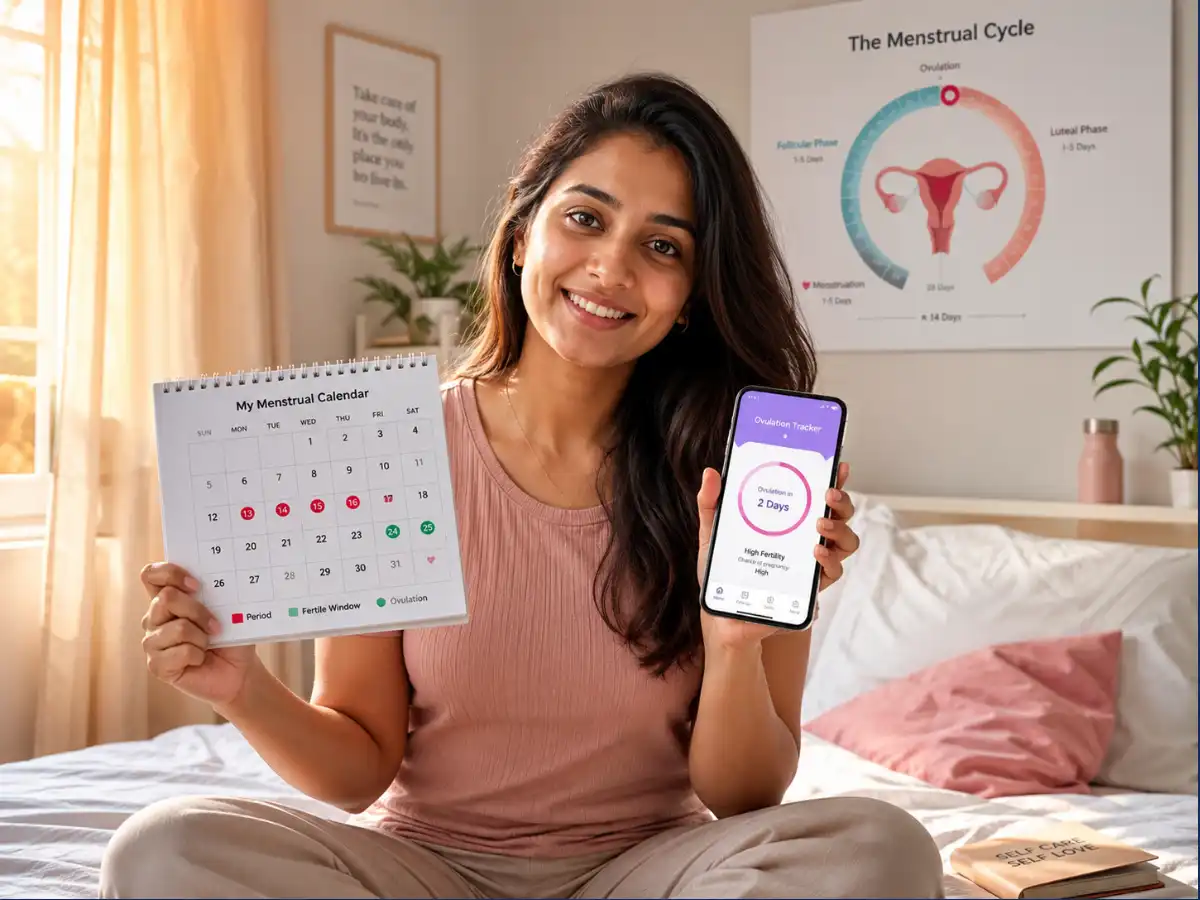
If you are trying to conceive—or simply want to understand your menstrual cycle better—knowing your ovulation window is one of the most important steps you can take. An ovulation calculator provides an estimate of when you’re most likely to release an egg, helping you identify your fertile window more confidently.
In my clinical experience as a physiotherapist and medical health educator, many women become anxious when pregnancy doesn’t happen immediately. Often, the issue isn’t infertility—it may simply be inaccurate timing. Educating patients about ovulation, healthy lifestyle habits, and reproductive health empowers them to make informed decisions while reducing unnecessary stress.
⚡ Quick Summary
Main Goal: Estimate your most fertile days for pregnancy planning.
Key Sign: Ovulation usually occurs about 12–16 days before your next period.
Best Solution: Combine an ovulation calculator with menstrual tracking, cervical mucus changes, and ovulation predictor kits for better accuracy.
Prevention Tip: Maintain a healthy lifestyle, regular sleep, balanced nutrition, and manage stress to support healthy ovulation.
How We Reviewed This Calculator
This ovulation calculator and its educational content have been reviewed to ensure they align with current evidence-based reproductive health guidance.
- Reviewed using recommendations from the American College of Obstetricians and Gynecologists (ACOG), World Health Organization (WHO), National Institutes of Health (NIH), and National Institute for Health and Care Excellence (NICE).
- Medically reviewed by Dr. Shabbir Hussain (BPT), Licensed Physiotherapist and Medical Health Educator.
- The calculator estimates fertile days using the first day of the last menstrual period (LMP) and the average menstrual cycle length based on widely accepted fertility calculation methods.
- Reviewed and updated using current peer-reviewed medical literature available through July 2026.
Important: This calculator provides an estimate of your fertile window and should not replace individualized medical advice. Women with irregular menstrual cycles, PCOS, fertility disorders, or those undergoing fertility treatment should consult a qualified healthcare professional for personalized evaluation.
What Is an Ovulation Calculator?
An ovulation calculator is a tool that estimates when you are most likely to ovulate based on information such as:
- The first day of your last menstrual period (LMP)
- Your average menstrual cycle length
- Sometimes the average duration of your menstrual period
Ovulation is the release of a mature egg from one of the ovaries. After release, the egg remains viable for about 12–24 hours. However, sperm can survive in the female reproductive tract for up to five days under favorable conditions. This means your fertile window generally includes the five days before ovulation and the day of ovulation itself.
It’s important to understand that an ovulation calculator estimates probability—not certainty. Factors such as stress, illness, travel, hormonal conditions, or significant lifestyle changes can shift ovulation by several days.
🌸 Ovulation Calculator
Enter the first day of your last period and your average cycle length.
🎯 Calculator Accuracy
This Ovulation Calculator estimates your most fertile days using the first day of your last menstrual period (LMP) and your average menstrual cycle length. While it follows widely accepted fertility calculation methods, it provides an estimate rather than confirming the exact day of ovulation.
Factors That Can Affect Accuracy
- 😟 Physical or emotional stress
- 🤒 Illness or fever
- ✈️ Travel and time-zone changes
- 🩺 Polycystic Ovary Syndrome (PCOS)
- ⚖️ Hormonal disorders (thyroid, prolactin, etc.)
- 💊 Fertility medications or hormonal contraceptive changes
- 📉 Significant weight gain or weight loss
- 😴 Poor sleep or irregular work schedules
- 🤱 Breastfeeding or recent pregnancy
For the most reliable fertility tracking, combine this calculator with ovulation predictor kits (LH tests), cervical mucus monitoring, basal body temperature (BBT) tracking, and regular menstrual cycle tracking. If your periods are consistently irregular or you have difficulty conceiving, consult a qualified gynecologist or fertility specialist for personalized evaluation.
How Does an Ovulation Calculator Work?
Most calculators estimate ovulation by counting backward approximately 14 days from your expected next menstrual period.
For example:
| Average Cycle Length | Estimated Ovulation |
|---|---|
| 21 days | Day 7 |
| 24 days | Day 10 |
| 28 days | Day 14 |
| 30 days | Day 16 |
| 32 days | Day 18 |
| 35 days | Day 21 |
Remember that these are estimates rather than guaranteed ovulation dates.
📊 Research Statistics
Scientific studies have improved our understanding of the fertile window and conception timing.
- Sperm can survive for up to 5 days inside the female reproductive tract under favorable conditions.
- The egg (ovum) remains viable for approximately 12–24 hours after ovulation.
- Together, this creates a fertile window of about 6 days—the five days before ovulation and the day of ovulation—when the chances of conception are highest.
- Research also shows that the highest probability of pregnancy occurs during the two days before ovulation and on the day of ovulation, rather than only on the day the egg is released.
Clinical takeaway: Because ovulation can vary from month to month, combining an ovulation calculator with cervical mucus tracking, basal body temperature monitoring, or ovulation predictor kits can improve the accuracy of identifying your most fertile days.
Why Knowing Your Fertile Window Matters
Understanding your fertile window offers several important benefits.
For couples trying to conceive, timing intercourse during the fertile days increases the likelihood of pregnancy. For women monitoring menstrual health, cycle tracking may help identify irregular ovulation patterns that deserve medical evaluation.
Many women also use ovulation awareness to better understand hormonal changes throughout the month. Changes in mood, energy levels, exercise performance, cervical mucus, and even body temperature often correspond with different phases of the menstrual cycle.
In real rehabilitation settings, I have also observed that women recovering from musculoskeletal injuries sometimes notice variations in joint comfort, energy, or exercise tolerance across different stages of the menstrual cycle. While these changes vary between individuals, understanding cycle patterns can support better exercise planning.
Why Ovulation Awareness Is Becoming More Important Today
Modern lifestyles influence reproductive health in ways many people underestimate.
Long working hours, poor sleep, high stress, frequent travel, unhealthy eating habits, and limited physical activity may all affect hormonal balance.
Although smartphones and laptops don’t directly cause infertility, today’s technology-driven lifestyle often contributes indirectly by encouraging prolonged sitting, reduced exercise, increased stress, and disrupted sleep—all of which can influence overall reproductive health.
Urban Indian lifestyles frequently involve irregular meal timings, long commutes, demanding work schedules, and chronic stress. Students preparing for competitive examinations and professionals working late into the night may experience temporary menstrual irregularities linked to these lifestyle factors.
Maintaining a healthy weight, exercising regularly, getting sufficient sleep, and managing stress remain important for overall reproductive health.
Signs That Ovulation May Be Approaching
Many women notice natural body changes before or during ovulation.
These may include:
- Clear, stretchy cervical mucus resembling raw egg whites
- Mild discomfort or cramping on one side of the lower abdomen (mittelschmerz)
- Increased sexual desire
- Slight rise in basal body temperature after ovulation
- Mild breast tenderness
- Increased vaginal lubrication
- Positive ovulation predictor kit (LH surge)
Not every woman experiences all of these signs, and some may notice very few changes.
Who Can Benefit Most From an Ovulation Calculator?
An ovulation calculator may be especially useful for:
- Couples planning pregnancy
- Women beginning fertility awareness tracking
- Women with regular menstrual cycles
- Individuals who want to understand their reproductive health better
- Those tracking menstrual patterns for discussions with their healthcare provider
Women with highly irregular cycles, conditions such as polycystic ovary syndrome (PCOS), or certain hormonal disorders may require additional methods such as ovulation predictor kits, ultrasound monitoring, or specialist evaluation because calendar-based estimates are often less accurate.
Hidden Dangers Most People Don’t Realize
An ovulation calculator is a helpful planning tool, but it has limitations. One of the biggest mistakes couples make is treating the predicted ovulation day as an exact scientific fact. Ovulation can naturally shift from month to month, even in women with otherwise regular cycles.
Another hidden concern is delayed medical evaluation. If pregnancy does not occur after many months of well-timed intercourse, some couples continue relying only on apps or calculators instead of seeking professional advice. This can delay the diagnosis of conditions such as ovulatory disorders, thyroid disease, endometriosis, or male factor infertility.
In my clinical experience, prolonged uncertainty often leads to emotional stress, anxiety, sleep disturbance, and relationship strain. Reproductive health is not only about hormones—it also involves mental well-being, physical health, and lifestyle.
Common Mistakes People Make
Many women unintentionally reduce the usefulness of ovulation tracking because of common misconceptions.
One frequent mistake is assuming every cycle is identical. Even healthy women may experience slight variations in ovulation timing due to illness, stress, travel, weight changes, or poor sleep.
Another mistake is depending entirely on smartphone apps without observing the body’s natural fertility signs. Ovulation calculators provide estimates, but combining them with cervical mucus changes or ovulation predictor kits generally improves accuracy.
Clinically, I also meet patients who delay evaluation because they believe they simply need to “keep trying.” While patience is important, timely medical assessment is equally valuable.
Recent Research
Research over the past decade has improved our understanding of fertility and ovulation.
Studies have shown that ovulation does not always occur on Day 14. Large menstrual cycle analyses demonstrate considerable variation between women and even between cycles in the same woman.
Recent fertility research also highlights that the fertile window lasts approximately six days, with the highest probability of conception occurring during the two days before ovulation and the day of ovulation.
Emerging evidence suggests that maintaining a healthy body weight, adequate sleep, regular physical activity, and avoiding smoking positively influence reproductive health. Conversely, obesity, severe underweight status, chronic stress, and certain endocrine disorders may reduce ovulatory function.
From a public health perspective, organizations such as the WHO emphasize the importance of addressing modifiable lifestyle factors alongside appropriate medical evaluation.
Causes and Risk Factors
Healthy ovulation depends on a complex interaction between the brain, ovaries, hormones, nutrition, and overall health.
Lifestyle factors play an important role. Chronic stress, irregular sleep, smoking, excessive alcohol intake, poor nutrition, and sedentary habits may interfere with hormonal balance.
Medical conditions that may affect ovulation include:
- Polycystic Ovary Syndrome (PCOS)
- Thyroid disorders
- Hyperprolactinemia
- Premature ovarian insufficiency
- Endometriosis
- Diabetes
- Obesity
- Being significantly underweight
- Certain medications
Age is another major factor. Female fertility naturally declines with increasing age, particularly after the mid-30s, largely because both egg quality and egg quantity gradually decrease.
Indian lifestyle patterns, including late-night work, high stress, processed food consumption, and reduced physical activity, may further influence menstrual regularity in some women.
Early Warning Signs That Ovulation May Not Be Normal
Although occasional irregular cycles can occur, persistent abnormalities deserve medical attention.
Early warning signs include:
- Menstrual cycles shorter than 21 days
- Cycles longer than 35 days
- Frequently missed periods
- Very heavy bleeding
- Extremely painful periods
- Difficulty conceiving after several months of well-timed intercourse
- Excessive facial hair or severe acne (possible PCOS)
Treatment & Physiotherapy Management
Treatment depends entirely on the underlying cause.
For women with normal ovulation, understanding the fertile window and maintaining healthy habits may be sufficient.
Where medical conditions are identified, treatment may include lifestyle modification, medications, hormonal therapy, or assisted reproductive techniques when indicated.
Lifestyle Management
Evidence supports several healthy habits that promote reproductive wellness:
- Maintain a healthy body weight.
- Eat a balanced diet rich in fruits, vegetables, whole grains, lean protein, and healthy fats.
- Exercise regularly but avoid excessive training.
- Sleep 7–9 hours each night.
- Reduce stress using mindfulness, yoga, or relaxation techniques.
- Avoid smoking and limit alcohol.
Physiotherapy Perspective
Many people are surprised to learn that physiotherapists contribute to women’s health beyond treating joint or muscle pain.
In my clinical experience, structured exercise programs, breathing exercises, posture correction, and stress-reduction strategies often help improve overall physical well-being. For women experiencing pelvic pain or certain pelvic floor dysfunctions, specialized pelvic health physiotherapy may also play an important supportive role alongside gynecological care.
It is important to understand that physiotherapy does not induce ovulation, but it can improve fitness, reduce musculoskeletal discomfort, and support healthy lifestyle behaviors.
Myth vs Fact
| Myth | Fact |
|---|---|
| Every woman ovulates on Day 14. | Ovulation varies between individuals and between cycles. |
| Pregnancy is only possible on ovulation day. | The fertile window includes several days before ovulation because sperm can survive up to five days. |
| Ovulation calculators are always accurate. | They provide estimates and work best alongside cycle tracking and other fertility signs. |
| Irregular periods always mean infertility. | Many women with irregular cycles conceive successfully after appropriate evaluation and treatment. |
| Stress has no effect on fertility. | Chronic stress may influence hormonal balance and menstrual regularity in some women. |
Real Patient Story
A 30-year-old software engineer visited our clinic primarily for chronic neck and upper back pain caused by prolonged computer work. During rehabilitation, she casually mentioned that she and her husband had been trying to conceive for several months without success.
When discussing her daily routine, she revealed that she relied solely on a mobile app that assumed ovulation always occurred on Day 14. However, her menstrual cycles ranged from 30 to 34 days.
After encouraging her to consult a gynecologist, combine cycle tracking with ovulation predictor kits, improve sleep, reduce workplace stress, and maintain regular physical activity, she gained a much better understanding of her fertile window. While fertility outcomes vary from person to person, the experience highlighted how education and timely medical guidance can prevent unnecessary confusion and anxiety.
Expert Clinical Insights
Over the years, one consistent pattern has stood out in my clinical practice: many women know the date of their next period but have never been taught how ovulation actually works.
Another observation is that stress often becomes a silent contributor. Patients juggling demanding jobs, long commutes, irregular meals, and poor sleep frequently underestimate how these lifestyle factors can influence overall reproductive health.
Many couples also place tremendous emotional pressure on themselves after only a few months of trying. Compassionate counseling, accurate information, and realistic expectations often reduce anxiety and encourage healthier decision-making.
When to See a Doctor Immediately
Although many menstrual variations are harmless, certain symptoms require prompt medical evaluation.
Seek medical attention immediately if you experience:
- Severe lower abdominal pain
- Heavy vaginal bleeding
- Fainting or dizziness associated with pelvic pain
- Fever with pelvic pain
- Positive pregnancy test with severe pain or bleeding (possible ectopic pregnancy)
- Sudden severe abdominal pain
- Persistent absence of menstrual periods without explanation
- Difficulty conceiving after:
- 12 months of regular unprotected intercourse if under age 35
- 6 months if age 35 or older
Early diagnosis often leads to more effective treatment.
Conclusion
Understanding your ovulation cycle is one of the simplest yet most valuable steps you can take when planning a pregnancy. An ovulation calculator is an excellent educational tool that estimates your fertile window, but it should be viewed as a guide rather than an exact predictor.
In my clinical experience, many women become less anxious once they understand how the menstrual cycle naturally varies from month to month. Combining cycle tracking with healthy lifestyle habits, regular exercise, adequate sleep, balanced nutrition, and appropriate medical care provides the best foundation for reproductive health.
If your menstrual cycles are consistently irregular or pregnancy has not occurred despite well-timed intercourse, don’t lose hope. Many underlying causes are treatable, and early evaluation can make a meaningful difference.
Remember, every woman’s reproductive journey is unique. Stay informed, listen to your body, and seek professional guidance whenever concerns arise.
✅ Key Takeaways
- An ovulation calculator estimates your fertile window but cannot predict ovulation with 100% accuracy.
- Ovulation usually occurs about 12–16 days before the next menstrual period, not always on Day 14.
- Combining cycle tracking with cervical mucus changes or ovulation predictor kits improves accuracy.
- Healthy lifestyle habits support normal reproductive health and hormonal balance.
- Persistent irregular periods or difficulty conceiving should be evaluated by a healthcare professional.
Frequently Asked Questions (FAQs)
1. Is an ovulation calculator accurate?
It provides an estimate based on your menstrual cycle. Accuracy improves when combined with ovulation predictor kits, cervical mucus observations, and menstrual tracking.
2. Can I ovulate earlier or later than expected?
Yes. Ovulation can naturally vary between cycles due to stress, illness, travel, hormonal changes, and other factors.
3. What if my menstrual cycles are irregular?
Women with irregular cycles may find calendar-based calculators less reliable. Consult a gynecologist for individualized evaluation if cycles are consistently irregular.
4. Can stress delay ovulation?
Yes. Significant physical or emotional stress may temporarily affect hormone regulation and menstrual timing in some women.
5. Does exercise improve fertility?
Moderate physical activity supports overall health and reproductive wellness. Excessive exercise without adequate nutrition, however, may disrupt ovulation in some women.
⚖️ BMI Calculator
Check whether your weight is in a healthy range before pregnancy. Maintaining a healthy BMI can support ovulation, fertility, and a healthier pregnancy.
Use Calculator →🚶 Fall Risk Calculator
Assess your balance and fall risk using evidence-based screening. Ideal for older adults and people recovering from illness, injury, or neurological conditions.
Use Calculator →💉 Vaccine Calculator
Stay up to date with recommended immunizations based on your age and health status to help protect yourself and your family.
Use Calculator →🦵 ACL Recovery Calculator
Track your rehabilitation milestones after an ACL injury or surgery and better understand your expected recovery timeline.
Use Calculator →🧠 Stroke Recovery Calculator
Estimate rehabilitation milestones after stroke and monitor recovery progress with evidence-based guidance.
Use Calculator →😴 Sleep Calculator
Improve sleep quality by finding your ideal bedtime or wake-up time. Healthy sleep supports hormonal balance, fertility, and overall well-being.
Use Calculator →Medical Disclaimer
This article is intended for educational and informational purposes only. It should not be considered a substitute for professional medical advice, diagnosis, or treatment. Every individual is unique, and fertility concerns require personalized assessment by a qualified healthcare professional. If you have persistent menstrual irregularities, severe symptoms, or difficulty conceiving, consult your gynecologist or fertility specialist promptly.
References (APA Style)
- American College of Obstetricians and Gynecologists. (2024). Ovulation and Fertility. https://www.acog.org/
- American Society for Reproductive Medicine. (2024). Patient Fact Sheets. https://www.reproductivefacts.org/
- National Institutes of Health. MedlinePlus: Ovulation. https://medlineplus.gov/
- World Health Organization. Sexual and Reproductive Health. https://www.who.int/
- National Institute for Health and Care Excellence (NICE). Fertility Problems: Assessment and Treatment. https://www.nice.org.uk/

Dr. Shabbir Hussain, BPT
Registered Physiotherapist | Clinical Rehabilitation Specialist
Maharashtra OTPT Council Reg. No.: PR-2021/08/PT/009532
Society of Onco Physiotherapists Reg. No.: SOP/00033/LM
Dr. Shabbir Hussain, BPT, Registered Physiotherapist with over 8 years of experience in physiotherapy, kidney rehabilitation, oncological rehabilitation, and lymphedema management. He specializes in balance disorders, pain management, musculoskeletal rehabilitation, strengthening programs, and VR-based rehabilitation.