
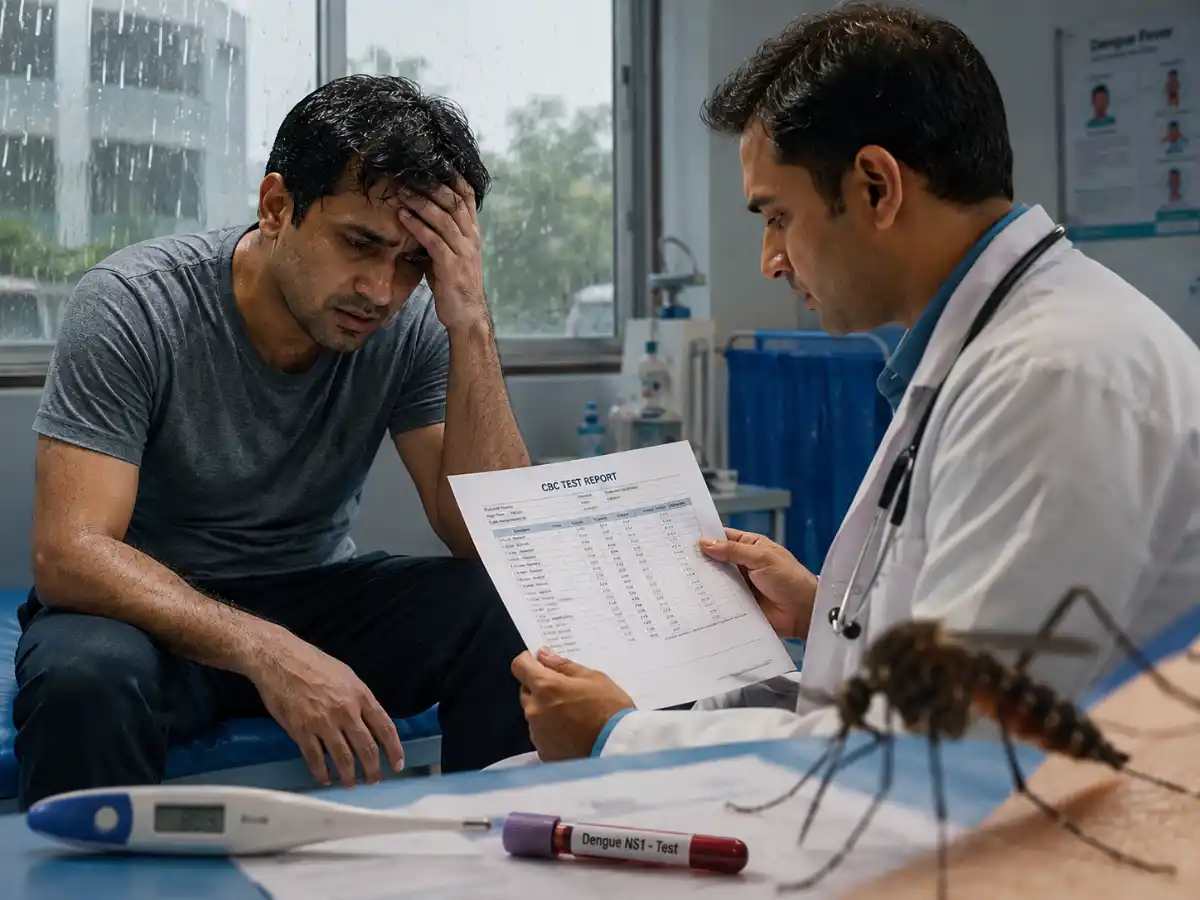
Monsoon Fever: When To Test For Dengue, Malaria Or Chikungunya
Thousands of people across India develop fever every monsoon—but many assume it’s ‘just viral.’ Unfortunately, waiting even two or three days can sometimes delay the diagnosis of dengue or malaria, increasing the risk of serious complications.
In my clinical experience, many patients visit a healthcare facility only after developing severe weakness, persistent vomiting, or unbearable joint pain. By then, dehydration or other complications may already have begun. Early medical assessment doesn’t always mean hospitalization, but it often helps doctors identify the cause before the illness becomes severe.
Monsoon fever is not a disease by itself. It is a symptom that can have several causes, including viral infections and mosquito-borne diseases. Knowing when to get tested is one of the most important decisions you can make during the rainy season.
💡 Did You Know?
🦟 Aedes mosquitoes, which spread dengue and chikungunya, are most active during the daytime, especially in the early morning and late afternoon. In contrast, Anopheles mosquitoes, which spread malaria, usually bite from dusk to dawn.
🏡 Even a small amount of clean stagnant water in flower pots, buckets, coolers, or discarded containers can become a breeding site for mosquitoes in as little as 5–7 days. Regularly emptying and cleaning these containers is one of the simplest ways to reduce your family’s risk during the monsoon season.
⚡ Quick Summary
Main Risk: Delayed diagnosis of dengue, malaria or chikungunya may lead to serious complications.
Key Symptom: Fever with body pain, headache, rash or chills during monsoon season.
Best Solution: Seek medical evaluation early and get the appropriate blood tests based on the duration of symptoms.
Prevention Tip: Prevent mosquito bites, eliminate stagnant water and stay well hydrated during the rainy season.
📊 Monsoon 2026: Why Early Testing Matters
Recent surveillance shows that dengue activity increases during the monsoon season, with several regions in India reporting a rise in cases following periods of heavy rainfall. Public health experts recommend seeking early medical evaluation if fever is accompanied by severe body pain, chills, rash, persistent vomiting, or unusual bleeding, as timely diagnosis can help prevent serious complications.
Sources: WHO South-East Asia Region Epidemiological Bulletin (2026), National Centre for Vector Borne Diseases Control (NCVBDC), Ministry of Health & Family Welfare, Government of India.
What Is Monsoon Fever?
“Monsoon fever” is a general term used to describe fever occurring during the rainy season, when infections become more common because of increased mosquito breeding, humidity, and contaminated water.
The three major mosquito-borne illnesses seen across India include:
- Dengue, transmitted by the Aedes mosquito.
- Malaria, transmitted by the Anopheles mosquito.
- Chikungunya, also spread by the Aedes mosquito.
Although these illnesses may begin with similar symptoms—such as fever, headache, fatigue, and body aches—they differ in how they progress, the laboratory tests required, and the treatment approach.
According to public health authorities, early diagnosis helps reduce complications and supports timely medical management. Some infections, particularly dengue, require careful monitoring of blood counts and hydration, while malaria needs prompt antimalarial treatment after confirmation.
🦟 Dengue vs Malaria vs Chikungunya: Symptom Comparison
Although these mosquito-borne illnesses can start with similar symptoms, they often differ in their typical presentation. This table provides a quick comparison—but remember that only a qualified healthcare professional and appropriate laboratory tests can confirm the diagnosis.
| Feature | 🩸 Dengue | 🦠 Malaria | 🦴 Chikungunya |
|---|---|---|---|
| High Fever | ✅ Very Common | ✅ Very Common | ✅ Very Common |
| Skin Rash | ✅ Common | ❌ Uncommon | ✅ Common |
| Severe Joint Pain | ⚠️ Mild–Moderate | ❌ Usually Mild | ✅ Very Severe |
| Chills / Rigors | ⚠️ Sometimes | ✅ Classic Feature | ⚠️ Occasionally |
| Bleeding Risk | ⚠️ Possible | ❌ Rare | ❌ Rare |
| Low Platelet Count | ✅ Common | ⚠️ Sometimes | ❌ Usually Normal |
| Typical Blood Test | NS1 / IgM | Blood Smear / Rapid Antigen | IgM / RT-PCR |
| Recovery Time | 1–3 Weeks | Varies with Treatment | Joint Pain May Last Weeks–Months |
Doctor Explains
One of the biggest misunderstandings I hear from patients is:
“Doctor, all monsoon fevers are viral, so I’ll wait for a few more days.”
This belief can be risky.
Clinically, fever alone does not tell us whether someone has dengue, malaria, chikungunya, influenza, COVID-19, typhoid, or another infection. Instead, doctors look at several factors together, including:
- How many days the fever has lasted
- Whether chills or rigors are present
- Recent mosquito exposure
- Platelet count
- White blood cell count
- Travel history
- Presence of rash
- Joint swelling
- Vomiting
- Bleeding symptoms
In my clinical experience, many patients delay testing because they fear the cost or believe blood tests are unnecessary. However, timely testing often prevents unnecessary medications and helps guide the correct treatment from the beginning.
Another common misconception is that platelet counts alone confirm dengue. In reality, doctors consider symptoms, physical examination, and specific laboratory tests together before making a diagnosis.
Why This Problem Is Becoming More Common
Several environmental and lifestyle factors have contributed to the increasing number of monsoon-related infections in India.
Rapid urbanization has led to more construction sites, uncovered water tanks, discarded containers, and stagnant rainwater—all of which create ideal breeding grounds for mosquitoes.
Busy lifestyles also play a role. Many people continue commuting long distances despite having fever, delaying medical consultation because of work or family responsibilities. Self-medication with over-the-counter painkillers has become increasingly common, sometimes masking important warning signs.
Students living in hostels and young professionals working long hours may ignore early symptoms, assuming they are simply exhausted. Others search social media for home remedies instead of seeking proper medical advice.
While smartphone use, work-from-home routines, and sedentary habits do not directly cause dengue or malaria, they can indirectly delay diagnosis by encouraging people to ignore symptoms or postpone healthcare visits.
As a physiotherapist, I often meet patients during the recovery phase who continue to experience fatigue, muscle weakness, or prolonged joint pain after the infection has resolved. Early diagnosis and appropriate treatment usually make rehabilitation much smoother.
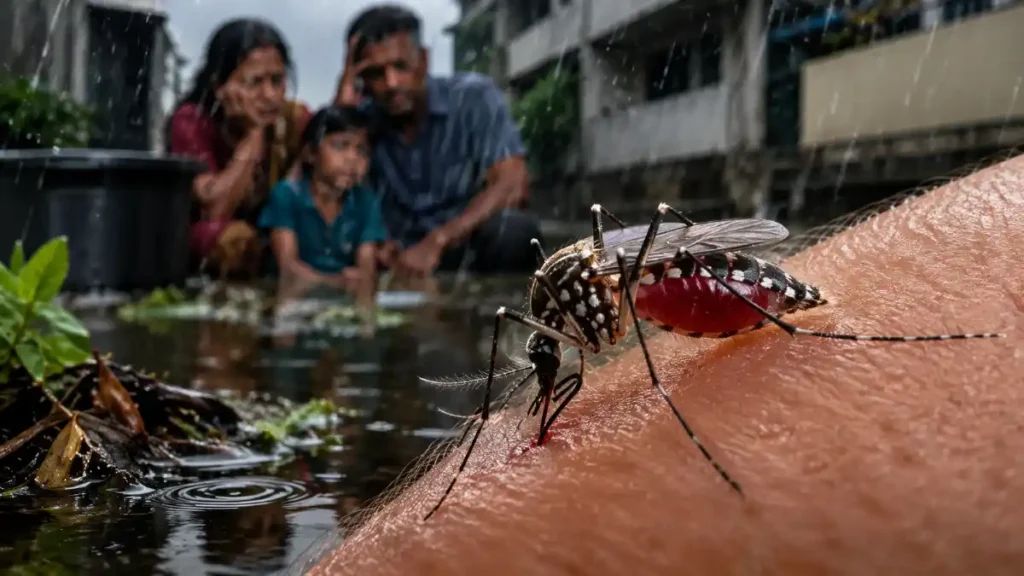
Hidden Dangers Most People Don’t Realize
Many people think the fever itself is the biggest problem. In reality, the body’s response to the infection can sometimes be far more concerning.
Dengue may lead to plasma leakage, severe dehydration, bleeding complications, or shock in a small percentage of patients, especially if warning signs are ignored.
Malaria, particularly infections caused by Plasmodium falciparum, can rapidly affect the brain, kidneys, liver, and other organs if left untreated.
Chikungunya is rarely fatal, but the severe joint pain can continue for weeks or even months in some individuals. Personally, I have seen patients who struggled to return to work because persistent joint stiffness limited their daily activities long after the fever disappeared.
From a rehabilitation perspective, prolonged inactivity during illness may also contribute to muscle weakness, reduced endurance, poor balance in older adults, and slower functional recovery.
Common Mistakes People Make
Every monsoon season, healthcare professionals notice similar patterns that delay diagnosis and recovery. In my clinical experience, these mistakes are far more common than most people realize.
1. Assuming Every Fever Is “Just Viral”
Many people wait three to five days before seeing a doctor because they believe seasonal fever will resolve on its own. While many viral infections are self-limiting, dengue, malaria, and chikungunya require proper evaluation.
2. Taking Painkillers Without Medical Advice
Some patients repeatedly take painkillers to suppress fever. Certain medicines, such as ibuprofen or diclofenac, are generally avoided when dengue is suspected because they may increase the risk of bleeding. Always consult a healthcare professional before taking medications during an unexplained fever.
3. Ignoring Warning Signs
Symptoms such as persistent vomiting, severe abdominal pain, bleeding gums, confusion, extreme weakness, or difficulty breathing should never be ignored.
Recent Research
Recent public health surveillance continues to show that mosquito-borne diseases remain a major seasonal health challenge in tropical countries, including India.
Some important findings include:
- Dengue cases often increase significantly after heavy rainfall, especially in densely populated urban areas where stagnant water accumulates.
- Co-infections (for example, dengue and malaria occurring together) have been reported in some regions, making diagnosis more challenging.
- Research suggests that early recognition of warning signs and timely supportive treatment significantly reduces severe complications.
- Studies also show that persistent joint pain after chikungunya may continue for several weeks or months in a subset of patients, sometimes affecting work productivity and quality of life.
- Climate change, increasing temperatures, and changing rainfall patterns are expanding mosquito breeding seasons in many regions.
Clinical Relevance
From a rehabilitation perspective, patients recovering from chikungunya frequently experience prolonged stiffness and reduced physical activity. Gentle rehabilitation, gradual strengthening, and supervised exercise may help restore mobility once the acute illness has resolved.
Causes and Risk Factors
Monsoon fever itself is not a disease—it is a symptom caused by various infections. Several environmental and personal factors increase the risk of contracting mosquito-borne illnesses.
During the rainy season, stagnant water collects in flower pots, coolers, construction sites, discarded tyres, rooftop tanks, and uncovered containers. These become ideal breeding places for mosquitoes.
People living in crowded urban neighbourhoods may face greater exposure due to higher mosquito density. Rural communities can also experience increased malaria transmission where mosquito control measures are limited.
Certain individuals are at higher risk of complications, including:
- Older adults
- Young children
- Pregnant women
- People with diabetes
- Individuals with kidney disease
- People with weakened immune systems
- Patients with chronic heart or liver disease
Diagnosis
Many patients ask,
“Doctor, which blood test should I get?”
The answer depends largely on how many days you have had fever and your symptoms.
A doctor begins with a detailed medical history and physical examination, including:
- Temperature
- Blood pressure
- Pulse
- Hydration status
- Skin examination
- Joint examination
- Abdominal examination
Routine investigations often include:
- Complete Blood Count (CBC)
- Platelet count
- Hematocrit
- Liver function tests (if needed)
Specific tests may include:
Dengue
- NS1 Antigen (usually useful during the first few days of illness)
- Dengue IgM antibody (typically becomes useful later in the illness)
- PCR testing in selected situations
Malaria
- Peripheral Blood Smear
- Rapid Malaria Antigen Test
Chikungunya
- IgM antibody testing
- RT-PCR in selected early cases
The exact timing and choice of tests should always be guided by a qualified healthcare professional based on your clinical presentation.
Role of Physiotherapy Assessment
Physiotherapy is not used to diagnose dengue, malaria, or chikungunya, but rehabilitation becomes valuable after the acute phase.
In real rehabilitation settings, assessment focuses on:
- Muscle weakness
- Balance
- Walking ability
- Joint stiffness
- Functional independence
- Endurance
- Return to work readiness
Patients recovering from chikungunya often benefit from individualized rehabilitation plans to regain mobility safely.
Treatment & Physiotherapy Management
Treatment depends entirely on the confirmed diagnosis.
Dengue
Currently, there is no specific antiviral medicine for dengue. Treatment focuses on:
- Adequate hydration
- Fever control (usually with paracetamol, as advised by a doctor)
- Monitoring platelet count and hematocrit when indicated
- Hospital observation for patients with warning signs
Malaria
Malaria requires specific antimalarial medications, selected according to the infecting parasite, local guidelines, and disease severity.
Chikungunya
Management is mainly supportive and includes:
- Rest
- Fluids
- Pain management under medical supervision
- Gradual return to activity
Physiotherapy During Recovery
Once the acute fever has settled and the treating physician approves activity, physiotherapy may help improve recovery.
In my clinical experience, many patients recover faster when rehabilitation is started gradually rather than returning immediately to intense physical activity.
Rehabilitation may include:
- Gentle range-of-motion exercises
- Progressive walking programs
- Stretching for stiff joints
- Muscle strengthening
- Balance training
Patients with prolonged chikungunya-related joint pain often require a slower progression based on pain tolerance.
Myth vs Fact
| Myth | Fact |
|---|---|
| Every monsoon fever is dengue. | Many illnesses, including malaria, chikungunya, influenza, typhoid, and other viral infections, can cause fever during monsoon. |
| Low platelet count always means dengue. | Platelet count alone cannot diagnose dengue; clinical evaluation and specific tests are required. |
| Antibiotics cure dengue. | Dengue is caused by a virus. Antibiotics do not treat viral infections unless there is a bacterial infection. |
| Papaya leaf juice cures dengue. | There is no strong scientific evidence that it cures dengue. Medical treatment and hydration remain the priority. |
| Once fever disappears, complete recovery is immediate. | Fatigue and weakness may continue for days or weeks, especially after chikungunya. |
| Mosquitoes breed only in dirty water. | Aedes mosquitoes can breed in clean stagnant water, including water stored in household containers. |
Real Patient Story
A 36-year-old software engineer visited the rehabilitation clinic nearly three weeks after recovering from chikungunya. He no longer had a fever but complained of severe stiffness in both wrists, knees, and ankles. Climbing stairs had become difficult, and typing at work caused discomfort.
Initially, he believed the joint pain would disappear within a few days and delayed seeking help.
After medical clearance, we started a gradual rehabilitation program focusing on joint mobility, gentle strengthening, posture correction, and activity pacing. Over the next several weeks, his walking confidence improved, stiffness reduced, and he was able to return to full-time work comfortably.
Cases like this remind us that recovery does not always end when the fever subsides. Proper rehabilitation can play an important role in restoring normal daily function.
Expert Clinical Insights
Over the years, several patterns have stood out in my clinical practice:
- Many patients delay medical evaluation because they assume every monsoon fever is a routine viral infection.
- The most successful recoveries usually occur in people who seek medical advice early, stay well hydrated, and follow evidence-based treatment rather than relying solely on internet remedies.
- One surprising observation is that persistent fatigue often lasts longer than patients expect, even after laboratory values begin to normalize.
- Clinically, I often observe that patients recovering from chikungunya benefit from gradual rehabilitation rather than prolonged bed rest, which may contribute to muscle weakness and joint stiffness.
👨⚕️ Doctor’s Clinical Insight
One important lesson I have learned in clinical practice is that patients rarely regret getting evaluated early—but many regret waiting too long.
During every monsoon season, I see individuals who initially dismissed their fever as a simple viral illness. Timely consultation, appropriate laboratory testing, good hydration, and proper follow-up often make recovery smoother and reduce the risk of complications.
When to See a Doctor Immediately
Seek immediate medical attention if you develop any of the following symptoms during monsoon fever:
- Fever lasting more than 2–3 days without improvement
- Persistent vomiting
- Severe abdominal pain
- Difficulty breathing
- Bleeding from gums or nose
- Blood in vomit, stool, or urine
- Black-colored stools
Conclusion
Monsoon brings welcome relief from the summer heat, but it also increases the risk of mosquito-borne diseases such as dengue, malaria, and chikungunya. Because these illnesses often begin with similar symptoms, it is impossible to identify the exact cause based on fever alone.
In my clinical experience, the patients who recover most smoothly are usually those who seek timely medical care, stay well hydrated, follow evidence-based treatment, and avoid self-medication.
Early diagnosis not only improves treatment outcomes but also reduces the risk of serious complications. With proper medical care, adequate rest, and gradual rehabilitation when needed, the vast majority of people recover well and safely return to their normal daily activities.
✅ Key Takeaways
- Fever during monsoon should never be ignored, especially if accompanied by severe body pain, rash, or chills.
- Early medical evaluation helps determine whether testing for dengue, malaria, or chikungunya is needed.
- Avoid self-medicating with painkillers unless advised by a healthcare professional.
- Stay well hydrated and watch carefully for warning signs such as bleeding, persistent vomiting, or breathing difficulty.
- Most people recover completely with timely diagnosis, appropriate treatment, and adequate rest.
- Patients with prolonged weakness or joint pain may benefit from supervised physiotherapy after medical clearance.
Frequently Asked Questions (FAQs)
1. How do I know if my fever is dengue or malaria?
It is difficult to tell based on symptoms alone. A healthcare professional may recommend blood tests based on your symptoms, examination findings, and the number of days you have had fever.
2. When should I get tested for dengue?
Testing depends on when the fever started. Your doctor will recommend the most appropriate test based on the duration of illness and your clinical condition.
3. Can dengue, malaria, and chikungunya occur together?
Although uncommon, co-infections have been reported. This is why proper medical evaluation is important.
4. Can I exercise during dengue or chikungunya?
No. During the acute illness, rest is important. Resume exercise only after your doctor confirms it is safe. Physiotherapy may help some patients during recovery, particularly after chikungunya.
5. Is papaya leaf juice proven to cure dengue?
Current scientific evidence does not support papaya leaf juice as a cure for dengue. It should never replace medical treatment.
6. Which mosquito spreads dengue?
Dengue and chikungunya are spread by the Aedes mosquito, while malaria is spread by the Anopheles mosquito.
⚠️ Medical Disclaimer
This article is intended for educational and public health awareness purposes only. It should not be considered a substitute for professional medical advice, diagnosis, or treatment.
If you have fever, severe symptoms, or suspect dengue, malaria, chikungunya, or any other serious illness, consult a qualified healthcare professional immediately. Individual treatment decisions should always be based on a complete medical assessment.
Never delay seeking medical care because of information you have read online.
References
- World Health Organization. (2025). Dengue and severe dengue. https://www.who.int/news-room/fact-sheets/detail/dengue-and-severe-dengue
- World Health Organization. (2025). Malaria. https://www.who.int/health-topics/malaria
- World Health Organization. (2025). Chikungunya. https://www.who.int/news-room/fact-sheets/detail/chikungunya
- Centers for Disease Control and Prevention. (2025). Dengue Clinical Guidance. https://www.cdc.gov/dengue/
- Centers for Disease Control and Prevention. (2025). Malaria Clinical Information. https://www.cdc.gov/malaria/

Dr. Shabbir Hussain, BPT Licensed Physiotherapist | Clinical Rehabilitation SpecialistMaharashtra OTPT Council Reg. No. PR-2021/08/PT/009532Society of Onco Physiotherapists Reg. No. SOP/00033/LM
He is a licensed physiotherapist with over 8 years of experience in physiotherapy, kidney rehabilitation, oncological rehabilitation, and lymphedema management. He specializes in balance disorders, pain management, musculoskeletal rehabilitation, strengthening programs, and VR-based rehabilitation.
Dr. Shabbir Hussain (BPT)