
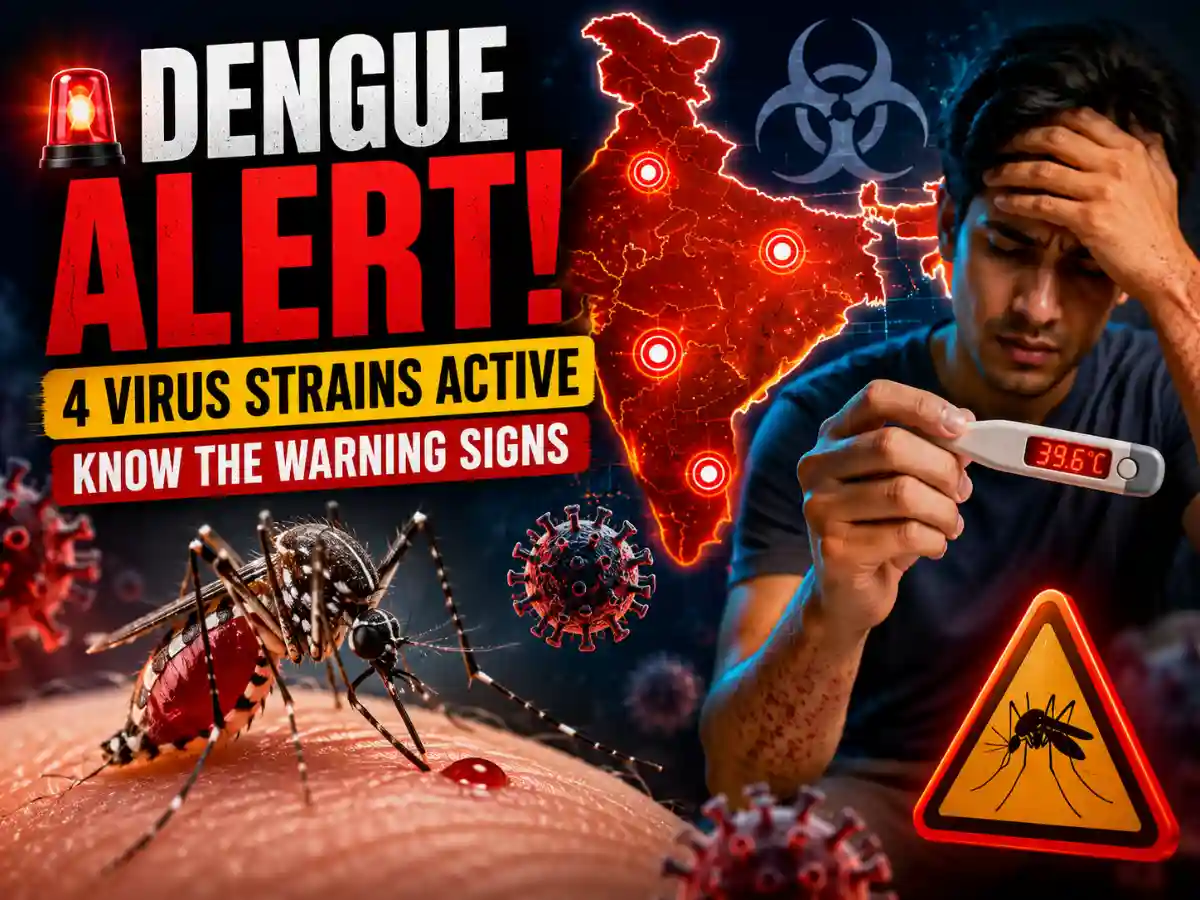
Dengue fever cases are rising rapidly during the monsoon season, and many people mistake the first symptoms for a common viral fever. Missing the warning signs can delay treatment and increase the risk of severe dengue.

The disease is a major public health challenge, particularly in countries like India where the climate is conducive to the breeding of mosquitoes that transmit the disease. Recognizing the symptoms and knowing how to prevent dengue fever are key steps in controlling its spread.
This article will provide an overview of dengue fever, including its symptoms, causes, and strategies for prevention. By understanding these aspects, individuals can take necessary precautions to protect themselves and their communities.
Spread
Through the bite of infected Aedes mosquitoes.
Common Symptoms
High fever, severe headache, body aches, rash, nausea and fatigue.
Incubation
Symptoms usually develop 3–14 days after an infected mosquito bite.
Emergency Signs
Severe abdominal pain, persistent vomiting, bleeding, breathing difficulty or extreme weakness require urgent medical care.
Prevention
Prevent mosquito bites, eliminate standing water and use repellents, protective clothing and window screens.
Understanding Dengue Fever and Its Impact in India
The impact of dengue fever in India is multifaceted, affecting not only the health of the population but also the economy. Dengue fever, a mosquito-borne viral disease, has become a significant public health concern in the country.
The Global and Indian Burden of Dengue
Dengue fever is a global health issue, with India being one of the worst-affected countries. According to the World Health Organization (WHO), India reported over 200,000 cases of dengue fever in 2020, accounting for a significant proportion of global cases. The disease is endemic in many parts of India, with states like Delhi, Karnataka, and Tamil Nadu being particularly affected.
The economic burden of dengue fever in India is substantial, with costs including hospitalization, medication, and lost productivity. A study estimated that the average cost of treating a dengue patient in India is around ₹15,000 to ₹20,000.
Seasonal Patterns and High-Risk Areas in India
Dengue fever outbreaks in India typically follow a seasonal pattern, with the number of cases peaking during the monsoon season (July to October). The disease is more prevalent in areas with poor sanitation and waterlogging, which provides breeding grounds for the Aedes mosquito, the primary vector of dengue.
- High-risk areas include urban and semi-urban regions with poor waste management.
- States with a high incidence of dengue fever include Delhi, Karnataka, Tamil Nadu, and Maharashtra.
Understanding these seasonal patterns and high-risk areas is crucial for developing effective strategies to prevent and control dengue fever outbreaks in India.
What Causes Dengue?
The dengue virus, transmitted primarily through the bite of an infected Aedes mosquito, is the causative agent of dengue fever. This disease is a significant public health concern in many parts of the world, particularly in tropical and subtropical regions.
The Dengue Virus: Four Serotypes
The dengue virus is a complex pathogen with four distinct serotypes: DENV-1, DENV-2, DENV-3, and DENV-4. Infection with one serotype provides lifelong immunity against that specific serotype, but only partial and temporary immunity against the other serotypes.
Understanding the different serotypes is crucial for developing effective vaccines and treatment strategies.
The Aedes Mosquito: Primary Vector
The Aedes mosquito is the primary vector responsible for transmitting the dengue virus. There are two main species of Aedes mosquitoes involved in dengue transmission: Aedes aegypti and Aedes albopictus.
Aedes aegypti vs. Aedes albopictus
Aedes aegypti is considered the primary vector due to its high competence in transmitting the dengue virus and its widespread presence in urban areas. Aedes albopictus, while also a competent vector, is more adaptable to different environments and is often found in both urban and rural settings.
Breeding Habits and Environment
Aedes mosquitoes breed in standing water, often found in domestic and peridomestic environments. Common breeding sites include flowerpots, discarded tires, and uncovered water containers.
| Mosquito Species | Primary Breeding Sites | Dengue Transmission Competence |
|---|---|---|
| Aedes aegypti | Urban areas, domestic water containers | High |
| Aedes albopictus | Both urban and rural areas, varied water collections | Moderate to High |
You Can Get Dengue More Than Once
Recovering from one dengue infection does not provide complete protection. You can still become infected with another dengue virus serotype in the future.
The Second Infection May Be More Severe
A subsequent infection with a different dengue virus serotype may increase the risk of developing severe dengue, making early recognition and medical care especially important.
These Mosquitoes Bite During the Day
Unlike many other mosquitoes, Aedes mosquitoes are most active during daylight hours, particularly in the early morning and late afternoon.
Doctors Don’t Look Only at Platelets
Platelet count is only one part of dengue assessment. Healthcare professionals also monitor warning signs, hydration status, blood pressure, hematocrit, bleeding, and overall clinical condition.
How Dengue Spreads: Transmission Cycle
Understanding how dengue spreads is crucial for controlling outbreaks. Dengue transmission involves a cycle between mosquitoes and humans.
Mosquito-to-Human Transmission
The primary vector of dengue transmission is the Aedes mosquito. When an infected mosquito bites a human, it transmits the dengue virus into the person’s bloodstream.
Human-to-Mosquito-to-Human Cycle
The dengue virus is maintained in a cycle between humans and mosquitoes. When a mosquito feeds on the blood of an infected person, it becomes infected and can then transmit the virus to other humans.
Urban Transmission Patterns
Urban areas with high population densities and poor waste management are conducive to Aedes mosquito breeding. This leads to higher transmission rates in cities.
Incubation Period
The incubation period of dengue fever, which is the time between the bite and the onset of symptoms, is typically between 3 to 14 days. Understanding this period is crucial for early detection and treatment.
- Presence of Aedes mosquitoes
- High population density
- Poor waste management
Types of Dengue Infections
Understanding the different types of dengue infections is crucial for effective diagnosis and treatment. Dengue fever, a mosquito-borne viral infection, manifests in various clinical forms, ranging from mild to severe.
Classic Dengue Fever
Classic dengue fever is the most common form of the disease, characterized by symptoms such as high fever, severe headache, pain behind the eyes, joint and muscle pain, rash, and mild bleeding. It is usually self-limiting, and patients typically recover within a week or two with proper rest and hydration.
Dengue Hemorrhagic Fever
Dengue hemorrhagic fever (DHF) is a more severe form of dengue infection, marked by severe bleeding, low levels of blood platelets, and blood plasma leakage. DHF can lead to life-threatening complications if not treated promptly and properly. Symptoms include severe abdominal pain, persistent vomiting, and rapid breathing.
Dengue Shock Syndrome
Dengue shock syndrome (DSS) is the most severe form of dengue infection, characterized by a severe drop in blood pressure, causing inadequate blood supply to vital organs. It is a medical emergency that requires immediate attention. Symptoms include severe bleeding, low blood platelet count, and leakage of blood plasma.
As noted by health experts, “Early detection and proper management of dengue infections can significantly reduce the risk of complications and mortality.” Understanding the different types of dengue infections is essential for healthcare providers to provide appropriate care and for individuals to seek medical attention when necessary.
Recognizing Dengue Symptoms
Recognizing the symptoms of dengue is crucial for early diagnosis and effective treatment. Dengue fever, caused by a virus transmitted by the Aedes mosquito, manifests through a variety of symptoms that can range from mild to severe.
Early Warning Signs
The early warning signs of dengue can be non-specific, making it challenging to diagnose based solely on clinical presentation. Common early signs include high fever, often accompanied by severe headache, pain behind the eyes, joint and muscle pain, rash, and mild bleeding.
Common Symptoms and Dengue Rash
As dengue progresses, symptoms can become more pronounced. The characteristic dengue rash appears in many patients, typically starting on the face and spreading to other parts of the body. Other common symptoms include:
- High fever that can reach up to 104°F (40°C)
- Severe headache and pain behind the eyes
- Joint and muscle pain, often described as severe
- Nausea and vomiting
- Fatigue and weakness
Severe Dengue Warning Signs
Severe dengue, also known as dengue hemorrhagic fever, is a life-threatening complication. Warning signs that require immediate medical attention include:
| Symptom | Description |
|---|---|
| Severe abdominal pain | Persistent and severe pain in the abdomen |
| Persistent vomiting | Vomiting that lasts for more than a few hours |
| Bleeding gums or nose | Spontaneous bleeding from gums or nose |
| Fatigue and restlessness | Feeling extremely weak or restless |
When to Seek Emergency Care
If you or someone you know is experiencing any of the severe dengue warning signs, it is crucial to seek emergency care immediately. Prompt medical intervention can significantly improve outcomes in cases of severe dengue.
Diagnosing Dengue: Tests and Procedures
Dengue diagnosis is a multifaceted process that relies on both clinical diagnosis and advanced laboratory tests. Accurate diagnosis is critical for providing appropriate treatment and managing the disease effectively.
Clinical Diagnosis
Clinical diagnosis involves evaluating the patient’s symptoms and medical history. Healthcare providers look for signs such as high fever, severe headache, pain behind the eyes, joint and muscle pain, rash, and mild bleeding. A clinical diagnosis is often made during outbreaks or in areas where dengue is common.
Laboratory Tests
Laboratory tests are essential for confirming dengue diagnosis. These tests include:
NS1 Antigen Test
The NS1 antigen test detects a protein produced by the dengue virus. It’s particularly useful in the early stages of the disease.
IgM and IgG Antibody Tests
IgM and IgG antibody tests detect the body’s immune response to the dengue virus. IgM antibodies are typically detectable 3-5 days after the onset of symptoms, while IgG antibodies appear later and remain in the blood for life.
| Test | Purpose | Timing |
|---|---|---|
| NS1 Antigen Test | Detects dengue virus protein | Early stages |
| IgM Antibody Test | Detects early immune response | 3-5 days after onset |
| IgG Antibody Test | Detects late immune response | After IgM response |
Differential Diagnosis
Differential diagnosis involves distinguishing dengue from other diseases with similar symptoms, such as malaria, chikungunya, and influenza. Accurate diagnosis is crucial for appropriate treatment.

Dengue Treatment Options and Management
Dengue treatment is primarily focused on alleviating symptoms and supporting the body’s recovery process. Since dengue is a viral infection, there is no specific antiviral treatment available; however, proper medical care and self-management can significantly improve outcomes.
Home Care for Mild Dengue
For patients with mild dengue, home care is often sufficient. This includes:
Hydration and Rest
Adequate hydration is crucial to help the body recover from dengue. Patients are advised to drink plenty of fluids, such as oral rehydration solutions, water, and clear broths. Rest is also essential to help the body fight the infection.
Fever Management
Fever management is a critical aspect of dengue care. Patients can use antipyretics like acetaminophen to reduce fever and alleviate pain. However, it’s essential to avoid non-steroidal anti-inflammatory drugs (NSAIDs) like ibuprofen, as they can increase the risk of bleeding.
Hospital Treatment for Severe Cases
Severe dengue requires immediate medical attention. Hospital treatment typically involves:
- Intravenous fluids to prevent dehydration
- Monitoring of vital signs and blood counts
- Blood transfusions in cases of severe bleeding
As noted by the World Health Organization, “Early detection and proper medical care can significantly reduce the mortality rate associated with dengue.”
“Early detection and access to proper medical care can reduce fatalities from dengue hemorrhagic fever from over 20% to less than 1%.”
Recovery and Follow-up Care
Recovery from dengue can take several weeks. During this time, patients should continue to prioritize rest and hydration. Follow-up care is essential to monitor for any complications and ensure that the patient is recovering as expected.
By understanding the treatment options and management strategies for dengue, patients and caregivers can better navigate the challenges of the disease and improve outcomes.
Many patients continue to experience fatigue, muscle weakness, and reduced stamina for days or even weeks after recovering from dengue fever. This is a common part of recovery and should not be ignored.
Return to activity gradually. Avoid intense workouts, heavy lifting, or strenuous sports immediately after recovery. Start with light walking and gradually increase activity as your strength returns.
Continue adequate hydration. Even after the fever resolves, maintaining good fluid intake supports recovery and overall well-being.
Seek medical evaluation if persistent dizziness, severe weakness, shortness of breath, chest pain, or fainting develops after recovery.
Expert Note: “A gradual return to normal daily activities is generally safer than immediately resuming heavy physical exercise after dengue. If symptoms persist or worsen, consult your treating healthcare professional.”
🤒 High Fever Phase
High fever, severe headache, pain behind the eyes, muscle and joint pain, nausea, and fatigue are common. Rest and adequate hydration are essential.
⚠️ Critical Phase
Some patients may develop warning signs such as severe abdominal pain, persistent vomiting, bleeding, or fluid leakage. This phase requires close medical monitoring.
✅ Recovery Phase
Fever usually subsides, appetite improves, and energy gradually returns. Continue hydration and follow your healthcare provider’s advice.
💪 Regaining Strength
Some people continue to experience tiredness or reduced stamina. Resume physical activity gradually and seek medical advice if symptoms persist or worsen.
Complications and Risk Factors of Dengue
Understanding the complications and risk factors associated with dengue is crucial for effective disease management. Dengue fever can lead to severe complications, particularly in vulnerable populations.
Vulnerable Populations
Certain groups are at a higher risk of developing severe dengue. These include children, pregnant women, and the elderly, especially those with underlying health conditions.
Children and Dengue
Children are more susceptible to severe dengue due to their developing immune systems. Monitoring their health closely during outbreaks is essential.
Pregnant Women
Pregnant women are not only at risk of severe dengue but also face potential complications that can affect their pregnancy. Close medical supervision is recommended.
Elderly and Those with Comorbidities
The elderly and individuals with pre-existing health conditions are more likely to experience severe dengue symptoms. Managing comorbidities is crucial during dengue infection.
Long-term Effects and Recurrent Infections
Dengue infection can have long-term health implications, and recurrent infections can increase the risk of severe disease. Understanding these risks is vital for public health strategies.
| Risk Factor | Complication | Prevention Strategy |
|---|---|---|
| Age (Children and Elderly) | Severe Dengue | Close Health Monitoring |
| Pregnancy | Pregnancy Complications | Regular Prenatal Care |
| Comorbidities | Exacerbated Health Issues | Managing Underlying Conditions |
Preventing Dengue: Effective Strategies
Preventing dengue fever requires a multi-faceted approach that includes personal protection, community efforts, and effective mosquito control measures. By understanding and implementing these strategies, individuals can significantly reduce their risk of contracting dengue.
Personal Protection Measures
Personal protection is the first line of defense against dengue. This includes using mosquito repellents containing DEET, picaridin, or oil of lemon eucalyptus, and wearing protective clothing such as long-sleeved shirts and long pants.
Mosquito Repellents and Clothing
Applying mosquito repellent to exposed skin and clothing can help prevent bites. Additionally, wearing protective clothing can reduce the risk of mosquito bites.
Home Protection Methods
Using mosquito nets, installing window and door screens, and eliminating standing water around homes can prevent mosquito breeding and reduce the risk of dengue transmission.
Community-Based Prevention in Indian Context
In India, community-based initiatives play a crucial role in dengue prevention. This includes organizing awareness campaigns, conducting clean-up drives to eliminate mosquito breeding sites, and promoting the use of mosquito repellents.
Community participation is essential in controlling mosquito populations and preventing dengue outbreaks.
Mosquito Control Methods
Effective mosquito control is critical in preventing dengue. This involves eliminating breeding sites and implementing government initiatives.
Eliminating Breeding Sites
Regularly checking for and eliminating standing water around homes and public areas can significantly reduce mosquito breeding sites.
Government Initiatives in India
The Indian government has launched several initiatives to control dengue, including fogging and spraying insecticides in high-risk areas, and promoting public awareness about dengue prevention.
| Prevention Strategy | Description | Impact |
|---|---|---|
| Personal Protection | Using mosquito repellents and wearing protective clothing | Reduces individual risk |
| Community Initiatives | Awareness campaigns and clean-up drives | Reduces community risk |
| Mosquito Control | Eliminating breeding sites and government initiatives | Reduces mosquito population |
Conclusion: Staying Safe in Dengue-Endemic Regions
As dengue fever continues to be a significant public health concern in India, staying informed and taking proactive measures is crucial. Understanding the causes, symptoms, and transmission cycle of dengue is essential in preventing its spread.
Dengue prevention strategies, including personal protection measures and community-based initiatives, play a vital role in controlling the disease. The use of dengue vaccines can also provide an additional layer of protection against the disease.
By adopting a multi-faceted approach to dengue prevention, individuals and communities can reduce the risk of infection and mitigate the impact of dengue outbreaks. Staying safe in dengue-endemic regions requires a collective effort, and by working together, we can create a safer and healthier environment for everyone.
FAQ
What are the common symptoms of dengue fever?
Common symptoms of dengue fever include high fever, severe headache, pain behind the eyes, joint and muscle pain, rash, and mild bleeding. These symptoms usually begin within 3 to 14 days after the bite from an infected mosquito.
How is dengue fever diagnosed?
Dengue fever is diagnosed through a combination of clinical evaluation, medical history, and laboratory tests such as the NS1 antigen test and IgM and IgG antibody tests. A healthcare professional will assess the symptoms and perform the necessary tests to confirm the diagnosis.
What is the treatment for dengue fever?
There is no specific treatment for dengue fever, but symptoms can be managed with rest, hydration, and fever-reducing medications. In severe cases, hospitalization may be required to monitor and manage complications.
How can dengue fever be prevented?
Dengue fever can be prevented by avoiding mosquito bites through the use of mosquito repellents, wearing protective clothing, and eliminating mosquito breeding sites around homes and communities. Community-based prevention strategies and government initiatives also play a crucial role in controlling dengue.
Is there a vaccine available for dengue fever?
Yes, there are dengue vaccines available, such as Dengvaxia, which has been approved for use in several countries. However, the vaccine is not 100% effective, and its use is recommended for individuals living in endemic areas who have had a previous dengue infection.
What are the complications of dengue fever?
Complications of dengue fever can include dengue hemorrhagic fever, dengue shock syndrome, and organ failure. Certain populations, such as children, pregnant women, and individuals with comorbidities, are more vulnerable to these complications.
Can dengue fever be transmitted directly from person to person?
No, dengue fever is not transmitted directly from person to person. The disease is transmitted through the bite of an infected Aedes mosquito, which previously fed on the blood of an individual infected with dengue.
How long does it take to recover from dengue fever?
Recovery from dengue fever typically takes 7 to 10 days, but some individuals may experience fatigue and other symptoms for several weeks after the initial illness.
References
World Health Organization. (2025). Dengue and severe dengue. https://www.who.int/news-room/fact-sheets/detail/dengue-and-severe-dengue
Centers for Disease Control and Prevention. (2025). Dengue. https://www.cdc.gov/dengue/
National Centre for Vector Borne Disease Control. (2025). Dengue. Ministry of Health & Family Welfare, Government of India. https://ncvbdc.mohfw.gov.in/
World Health Organization. (2009). Dengue: Guidelines for diagnosis, treatment, prevention and control (New ed.). World Health Organization. https://apps.who.int/iris/handle/10665/44188
Indian Council of Medical Research. (2024). ICMR guidelines and advisories on vector-borne diseases. https://www.icmr.gov.in/
National Center for Biotechnology Information. (2023). Dengue. In StatPearls. StatPearls Publishing. https://www.ncbi.nlm.nih.gov/books/NBK430732/

Dr. Shabbir Hussain, BPT
Licensed Physiotherapist | Clinical Rehabilitation Specialist
Maharashtra OTPT Council Reg. No.: PR-2021/08/PT/009532
Society of Onco Physiotherapists Reg. No.: SOP/00033/LM
Dr. Shabbir Hussain, BPT, Registered Physiotherapist with over 8 years of experience in physiotherapy, kidney rehabilitation, oncological rehabilitation, and lymphedema management. He specializes in balance disorders, pain management, musculoskeletal rehabilitation, strengthening programs, and VR-based rehabilitation.