
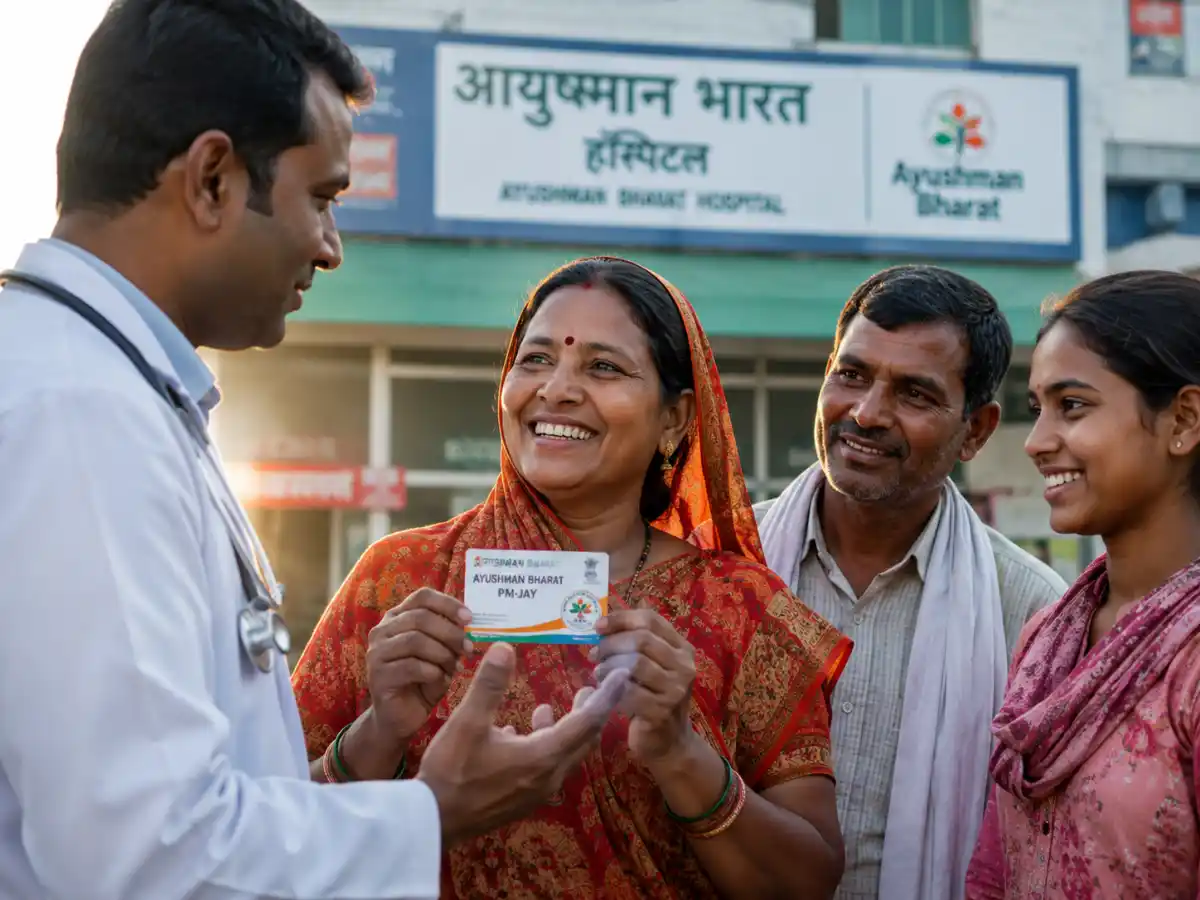
How to Apply for An Ayushman Card (PM-JAY): Complete Step-by-Step Guide
The Ayushman Bharat scheme now covers eligible families with up to ₹5 lakh cashless treatment. If you still haven’t generated your Ayushman Card, here’s exactly how to do it before a medical emergency.
Imagine reaching a hospital during a medical emergency only to discover that you could have received free treatment worth lakhs of rupees—but you never applied for your Ayushman Card. Unfortunately, this is a situation I have encountered while interacting with patients and their families during rehabilitation and hospital care.
Many people believe the application process is complicated or assume they are not eligible. In reality, thousands of deserving families miss government healthcare benefits simply because they are unaware of the correct process or fail to carry the required documents.
As a physiotherapist, I often work with patients recovering from fractures, strokes, joint replacement surgeries, and chronic illnesses. One common challenge isn’t just rehabilitation—it’s the financial burden of treatment. Government health schemes like Ayushman Bharat Pradhan Mantri Jan Arogya Yojana (PM-JAY) can significantly reduce this burden when used correctly.
This guide explains everything you need to know about applying for an Ayushman Card in India, eligibility, required documents, and common mistakes to avoid.
🚀 What’s New in Ayushman Card 2026?
The Ayushman Bharat PM-JAY ecosystem continues to improve, making it easier for eligible beneficiaries to access cashless healthcare services across India. Here are some of the latest developments and improvements in 2026:
⚡ Faster Aadhaar e-KYC
Identity verification has become quicker through improved Aadhaar-based e-KYC, helping eligible beneficiaries generate their Ayushman Card with fewer delays.
🏥 More Empanelled Hospitals
The PM-JAY network continues to expand with more public and private hospitals joining the scheme, improving access to cashless treatment across the country.
✅ Improved Beneficiary Verification
Enhanced digital verification and updated beneficiary databases help reduce errors, making eligibility checks more accurate and efficient.
💻 Better Integration with ABDM
Greater integration with the Ayushman Bharat Digital Mission (ABDM) is helping strengthen digital health records and improve the overall healthcare experience for beneficiaries.
📊 Ayushman Bharat PM-JAY at a Glance
Ayushman Bharat – Pradhan Mantri Jan Arogya Yojana (PM-JAY) is one of the world’s largest government-funded health assurance schemes. As of early 2026, the programme has expanded significantly, helping crores of eligible Indians access cashless treatment at thousands of empanelled hospitals across the country.
Source: National Health Authority (NHA) & Ministry of Health and Family Welfare, Government of India (official progress update, February–March 2026). Statistics are updated periodically and may change as the programme expands.
What Is an Ayushman Card?
An Ayushman Bharat Card is a government-issued health identification card under the Ayushman Bharat Pradhan Mantri Jan Arogya Yojana (PM-JAY). Eligible beneficiaries can receive cashless treatment at empanelled public and private hospitals across India.
The scheme provides health insurance coverage of up to ₹5 lakh per eligible family per year for secondary and tertiary care hospitalization.
Unlike traditional insurance, beneficiaries do not pay a premium if they are eligible under the scheme.
The Ayushman Card serves as proof of enrollment and allows hospitals to verify eligibility quickly before treatment.
Doctor Explains – How to Apply for An Ayushman Card
One of the biggest misunderstandings I notice among patients is that they think an PM Jan Arogya Card is only meant for extremely poor families or senior citizens. In reality, eligibility depends on government databases and specific criteria—not simply age or income alone.
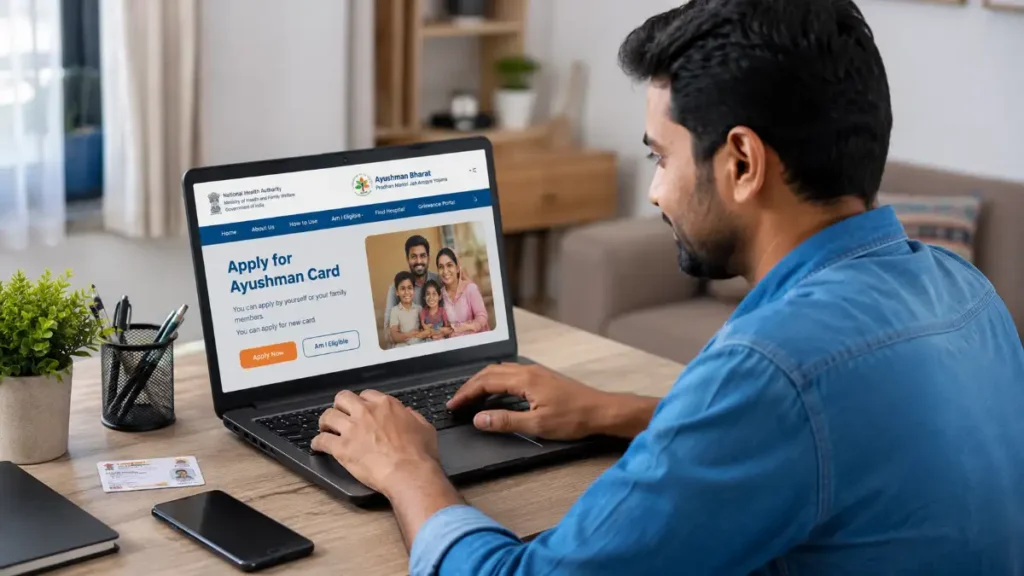
Another misconception is that people believe they must visit multiple government offices. Today, many applications can be completed digitally or through authorized Common Service Centres with minimal paperwork.
From my clinical experience, patients who complete their documentation before a medical emergency experience much less stress during hospital admission. Their families can focus on treatment rather than financial arrangements.
Why Awareness About Ayushman Bharat Card Is Increasing
India is witnessing a steady rise in chronic diseases, orthopedic injuries, surgeries, and age-related illnesses. Urban lifestyles, long working hours, increased life expectancy, and rising healthcare costs have made financial protection more important than ever.
Many office workers spend long hours sitting at computers, while students often adopt sedentary lifestyles. Although these habits are not directly related to PM Jan Arogya Card eligibility, they contribute to health problems that may eventually require hospitalization or rehabilitation.
In rehabilitation practice, I have seen patients recovering from road traffic accidents, spinal surgeries, knee replacements, stroke, and cancer treatments. Medical expenses often become a major concern for families, highlighting the importance of enrolling in government-supported healthcare schemes before illness strikes.
🕒 Ayushman Card Application Timeline
Applying for an Ayushman Bharat PM-JAY Card is a straightforward process. Follow these five simple steps to complete your registration and access cashless healthcare benefits.
🔍 Check Eligibility
Search your details using Aadhaar, mobile number, Family ID, or other approved identification on the official PM-JAY portal or at a Common Service Centre (CSC).
🪪 Complete Aadhaar e-KYC
Verify your identity through Aadhaar-based e-KYC to confirm your eligibility and prevent fraudulent registrations.
📄 Document Verification
An authorized operator verifies your identity and supporting documents before approving your application.
💳 Ayushman Card Generated
Once approved, your Ayushman Card is generated digitally. You can download it instantly or collect a printed copy from the authorized centre.
🏥 Receive Cashless Treatment
Present your Ayushman Card at an empanelled hospital to verify eligibility and receive cashless treatment under PM-JAY scheme guidelines.
Benefits of Having an Ayushman Card
Eligible beneficiaries can access several important healthcare benefits.
The scheme covers hospitalization expenses, surgeries, intensive care, medicines during hospitalization, diagnostic investigations, and post-hospitalization care as per scheme guidelines.
Patients can receive treatment at thousands of empanelled hospitals across India, allowing greater flexibility during emergencies.
The scheme also reduces out-of-pocket healthcare expenditure, which remains one of the leading causes of financial hardship among Indian households.
For many families, the Ayushman Bharat Card provides peace of mind during unexpected medical situations.
Who is Eligible for an Ayushman Card?
Eligibility is determined primarily through the Socio-Economic Caste Census (SECC) database and other government-approved beneficiary lists.
In general, eligible categories may include:
- Economically vulnerable rural households
- Certain urban occupational categories
- Families identified under PM-JAY criteria
- Beneficiaries added through state-specific health schemes integrated with Ayushman Bharat
Eligibility rules may vary slightly depending on the state and updates issued by the National Health Authority.
The easiest way to confirm eligibility is through the official beneficiary verification portal or by visiting a nearby CSC.
Documents Required
Although requirements can vary slightly, applicants generally need:
- Aadhaar Card
- Mobile number linked with Aadhaar
- Ration Card (where applicable)
- Family Identification documents
- Residence proof (if required by state)
- Additional government-approved identification if requested
Always carry original documents during verification.
Step-by-Step Process to Apply for an Ayushman Bharat Card
Step 1: Check Eligibility
Visit the official beneficiary portal or visit a nearby Common Service Centre.
Search using your mobile number, Aadhaar, Family ID, or other approved identification.
Step 2: Complete e-KYC
If your name appears in the beneficiary database, complete Aadhaar-based e-KYC.
Identity verification helps prevent fraudulent registrations.
Step 3: Document Verification
An authorized operator verifies your identity and supporting documents.
If any discrepancy is found, additional verification may be required.
Step 4: Card Generation
Once verification is approved, your Ayushman Card is generated digitally.
You can download the card or receive a printed version from the authorized center.
Step 5: Use at Empanelled Hospitals
Present the Cashless Health Card during hospital admission.
Hospital staff verify eligibility electronically before initiating cashless treatment under scheme guidelines.
Online vs Offline Application
Many beneficiaries prefer applying online because it saves time and reduces paperwork. However, elderly individuals or those unfamiliar with digital services often find Common Service Centres more convenient.
In my experience, patients from rural areas usually receive better assistance through CSC operators who help with document verification and card generation.
Regardless of the application method, always ensure your personal details exactly match your Aadhaar records to avoid unnecessary delays.
Hidden Mistakes That Delay Ayushman Card Approval
Although applying for an Cashless Health Card is relatively simple, many eligible people face delays because of avoidable mistakes. In my interactions with patients and caregivers, I have seen families rush to complete documentation only after a medical emergency has already occurred.
Some of the most common mistakes include:
- Aadhaar and mobile number are not linked.
- Name or date of birth does not match government records.
- Incorrect spelling of family members’ names.
- Using unofficial websites or unauthorized agents.
- Waiting until hospitalization to verify eligibility.
These small errors can delay verification and, in some situations, postpone access to cashless treatment.
Why More People Are Applying for Ayushman Cards
Healthcare costs in India have increased steadily over the past decade. Orthopedic surgeries, cancer care, intensive care admissions, dialysis, stroke rehabilitation, and trauma management can become financially overwhelming for many families.
Clinically, I have observed that patients recovering from fractures, spinal injuries, or joint replacement surgeries often require prolonged treatment. When hospitalization costs are reduced through government schemes, patients are more likely to continue rehabilitation instead of discontinuing treatment due to financial constraints.
Increased awareness through digital health campaigns, Ayushman Bharat Digital Mission (ABDM), and improved access to government healthcare services have also encouraged more families to register.
Hidden Consequences of Not Having an Ayushman Card
Many people postpone registration because they feel healthy today. Unfortunately, accidents and medical emergencies rarely come with a warning.
Without financial protection, families may face:
- Delayed hospitalization
- Postponed surgeries
- Borrowing money for treatment
- Interruptions in rehabilitation
- Increased financial stress
- Reduced access to specialized healthcare
Personally, I have seen families delay physiotherapy after surgery simply because most of their savings were spent on hospitalization. Early enrollment in government health schemes can help reduce this burden.
Recent Research & Public Health Insights
Recent reports from the National Health Authority indicate that Ayushman Bharat has significantly expanded access to cashless hospitalization across India. Millions of beneficiaries have already received treatment under the scheme, reducing catastrophic healthcare expenditure for eligible families.
Public health research has consistently shown that financial protection through government-supported health insurance improves timely healthcare utilization, especially among economically vulnerable populations.
Emerging evidence also suggests that easier digital verification and Aadhaar-enabled services have improved beneficiary identification while reducing fraudulent claims.
From a rehabilitation perspective, affordable access to hospitalization often improves long-term recovery because patients are more likely to continue recommended physiotherapy and follow-up care.
Causes of Low Enrollment Despite Eligibility
Despite widespread awareness campaigns, many eligible families still remain unregistered.
Several factors contribute to this situation.
In rural areas, limited digital literacy may prevent people from checking eligibility online. Urban workers often postpone registration because of busy schedules. Elderly individuals may depend on family members for documentation.
Migration between states, outdated Aadhaar information, and changes in family records can also complicate verification.
Another challenge is misinformation shared through social media, where unofficial videos sometimes promote incorrect registration methods.
How Is Eligibility Verified?
Verification is carried out using official government databases.
Typically, authorities verify:
- Identity
- Aadhaar authentication
- Beneficiary records
- Family information
- State-specific eligibility criteria
Unlike a medical diagnosis, there are no laboratory tests or imaging investigations required. The “gold standard” is successful verification through the official PM-JAY system.
Treatment Coverage & Healthcare Benefits
The Ayushman Card itself is not a treatment. Instead, it provides financial coverage for eligible medical care.
Depending on applicable PM-JAY packages, beneficiaries may receive coverage for:
- Major surgeries
- Hospitalization
- Intensive care
- Medical management
- Selected cancer treatments
- Cardiac procedures
- Orthopedic surgeries
- Trauma care
- Certain rehabilitation-related hospital services
- Diagnostic investigations during admission
Coverage depends on scheme guidelines and hospital empanelment.
Physiotherapy & Rehabilitation After Hospitalization
As a physiotherapist, I would like to emphasize an important point that many patients overlook.
Receiving successful surgery is only one part of recovery.
After knee replacement, spinal surgery, fractures, stroke, or prolonged hospitalization, rehabilitation becomes equally important.
In real rehabilitation settings, I often observe that patients who actively participate in physiotherapy recover mobility faster, regain confidence earlier, and improve their quality of life.
Although PM-JAY primarily supports hospitalization packages, patients should always discuss rehabilitation planning with their treating doctor and physiotherapist before discharge.
Recovery depends not only on surgery but also on structured rehabilitation, nutrition, home exercises, and regular follow-up.
Conclusion
The Ayushman Bharat PM-JAY scheme has become one of India’s most important public health initiatives, helping eligible families access quality healthcare without overwhelming financial stress.
From my clinical experience, patients and caregivers who understand the scheme before illness strikes are often more confident during hospitalization and better able to focus on recovery rather than expenses.
If you think your family may qualify, do not wait for an emergency. Verify your eligibility, complete the required documentation, and keep your Ayushman Card ready.
A few minutes of preparation today could make a life-changing difference when timely medical care is needed.
✅ Key Takeaways
- Check your PM-JAY eligibility before any medical emergency.
- Keep Aadhaar and family details updated.
- Use only official government portals or authorized CSCs.
- Carry original identity documents during verification.
- Know your nearest empanelled hospital in advance.
- Continue rehabilitation after hospitalization for better recovery.
Frequently Asked Questions (FAQs)
1. Can I apply for an Ayushman Card online?
Yes. Eligible beneficiaries can verify eligibility and complete the process through official PM-JAY platforms or authorized CSCs.
2. Is the Ayushman Card free?
Eligible beneficiaries do not pay any premium for PM-JAY coverage.
3. Can I use my Ayushman Card in any hospital?
No. It can only be used at empanelled hospitals participating in the scheme.
4. Is Aadhaar mandatory?
Aadhaar-based verification is commonly used, though requirements may vary according to official guidelines.
5. How much treatment is covered?
Eligible families can receive health coverage of up to ₹5 lakh per year under PM-JAY, subject to applicable package rules.
6. What if my name is not found in the beneficiary list?
Visit an authorized help centre or CSC for guidance and verification of your eligibility records.
⚕️ Medical Disclaimer
This article is intended for educational and public health awareness purposes only. It does not replace professional medical advice, diagnosis, or treatment. Eligibility rules and benefits under Ayushman Bharat PM-JAY may change over time and can vary by state. Always verify the latest information through official government sources and consult qualified healthcare professionals regarding your individual medical condition.
References
National Health Authority. (2026). Ayushman Bharat Pradhan Mantri Jan Arogya Yojana (PM-JAY).https://pmjay.gov.in/
National Health Authority. (2026). Ayushman Bharat Digital Mission.https://abdm.gov.in/
Ministry of Health and Family Welfare, Government of India. (2026). National Health Mission.https://nhm.gov.in/
World Health Organization. (2025). Universal Health Coverage (UHC).https://www.who.int/health-topics/universal-health-coverage
World Health Organization. (2025). Primary Health Care.https://www.who.int/health-topics/primary-health-care

Dr. Shabbir Hussain, BPT
Licensed Physiotherapist | Clinical Rehabilitation Specialist
Maharashtra OTPT Council Reg. No.: PR-2021/08/PT/009532
Society of Onco Physiotherapists Reg. No.: SOP/00033/LM
Dr. Shabbir Hussain, BPT, Registered Physiotherapist with over 8 years of experience in physiotherapy, kidney rehabilitation, oncological rehabilitation, and lymphedema management. He specializes in balance disorders, pain management, musculoskeletal rehabilitation, strengthening programs, and VR-based rehabilitation.