
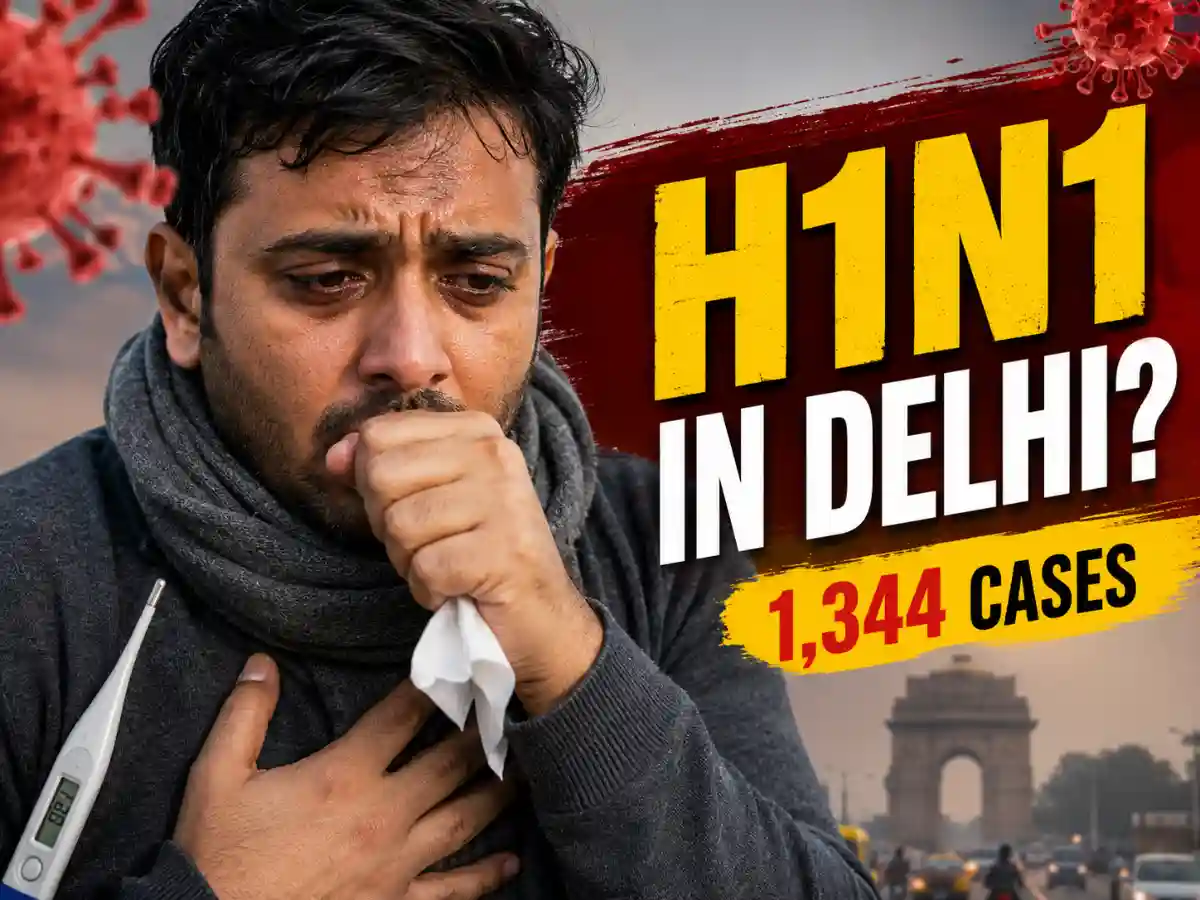
H1N1 Virus Delhi: Cases Rise Sharply
Delhi is seeing a sharp increase in reported H1N1 infections in 2026. Recent reports citing Delhi health data indicate that 1,344 H1N1 infections have been reported in 2026, compared with 229 during the comparable period last year. This represents a substantial increase, but it does not mean every person with fever or flu-like symptoms in Delhi has H1N1.
As a physiotherapist and rehabilitation specialist, I also look at what happens after the acute infection: prolonged weakness, reduced exercise tolerance, poor sleep and difficulty returning to normal activity can become frustrating for some patients.
The important message is simple: don’t panic about H1N1—but don’t casually ignore significant symptoms either.
⚡ H1N1 Delhi: Quick Summary
Main Risk: Influenza can become severe, particularly in older adults, young children, pregnant women and people with chronic medical conditions.
Key Symptoms: Sudden fever, cough, sore throat, headache, body aches, chills, fatigue and sometimes breathing difficulty.
What to Do: Seek early medical assessment when symptoms are significant or you are at higher risk; antiviral treatment may be appropriate when prescribed.
Prevention Tip: Vaccination, hand hygiene, ventilation, avoiding close contact while sick and masking when appropriate can reduce transmission.
What Is H1N1 Virus?
H1N1 is a subtype of influenza A. The H1N1 strain became widely known during the 2009 influenza pandemic and subsequently became part of the seasonal influenza viruses circulating among humans.
In everyday conversation, H1N1 is often called swine flu. However, modern seasonal H1N1 infection should not be understood simply as an illness people “catch from pigs.” The virus can spread from person to person through respiratory particles when an infected person coughs, sneezes, talks or breathes, particularly in close or poorly ventilated environments. WHO describes seasonal influenza as a contagious respiratory infection that can range from mild illness to severe disease.
Typical influenza symptoms include sudden fever, cough, headache, sore throat, muscle or joint pain, fatigue and a runny nose. Many otherwise healthy people recover within about a week, although cough and tiredness can last longer.
What is happening in Delhi?
Recent reporting indicates a substantial increase in reported H1N1 infections in Delhi in 2026. The reported number of 1,344 cases is important, but it should not be interpreted as proof that every fever or cough currently circulating in Delhi is H1N1. Other respiratory viruses, influenza subtypes and illnesses can produce similar symptoms.
That distinction matters because symptoms alone cannot reliably identify the exact influenza strain.
Is Every Fever in Delhi H1N1?
“Is every fever in Delhi H1N1?”
No.
This is probably the first thing I would tell a worried patient.
Influenza, COVID-19, other respiratory viruses and even non-respiratory infections can produce overlapping symptoms. During Delhi’s monsoon period, fever can also have several other causes.
In my clinical experience, patients often become anxious after seeing the words “H1N1 surge” in social media. The opposite problem is also common: someone has significant fever, weakness and breathing symptoms but continues working because they assume it is ordinary seasonal flu.
Both extremes are unhelpful.
The sensible approach is to assess how severe the symptoms are, how long they have been present, whether the person belongs to a high-risk group, and whether warning signs are developing.
Can H1N1 Cause Serious Complications?
For most healthy adults, influenza is self-limited. But “usually mild” does not mean “always harmless.”
Influenza can cause complications such as pneumonia and can worsen underlying heart, lung or other chronic conditions. WHO identifies young children, older adults, pregnant women and people with serious medical conditions as groups at increased risk of severe disease.
Common Mistakes People Make
1. Waiting too long
A mild illness can often be managed conservatively, but high-risk individuals or people who are becoming progressively unwell should not simply wait.
2. Taking antibiotics without medical advice
H1N1 is caused by a virus. Antibiotics do not treat influenza itself. Unnecessary antibiotic use can cause adverse effects and contributes to antimicrobial resistance.
3. Self-prescribing antivirals
Antiviral medication should be prescribed according to the individual’s clinical situation. Drugs such as oseltamivir are used for influenza, but treatment decisions should be made by a healthcare professional.
What WHO and CDC Guidance Says
The important finding is that influenza is not restricted to winter in every part of the world. WHO notes that in tropical regions influenza can circulate throughout the year, with periods of increased activity.
Another clinically important point is timing.
Current WHO and CDC guidance emphasizes that antiviral treatment is most beneficial when started early, particularly for people at high risk of complications or those with severe illness. CDC states that influenza antivirals work best when started within approximately 1–2 days of symptom onset.
That does not mean everyone with a mild cough needs an antiviral. It means that people at higher risk should not delay medical assessment.
Causes and Risk Factors
H1N1 spreads primarily through respiratory transmission. Close contact with an infected person, particularly in indoor environments, increases exposure.
Risk is not simply determined by age. Pregnancy, very young age, older age and chronic conditions such as asthma, diabetes, heart disease and other serious medical problems can increase the likelihood of complications.
H1N1 Warning Signs: When to Seek Urgent Medical Care
Seek prompt medical attention if there is:
- Difficulty breathing or shortness of breath
- Chest pain or pressure
- Bluish or greyish lips/face
- Confusion or unusual drowsiness
- Severe weakness
Emergency symptoms require urgent medical evaluation rather than home treatment.
Diagnosis
H1N1 cannot be reliably diagnosed simply by looking at a person’s symptoms.
A doctor may assess:
- The onset and pattern of symptoms
- Temperature and vital signs
- Breathing and oxygen status
- Medical history
- Exposure history
- Risk factors for complications
Laboratory testing may be recommended depending on the clinical situation, local surveillance and healthcare setting.
In severe cases, additional investigations may be needed to look for complications such as pneumonia or other causes of respiratory distress.
From a physiotherapy perspective, assessment becomes relevant primarily during recovery—for example, when someone has persistent functional limitations, reduced exercise tolerance or difficulty returning to normal activity.
Treatment & Physiotherapy Management
Treatment depends on severity and risk.
For uncomplicated influenza, supportive care generally includes adequate fluids, rest and appropriate treatment of symptoms. WHO states that people at higher risk of severe illness should receive antiviral treatment as soon as possible when clinically indicated.
Antiviral medicines are prescription treatments. Oseltamivir is one commonly used influenza antiviral, but the appropriate drug and dose depend on the individual and should be determined by a healthcare professional.
Where does physiotherapy fit?
Physiotherapy is not a replacement for antiviral or medical treatment during acute H1N1 infection.
Its role may become more relevant during recovery when a patient has:
- Significant deconditioning
- Reduced exercise tolerance
- Weakness after prolonged illness
- Difficulty returning to daily activities
- Reduced mobility after hospitalization
- Breathing-related functional limitations after appropriate medical assessment
In real rehabilitation settings, I prefer a graded return to activity rather than asking a recovering patient to suddenly resume their previous exercise level.
The progression may begin with basic mobility and everyday activities, followed by light activity and gradually increased endurance as symptoms settle.
If exercise causes significant breathlessness, dizziness, chest discomfort or unusual fatigue, the person should stop and seek medical guidance rather than pushing harder.
Myth vs Fact
| Myth | Fact |
|---|---|
| Every fever in Delhi is H1N1. | Many infections can cause similar flu-like symptoms. Testing and clinical assessment may be needed. |
| H1N1 is always fatal. | Most people recover, but severe disease can occur, particularly in high-risk groups. |
| Antibiotics cure H1N1. | Antibiotics do not treat influenza viruses. |
| H1N1 only affects older people. | People of any age can become infected. |
| Once fever disappears, intense exercise is safe. | Recovery should be gradual, especially after significant illness. |
| A flu vaccine guarantees that you cannot get influenza. | Vaccination reduces the risk of influenza and severe outcomes but does not provide an absolute guarantee. |
| H1N1 is the same as every “swine flu” infection. | H1N1 refers to a particular influenza A subtype; laboratory surveillance distinguishes circulating influenza viruses. |
Why Recovery Can Take Longer Than Fever
Consider a hypothetical example.
A 34-year-old IT professional develops sudden fever, dry cough, body aches and severe tiredness. Instead of resting, he continues working on his laptop for eight to nine hours because he assumes it is “just viral fever.”
After several days, the fever improves, but he still becomes exhausted after climbing one flight of stairs.
This is an important distinction: the infection may be improving while physical recovery is still incomplete.
The appropriate response is not to immediately return to intense gym training. Medical review should be considered if symptoms are persistent or concerning, followed by a gradual return to normal activity once medically appropriate.
The example is not meant to diagnose H1N1 from symptoms alone. It illustrates why recovery should be treated as a process rather than a switch that turns on when the thermometer becomes normal.
Prevention Strategy
There is no single trick that eliminates influenza risk.
A practical Delhi-focused prevention strategy includes:
Vaccination: Annual influenza vaccination is an important preventive measure, especially for people at higher risk. WHO recommends annual vaccination for groups including pregnant women, older adults, young children, healthcare workers and people with chronic medical conditions.
Ventilation: Open windows where practical and improve airflow in crowded indoor spaces.
Masking: A well-fitting mask can be useful when you are sick, caring for someone with respiratory infection or entering crowded high-risk environments.
Hand hygiene: Wash hands regularly and avoid touching your eyes, nose and mouth unnecessarily.
Stay home when sick: Continuing normal social activities while febrile can expose family members, colleagues and vulnerable people.
Don’t share personal items: Avoid sharing cups, towels and other items that may facilitate transmission.
Who Should Avoid Certain Exercises or Treatments?
During active influenza with fever or significant systemic symptoms, intense exercise is generally inappropriate.
Extra caution is needed for people with:
- Significant breathing difficulty
- Chest pain
- Severe weakness or dizziness
- Recent hospitalization
- Significant heart or lung disease
People recovering from severe illness should not start aggressive exercise simply because they are tired of being inactive.
Similarly, physiotherapy techniques should be selected according to the patient’s medical status. The priority during acute infection is appropriate medical care, infection control and recovery—not routine musculoskeletal treatment.
Conclusion
The current rise in reported H1N1 cases in Delhi deserves awareness—not panic.
The biggest mistake is assuming that every fever is H1N1. The second mistake is assuming that significant symptoms can always be ignored because “viral fever will settle on its own.”
Most people with uncomplicated influenza recover. But some people are at substantially higher risk of complications, and early medical assessment can make an important difference.
If you develop sudden fever, cough, body aches and marked fatigue, pay attention to how your illness progresses. If you are high-risk, very unwell or developing breathing or chest symptoms, seek medical care promptly.
And once the infection settles, give your body time to rebuild stamina.
Recovery is not a race. A gradual return to normal activity is often wiser than trying to make up for lost days in one workout.
— Dr. SHABBIR HUSSAIN (BPT)
Senior Physiotherapist, Rehabilitation Specialist & Medical Health Writer
FAQ
1. Is H1N1 spreading in Delhi in 2026?
Recent reports indicate a substantial rise in reported H1N1 infections in Delhi, with 1,344 cases reported in 2026 compared with 229 during the comparable period last year.
2. What are the first symptoms of H1N1?
Common symptoms include sudden fever, cough, sore throat, headache, muscle aches, chills, fatigue and sometimes a runny or blocked nose.
3. Is H1N1 the same as swine flu?
H1N1 is an influenza A subtype that became widely known during the 2009 pandemic. The term “swine flu” is commonly used for H1N1 in everyday language.
4. Can antibiotics cure H1N1?
No. Antibiotics act against bacteria and do not treat influenza viruses.
5. Who is most at risk from H1N1?
Young children, older adults, pregnant women and people with certain chronic medical conditions have a higher risk of severe influenza complications.
⚕️ Medical Disclaimer
This article is provided for general educational and public-health awareness purposes only. It is not a substitute for diagnosis, treatment or individualized medical advice from a qualified healthcare professional.
H1N1 symptoms can overlap with other respiratory infections and other causes of fever. Individual medical advice requires assessment of symptoms, medical history, examination and, when appropriate, laboratory testing.
If you have severe symptoms, belong to a high-risk group, or are concerned about your condition, contact a qualified doctor or seek urgent medical care when necessary.
REFERENCES
- Economic Times. (2026). H1N1 Cases in Delhi: What Are the Symptoms, Prevention Tips as Cases Jump 6-Fold From Last Year. August 10, 2026. https://economictimes.indiatimes.com/news/new-updates/h1n1-cases-in-delhi-what-are-the-symptoms-prevention-tips-as-cases-jump-6-fold-from-last-year/articleshow/133119162.cms
- World Health Organization. (2026). How can I avoid getting the flu? March 4, 2026. https://www.who.int/news-room/questions-and-answers/item/how-can-i-avoid-getting-the-flu
- World Health Organization. (2025). Influenza (seasonal). https://www.who.int/health-topics/influenza-seasonal
- World Health Organization. (2024). Clinical practice guidelines for influenza. https://www.who.int/publications/i/item/9789240097759
- World Health Organization. (2026). WHO guideline on public health and social measures for mitigating the risk and impact of epidemic and pandemic influenza. https://www.who.int/publications/i/item/9789240116658
- Centers for Disease Control and Prevention. (2026). Clinical Signs and Symptoms of Influenza. https://www.cdc.gov/flu/hcp/clinical-signs/index.html
- Centers for Disease Control and Prevention. (2025). Treating Flu with Antiviral Drugs. https://www.cdc.gov/flu/treatment/antiviral-drugs.html

Dr. Shabbir Hussain, BPT Licensed Physiotherapist | Clinical Rehabilitation SpecialistMaharashtra OTPT Council Reg. No. PR-2021/08/PT/009532Society of Onco Physiotherapists Reg. No. SOP/00033/LM
He is a licensed physiotherapist with over 8 years of experience in physiotherapy, kidney rehabilitation, oncological rehabilitation, and lymphedema management. He specializes in balance disorders, pain management, musculoskeletal rehabilitation, strengthening programs, and VR-based rehabilitation.
Dr. Shabbir Hussain (BPT)