Published: May 27, 2026 | Last Updated: May 27, 2026
Reviewed & Trusted Medical Content
Written By: Physio Talk Editorial Team
Reviewed By: Dr. SHABBIR HUSSAIN (BPT)
Clinical Experience: Rehabilitation & Physiotherapy Practice
Evidence-Based Review: WHO, NIH, PubMed & rehabilitation guidelines reviewed.
This article has been reviewed by a qualified physiotherapist for medical accuracy and public health awareness.
Quick Summary
Main Risk: Ebola symptoms can rapidly worsen and may become life-threatening.
Key Symptom: Severe fever, bleeding tendencies, weakness, and extreme fatigue.
Best Solution: Early medical treatment plus guided rehabilitation after survival.
Prevention Tip: Avoid exposure to infected body fluids and seek immediate care if symptoms appear.
Ebola symptoms may begin like a common viral fever with weakness, body pain, fatigue, and sore throat. However, in severe cases, symptoms can rapidly progress into dehydration, bleeding, breathing difficulty, confusion, and life-threatening complications within days.
Recognizing dangerous Ebola warning signs early is critical because delayed treatment may increase the risk of severe complications and long-term physical weakness.
A patient may think, “It’s just viral weakness.” Another person may continue working despite body pain, vomiting, or unusual fatigue. In real rehabilitation settings, this delay can become dangerous because Ebola symptoms often worsen faster than people expect.
Quick Answer
Early Ebola symptoms include fever, fatigue, weakness, headache, sore throat, muscle pain, and body aches. Dangerous symptoms include bleeding, dehydration, breathing difficulty, severe weakness, vomiting, confusion, and organ complications.
What Is Ebola?
Ebola Virus Disease is a severe and potentially fatal viral illness caused by the Ebola virus. It spreads through direct contact with infected blood, body fluids, contaminated surfaces or infected animals.
According to the World Health Organization, Ebola can lead to fever, bleeding complications, organ failure, and severe dehydration if not treated quickly.
The illness usually begins suddenly. A person may initially experience fever, chills, headache, body pain, and weakness. As the infection progresses, symptoms can become severe and life-threatening.
Many survivors face prolonged weakness and mobility limitations for weeks or months.
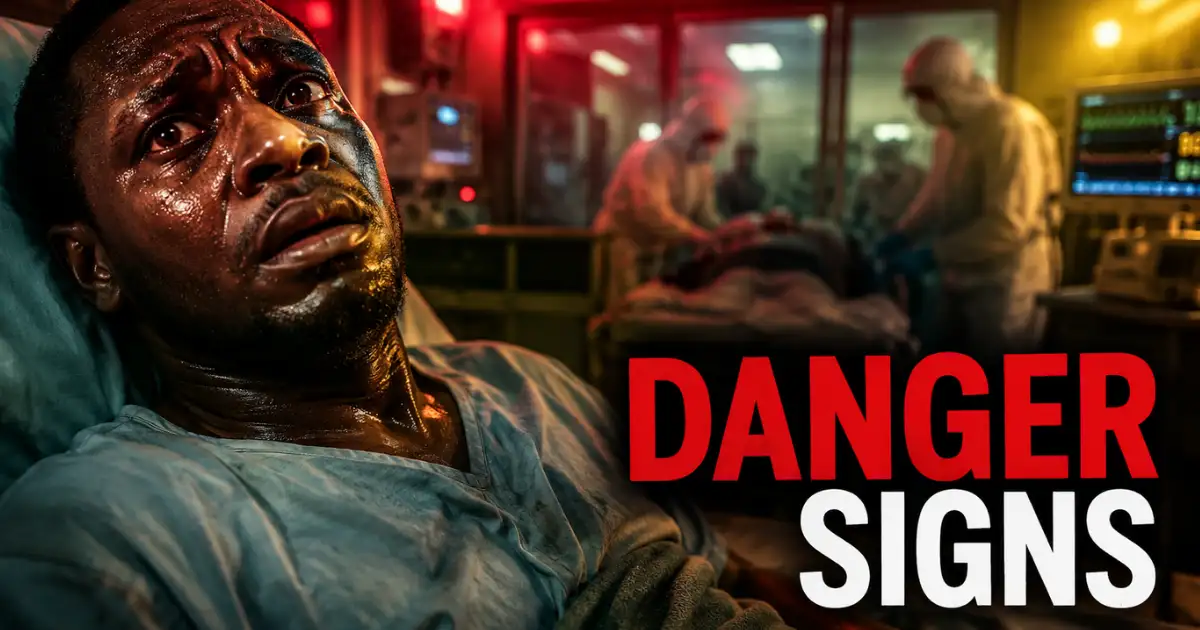
8 Danger Signs of Ebola You Should Never Ignore
Early Ebola symptoms may resemble flu or viral fever initially, which is why people sometimes delay treatment.
Do not ignore these signs:
High fever that appears suddenly.
Extreme weakness that feels disproportionate to normal illness.
Severe body pain and headaches.
Vomiting and diarrhea leading to dehydration.
Unusual bleeding from gums, nose, or stools.
Skin rash and unexplained bruising.
Difficulty breathing or chest discomfort.
Confusion or reduced alertness.
Clinically, worsening fatigue combined with dehydration is a major red flag. Patients may suddenly collapse due to severe weakness.
Advanced symptoms can involve multi-organ complications and emergency hospitalization.
How Ebola Symptoms Progress
Early Stage: Fever, headache, fatigue, sore throat, weakness.
Danger Stage: Vomiting, dehydration, breathing problems, bleeding, confusion.
Recovery Stage: Severe fatigue, muscle weakness, mobility problems, emotional stress.
Hidden Dangers Many People Don’t Realize
The dangerous part about Ebola is not only the infection — it is what happens afterward.
Patients recovering from severe viral illnesses often lose significant muscle strength because of prolonged bed rest, poor nutrition, dehydration, and systemic inflammation.
One common pattern observed in rehabilitation settings is post-viral fatigue syndrome. Patients feel exhausted even after minor activity. Walking short distances may become difficult.
Some survivors develop:
- Joint pain
- Muscle wasting
- Balance problems
- Reduced lung capacity
- Anxiety and fear of movement
- Difficulty returning to work
In Indian households, especially among working adults and caregivers, people frequently return to physical activity too early. This can delay recovery further.
A nurse, office worker or delivery employee may try resuming long shifts despite severe fatigue. Clinically, this often worsens weakness and increases recovery time.
Causes & Risk Factors
Ebola spreads through close contact with infected bodily fluids.
Healthcare workers, caregivers and family members are at higher risk during outbreaks. Poor infection control measures can also increase transmission.
Although Ebola outbreaks are more common in parts of Africa, global travel means awareness is important everywhere.
Modern lifestyle habits can indirectly worsen recovery after severe infections. Sedentary behavior, lack of exercise, poor sleep, and nutritional deficiencies reduce physical resilience.
Personally, I’ve observed that urban lifestyles involving prolonged sitting, smartphone overuse, stress, and low physical activity often make rehabilitation slower after serious illnesses.
Long commuting hours, irregular sleep, and chronic fatigue already weaken many individuals before infection occurs.
How Ebola Is Diagnosed
Doctors diagnose Ebola through clinical examination, travel history, exposure risk assessment, and laboratory testing.
Gold-standard confirmation involves PCR testing to detect the virus.
Blood tests help evaluate:
- Infection severity
- Electrolyte imbalance
- Organ function
- Platelet count
- Liver involvement
From a rehabilitation perspective, physiotherapists assess:
- Muscle strength
- Walking ability
- Joint mobility
- Balance
- Lung capacity
- Fatigue levels
In real rehabilitation settings, recovery assessment is extremely important because many survivors appear “medically stable” but still struggle physically.
When Do Ebola Symptoms Become Dangerous?
Ebola can become dangerous when symptoms rapidly progress beyond fever and weakness. Severe dehydration, bleeding, breathing difficulty, confusion, persistent vomiting, and extreme fatigue may indicate life-threatening complications requiring urgent medical care.
- Bleeding from gums or nose
- Difficulty breathing
- Severe dehydration
- Persistent vomiting
- Confusion or disorientation
- Extreme physical weakness
Treatment & Physiotherapy Management
Ebola requires urgent medical care.
Treatment mainly focuses on supportive management, including hydration, electrolyte correction, oxygen support, and management of complications.
But recovery does not stop after discharge.
This is where physiotherapy becomes highly valuable.
In my physiotherapy practice, rehabilitation helps survivors regain movement, confidence, strength, endurance, and independence.
Early rehabilitation usually begins gently.
Breathing exercises help improve lung function after prolonged illness.
Gradual mobility training prevents stiffness and muscle wasting.
Walking retraining improves balance and endurance.
Strengthening exercises help patients recover lost muscle mass.
Energy conservation strategies are extremely important because post-viral fatigue can persist for months.
Many patients improve faster when rehabilitation is started progressively instead of aggressively.
One major myth is that complete bed rest speeds recovery. Clinically, prolonged inactivity often worsens weakness.
Another misconception is that survivors should immediately return to heavy work once fever resolves. In reality, the nervous system and muscles may still be recovering.
Recovery timelines vary.
Some individuals recover within weeks. Others continue facing weakness, pain, and fatigue for several months.
Real Patient Story
A 34-year-old healthcare worker visited the rehabilitation clinic after recovering from a severe viral illness similar to Ebola-related complications.
Although the infection had resolved medically, she complained of extreme fatigue, difficulty climbing stairs, poor balance and severe muscle weakness.
She initially believed rest alone would solve the problem. However, after nearly two months, even household activities became exhausting.
In physiotherapy sessions, gradual strengthening, breathing exercises, pacing strategies, and balance retraining were introduced.
Within six weeks, her walking endurance improved significantly, and she regained confidence returning to work safely.
This is a common rehabilitation pattern observed after severe systemic illnesses.
Doctor Insight
⚠️ Many patients ignore early symptoms until daily movement becomes exhausting. In rehabilitation practice, delayed recovery is often linked to prolonged weakness and inactivity after severe illness.
Prevention Strategies
Preventing Ebola primarily involves avoiding exposure to infected bodily fluids and maintaining infection control measures.
Good hand hygiene remains critical.
Healthcare workers should use proper protective equipment.
Avoid direct contact with infected individuals during outbreaks.
From a rehabilitation perspective, maintaining overall physical health also matters.
Regular physical activity improves immune resilience and recovery capacity.
In Indian urban lifestyles, small changes can help significantly:
Walking daily instead of prolonged sitting.
Improving sleep schedules.
Reducing processed food intake.
Maintaining hydration during long work hours.
Taking movement breaks during office work.
Many office employees spend 8–10 hours sitting continuously. Personally, I’ve observed that physically inactive individuals often recover slower after severe illnesses.
When to See a Doctor
Seek immediate medical care if someone develops:
High fever after exposure risk.
Persistent vomiting or diarrhea.
Severe dehydration.
Breathing difficulty.
Confusion or unconsciousness.
Bleeding symptoms.
Extreme fatigue that rapidly worsens.
Never attempt self-treatment during suspected Ebola infection.
Early medical intervention can save lives.
Who Should Avoid Certain Exercises or Treatments?
Not every survivor should begin aggressive exercise immediately.
Patients with:
- Severe cardiac complications
- Breathing instability
- Active fever
- Organ failure
- Severe dehydration
- Neurological complications
should only exercise under medical supervision.
In rehabilitation settings, individualized physiotherapy plans are essential.
Overexertion during recovery may worsen fatigue and delay healing.
What makes Ebola frightening is not only the infection itself, but the long recovery that follows. Many survivors continue struggling with muscle weakness, joint stiffness, balance issues, fatigue, and emotional trauma long after the virus is gone.
Key Takeaways
Early Ebola symptoms should never be ignored because rapid worsening can occur.
Recovery often continues long after infection clears.
Physiotherapy helps improve strength, mobility, breathing, and endurance.
Post-viral fatigue is real and can affect daily activities significantly.
Gradual rehabilitation is safer than prolonged bed rest or sudden heavy activity.
Preventive hygiene and early medical attention remain critical.
FAQs
Can Ebola survivors experience weakness for months?
Yes. Many survivors report prolonged fatigue, muscle weakness, and reduced endurance even after medical recovery.
How does physiotherapy help Ebola recovery?
Physiotherapy improves mobility, breathing, muscle strength, balance, and overall physical function during rehabilitation.
Is exercise safe after Ebola?
Exercise must be gradual and medically supervised depending on the survivor’s condition.
What are the earliest Ebola symptoms?
Fever, weakness, body pain, headache, and fatigue are common early symptoms.
Can Ebola affect mental health?
Yes. Anxiety, trauma, fear, and emotional stress are common after severe illness.
Is complete bed rest recommended during recovery?
Not always. Prolonged inactivity can worsen weakness and muscle loss.
When should someone seek emergency care?
Immediate care is necessary if there is bleeding, breathing difficulty, confusion, severe dehydration, or rapid worsening symptoms.
Can physiotherapy reduce post-viral fatigue?
Yes. Structured rehabilitation and pacing strategies often improve endurance and functional recovery.
Medical Disclaimer
This article is for educational and public health awareness purposes only. It does not replace professional medical diagnosis, treatment, or emergency care. Consult a qualified healthcare professional for personalized advice.
References
- World Health Organization – Ebola Virus Disease
- NIH – Ebola Information Page
- CDC – Ebola Symptoms and Treatment
- PubMed Research Database.

Dr. Shabbir Hussain, BPT Licensed Physiotherapist | Clinical Rehabilitation SpecialistMaharashtra OTPT Council Reg. No. PR-2021/08/PT/009532Society of Onco Physiotherapists Reg. No. SOP/00033/LM
He is a licensed physiotherapist with over 8 years of experience in physiotherapy, kidney rehabilitation, oncological rehabilitation, and lymphedema management. He specializes in balance disorders, pain management, musculoskeletal rehabilitation, strengthening programs, and VR-based rehabilitation.
Dr. Shabbir Hussain (BPT)