
Published: July 18, 2026
Last Updated: July 18, 2026
Evidence-Based Review: Yes
Reading Time: 9–10 Minutes
The Fascinating Story Behind the Stethoscope Invention
Introduction
Imagine visiting a doctor with chest pain in the early 1800s. There were no X-rays, CT scans, ultrasounds, or digital heart monitors. Physicians relied almost entirely on what they could see, touch, and hear. Diagnosing heart or lung disease was often difficult, uncomfortable, and sometimes inaccurate.
Today, the stethoscope is one of the most recognizable symbols of healthcare. Whether you visit a family physician, cardiologist, pediatrician, or physiotherapist, chances are you’ll see one hanging around their neck. Yet very few people know the remarkable story behind this simple instrument.
As a physiotherapist, I frequently work alongside physicians during rehabilitation, especially for patients recovering from heart surgery, respiratory illnesses, or chronic lung diseases. In real clinical settings, a stethoscope is far more than a medical accessory—it provides valuable clues about a patient’s cardiovascular and respiratory health, helping healthcare professionals make informed decisions quickly.
The invention of the stethoscope in 1816 transformed medicine forever. It improved patient dignity, enhanced diagnostic accuracy, and laid the foundation for modern clinical examination. More than two centuries later, even with advanced imaging technologies, this humble instrument continues to play a vital role in healthcare around the world.
⚡ Quick Summary
Inventor: Dr. René Laennec (1816)
Main Purpose: Safe and accurate examination of the heart and lungs.
Why It Matters: Revolutionized medical diagnosis worldwide.
Interesting Fact: The first stethoscope was a simple hollow wooden tube.
🕰️ Timeline of the Stethoscope
France
De l’Auscultation Médiate
Noise Reduction • Recording • AI Analysis • Telemedicine
Who Invented the Stethoscope?
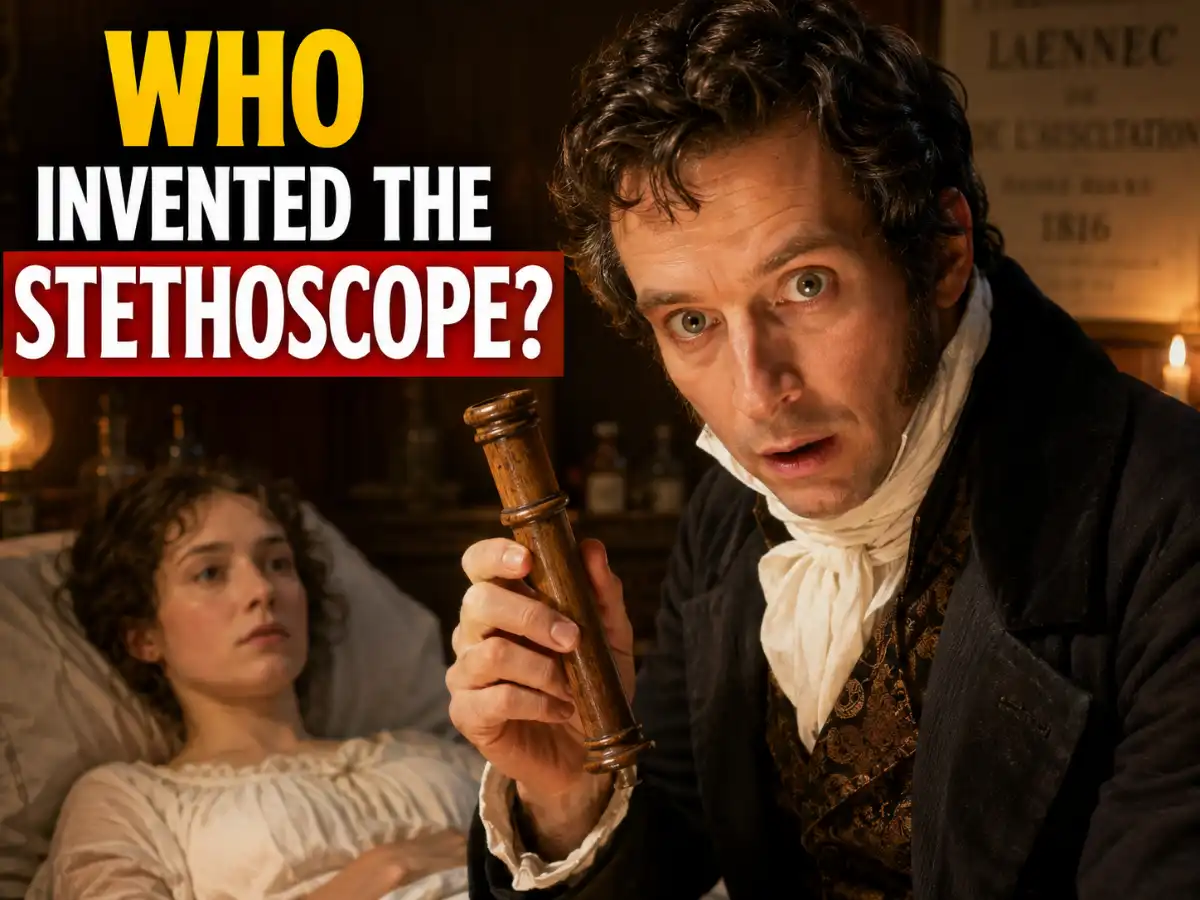
The stethoscope was invented in 1816 by Dr. René Théophile Hyacinthe Laennec, a French physician working at the Necker Hospital in Paris.
Laennec was widely respected for his keen observational skills and his deep interest in diseases of the heart and lungs. During his medical practice, he often faced challenges while examining patients with chest complaints. At that time, doctors performed what was known as immediate auscultation, placing an ear directly on the patient’s chest to listen to heart and lung sounds.
Although this method sometimes worked, it had significant drawbacks. It was uncomfortable for both the patient and the physician, particularly when examining women or individuals with obesity. Background noise and poor sound transmission also limited diagnostic accuracy.
Laennec believed there had to be a better way—and one simple observation led to a revolutionary idea.
Why Was the Stethoscope Invented?
According to historical accounts, Dr. Laennec was preparing to examine a young woman with symptoms suggesting heart disease. Because direct chest examination felt socially inappropriate and medically ineffective, he recalled a childhood observation: sound travels efficiently through solid materials.
He rolled a sheet of paper into a hollow cylinder and placed one end against the patient’s chest while listening from the other end. To his surprise, the heart sounds became clearer than ever before.
This unexpected discovery inspired Laennec to create a more durable version made from wood, giving birth to the first stethoscope.
The name itself comes from two Greek words:
- Stethos meaning chest
- Skopein meaning to observe or examine
Thus, the stethoscope literally means “to examine the chest.”
The Story of René Laennec: A Medical Pioneer in Stethoscope Invention
René Laennec was born in France in 1781. From a young age, he showed exceptional academic ability and developed a passion for medicine despite facing personal hardships, including losing his mother early in life.
Throughout his career, Laennec became fascinated by diseases affecting the lungs, particularly tuberculosis, which was widespread during the 19th century. He meticulously studied how different diseases produced distinct sounds within the chest.
In 1819, he published his landmark medical book, “De l’Auscultation Médiate,” introducing the concept of listening to internal body sounds through an instrument rather than directly with the ear.
His work forever changed clinical medicine by allowing physicians to identify conditions such as pneumonia, pleural effusion, tuberculosis, and various heart diseases with much greater confidence.
Sadly, Laennec himself later died of tuberculosis at the age of 45. Yet his invention continues to save millions of lives every year.
What Did the First Stethoscope Look Like?
Unlike today’s flexible rubber stethoscopes, the original device was remarkably simple.
It consisted of:
- A hollow wooden cylinder
- Approximately 25–30 centimeters in length
- A single listening channel (monaural)
- One earpiece
- A chest opening that amplified internal body sounds
Despite its simplicity, it dramatically improved the physician’s ability to hear heartbeats, breathing patterns, and abnormal lung sounds.
Many historians consider it one of the most influential medical inventions ever created.

How the Stethoscope Changed Medicine Forever
The introduction of the stethoscope marked a turning point in medical history.
For the first time, doctors could assess internal organs without surgery. Diseases could be detected earlier, patients experienced greater privacy, and medical examinations became more systematic.
Clinically, this innovation introduced the practice of mediate auscultation, which remains a fundamental skill taught in every medical school today.
As healthcare evolved, physicians discovered that different heart murmurs, lung crackles, wheezing, and bowel sounds could indicate specific diseases. This transformed bedside diagnosis and reduced reliance on guesswork.
In my clinical experience working with rehabilitation patients, careful auscultation often helps identify subtle respiratory changes that influence physiotherapy planning. For example, reduced air entry or abnormal breath sounds may prompt modification of exercise intensity and referral for further medical evaluation.
The Evolution of the Stethoscope
The stethoscope has undergone remarkable changes over the past two centuries.
During the mid-1800s, flexible tubing replaced the rigid wooden cylinder, making examinations more comfortable and practical. Later, the binaural design—with two earpieces—significantly improved sound quality and became the global standard.
The 20th century introduced lightweight materials, improved diaphragms, and specialized models for cardiology, pediatrics, and neonatal care. These refinements enabled clinicians to detect subtle heart murmurs, abnormal lung sounds, and vascular changes with greater precision.
Today, digital stethoscopes represent the next major leap in innovation. Many modern devices can amplify body sounds, reduce background noise, record heart and lung sounds, and even integrate with artificial intelligence to assist clinicians in detecting abnormalities. Some models allow remote consultations, making them especially valuable in telemedicine and rural healthcare settings.
Despite these technological advances, the fundamental principle established by René Laennec in 1816 remains unchanged: listening carefully to the human body provides invaluable diagnostic information.
As healthcare professionals, we are reminded that groundbreaking innovations do not always require complex technology. Sometimes, a simple observation combined with curiosity and compassion can transform medicine for generations. The stethoscope is a timeless example of how one thoughtful invention continues to connect doctors with patients, improve diagnosis, and symbolize trust, care, and healing across the world.
How Does a Stethoscope Work?
Although a stethoscope appears to be a simple instrument, it is carefully engineered to transmit sound with remarkable clarity. Every heartbeat, breath, and bowel movement creates vibrations that travel through body tissues. When the chest piece is placed on the skin, these vibrations are collected and transmitted through hollow tubing to the earpieces.
Modern acoustic stethoscopes generally have two sides on the chest piece:
- Diaphragm: Best for high-pitched sounds such as normal breath sounds, bowel sounds, and many heart sounds.
- Bell: Better for detecting low-pitched sounds like certain heart murmurs and extra heart sounds.
Digital stethoscopes take this a step further by converting sound waves into electronic signals. Some models amplify faint sounds, filter background noise, and even generate visual waveforms that can be analyzed using artificial intelligence.
Despite these technological improvements, the doctor’s clinical judgment remains the most important part of the examination.
Types of Stethoscopes
Over the years, different types of stethoscopes have been developed to meet specific clinical needs.
1. Acoustic Stethoscope
The most common type used by physicians, nurses, physiotherapists, and medical students. It relies entirely on natural sound transmission without electronics.
2. Electronic (Digital) Stethoscope
Amplifies body sounds and reduces environmental noise. It is especially useful in busy hospitals, intensive care units, and telemedicine.
3. Cardiology Stethoscope
Designed with superior acoustic sensitivity, allowing cardiologists to hear subtle heart murmurs and abnormal valve sounds more clearly.
4. Pediatric and Neonatal Stethoscope
Features a smaller chest piece specifically designed for infants and children.
5. Fetal Stethoscope (Pinard Horn)
A traditional instrument used in obstetrics to listen to a baby’s heartbeat during pregnancy.
Interactive Quiz: Can You Identify These Stethoscope Types?
Click on each card to reveal the correct answer.
🔊 Which stethoscope is most commonly used by doctors and medical students?
✅ Acoustic Stethoscope
It uses natural sound transmission without electronics and remains the most widely used stethoscope worldwide.
🤖 Which stethoscope can record heart sounds and use AI?
✅ Digital (Electronic) Stethoscope
It converts body sounds into electronic signals, reduces background noise, records sounds, and some models use artificial intelligence to assist clinicians.
❤️ Which stethoscope is specially designed for detecting subtle heart murmurs?
✅ Cardiology Stethoscope
It provides superior acoustic sensitivity, making it ideal for cardiologists and cardiac examinations.
👶 Which stethoscope is made for newborn babies and children?
✅ Pediatric / Neonatal Stethoscope
It has a smaller chest piece to accurately examine infants and young children.
🤰 Which traditional instrument is used to hear a baby’s heartbeat during pregnancy?
✅ Pinard Horn (Fetal Stethoscope)
It is a traditional obstetric instrument used for listening to the fetal heartbeat.
🎉 How Many Did You Get Right?
✔ 5/5 = Future Healthcare Expert 🩺
✔ 3–4 = Great Job 👏
✔ 1–2 = Keep Learning 📚
Why Is the Stethoscope Still Important Today?
Many people assume that modern technologies such as CT scans, MRI, ultrasound, and echocardiography have made the stethoscope obsolete. Surprisingly, that is far from the truth.
The stethoscope remains one of the fastest, safest, and most cost-effective diagnostic tools available. It allows healthcare professionals to assess patients within seconds, even before laboratory reports or imaging studies become available.
In emergency departments, ambulances, intensive care units, outpatient clinics, rural health centers, and physiotherapy rehabilitation settings, the stethoscope continues to be an indispensable part of patient care.
In my clinical experience, listening to breath sounds before beginning chest physiotherapy often helps identify congestion, reduced air entry, or airway secretions. These findings guide treatment decisions and improve patient safety.
Diseases That Can Be Detected Using a Stethoscope
Although a stethoscope does not provide a final diagnosis on its own, it often gives the first important clues.
Doctors commonly use it to evaluate conditions such as:
- Pneumonia
- Asthma
- Chronic Obstructive Pulmonary Disease (COPD)
- Tuberculosis
- Heart murmurs
- Valve disorders
- Congestive heart failure
- Fluid around the lungs (Pleural Effusion)
- Irregular heart rhythms
- High blood pressure (using a sphygmomanometer)
Early detection through careful auscultation often leads to timely investigations and better treatment outcomes.
Doctor Explains
One of the biggest misconceptions I encounter is that the stethoscope is merely a symbol of the medical profession. Many patients believe doctors already know what is wrong before placing it on the chest.
In reality, every examination provides valuable clinical information.
A physician listens not only to the heart but also to the lungs, blood flow, and, in some cases, bowel sounds. Subtle differences in rhythm, intensity, or timing can indicate underlying disease long before symptoms become severe.
Clinically, I have observed that patients often underestimate the importance of this simple examination because it takes only a minute or two. However, those few minutes frequently help clinicians decide whether further tests, urgent treatment, or specialist referral is necessary.
The stethoscope is not replacing technology—it helps doctors determine when advanced investigations are truly needed.
Interesting Facts Most People Don’t Know
The history of the stethoscope is filled with fascinating milestones that many people have never heard about.
The first stethoscope was made entirely from wood and had only one earpiece. Flexible rubber tubing was introduced decades later, dramatically improving comfort and sound quality.
Interestingly, René Laennec’s invention was initially met with skepticism. Some physicians believed placing an instrument between the doctor and patient would weaken the doctor-patient relationship. Instead, the opposite happened—it improved patient dignity and made examinations more respectful.
Today, millions of healthcare professionals across the world still carry a stethoscope every day, making it one of the longest-lasting medical inventions in history.
Recent Innovations and Research
Medical technology continues to transform the traditional stethoscope.
Recent research has shown that AI-assisted digital stethoscopes can help detect abnormal heart murmurs, atrial fibrillation, and certain lung conditions with impressive accuracy when used alongside clinical assessment.
Modern devices can:
- Record heart and lung sounds.
- Share recordings securely with specialists.
- Support telemedicine consultations.
- Assist in medical education by replaying abnormal sounds.
- Improve screening in remote and underserved communities.
Researchers continue to explore how artificial intelligence may help healthcare professionals identify cardiovascular and respiratory diseases even earlier. However, these tools are designed to support—not replace—clinical expertise.
Myth vs Fact
| Myth | Fact |
|---|---|
| Stethoscopes are outdated. | They remain one of the most important bedside diagnostic tools. |
| Doctors only check the heartbeat. | They also evaluate lungs, blood flow, bowel sounds, and circulation. |
| Digital stethoscopes have replaced traditional ones. | Acoustic stethoscopes are still widely used worldwide. |
| Only cardiologists need stethoscopes. | Physicians, pediatricians, physiotherapists, emergency doctors, nurses, and many other professionals use them daily. |
| A stethoscope alone can diagnose every disease. | It provides important clinical clues but is combined with history, examination, and investigations. |
A Real Clinical Story
A 62-year-old gentleman recovering from pneumonia was referred for pulmonary rehabilitation. Before starting breathing exercises, the medical team performed a routine chest examination using a stethoscope. Reduced breath sounds and fine crackles were still present in one lung despite improvement in his symptoms.
Because these findings suggested incomplete recovery, his rehabilitation program was modified, and further medical evaluation confirmed that additional treatment was needed. Over the following weeks, his breathing improved, and he returned to normal daily activities.
This example highlights an important lesson: a patient may feel better, yet careful clinical examination can reveal ongoing issues that require attention
Expert Clinical Insights
Throughout my years in physiotherapy practice, I have worked closely with physicians caring for patients with orthopedic, neurological, cardiac and respiratory conditions.
One pattern I frequently observe is that patients are often reassured by advanced scans but overlook the value of a thorough physical examination. In reality, a skilled clinician combines observation, palpation, patient history, and auscultation to build a complete picture of health.
Many rehabilitation decisions—especially in cardiopulmonary physiotherapy—are influenced by what healthcare professionals hear through a stethoscope. Even subtle changes in breathing sounds may prompt adjustments in exercise intensity, breathing techniques, or referral for additional investigations.
This reminds us that while technology continues to evolve, clinical skills remain at the heart of safe and effective patient care.
Conclusion
More than 200 years after its invention, the stethoscope remains one of the greatest achievements in medical history. What began as a rolled sheet of paper in the hands of a thoughtful French physician has evolved into a globally recognized symbol of healthcare.
Its story teaches us that innovation does not always come from complex machines or expensive technology. Sometimes, the most transformative discoveries arise from compassion, curiosity, and a desire to improve patient care.
As a physiotherapist, I continue to appreciate the role of the stethoscope in multidisciplinary healthcare. Whether assessing breathing before rehabilitation, monitoring recovery after surgery, or supporting physicians in patient management, this simple instrument continues to contribute to better clinical decisions every day.
Even in an era of artificial intelligence, advanced imaging, and digital diagnostics, the stethoscope remains a timeless reminder that listening carefully to the human body—and to our patients—will always be one of the most valuable skills in medicine.
🩺 Medical Review & Author Information
Written & Reviewed By: Dr. SHABBIR HUSSAIN (BPT)
Designation: Senior Physiotherapist, Rehabilitation Specialist & Medical Health Writer
Clinical Experience: 8+ Years in Musculoskeletal Rehabilitation, Pain Management, Oncology Rehabilitation, Kidney Rehabilitation & Functional Recovery
About the Author: Learn more about Dr. Shabbir Hussain’s qualifications, clinical expertise, professional experience and editorial standards: About Dr. Shabbir Hussain
Evidence-Based Review: This article has been medically reviewed and written by a qualified physiotherapist to ensure clinical accuracy, patient safety and public health awareness.
Last Updated: July 18, 2026
Frequently Asked Questions (FAQs)
Who invented the stethoscope?
The stethoscope was invented in 1816 by the French physician Dr. René Théophile Hyacinthe Laennec. He created the first stethoscope by rolling a sheet of paper into a hollow tube, which later evolved into a wooden instrument that revolutionized medical diagnosis.
Why was the stethoscope invented?
Dr. Laennec invented the stethoscope to examine heart and lung sounds more accurately while preserving patient dignity. At that time, doctors placed their ear directly on a patient’s chest, which was uncomfortable and often ineffective.
What was the first stethoscope made of?
The first stethoscope began as a rolled paper tube. Soon afterward, Dr. Laennec developed a more durable version made from a hollow wooden cylinder about 25–30 cm long with a single listening channel.
Is the stethoscope still used today?
Yes. Even with advanced technologies such as CT scans, MRI, ultrasound, and echocardiography, the stethoscope remains one of the fastest, safest, and most cost-effective tools for assessing heart, lung, and bowel sounds in hospitals, clinics, ambulances, and rehabilitation settings.
How does a digital stethoscope work?
A digital stethoscope converts body sounds into electronic signals. It can amplify faint sounds, reduce background noise, record heart and lung sounds, and in some models use artificial intelligence (AI) to help clinicians detect abnormal heart or lung sounds.
What diseases can a stethoscope help detect?
A stethoscope helps clinicians identify important signs of conditions such as pneumonia, asthma, COPD, heart murmurs, valve disorders, pleural effusion, congestive heart failure, and irregular heart rhythms. It provides valuable clinical clues that guide further testing and treatment.
Can a stethoscope diagnose every disease?
No. A stethoscope is an essential bedside examination tool, but it does not provide a final diagnosis on its own. Doctors combine the findings with a patient’s medical history, physical examination, laboratory tests, and imaging studies to make an accurate diagnosis.
References
- Laennec, R. T. H. (1819). De l’Auscultation Médiate, ou Traité du Diagnostic des Maladies des Poumons et du Cœur. Paris: J.-A. Brosson et J.-S. Chaudé.
- National Library of Medicine. (2024). René Théophile Hyacinthe Laennec (1781–1826): Inventor of the Stethoscope. U.S. National Library of Medicine. https://www.nlm.nih.gov/
- National Center for Biotechnology Information. (2023). The History of the Stethoscope. National Library of Medicine. https://www.ncbi.nlm.nih.gov/
- National Institutes of Health. (2024). Medical History Resources. https://www.nih.gov/
- World Health Organization. (2024). Quality of Care. https://www.who.int/health-topics/quality-of-care
- Stanford Medicine. (2023). The Evolution of the Stethoscope. https://lane.stanford.edu/

Dr. Shabbir Hussain, BPT
Registered Physiotherapist | Clinical Rehabilitation Specialist
Maharashtra OTPT Council Reg. No.: PR-2021/08/PT/009532
Society of Onco Physiotherapists Reg. No.: SOP/00033/LM
Dr. Shabbir Hussain, BPT, Registered Physiotherapist with over 8 years of experience in physiotherapy, kidney rehabilitation, oncological rehabilitation, and lymphedema management. He specializes in balance disorders, pain management, musculoskeletal rehabilitation, strengthening programs, and VR-based rehabilitation.