Medically Reviewed By: Dr. Shabbir Hussain (BPT), Licensed Physiotherapist with 8+ years of clinical experience in rehabilitation, balance disorders, pain management, neurological rehabilitation, and strengthening programs.
Last Updated: June 13, 2026
Most people imagine epilepsy as a sudden collapse and violent seizure. In reality, some of the earliest warning signs can be so subtle that they are mistaken for stress, fatigue, or simple daydreaming.
Across India and the world, millions live with undiagnosed , mistaking early warning signs for stress, weakness, or “nothing serious.” Families delay care. Patients hide symptoms. Treatment starts too late.
On International Epilepsy Day, doctors worldwide warn of one uncomfortable truth:
👉 Ignoring it doesn’t make it disappear—it makes outcomes worse.
Rohan, a 19-year-old college student, thought his repeated “blank staring episodes” were simply fatigue. Months later, he experienced a full seizure during class. Doctors later confirmed epilepsy. Early diagnosis could have prevented years of uncertainty.
🌍 According to the World Health Organization, epilepsy affects more than 50 million people worldwide, making it one of the most common neurological disorders.
🧠 What Are the Early Warning Signs of Epilepsy?
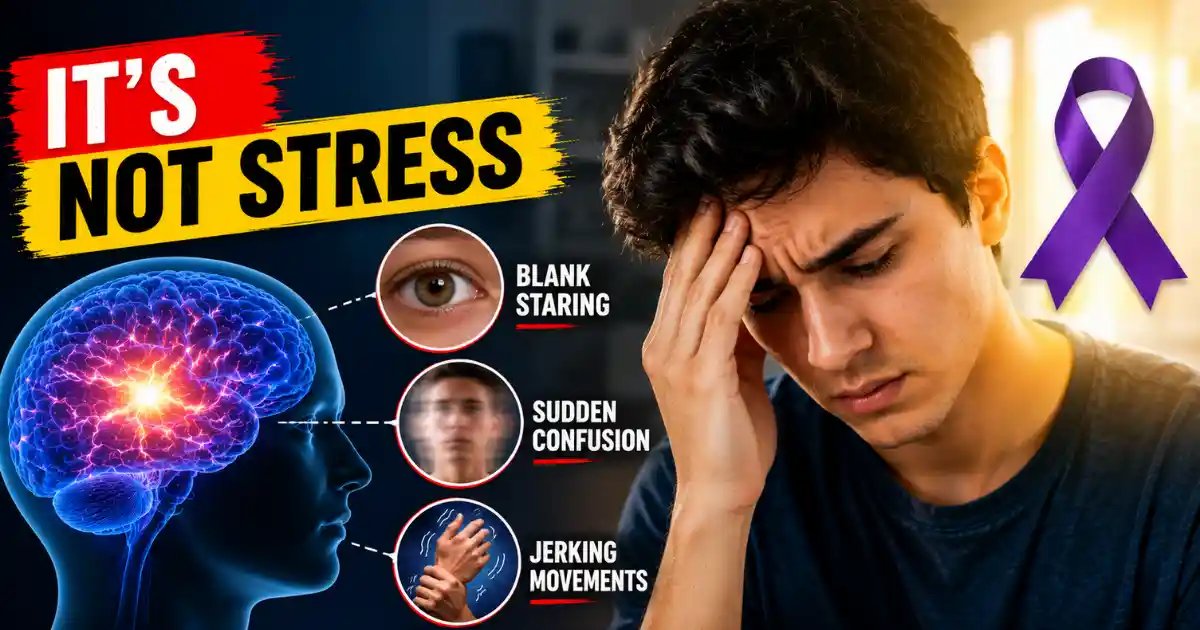
Early epilepsy symptoms can be subtle and are often mistaken for stress, fatigue, or lack of concentration. Common warning signs include:
- ⚡ Brief staring spells
- ⚡ Sudden confusion
- ⚡ Unusual smells, tastes, or sensations
- ⚡ Jerking movements of an arm or leg
- ⚡ Short periods of unresponsiveness
Important: Even a single unexplained seizure or episode of altered awareness should be evaluated by a healthcare professional.
😲 3 Shocking Truths About Epilepsy Most People Learn Too Late
⚠️ Truth #1: Not Every Seizure Looks Like a Seizure
Many people never lose consciousness. Some simply experience blank staring episodes, sudden confusion, unusual sensations, or brief lapses in awareness that are often mistaken for stress or fatigue.
🚨 Truth #2: Untreated Epilepsy Can Be Fatal
Repeated uncontrolled seizures increase the risk of serious injuries, accidents, drowning, and a rare but life-threatening condition known as Sudden Unexpected Death in Epilepsy (SUDEP).
✅ Truth #3: Most Cases Can Be Controlled
With early diagnosis, proper medication, and regular follow-up care, many people with epilepsy achieve excellent seizure control and live active, productive lives.
What Is Epilepsy? Causes, Symptoms and Treatment
It is a chronic neurological disorder characterised by recurrent, unprovoked seizures caused by abnormal electrical activity in the brain.
According to the World Health Organization, It affects over 50 million people worldwide, making it one of the most common neurological conditions.
A person is diagnosed with epilepsy when:
- They have two or more unprovoked seizures, or
- One seizure with a high risk of recurrence confirmed clinically
Importantly:
It is not contagious
It is not a mental illness
It is not caused by weakness or sin
🚨 Most People Don’t Realize This
Every year, thousands of people develop preventable epilepsy complications simply because warning signs were mistaken for stress, fatigue, or something harmless. Early diagnosis can be life-changing—and in some cases, life-saving.
The NEGATIVE ANGLE ⚠️ What Happens If Epilepsy Is Ignored?
Ignoring epilepsy can be life-altering—and sometimes fatal.
🚨 Serious Consequences Include:
- Sudden Unexpected Death (SUDEP)
- Permanent brain injury
- Learning and memory problems in children
- Depression, anxiety, and social isolation
- Increased risk of accidents, falls, and drowning
WHO data shows that up to 70% of cases can be controlled, yet nearly 75% of people in low- and middle-income countries receive no treatment.
Delay doesn’t just prolong seizures—it reduces treatment success.
Causes & Risk Factors
🧬 Medical Causes
- Brain injury or stroke
- Birth trauma or low oxygen at birth
- Brain infections (meningitis, neurocysticercosis)
- Genetic predisposition
- Brain tumors
🧠 Lifestyle & Environmental Factors
- Sleep deprivation
- Alcohol misuse
- Flashing lights (photosensitive epilepsy)
- Poor medication adherence
👶👴 Age-Related Risk
- High incidence in children and adults over 60
- Post-stroke epilepsy common in elderly populations
🧠 Did You Know?
Epilepsy does not always cause dramatic convulsions. Some seizures may last only a few seconds and appear as staring, confusion, unusual emotions, or brief lapses in awareness.
Warning Signs & Symptoms ⚠️ Don’t Ignore These
Early Signs
- Brief staring spells
- Sudden confusion
- Unusual sensations (smell, fear)
- Jerking movements of one limb
Advanced Symptoms
- Loss of consciousness
- Full-body convulsions
- Tongue biting
- Loss of bladder control
- Severe post-seizure fatigue
👉 Any unexplained seizure requires medical evaluation. Even one.
🚨 Don’t Ignore These Symptoms
Many people dismiss brief staring spells, sudden confusion, unusual sensations, or unexplained jerking movements as stress or fatigue. In some cases, these may be early warning signs of epilepsy that require medical evaluation.
Diagnosis & Clinical Standards
Gold-standard diagnosis follows international guidelines from National Institutes of Health and WHO.
Diagnostic Tools Include:
- EEG (Electroencephalogram) – gold standard
- MRI brain imaging
- Blood tests (to rule out metabolic causes)
- Detailed seizure history.
📊 Epilepsy at a Glance
- 🌍 Affects over 50 million people worldwide
- 💊 Many cases can be effectively controlled with treatment
- 🧠 Caused by abnormal electrical activity in the brain
- ⚡ Not all seizures involve convulsions
- 🚑 Early diagnosis improves outcomes
What Actually Works
💊 Medical Treatment (Evidence-Based)
- Anti-epileptic drugs (AEDs)
- Correct medication controls seizures in 70% of patients
- Treatment is often long-term but life-saving
🧘 Physiotherapy & Rehabilitation
Research published in PubMed highlights benefits of:
- Balance and gait training
- Injury prevention
- Post-seizure muscle recovery
- Confidence restoration
🧠 Lifestyle Interventions
- Sleep regulation
- Stress management
- Avoiding seizure triggers
- Medication adherence
❌ Myths like “herbal cures” or “stopping meds once seizures stop” increase relapse risk.
⚠️ Common Mistakes That Delay Treatment
- Ignoring early seizure symptoms
- Stopping medication without medical advice
- Believing myths and unproven remedies
- Delaying neurological evaluation
- Not identifying seizure triggers
🧘 How Physiotherapy Can Help People with Epilepsy
While physiotherapy does not cure epilepsy, it can play an important role in improving safety, mobility, confidence, and overall quality of life—especially for individuals who experience balance problems, muscle weakness, falls, or physical limitations after seizures.
- ✅ Improves balance and coordination
- ✅ Reduces the risk of falls and injuries
- ✅ Helps restore strength after seizure-related weakness
- ✅ Supports gait and mobility training
- ✅ Enhances confidence in daily activities
- ✅ Promotes physical fitness and overall well-being
💡 Key Takeaway: When combined with appropriate medical treatment, physiotherapy can help people with epilepsy maintain independence, improve physical function, and safely return to everyday activities.
Prevention & Daily Habits
While epilepsy isn’t always preventable, risk reduction is possible:
- Safe childbirth practices
- Prevent head injuries
- Treat brain infections early
- Avoid alcohol misuse
- Never skip prescribed medication
Public-health action saves lives.
✅ The Good News
With early diagnosis and proper treatment, many people with epilepsy can achieve excellent seizure control and live active, productive lives. Seeking medical advice early can significantly improve long-term outcomes.
⚠️ Medical Disclaimer
The information provided in this article is intended for educational and informational purposes only and should not be considered a substitute for professional medical advice, diagnosis, or treatment.
Epilepsy is a complex neurological condition that requires individualized assessment and management. Always consult a qualified physician, neurologist, or licensed healthcare professional regarding any symptoms, diagnosis, treatment options, or health concerns.
Never ignore, delay, or discontinue medical treatment based on information found online. Treatment decisions should always be made in consultation with a healthcare professional.
🚑 Emergency Warning: If someone experiences a seizure for the first time, has repeated seizures, difficulty breathing, serious injury during a seizure, or a seizure lasting more than 5 minutes, seek immediate emergency medical attention.
FAQ’s
It is reversible?
Some forms are controlled or outgrown, but many require lifelong management.
Can physiotherapy help ?
Yes—especially for mobility, injury prevention, and post-seizure recovery.
Is epilepsy dangerous if untreated?
Yes. Untreated epilepsy increases risk of injury, brain damage, and death.
Can children with epilepsy live normal lives?
With early treatment, most children lead full, productive lives.
What mistakes delay recovery?
Ignoring early seizures, stopping medication, and believing myths.
Can stress trigger seizures?
Stress does not cause epilepsy but may trigger seizures in some people who already have the condition.
What should you do if someone has a seizure?
Keep them safe, turn them onto their side if possible, and seek emergency help if the seizure lasts longer than 5 minutes.
📚 Continue Reading
You may also find these evidence-based health articles helpful:
📚 Authoritative References
World Health Organization. (2023). Epilepsy: A public health imperative. https://www.who.int
Fisher, R. S., et al. (2017). ILAE official report: Practical clinical definition of epilepsy. Epilepsia. https://pubmed.ncbi.nlm.nih.gov
National Institutes of Health. (2022). Epilepsy overview. https://www.ninds.nih.gov
Physiotherapy Evidence Database (PEDro). (2021). Rehabilitation in epilepsy patients. https://pedro.org.au

Dr. Shabbir Hussain, BPT Licensed Physiotherapist | Clinical Rehabilitation SpecialistMaharashtra OTPT Council Reg. No. PR-2021/08/PT/009532Society of Onco Physiotherapists Reg. No. SOP/00033/LM
He is a licensed physiotherapist with over 8 years of experience in physiotherapy, kidney rehabilitation, oncological rehabilitation, and lymphedema management. He specializes in balance disorders, pain management, musculoskeletal rehabilitation, strengthening programs, and VR-based rehabilitation.
Dr. Shabbir Hussain (BPT)