

🩺 Medical Review & Author Information
Written & Reviewed By: Dr. SHABBIR HUSSAIN (BPT)
Designation: Senior Physiotherapist, Rehabilitation Specialist & Medical Health Writer
Clinical Experience: 8+ Years in Musculoskeletal Rehabilitation, Pain Management, Oncology Rehabilitation, Kidney Rehabilitation & Functional Recovery
About the Author: Learn more about Dr. Shabbir Hussain’s qualifications, clinical expertise, professional experience and editorial standards: About Dr. Shabbir Hussain
Evidence-Based Review: This article has been medically reviewed and written by a qualified physiotherapist to ensure clinical accuracy, patient safety and public health awareness.
Last Updated: June 11, 2026
Can Vitamin D Deficiency Cause Back Pain? The Overlooked Reason Your Back May Be Hurting
Many people spend thousands on MRIs, painkillers, and ergonomic chairs trying to fix their back pain.
Yet for some, the real culprit isn’t the spine at all. It may be a simple vitamin deficiency hiding in plain sight.
In my clinical experience as a physiotherapist, I have met countless individuals who blamed their back pain on long office hours, poor mattresses, or age-related changes. While those factors certainly matter, a surprising number were later found to have low vitamin D levels.
What makes this issue particularly concerning is that vitamin D deficiency often develops silently. By the time symptoms appear, individuals may already be experiencing muscle weakness, fatigue, bone discomfort, and persistent back pain that interferes with daily life.
If you’ve been struggling with recurring back pain despite medications, exercise or rest, it may be worth asking an important question:
Could vitamin D deficiency be contributing to your pain?
⚡ Quick Summary
Main Risk: Chronic vitamin D deficiency may contribute to muscle weakness, bone pain, and persistent back pain.
Key Symptom: Deep aching lower back pain that does not improve despite rest.
Best Solution: Proper diagnosis, vitamin D correction, exercise rehabilitation, and lifestyle modification.
Prevention Tip: Regular sunlight exposure, balanced nutrition, and maintaining physical activity.
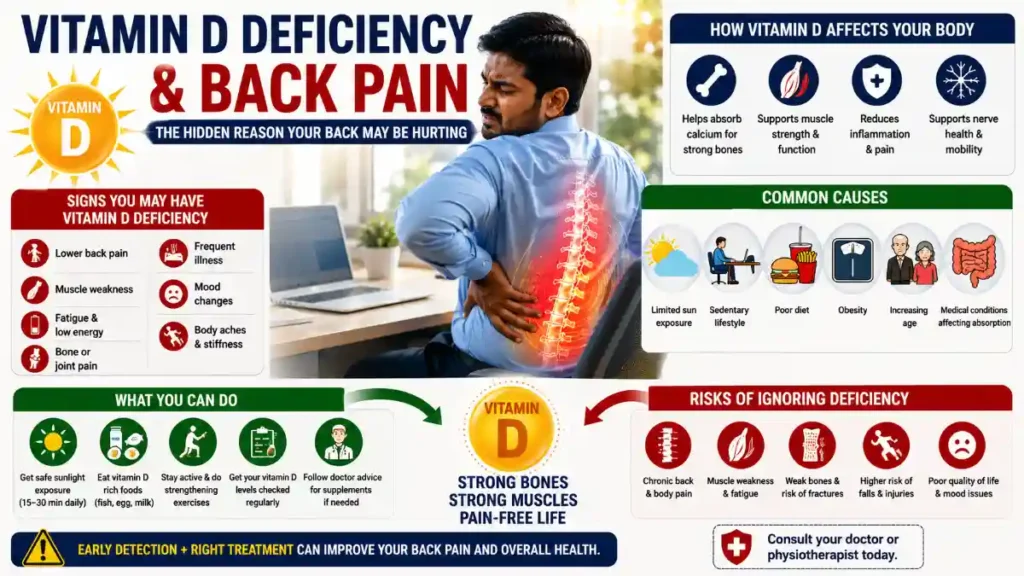
7 Signs Your Back Pain Could Be Linked to Vitamin D Deficiency
- ✅ Back pain lasting more than 6 weeks
- ✅ Constant fatigue despite adequate rest
- ✅ Muscle weakness affecting daily activities
- ✅ Unexplained body aches and soreness
- ✅ Difficulty climbing stairs or walking long distances
- ✅ Persistent leg discomfort or heaviness
- ✅ Reduced stamina and poor exercise tolerance
⚠️ If you experience several of these symptoms together, consider discussing vitamin D testing with your healthcare provider.
Why Many People Mistake Vitamin D Deficiency for a Slipped Disc
Vitamin D is an essential nutrient that helps the body absorb calcium and phosphorus. These minerals are crucial for maintaining strong bones, healthy muscles, and normal nerve function.
Many patients believe they have a slipped disc, but blood tests later reveal severe vitamin D deficiency
According to health authorities including the WHO and NIH, vitamin D plays a major role in musculoskeletal health. When levels become too low, the body struggles to maintain optimal bone strength and muscle performance.
Vitamin D deficiency occurs when the amount of vitamin D in the body falls below healthy levels. This can happen due to inadequate sunlight exposure, poor dietary intake, obesity, certain medical conditions, aging, or lifestyle factors.
Many people associate vitamin D only with bone health, but its effects extend far beyond that. Deficiency can influence muscle strength, inflammation, immune function, and pain perception.
Doctor Explains
One of the biggest misconceptions I encounter in physiotherapy practice is the belief that every episode of back pain must be caused by a spinal problem.
Patients frequently arrive convinced they have a slipped disc, nerve compression, or severe arthritis. Sometimes those conditions are present, but often the picture is more complex.
Clinically, many patients with vitamin D deficiency report a vague, persistent aching sensation in the lower back. Unlike acute injuries, the pain may develop gradually and seem difficult to explain.
Another reason this problem gets overlooked is that vitamin D deficiency rarely causes only one symptom. Patients may simultaneously experience tiredness, muscle weakness, body aches, poor exercise tolerance, and mood changes.
Early action matters because correcting a deficiency can improve overall musculoskeletal health and enhance recovery from rehabilitation programs.
Why This Problem Is Becoming More Common
Despite living in a sunny country, vitamin D deficiency remains extremely common in India.
One common pattern observed in physiotherapy practice is that patients spend most of their day indoors.
Office workers move from home to car, car to office, and office back to home. Students spend hours studying indoors. Work-from-home professionals may go several days with minimal sunlight exposure.
Smartphone use and laptop work have also contributed indirectly. Longer screen time encourages sedentary behavior, reduced outdoor activity, and poor posture.
Urban lifestyles create additional challenges. Air pollution can reduce effective UV exposure, while cultural clothing practices and sunscreen use may further limit vitamin D synthesis.
Long daily commutes, crowded cities, academic pressures, and increasing dependence on digital devices have collectively created an environment where vitamin D deficiency can thrive.
Hidden Dangers Most People Don’t Realize
Many people assume vitamin D deficiency only affects bone density. The reality is far more significant.
Over time, low vitamin D levels may contribute to chronic musculoskeletal pain, reduced muscle strength, impaired balance, slower recovery after injury, and increased risk of falls in older adults.
Personally, I have seen many patients who became less active because of pain. Reduced activity then led to further muscle weakness and worsening physical function.
This creates a vicious cycle.
Pain discourages movement. Reduced movement weakens muscles. Weaker muscles place additional strain on the spine. As a result, back pain may become more persistent.
In severe or prolonged deficiency, bone health may also be compromised, increasing the risk of osteomalacia in adults—a condition characterized by softening of the bones.
The result is often reduced quality of life, difficulty performing household activities, impaired work productivity, and diminished physical independence.
Real Patient Story
A 34-year-old IT professional visited my clinic after experiencing lower back pain for nearly eight months.
He had already changed mattresses, purchased ergonomic chairs, and tried multiple pain-relief products advertised online.
Initially, he believed his desk job was entirely responsible.
During assessment, I noticed generalized muscle weakness, poor endurance, and reduced activity levels. He also reported fatigue and body aches.
His physician ordered blood investigations, which revealed significantly low vitamin D levels.
After medical management, progressive strengthening exercises, posture correction, and gradual return to physical activity, his symptoms improved substantially over the following months.
This case highlights an important lesson:
Sometimes back pain has more than one contributing factor, and identifying all of them is crucial.
Common Mistakes People Make
Many patients unintentionally delay recovery because of avoidable mistakes.
The first mistake is ignoring symptoms for months or even years. People often assume back pain is simply part of aging.
The second common mistake is self-medicating with painkillers while never investigating the underlying cause.
Another growing problem is relying exclusively on social media advice. Not every exercise shown online is appropriate for every individual.
Some people begin aggressive strengthening exercises despite having severe pain or undiagnosed conditions. Others avoid exercise completely due to fear.
In real rehabilitation settings, the best outcomes usually occur when treatment is individualized and based on proper assessment rather than guesswork.
Shocking Findings & Recent Research
Research over the last decade has strengthened the connection between vitamin D status and musculoskeletal pain.
Several studies published in peer-reviewed journals have reported that individuals with chronic low back pain are more likely to have low vitamin D levels compared with people without persistent pain. Researchers believe this relationship may be linked to muscle function, bone metabolism, inflammation, and pain sensitivity.
One finding that surprises many patients is that vitamin D deficiency can cause pain even when MRI scans appear relatively normal. In such cases, the problem may not be a major structural spinal issue but rather impaired musculoskeletal health.
Recent evidence also suggests that correcting vitamin D deficiency may help improve physical function and reduce pain in selected patients, particularly when deficiency is severe and accompanied by weakness or widespread body aches.
However, vitamin D is not a miracle cure. Not every case of back pain is caused by low vitamin D. This is why proper diagnosis remains essential.
From a physiotherapy perspective, the most meaningful improvement often occurs when vitamin D correction is combined with exercise rehabilitation, posture improvement, and activity modification.
Causes and Risk Factors
Vitamin D deficiency rarely develops because of a single factor. Most patients have multiple contributing causes.
Lifestyle habits play a major role. Limited sunlight exposure remains one of the biggest reasons. Modern life often keeps people indoors for most of the day.
Occupational factors are equally important. IT professionals, students, healthcare workers, bankers, call center employees, and remote workers frequently spend prolonged periods inside buildings with minimal sun exposure.
Certain medical conditions can increase risk as well. Obesity, kidney disease, liver disorders, gastrointestinal diseases affecting nutrient absorption, and some medications may interfere with vitamin D metabolism.
Age-related changes further contribute to the problem. As people grow older, the skin becomes less efficient at producing vitamin D from sunlight.
Indian lifestyle patterns create unique challenges. Many individuals avoid direct sunlight because of heat, work schedules, skin-darkening concerns, or cultural habits. Ironically, even in a country with abundant sunshine, deficiency remains widespread.
Early Warning Signs
Vitamin D deficiency often develops gradually. The symptoms may be subtle at first.
Many individuals initially notice general tiredness, low energy levels, or a feeling that their body is not functioning at its best.
As deficiency progresses, musculoskeletal symptoms may become more noticeable.
Patients frequently describe:
- Persistent lower back pain
- Muscle aches
- Generalized body pain
- Leg discomfort
- Reduced stamina
- Difficulty climbing stairs
- Muscle weakness
- Fatigue despite adequate rest
Advanced deficiency may contribute to significant functional limitations and worsening physical performance.
Don’t Ignore These Signs
Seek medical evaluation if you experience:
- Back pain lasting more than 6 weeks
- Unexplained muscle weakness
- Recurrent bone pain
- Frequent falls
- Difficulty standing from a seated position
- Persistent fatigue alongside body aches
- Back pain that continues despite treatment
These symptoms do not automatically mean vitamin D deficiency is present, but they warrant proper assessment.
Diagnosis
The diagnosis of vitamin D deficiency requires more than symptom evaluation alone.
A healthcare professional will typically review your medical history, lifestyle habits, dietary intake, physical activity level, and symptoms.
From a physiotherapy perspective, assessment may include:
- Postural evaluation
- Functional movement analysis
- Muscle strength testing
- Balance assessment
- Flexibility assessment
- Activity limitation evaluation
The gold standard for identifying vitamin D deficiency is a blood test measuring serum 25-hydroxyvitamin D.
Depending on symptoms, additional investigations may include:
- Calcium levels
- Phosphorus levels
- Parathyroid hormone levels
- Bone density testing
- X-rays
- MRI (if structural spinal pathology is suspected)
The goal is to identify whether vitamin D deficiency is contributing to pain or whether another underlying condition is responsible.
Medical Disclaimer
This article is intended for educational and informational purposes only and should not be considered medical advice, diagnosis, or treatment.
While every effort has been made to ensure accuracy and evidence-based information, individual health conditions vary significantly.
Back pain, vitamin D deficiency, and related symptoms require proper medical evaluation by a qualified healthcare professional.
Never ignore professional medical advice or delay seeking treatment because of information you have read online.
For personalized recommendations, diagnosis, treatment plans, or rehabilitation programs, consult a qualified physician or physiotherapist.
Treatment & Physiotherapy Management
The treatment approach depends on the severity of deficiency and the underlying causes of back pain.
When laboratory testing confirms low vitamin D levels, a physician may recommend supplementation based on established clinical guidelines.
However, correcting vitamin D deficiency alone may not fully resolve symptoms if muscle weakness, poor posture, reduced mobility, or deconditioning are also present.
This is where physiotherapy becomes particularly valuable.
Exercise Rehabilitation
Exercise helps restore strength, flexibility, endurance, and spinal support.
Many patients improve faster when rehabilitation programs focus on:
- Core strengthening
- Back muscle conditioning
- Hip strengthening
- Balance training
- Functional movement retraining
Pain Management
Pain management strategies may include:
- Activity modification
- Therapeutic exercises
- Heat therapy
- Manual therapy when appropriate
- Movement education
Postural Correction
One common pattern observed in physiotherapy practice is poor posture combined with vitamin D deficiency.
Patients often spend years sitting with rounded shoulders and reduced spinal support.
Postural correction helps reduce unnecessary mechanical stress on the spine.
Lifestyle Changes
Long-term recovery requires:
- Safe sunlight exposure
- Healthy nutrition
- Regular exercise
- Weight management
- Adequate sleep
Recovery Expectations
Recovery varies among individuals.
Some patients report improvement within weeks of correcting deficiency and beginning rehabilitation. Others require several months depending on severity, age, activity level, and coexisting conditions.
| Myth | Fact |
|---|---|
| Back pain is always caused by a spinal problem. | Vitamin D deficiency can contribute to musculoskeletal pain. |
| Living in India prevents vitamin D deficiency. | Vitamin D deficiency remains common despite abundant sunlight. |
| Supplements alone cure all back pain. | Most patients need a comprehensive treatment approach. |
| If MRI is normal, the pain is imaginary. | Pain can occur even without major structural abnormalities. |
| Rest is the best treatment. | Appropriate movement and rehabilitation are usually beneficial. |
| Young people cannot have vitamin D deficiency. | Deficiency affects adults of all ages. |
Expert Clinical Insights
In my clinical experience, vitamin D deficiency is often overlooked until symptoms become persistent.
One surprising pattern I frequently observe is that patients focus entirely on imaging reports while ignoring lifestyle factors.
Many patients delay treatment because they assume fatigue and body aches are simply part of a busy life.
Clinically, I often observe improved rehabilitation outcomes when nutritional deficiencies are identified and addressed early.
Personally, I have seen many patients become frustrated because pain persists despite medications. Once underlying contributors are investigated, recovery often becomes more achievable.
The biggest lesson is that successful treatment usually involves looking beyond the painful area itself.
Who Should Avoid Certain Exercises or Treatments?
Not every exercise is appropriate for every patient.
Medical supervision is especially important for individuals with:
- Recent spinal surgery
- Severe osteoporosis
- Unexplained neurological symptoms
- Significant muscle weakness
- Suspected fractures
- Severe pain during movement
- Cancer involving bone structures
- Serious medical conditions affecting mobility
Certain treatments may require modification based on individual health status.
Always obtain professional guidance when symptoms are severe or worsening.
Conclusion
Vitamin D deficiency can contribute to back pain, muscle weakness, fatigue, and reduced physical performance. While it may not be the sole cause of every case of back pain, it is an important factor that deserves consideration—especially when symptoms persist despite treatment.
As a physiotherapist, I have seen how identifying hidden contributors can completely change a patient’s recovery journey. Sometimes the answer is not simply stronger medications or more rest. Instead, it involves understanding the bigger picture of musculoskeletal health.
If you have persistent back pain, do not rely on assumptions. Seek proper assessment, investigate possible deficiencies, stay physically active, and follow evidence-based rehabilitation strategies.
The encouraging news is that many people improve significantly when the underlying cause is identified early and treated appropriately.
✅ Key Takeaways
- Vitamin D deficiency may contribute to persistent back pain and muscle weakness.
- Many Indians remain deficient despite living in a sunny climate.
- Blood testing is the most reliable way to confirm deficiency.
- Physiotherapy and exercise rehabilitation often enhance recovery.
- Safe sunlight exposure and physical activity support prevention.
- Persistent back pain should never be ignored.
FAQ Section
Can vitamin D deficiency cause lower back pain?
Yes. Vitamin D deficiency may contribute to muscle weakness, bone discomfort, and persistent lower back pain.
How do I know if my back pain is due to vitamin D deficiency?
A blood test measuring 25-hydroxyvitamin D levels is needed to confirm deficiency.
Can vitamin D supplements cure back pain?
Not always. They help when deficiency is contributing to symptoms, but other causes may also need treatment.
How long does it take to feel better after correcting vitamin D deficiency?
Some individuals improve within weeks, while others may require several months.
Is vitamin D deficiency common in India?
Yes. Despite abundant sunshine, vitamin D deficiency remains highly prevalent.
What foods contain vitamin D?
Fatty fish, egg yolks, fortified dairy products, and fortified foods can help increase intake.
Should I exercise if I have back pain and vitamin D deficiency?
In most cases, appropriate exercise is beneficial, but programs should be individualized.
REFERENCES
Authoritative Medical References
- National Institutes of Health. (2024). Vitamin D Fact Sheet for Health Professionals.
https://ods.od.nih.gov/factsheets/VitaminD-HealthProfessional/ - Holick, M. F. (2007). Vitamin D deficiency. New England Journal of Medicine, 357(3), 266–281.
https://www.nejm.org/doi/full/10.1056/NEJMra070553 - Pilz, S., Zittermann, A., Trummer, C., et al. (2019). Vitamin D testing and treatment: A narrative review. Endocrine Connections, 8(2), R27–R43.
https://ec.bioscientifica.com/view/journals/ec/8/2/EC-18-0432.xml - World Health Organization (WHO). Healthy Diet Fact Sheet.
https://www.who.int/news-room/fact-sheets/detail/healthy-diet - Institute of Medicine. (2011). Dietary Reference Intakes for Calcium and Vitamin D.
https://www.ncbi.nlm.nih.gov/books/NBK56070/

Dr. Shabbir Hussain, BPT
Licensed Physiotherapist | Clinical Rehabilitation Specialist
Maharashtra OTPT Council Reg. No.: PR-2021/08/PT/009532
Society of Onco Physiotherapists Reg. No.: SOP/00033/LM
Dr. Shabbir Hussain, BPT, Registered Physiotherapist with over 8 years of experience in physiotherapy, kidney rehabilitation, oncological rehabilitation, and lymphedema management. He specializes in balance disorders, pain management, musculoskeletal rehabilitation, strengthening programs, and VR-based rehabilitation.