
Published: May 14, 2026 | Last Updated: May 14, 2026
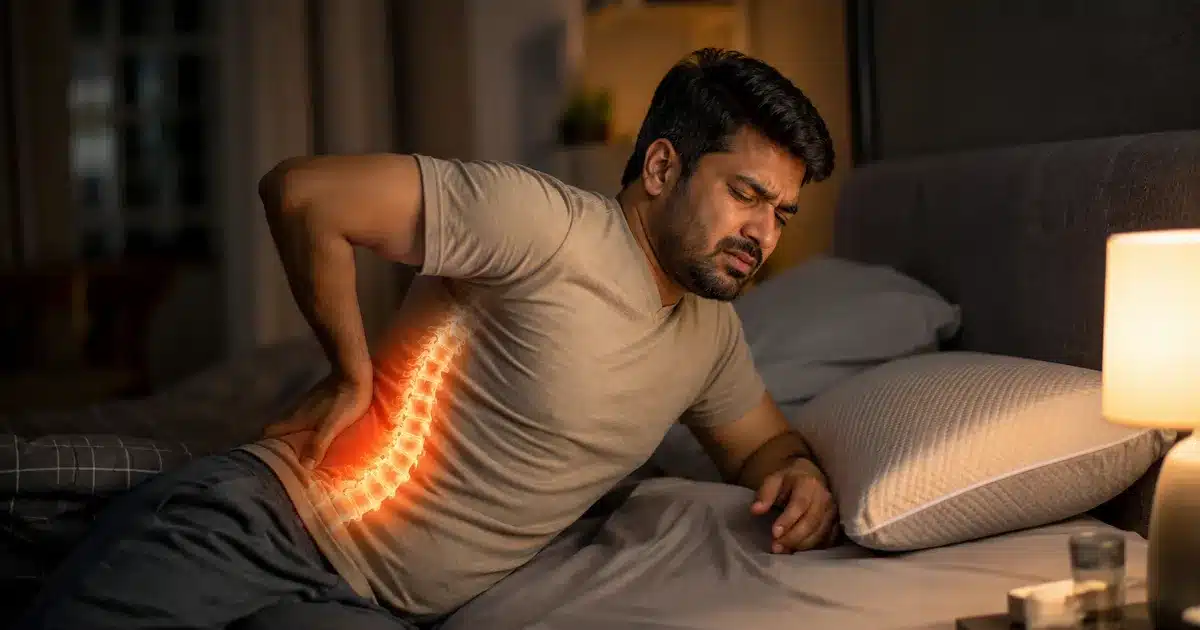
You wake up, try to sit up from bed… and your lower back feels stiff again.
If this keeps happening every morning, your body may be trying to warn you about something deeper than “just bad sleep.”
A large number of office workers, students, drivers, nurses, and even young adults in India unknowingly place continuous stress on the spine while sleeping. The surprising part is that the damage often happens slowly. Night after night, poor spinal alignment can irritate joints, tighten muscles, and increase pressure on spinal discs.
Quick Summary
- Morning back pain may be linked to posture, mattress support, inflammation, or muscle stiffness.
- Pain improving after movement often indicates mechanical causes.
- Persistent morning pain may require physiotherapy evaluation.
What Are the Best Sleeping Positions for Back Pain Relief?
The best sleeping position is the one that keeps the spine in a neutral alignment while reducing pressure on muscles, discs, and joints.
From a rehabilitation perspective, the spine should maintain its natural curves during sleep. When posture becomes twisted, overly arched, or unsupported for several hours, the body reacts with stiffness, inflammation, and muscle guarding.
In my clinical experience, side sleeping with proper pillow support is one of the safest and most comfortable positions for many patients with lower back pain. Sleeping on the back with knee support can also help distribute body weight evenly across the spine.
However, stomach sleeping is often problematic because it forces excessive spinal extension and neck rotation for prolonged periods.
The ideal sleeping posture may vary depending on whether the pain comes from muscle strain, disc irritation, sciatica, arthritis, or postural dysfunction.
Reviewed & Trusted Medical Content
Written By: Physio Talk Editorial Team
Reviewed By: Dr. SHABBIR HUSSAIN (BPT)
Clinical Focus: Orthopedic & Rehabilitation Physiotherapy
This article has been medically reviewed for physiotherapy accuracy and public health awareness.
Why Sleeping Position Matters More Than Most People Think
During sleep, spinal tissues recover from daytime stress. But if posture remains poor for 6–8 hours continuously, recovery may not happen properly.
Personally, I’ve observed that patients with sedentary jobs often experience increased morning pain because their spine receives no true “rest period.” Their daytime sitting posture is already stressful, and nighttime positioning continues the strain.
Long-term poor sleeping posture may contribute to:
Persistent muscle tightness, worsening disc pressure, reduced mobility, sleep disturbance, nerve irritation, and chronic pain sensitization.
Many people also develop fear of movement because mornings become painful. Over time, reduced activity weakens spinal muscles further.
That creates a frustrating cycle.
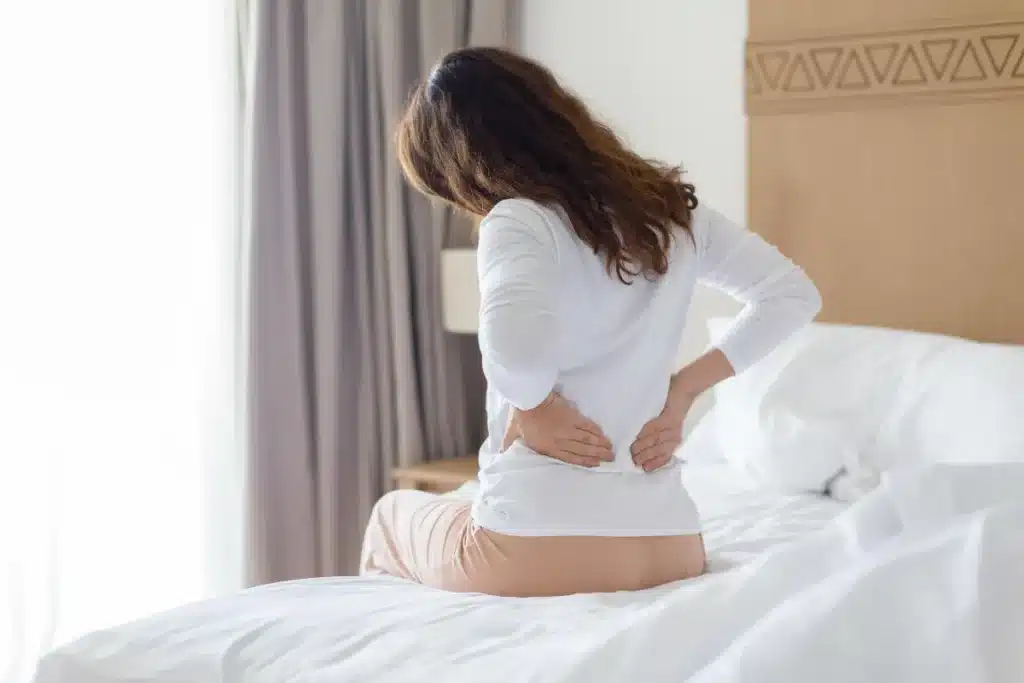
The Best Sleeping Positions for Back Pain Relief
Sleeping on Your Back With Pillow Support
For many individuals, sleeping on the back with a pillow under the knees helps maintain spinal neutrality.
This position reduces stress on the lumbar spine and allows muscles to relax more naturally.
One common physiotherapy recommendation is using a medium-height pillow under the knees to reduce excessive lower back arching.
Clinically, many patients with mechanical low back pain report reduced morning stiffness after switching to this setup consistently for a few weeks.
Side Sleeping With a Pillow Between the Knees
This is often one of the most comfortable positions for people with lower back pain or sciatica.
Placing a pillow between the knees helps align the pelvis and reduces rotational stress on the lower spine.
In real rehabilitation settings, this posture is commonly advised for individuals who sleep curled tightly in a fetal position. Without knee support, hip rotation may place additional strain on the lumbar region overnight.
Many Indian office workers who sit for prolonged hours benefit significantly from this adjustment.
Fetal Position for Disc-Related Pain
For some patients with disc irritation, slightly curling the body while side sleeping may reduce nerve tension temporarily.
However, excessively curling into a tight ball may increase stiffness.
The key is moderation and support.
Sleeping in a Reclined Position
Certain individuals with spinal stenosis or severe degenerative changes feel better in a reclined posture.
This slightly flexed position may reduce nerve compression symptoms in some cases.
Adjustable beds or wedge pillows can sometimes help.
Sleeping Positions Often Associated With Increased Pain
Stomach sleeping is usually the least recommended position for spinal health.
It commonly increases neck rotation and lower back compression.
In physiotherapy practice, chronic stomach sleepers frequently present with combined neck stiffness and lower back tightness.
Another issue is using very high pillows, which may distort spinal alignment and create muscle imbalance.
⚠️ Doctor Insight
Many patients ignore early morning stiffness until bending, walking, or even getting out of bed becomes painful. Persistent morning pain is often a sign that nighttime spinal recovery is not happening properly.
Causes & Risk Factors
Back pain linked to sleeping posture is becoming increasingly common in urban lifestyles.
One major factor is prolonged sitting. Many Indians now spend 8–10 hours daily on laptops or smartphones. The spine remains flexed throughout the day, and unsupported sleep posture adds further stress at night.
Long commuting hours, poor mattress quality, obesity, lack of exercise, weak core muscles, and emotional stress also contribute.
Clinically, another common pattern observed is sleep deprivation itself worsening pain sensitivity. Poor sleep and pain often feed into each other.
Healthcare workers, IT professionals, drivers, college students, and work-from-home employees appear especially vulnerable.
Warning Signs You Should Not Ignore
Morning stiffness lasting more than 30 minutes may indicate ongoing spinal stress.
Pain radiating into the legs, numbness, tingling, weakness, difficulty standing upright after waking, or pain that disrupts sleep repeatedly should not be ignored.
In advanced cases, individuals may notice difficulty walking comfortably in the morning or sudden sharp pain while turning in bed.
Back pain associated with fever, unexplained weight loss, bladder issues, or severe trauma requires urgent medical evaluation.
Diagnosis
A physiotherapist or spine specialist usually begins with posture analysis, movement testing, flexibility assessment, and neurological evaluation.
In my clinical experience, understanding daily habits is extremely important. Sleep posture alone rarely acts in isolation.
Physiotherapy assessment may include:
Spinal mobility testing, muscle imbalance analysis, gait assessment, ergonomic evaluation, and functional movement screening.
Imaging like X-rays or MRI may be advised if symptoms suggest disc prolapse, nerve compression, fracture, or severe degenerative disease.
MRI remains one of the gold-standard tools for evaluating soft tissue and disc-related spinal conditions.
Treatment & Physiotherapy Management
Treatment depends on the underlying cause of pain.
For posture-related mechanical back pain, physiotherapy often focuses on reducing muscle tension, improving mobility, correcting posture, and strengthening core muscles.
In real rehabilitation settings, recovery usually improves faster when patients combine exercise therapy with proper sleep modifications.
Many patients expect immediate relief after changing sleep position for one night. However, spinal tissues often require several weeks to adapt.
Treatment may include manual therapy, stretching, lumbar stabilization exercises, ergonomic education, breathing techniques, and gradual strengthening.
One important myth is that complete bed rest helps back pain heal faster.
Clinically, prolonged inactivity often worsens stiffness and muscle weakness.
Gentle movement and guided rehabilitation are usually more beneficial.
Recovery timelines vary. Mild posture-related pain may improve within 2–6 weeks, while chronic conditions can require longer rehabilitation.
Real Patient Scenario
A 34-year-old IT employee visited the clinic after experiencing severe lower back stiffness every morning for almost six months.
Interestingly, his pain reduced during office hours but returned after sleep daily.
Assessment revealed prolonged laptop sitting, weak core muscles, and habitual stomach sleeping with two thick pillows.
After posture correction, side-sleeping modifications, core strengthening, and ergonomic changes, his morning pain reduced significantly within five weeks.
What stood out most was that he initially believed his mattress alone was responsible. In reality, his sleeping posture and daytime mechanics were equally important contributors.
Prevention Strategy
Preventing sleep-related back pain often requires small but consistent lifestyle adjustments.
Maintaining regular physical activity is crucial. Walking, stretching, and core exercises improve spinal support significantly.
Using a supportive mattress, avoiding excessively soft bedding, reducing smartphone use before sleep, and maintaining healthy body weight also help.
For Indian households where floor sitting is common, prolonged unsupported sitting positions should be minimized if back pain already exists.
Many patients improve faster when they develop a consistent sleep schedule and reduce late-night screen exposure.
Stress management also matters more than people realize. Muscle tension and poor sleep quality are strongly linked.
When to See a Doctor
Seek medical evaluation if back pain lasts more than a few weeks, wakes you from sleep regularly, radiates into the legs, or causes weakness or numbness.
Urgent medical attention is necessary if symptoms involve bladder dysfunction, bowel changes, fever, unexplained weight loss, or severe trauma.
Who Should Avoid Certain Exercises or Treatments?
People with fractures, severe osteoporosis, advanced disc prolapse, inflammatory spinal disorders, or recent surgery should avoid self-prescribed exercises without professional guidance.
In physiotherapy practice, aggressive stretching sometimes worsens symptoms in acute disc injuries.
Pregnant women and elderly individuals should also receive individualized recommendations rather than generic internet advice.
Medical Disclaimer
This article is intended for educational and public awareness purposes only. It should not replace professional medical diagnosis, physiotherapy evaluation, or individualized treatment. Always consult a qualified healthcare professional for persistent or severe symptoms.
FAQs
Can sleeping position really cause back pain?
Yes. Poor spinal alignment during sleep can increase pressure on muscles, joints, and spinal discs for several hours continuously.
Which sleeping position is best for lower back pain?
Side sleeping with a pillow between the knees is commonly recommended by physiotherapists for many lower back pain cases.
Is sleeping on the floor good for back pain?
Not always. Extremely hard surfaces may worsen pressure points and stiffness in some individuals.
Why does my back hurt more in the morning?
Morning pain often suggests nighttime spinal stress, muscle stiffness, poor mattress support, or inflammatory conditions.
Are soft mattresses bad for back pain?
Very soft mattresses may reduce spinal support and increase sagging posture during sleep.
Can physiotherapy improve chronic back pain?
Yes. Evidence-based physiotherapy can improve mobility, strength, posture, and pain management significantly.
References
- World Health Organization. Musculoskeletal Conditions. https://www.who.int/news-room/fact-sheets/detail/musculoskeletal-conditions
- National Institutes of Health. Low Back Pain Fact Sheet. https://www.ninds.nih.gov/health-information/disorders/low-back-pain
- Qaseem A, et al. Noninvasive Treatments for Acute and Chronic Low Back Pain. Annals of Internal Medicine. https://pubmed.ncbi.nlm.nih.gov/28192789/
- Maher C, et al. Non-specific low back pain. The Lancet. https://pubmed.ncbi.nlm.nih.gov/30496100/
- National Institute of Arthritis and Musculoskeletal and Skin Diseases. Back Pain Overview. https://www.niams.nih.gov/health-topics/back-pain
- Delitto A, et al. Clinical Practice Guidelines for Low Back Pain. Journal of Orthopaedic & Sports Physical Therapy. https://pubmed.ncbi.nlm.nih.gov/29602304/

Dr. Shabbir Hussain, BPT
Registered Physiotherapist | Clinical Rehabilitation Specialist
Maharashtra OTPT Council Reg. No.: PR-2021/08/PT/009532
Society of Onco Physiotherapists Reg. No.: SOP/00033/LM
Dr. Shabbir Hussain, BPT, Registered Physiotherapist with over 8 years of experience in physiotherapy, kidney rehabilitation, oncological rehabilitation, and lymphedema management. He specializes in balance disorders, pain management, musculoskeletal rehabilitation, strengthening programs, and VR-based rehabilitation.