

✔ Medical Review & Author Information
Written & Reviewed By: Dr. SHABBIR HUSSAIN (BPT)
Experience: Physiotherapy & Rehabilitation Practice
Last Updated: June 5, 2026
Evidence-Based Review: This article has been reviewed by a qualified physiotherapist for medical accuracy and public health awareness.
10 Surprising Signs of Vitamin D Deficiency Most People Ignore
You wake up feeling tired despite sleeping for eight hours. Your muscles feel heavy, your mood seems different, and those random aches in your back or legs just won’t go away.
Most people blame stress. Some blame aging. Others assume they’re simply overworked.
But in my physiotherapy practice, one surprisingly common pattern appears again and again: patients experiencing persistent fatigue, muscle weakness, and unexplained aches later discover that low vitamin D levels are contributing to their symptoms.
What makes vitamin D deficiency particularly concerning is how quietly it develops. The warning signs often appear gradually, making them easy to dismiss until they begin interfering with everyday life.
For many people across India, especially office workers, students, healthcare professionals, and individuals spending long hours indoors, vitamin D deficiency has become an increasingly common health concern.
Let’s explore the signs your body may be using to signal that something is wrong.
Quick Summary
- Vitamin D deficiency may cause fatigue, muscle weakness, and bone pain.
- Many symptoms develop gradually and are often ignored.
- A blood test is the best way to confirm deficiency.
- Early treatment can prevent complications.
💡 Did You Know?
Many people with vitamin D deficiency have no obvious symptoms initially. The condition may remain unnoticed for months or even years before fatigue, muscle weakness, or bone pain become noticeable.
According to multiple studies, vitamin D deficiency affects a large percentage of the Indian population, including people living in sunny regions. Many individuals remain unaware of their deficiency until symptoms begin affecting daily life.
What Is Vitamin D Deficiency?
Vitamin D is a fat-soluble vitamin that plays a critical role in maintaining healthy bones, muscles, nerves, and immune function.
Unlike many nutrients, vitamin D can be produced naturally when sunlight reaches the skin.
However, modern lifestyles have changed dramatically.
Many people spend most of their day indoors, commute in enclosed vehicles, work in offices, and avoid direct sunlight because of heat or skin concerns.
When vitamin D levels fall below healthy ranges, the body struggles to absorb calcium efficiently. Over time, this can affect bone strength, muscle performance, immunity, and overall wellbeing.
According to global health organizations and medical research, vitamin D deficiency remains one of the most common nutritional deficiencies worldwide.
Hidden Dangers of Ignoring Vitamin D Deficiency
Many people think vitamin D only affects bones.
That is a dangerous misconception.
In real rehabilitation settings, patients with prolonged vitamin D deficiency often report reduced physical performance, slower recovery from injuries, muscle weakness, and persistent fatigue.
If deficiency remains untreated for extended periods, potential complications may include:
- Reduced bone density
- Increased fracture risk
- Osteomalacia in adults
- Muscle weakness
- Frequent falls in older adults
- Reduced exercise tolerance
- Chronic musculoskeletal pain
One common pattern observed clinically is that patients often seek help for back pain, knee pain, or muscle discomfort before realizing that vitamin D deficiency may be contributing to the problem.
Causes and Risk Factors
Vitamin D deficiency does not affect only elderly individuals.
Many young adults are now developing low levels because of modern lifestyle habits.
In my clinical experience, the following factors frequently appear among affected patients:
Long working hours indoors significantly reduce sunlight exposure.
Students preparing for competitive exams may spend months studying indoors with little outdoor activity.
Healthcare workers, IT professionals, call-center employees, and remote workers often spend most of their day inside buildings.
Excessive smartphone use and screen time have indirectly reduced outdoor recreation.
Urban lifestyles have also decreased natural sunlight exposure.
Additional risk factors include obesity, darker skin pigmentation, aging, digestive disorders, kidney disease, liver disease, and certain medications that affect vitamin D metabolism.
Symptom Comparison Table
| Symptom | Commonly Mistaken For |
|---|---|
| Fatigue | Stress |
| Muscle Weakness | Aging |
| Bone Pain | Arthritis |
| Mood Changes | Work Pressure |
| Poor Exercise Performance | Lack of Fitness |
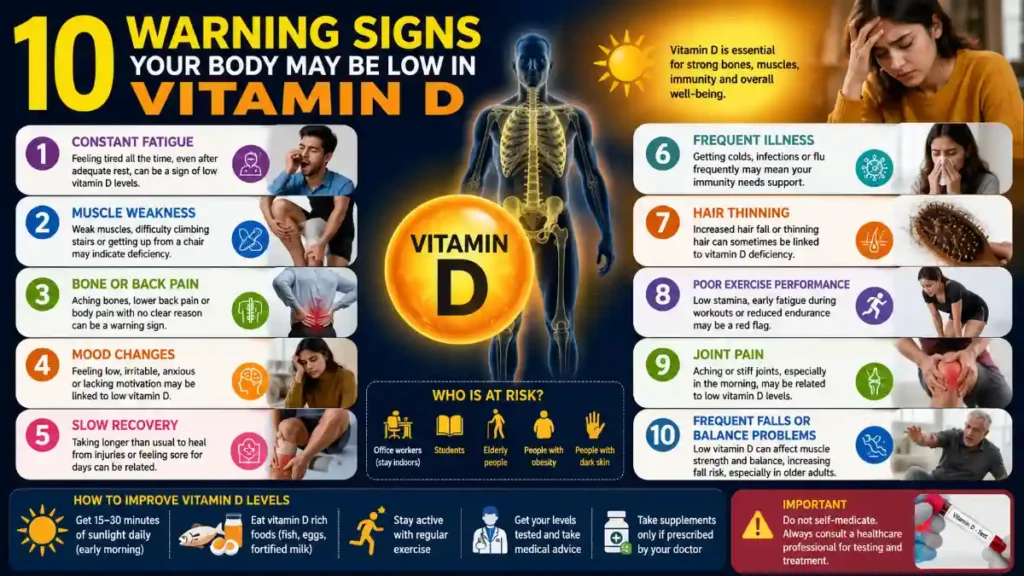
10 Surprising Signs of Vitamin D Deficiency
1. Constant Fatigue Despite Adequate Sleep
One of the most frequently overlooked symptoms is persistent tiredness.
Many patients report feeling exhausted throughout the day even after getting sufficient sleep.
Low vitamin D may influence energy regulation and overall physical performance, making routine tasks feel unusually demanding.
2. Frequent Muscle Weakness
Climbing stairs suddenly feels harder.
Standing from a chair requires more effort.
Walking long distances becomes tiring.
Vitamin D plays an important role in muscle function. Deficiency can contribute to muscle weakness and reduced physical performance.3. Persistent Bone Pain
Bone discomfort is often mistaken for arthritis or aging.
Many individuals describe a deep aching sensation in the lower back, hips, ribs, or legs.
This symptom deserves attention, especially if it persists for weeks.
4. Recurrent Back Pain
Clinically, many patients presenting with chronic lower back pain also show low vitamin D levels during medical evaluation.
While back pain has numerous causes, vitamin D deficiency can sometimes contribute to musculoskeletal discomfort.
5. Mood Changes and Low Motivation
Feeling emotionally drained?
Some research suggests associations between vitamin D deficiency and mood disturbances.
Many individuals report feeling less motivated, more irritable, or emotionally flat when vitamin D levels are low.
6. Slow Recovery From Injuries
In rehabilitation settings, recovery speed matters.
Many patients improve faster when nutritional deficiencies are addressed alongside physiotherapy treatment.
Persistent low vitamin D may negatively affect recovery processes.
7. Increased Frequency of Illness
Frequent colds and recurring infections may occasionally signal weakened immune support.
Vitamin D contributes to immune system regulation, making adequate levels important for overall health.
8. Hair Thinning
Although hair loss has multiple causes, vitamin D deficiency has been linked to certain hair-related conditions.
Unexplained hair thinning deserves medical evaluation.
9. Poor Exercise Performance
You may notice reduced stamina, early fatigue during workouts, or difficulty maintaining previous activity levels.
Athletes and active adults sometimes discover low vitamin D levels after performance declines.
10. Frequent Falls or Balance Problems
Particularly among older adults, muscle weakness associated with vitamin D deficiency can increase fall risk.
This is one reason healthcare providers take deficiency seriously.
Real Patient Story
A 34-year-old IT employee visited the clinic after experiencing persistent lower back pain, fatigue, and muscle weakness for several months.
Initially, he assumed long working hours were responsible.
Despite trying ergonomic changes and occasional exercise, his symptoms continued.
After medical evaluation, blood testing revealed vitamin D deficiency.
Along with physiotherapy, lifestyle modifications, sunlight exposure, and physician-guided supplementation were recommended.
Over the following months, he reported improved energy levels, better exercise tolerance, and reduced musculoskeletal discomfort.
This scenario highlights why persistent symptoms should never be dismissed without proper evaluation.
Most Ignored Sign of Vitamin D Deficiency
In my clinical practice, persistent fatigue is often the symptom people dismiss the longest. Many individuals attribute tiredness to work stress, poor sleep, or aging and never consider checking their vitamin D levels.
Diagnosis
Vitamin D deficiency cannot be confirmed based on symptoms alone.
Healthcare professionals typically perform a clinical assessment and review medical history.
The gold-standard laboratory investigation is the 25-hydroxyvitamin D blood test.
Additional assessments may include:
Bone health evaluation.
Calcium and phosphorus testing.
Musculoskeletal examination.
Functional movement assessment.
Physiotherapy evaluation may help identify weakness, mobility limitations, and movement impairments associated with deficiency.
Treatment and Physiotherapy Management
Treatment depends on severity and underlying causes.
Medical professionals may recommend vitamin D supplementation when appropriate.
Nutritional improvement is equally important.
Foods containing vitamin D include fortified dairy products, egg yolks, fatty fish, and fortified cereals.
Physiotherapy plays an important supportive role.
In my physiotherapy practice, strengthening programs, balance training, mobility exercises, and progressive rehabilitation strategies often help individuals regain confidence and function.
Many patients improve faster when exercise programs are combined with proper nutritional management.
Recovery timelines vary depending on deficiency severity, overall health status, and adherence to treatment recommendations.
What New Research Suggests About Vitamin D
Over the past few years, vitamin D research has expanded far beyond bone health.
Scientists are now investigating how vitamin D may influence muscle performance, immune regulation, physical function, and fall prevention—particularly in people with low baseline vitamin D levels.
However, researchers also emphasize that vitamin D is not a “magic cure” and works best as part of an overall healthy lifestyle.
Muscle Function
Recent reviews suggest that vitamin D plays a role in muscle cell function, muscle repair mechanisms, and neuromuscular performance.
Researchers have found that vitamin D receptors exist in skeletal muscle tissue, supporting the idea that deficiency may contribute to weakness and reduced physical function.
Some studies report improvements in muscle strength among deficient individuals after correction of vitamin D levels, although results remain mixed across different populations.
In my physiotherapy practice, this is particularly relevant because many patients presenting with muscle weakness, poor endurance, or slow rehabilitation progress are later found to have inadequate vitamin D levels.
⚠ Common Mistakes People Make
Many people assume constant fatigue is just part of a busy lifestyle, avoid sunlight completely, start vitamin D supplements without proper testing, or ignore persistent body pain for months. These common mistakes can delay diagnosis and allow deficiency-related health problems to worsen over time.
Myth vs Fact
Many people believe sitting near a sunny window provides sufficient vitamin D.
In reality, glass can block much of the ultraviolet radiation required for vitamin D production.
Another common myth is that only elderly people develop deficiency.
Today, young adults, students, and office workers are increasingly affected.
👨⚕️ Doctor Explains
Vitamin D deficiency is one of the most overlooked health problems I see in rehabilitation practice. Many patients come for back pain, fatigue, muscle weakness, or slow recovery from injuries without realizing that low vitamin D levels may be contributing to their symptoms.
Prevention Strategy
Prevention begins with awareness.
Regular outdoor activity remains one of the most effective strategies.
Even short periods of safe sunlight exposure may help support vitamin D production.
Indian office workers should consider brief outdoor breaks whenever possible.
Students spending long hours indoors should balance study schedules with outdoor activity.
Maintaining a balanced diet and staying physically active also support overall musculoskeletal health.
Routine medical evaluation may be beneficial for individuals at higher risk.
⚠ Doctor Insight
Many patients ignore persistent fatigue, muscle weakness, and unexplained body aches for months. Early evaluation can help identify underlying vitamin D deficiency before it significantly affects mobility, bone health, and quality of life.
When to See a Doctor
You should seek medical advice if you experience persistent fatigue, recurring bone pain, muscle weakness, frequent falls, or unexplained musculoskeletal discomfort.
Prompt evaluation is especially important if symptoms interfere with work, exercise, or daily activities.
🚨 When Vitamin D Deficiency May Be Serious
While mild vitamin D deficiency may cause fatigue or body aches, some symptoms can indicate a more significant deficiency that requires medical evaluation.
Seek medical attention if you experience:
- ⚠️ Frequent falls or balance problems
- ⚠️ Severe muscle weakness
- ⚠️ Persistent bone pain
- ⚠️ Recurrent fractures after minor injuries
- ⚠️ Ongoing fatigue despite adequate rest
Don’t ignore these warning signs. Early diagnosis and treatment can help prevent long-term complications affecting bones, muscles, and overall health.
Who Should Avoid Certain Exercises or Treatments?
Individuals with severe osteoporosis, recent fractures, balance disorders, advanced musculoskeletal conditions, or significant weakness should avoid starting intense exercise programs without professional guidance.
A personalized rehabilitation plan is often safer and more effective.
Key Takeaways
Vitamin D deficiency often develops silently.
Persistent fatigue and muscle weakness should not be ignored.
Low vitamin D may affect bones, muscles, and immunity.
Blood testing is the most reliable way to confirm deficiency.
Physiotherapy can support recovery and physical function.
Regular sunlight exposure and healthy lifestyle habits help reduce risk.
Medical Disclaimer
This article is intended for educational and public health awareness purposes only. It should not replace professional medical advice, diagnosis, or treatment. Always consult a qualified healthcare professional regarding any medical condition or symptoms.
Frequently Asked Questions
Can vitamin D deficiency cause body pain?
Yes. Many individuals experience muscle aches, bone pain, or generalized discomfort when vitamin D levels are low.
How common is vitamin D deficiency in India?
Vitamin D deficiency is extremely common across India despite abundant sunlight, largely because of indoor lifestyles and limited sun exposure.
How long does it take to recover?
Recovery varies. Some people notice improvement within weeks, while others may require several months depending on deficiency severity.
Can vitamin D deficiency affect mood?
Research suggests low vitamin D levels may be associated with mood changes and reduced wellbeing in some individuals.
Which test confirms vitamin D deficiency?
The 25-hydroxyvitamin D blood test is considered the standard diagnostic test.
Can exercise alone fix vitamin D deficiency?
Exercise is beneficial but does not replace appropriate medical evaluation, nutritional management, and supplementation when required.
What foods contain vitamin D?
Fatty fish, egg yolks, fortified milk products, and fortified cereals are common dietary sources.
References
Peer-Reviewed Research & Clinical Sources
- National Institutes of Health (NIH) – Office of Dietary Supplements. (2025). Vitamin D Fact Sheet for Health Professionals. Retrieved from:
https://ods.od.nih.gov/factsheets/VitaminD-HealthProfessional/ - Holick, M. F. (2007). Vitamin D deficiency. New England Journal of Medicine, 357(3), 266–281.
https://doi.org/10.1056/NEJMra070553 - Pilz, S., Zittermann, A., Trummer, C., et al. (2019). Vitamin D testing and treatment: A narrative review of current evidence. Endocrine Connections, 8(2), R27–R43.
https://doi.org/10.1530/EC-18-0432 - Bouillon, R., Marcocci, C., Carmeliet, G., et al. (2019). Skeletal and extraskeletal actions of vitamin D: Current evidence and outstanding questions. Endocrine Reviews, 40(4), 1109–1151.
https://doi.org/10.1210/er.2018-00126

Dr. Shabbir Hussain, BPT
Licensed Physiotherapist | Clinical Rehabilitation Specialist
Maharashtra OTPT Council Reg. No.: PR-2021/08/PT/009532
Society of Onco Physiotherapists Reg. No.: SOP/00033/LM
Dr. Shabbir Hussain, BPT, Registered Physiotherapist with over 8 years of experience in physiotherapy, kidney rehabilitation, oncological rehabilitation, and lymphedema management. He specializes in balance disorders, pain management, musculoskeletal rehabilitation, strengthening programs, and VR-based rehabilitation.