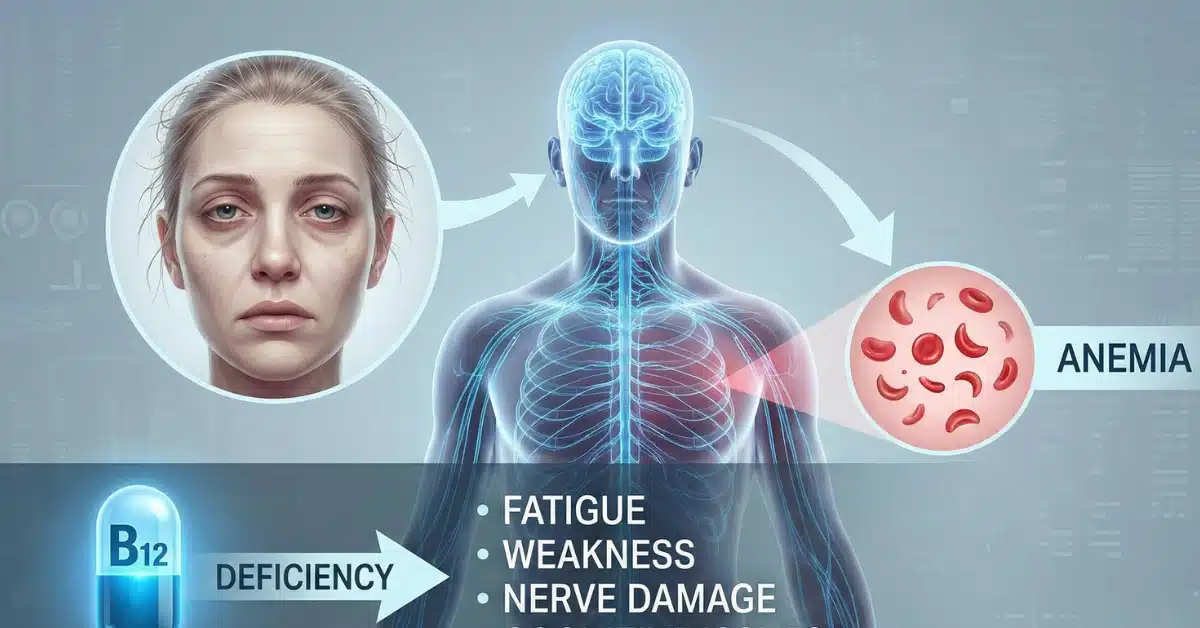
Vitamin B12 Deficiency Warning – Are you aware of the silent threats that a lack of a crucial nutrient can pose to your health? Vitamin B12 plays a vital role in maintaining the health of your nervous system, forming red blood cells, and synthesizing DNA. A deficiency in this essential vitamin can lead to a multitude of health issues, some of which can be quite severe.

A vitamin B12 deficiency can manifest in various ways, often making it difficult to diagnose. The importance of B12 in the body cannot be overstated, as it is crucial for energy production and nerve function. If you’re experiencing fatigue, weakness, or neurological changes, it’s essential to understand the potential causes and the fastest ways to address them.
Key Takeaways – Vitamin B12 Deficiency Warning
- Understanding the risks associated with vitamin B12 deficiency.
- Recognizing the hidden symptoms that can indicate a deficiency.
- Learning the fastest ways to fix a vitamin B12 deficiency.
- The importance of B12 for overall health and well-being.
- Preventive measures to avoid deficiency.
Understanding Vitamin B12 and Its Critical Role in Your Body
The significance of Vitamin B12 cannot be overstated, as it is involved in the production of red blood cells and nerve function. Vitamin B12, also known as cobalamin, is a water-soluble vitamin that plays a crucial role in various bodily functions, including the synthesis of DNA, fatty acid, and energy production.
What is Vitamin B12 and Why Do You Need It?
Vitamin B12 is essential for the production of red blood cells, which carry oxygen throughout the body. A deficiency in Vitamin B12 can lead to anemia, fatigue, and weakness. It is also crucial for the maintenance of the nervous system, with a deficiency potentially causing neurological problems.
Common Causes of B12 Deficiency in India
In India, common causes of B12 deficiency include a diet lacking animal products, as Vitamin B12 is primarily found in meat, fish, and dairy products. Vegetarians and vegans are at a higher risk due to their dietary preferences. Other causes include gastrointestinal disorders and certain medications.
| Cause | Description | Risk Group |
|---|---|---|
| Dietary Preferences | Lack of animal products in diet | Vegetarians, Vegans |
| Gastrointestinal Disorders | Conditions affecting nutrient absorption | Individuals with GI disorders |
| Certain Medications | Drugs that interfere with B12 absorption | Patients on long-term medication |
Vitamin B12 Deficiency Warning: Hidden Symptoms You Shouldn’t Ignore
Vitamin B12 deficiency can manifest in subtle ways, often making it difficult to diagnose. It’s essential to be aware of the hidden symptoms to prevent long-term damage to your health.
Subtle Physical Signs: Fatigue, Pale Skin, and Glossitis
Some of the physical signs of Vitamin B12 deficiency include persistent fatigue, pale skin, and glossitis (inflammation of the tongue). These symptoms can be easily mistaken for other conditions, making it crucial to undergo proper diagnosis.

Neurological Red Flags: Tingling, Memory Problems, and Mood Changes
Vitamin B12 deficiency can also affect the nervous system, leading to tingling sensations in the hands and feet, memory problems, and mood changes such as depression and anxiety. These neurological red flags should not be ignored.
“Vitamin B12 deficiency can cause neurological symptoms that are often reversible with treatment, but if left untreated, they can become permanent.”
How B12 Deficiency Is Diagnosed in India
In India, diagnosis of Vitamin B12 deficiency typically involves blood tests to check the levels of Vitamin B12 in the body. Healthcare providers may also perform additional tests to rule out other conditions with similar symptoms.
| Diagnostic Test | Purpose |
|---|---|
| Blood Test | To check Vitamin B12 levels |
| Complete Blood Count (CBC) | To check for anemia |
| Neurological Examination | To assess nerve damage |
The Dangerous Consequences of Untreated B12 Deficiency
Failing to address B12 deficiency can have serious repercussions on your health. If left untreated, it can lead to severe and potentially irreversible health issues. Vitamin B12 plays a crucial role in the production of red blood cells, nerve function, and DNA synthesis.
Permanent Nerve Damage and Cognitive Decline
One of the significant risks of untreated Vitamin B12 deficiency is permanent nerve damage. This can manifest as tingling or numbness in the hands and feet, difficulties with balance, and cognitive decline. The nerve damage occurs because B12 is essential for the synthesis of myelin, the fatty substance that surrounds and protects nerve fibers.
Megaloblastic Anemia and Cardiovascular Risks
Another dangerous consequence is the development of megaloblastic anemia, characterized by the production of abnormally large red blood cells that are not able to function properly. This condition can lead to fatigue, weakness, and shortness of breath. Moreover, B12 deficiency has been linked to an increased risk of cardiovascular diseases due to elevated levels of homocysteine in the blood.
| Health Risks | Symptoms | Consequences if Untreated |
|---|---|---|
| Permanent Nerve Damage | Tingling, numbness, balance issues | Irreversible nerve damage |
| Megaloblastic Anemia | Fatigue, weakness, shortness of breath | Cardiovascular risks, poor oxygen delivery |
The Fastest Ways to Fix B12 Deficiency
Addressing a Vitamin B12 deficiency effectively requires a comprehensive plan that includes diet, supplements, and potentially medical treatment. The good news is that with the right approach, it’s possible to reverse the deficiency and prevent long-term damage.
Indian Diet Solutions: Vegetarian and Non-Vegetarian B12 Sources
Incorporating foods rich in Vitamin B12 is a crucial step. For non-vegetarians, options include fish, meat, and poultry. Vegetarians can consume dairy products and fortified cereals. Some Indian foods that are rich in B12 or can be fortified with B12 include milk, yogurt, and certain breakfast cereals.
Supplement Options Available in India: Pills, Sublingual Tablets, and Injections
For those who cannot get enough B12 from their diet, supplements are a viable option. Pills and sublingual tablets are easily available over-the-counter, while injections may require a doctor’s prescription. It’s essential to consult a healthcare professional before starting any supplement regimen.
When to Seek Medical Treatment and What to Expect
If you’re diagnosed with a B12 deficiency, it’s crucial to seek medical treatment if you’re experiencing severe symptoms or if your condition doesn’t improve with dietary changes and supplements. A healthcare provider may perform tests to determine the underlying cause and recommend appropriate treatment, which may include B12 injections or medications to address underlying conditions.
| Treatment Option | Description | Best For |
|---|---|---|
| Dietary Changes | Increasing intake of B12-rich foods | Mild deficiency |
| Supplements | Pills, sublingual tablets, and injections | Moderate to severe deficiency |
| Medical Treatment | Professional diagnosis and treatment | Severe cases or underlying conditions |
Conclusion
Understanding the importance of vitamin B12 and recognizing the early signs of b12 deficiency is crucial for maintaining overall health. The benefits of vitamin B12 are numerous, and a deficiency can lead to severe health risks if left untreated.
By being aware of the symptoms of b12 deficiency, individuals can take prompt action to prevent long-term damage. Incorporating vitamin B12-rich foods into your diet or seeking medical treatment when necessary can help mitigate the risks associated with vitamin b12 deficiency.
It’s essential to prioritize your health by staying informed about vitamin b12 benefits and the potential health risks of a deficiency. By doing so, you can take control of your well-being and make informed decisions about your health.
FAQ
What are the common symptoms of vitamin B12 deficiency?
Common symptoms include fatigue, pale skin, glossitis, tingling sensations, memory problems, and mood changes. If you’re experiencing these symptoms, it’s essential to consult a healthcare professional for proper diagnosis.
How is vitamin B12 deficiency diagnosed?
Diagnosis typically involves blood tests to measure vitamin B12 levels in the body. Healthcare professionals may also perform additional tests to rule out underlying conditions that could be causing the deficiency.
What are the risks of untreated vitamin B12 deficiency?
Untreated vitamin B12 deficiency can lead to permanent nerve damage, cognitive decline, megaloblastic anemia, and increased cardiovascular risks. Prompt treatment is crucial to prevent these complications.
What are the best dietary sources of vitamin B12?
Animal-based foods like meat, fish, poultry, eggs, and dairy products are rich in vitamin B12. For vegetarians and vegans, fortified plant-based milk, cereals, and nutritional yeast are good alternatives.
Can vitamin B12 deficiency be treated with supplements?
Yes, vitamin B12 supplements are available in various forms, including pills, sublingual tablets, and injections. Consult a healthcare professional to determine the best supplement option for your specific needs.
How can I prevent vitamin B12 deficiency?
Maintaining a balanced diet that includes vitamin B12-rich foods, getting regular check-ups, and being aware of the risk factors can help prevent vitamin B12 deficiency.
What are the signs of not enough vitamin B12 in the body?
Signs of vitamin B12 deficiency include weakness, tiredness, pale skin, and neurological symptoms like numbness or tingling in the hands and feet. If you’re experiencing these symptoms, consult a healthcare professional.
How does vitamin B12 deficiency affect the nervous system?
Vitamin B12 plays a crucial role in the production of myelin, the fatty substance that surrounds and protects nerve fibers. Deficiency can cause nerve damage, leading to symptoms like numbness, tingling, and cognitive decline.

Dr. Shabbir Hussain, BPT Licensed Physiotherapist | Clinical Rehabilitation SpecialistMaharashtra OTPT Council Reg. No. PR-2021/08/PT/009532Society of Onco Physiotherapists Reg. No. SOP/00033/LM
He is a licensed physiotherapist with over 8 years of experience in physiotherapy, kidney rehabilitation, oncological rehabilitation, and lymphedema management. He specializes in balance disorders, pain management, musculoskeletal rehabilitation, strengthening programs, and VR-based rehabilitation.
Dr. Shabbir Hussain (BPT)