
Vitamin B12 Deficiency Risk Calculator
Could Your Daily Tiredness Be More Than Just Stress?
Most people blame their constant tiredness on long working hours, poor sleep or increasing screen time. They try another cup of coffee, energy drink or vitamin supplement, hoping they’ll feel better tomorrow.
But what if the real problem isn’t stress at all?
In my clinical experience as a physiotherapist, I have met many patients who struggled with fatigue, balance problems, muscle weakness or tingling sensations for months before discovering they had Vitamin B12 deficiency. Many were surprised because they assumed these symptoms were simply part of aging or a busy lifestyle.
A Vitamin B12 Deficiency Risk Calculator is designed to help identify whether your symptoms and lifestyle place you at increased risk. While it cannot diagnose deficiency, it can help you recognize warning signs early so that you can seek proper medical testing before complications develop.
Early awareness matters because prolonged Vitamin B12 deficiency may affect the nervous system, mobility, memory and overall quality of life. The earlier it is identified, the better the chances of preventing long-term nerve damage.
Numbness and tingling can appear before anemia develops. Some people experience nerve-related symptoms long before routine blood tests show obvious anemia, making early medical evaluation important.
🩺 Vitamin B12 Deficiency Risk Calculator
Answer the questions below to estimate your risk of Vitamin B12 deficiency. This calculator is for educational purposes only and does not diagnose any medical condition.
What Is a Vitamin B12 Deficiency Risk Calculator?
A Vitamin B12 Deficiency Risk Calculator is an educational screening tool that estimates your likelihood of having Vitamin B12 deficiency based on factors such as:
- Age
- Dietary habits
- Existing medical conditions
- Digestive disorders
- Long-term medication use
- Previous Vitamin B12 deficiency
- Symptoms like fatigue, numbness and memory problems
It is important to understand that this calculator does not diagnose Vitamin B12 deficiency. Instead, it helps determine whether you may benefit from further medical evaluation, including blood tests such as serum Vitamin B12, methylmalonic acid (MMA) or homocysteine levels when appropriate.
According to international health organizations, Vitamin B12 is essential for:
- Healthy nerve function
- DNA production
- Formation of red blood cells
- Brain function
- Energy metabolism
Without adequate Vitamin B12, these vital processes begin to slow down, often producing symptoms that develop gradually and may be mistaken for other health conditions.

Doctor Explains
Why So Many People Miss the Early Signs
One of the biggest misconceptions I encounter is that Vitamin B12 deficiency always causes severe anemia first. In reality, this isn't always true.
Personally, I have seen patients whose first complaint was difficulty maintaining balance during walking. Others reported burning feet, tingling fingers or unexplained muscle fatigue despite normal exercise routines. Some had undergone multiple consultations before anyone considered checking their Vitamin B12 levels.
Clinically, many patients ignore these symptoms because they appear slowly. Unlike sudden injuries, Vitamin B12 deficiency often develops over months or even years. People simply adapt to feeling tired until daily activities become noticeably difficult.
Why Vitamin B12 Deficiency Is Becoming More Common
Modern lifestyles have changed dramatically over the past decade, and several trends are contributing to a growing number of Vitamin B12 deficiency cases.
Long working hours often leave little time for balanced meals. Many office workers skip breakfast, rely on processed foods or order fast food during hectic workdays. Although these meals may satisfy hunger, they are not always rich in Vitamin B12.
Students preparing for competitive examinations frequently survive on tea, instant noodles and packaged snacks. Similarly, work-from-home professionals may spend entire days sitting in front of laptops without paying attention to dietary quality.
Urban Indian lifestyles have also become increasingly sedentary. Long commutes, reduced physical activity and irregular meal timings often combine with chronic stress, making persistent fatigue seem "normal." As a result, people delay seeking medical advice because they assume exhaustion is simply part of modern life.
Another important factor is the widespread use of medications such as metformin for diabetes and acid-suppressing medicines like proton pump inhibitors. Long-term use of these medications may reduce Vitamin B12 absorption in some individuals, increasing deficiency risk over time.
In rehabilitation settings, I frequently notice that patients recovering from orthopedic surgery or chronic illness may already have underlying nutritional deficiencies that slow recovery. Identifying and correcting Vitamin B12 deficiency can therefore play an important role in improving overall rehabilitation outcomes.
Hidden Dangers Most People Don't Realize
Vitamin B12 deficiency affects much more than energy levels.
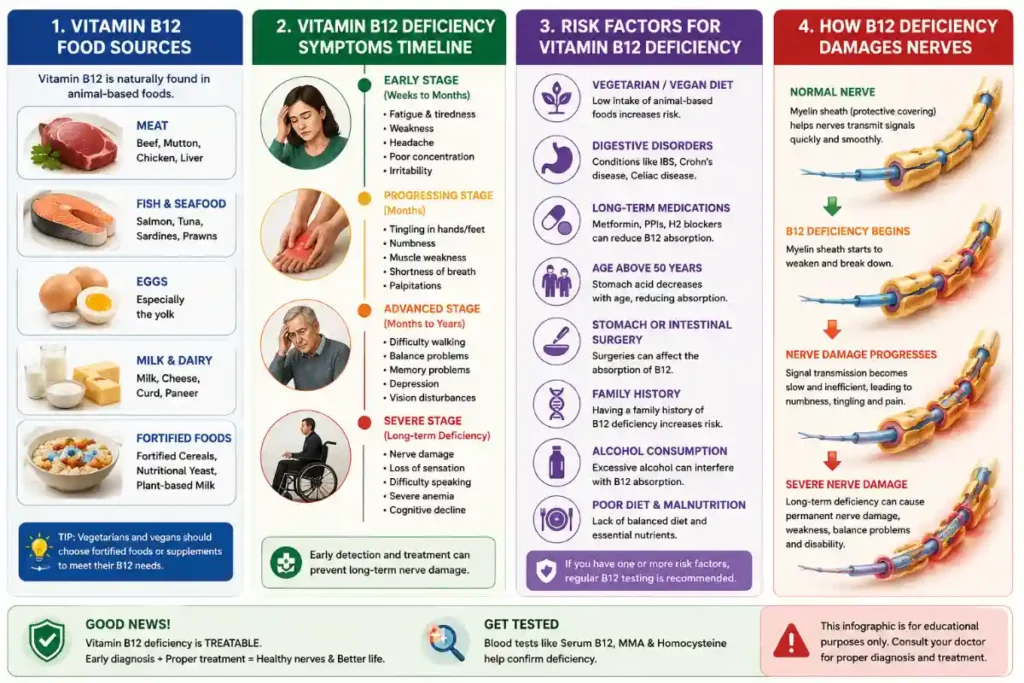
One of the greatest concerns is its impact on the nervous system. When Vitamin B12 levels remain low for a prolonged period, the protective covering around nerves—known as myelin—can become damaged. This may lead to numbness, tingling, poor coordination and difficulty walking.
From a physiotherapy perspective, this is particularly important because impaired nerve function often affects balance, muscle control and confidence during movement. Patients may become hesitant to walk independently due to fear of falling.
Over time, untreated deficiency may contribute to reduced mobility, decreased physical performance and greater dependence on family members for daily activities.
Beyond physical symptoms, Vitamin B12 deficiency may also influence concentration, mood and memory. Many individuals initially believe they are simply becoming forgetful with age when, in reality, an underlying nutritional deficiency could be contributing to these changes.
In severe or prolonged cases, neurological damage may become only partially reversible, highlighting the importance of early recognition and appropriate treatment.
Common Mistakes People Make
One of the most common mistakes is assuming that taking any over-the-counter multivitamin will automatically correct Vitamin B12 deficiency. In reality, the right treatment depends on the cause. Some people may require higher-dose oral supplements, while others need Vitamin B12 injections because their bodies cannot absorb the vitamin effectively.
Another mistake is ignoring early neurological symptoms such as tingling, numbness or reduced balance. These signs are sometimes dismissed as "poor circulation" or temporary fatigue, allowing nerve damage to progress.
Social media has also contributed to confusion. It is increasingly common to see influencers recommending expensive supplements without encouraging proper diagnosis. Self-medicating without confirming a deficiency may delay identification of other serious conditions that can cause similar symptoms.
In physiotherapy practice, I also see individuals focusing only on exercises while overlooking nutrition. Rehabilitation works best when exercise, medical treatment and nutritional health are addressed together rather than separately.
Causes and Risk Factors
Vitamin B12 deficiency rarely develops overnight. In most people, it results from a combination of dietary habits, reduced absorption, underlying medical conditions, and lifestyle factors.
Diet plays a significant role because Vitamin B12 is found naturally in animal-based foods such as meat, fish, eggs, dairy products, and liver. Individuals following vegetarian or vegan diets without fortified foods or supplements may gradually deplete their body's Vitamin B12 stores.
However, diet is only one part of the picture.
In my clinical experience, I have also seen deficiency in patients who eat adequate amounts of animal protein but have digestive disorders that prevent proper absorption. Conditions such as pernicious anemia, Crohn's disease, celiac disease, chronic gastritis, or previous stomach and intestinal surgery can interfere with Vitamin B12 absorption.
Early Warning Signs
Vitamin B12 deficiency often begins subtly. Many people attribute early symptoms to stress, lack of sleep, or aging.
Initially, you may notice persistent tiredness despite adequate rest. Climbing stairs may feel more difficult than usual, and routine physical activities may require greater effort.
As deficiency progresses, neurological symptoms often become more noticeable. Tingling or numbness may develop in the hands, fingers, feet, or toes. Some individuals describe a burning sensation, while others notice that they frequently drop objects or feel less coordinated.
Balance problems may also appear. Walking on uneven surfaces becomes challenging, and some people feel unusually unsteady in the dark.
Cognitive symptoms can include poor concentration, forgetfulness, slower thinking, irritability, or mood changes.
If deficiency remains untreated, muscle weakness may worsen, gait becomes unstable, and nerve damage may become increasingly difficult to reverse.
Diagnosis of Vitamin B12 Deficiency
A Vitamin B12 Deficiency Risk Calculator is a helpful screening tool, but it cannot confirm a diagnosis.
A healthcare professional will begin by reviewing your symptoms, medical history, dietary habits, medications, and any previous illnesses that could interfere with Vitamin B12 absorption.
Blood tests remain the cornerstone of diagnosis. Depending on the clinical situation, your doctor may recommend:
- Complete Blood Count (CBC)
- Serum Vitamin B12 level
- Methylmalonic Acid (MMA)
- Homocysteine level
- Folate testing
- Iron studies
- Intrinsic factor antibody testing (when pernicious anemia is suspected)
In physiotherapy practice, assessment also includes evaluating functional performance rather than focusing solely on laboratory values.
One common pattern observed in rehabilitation settings is reduced walking speed, decreased balance confidence, impaired coordination, and lower limb weakness. Functional assessments such as gait analysis, balance testing, strength evaluation, and mobility assessment help determine how neurological symptoms affect daily activities.
Treatment & Physiotherapy Management
Treatment depends on identifying the underlying cause rather than simply correcting the Vitamin B12 level.
If deficiency results from inadequate dietary intake, increasing Vitamin B12-rich foods along with oral supplementation may be sufficient.
When absorption is impaired—such as in pernicious anemia or after certain gastrointestinal surgeries—Vitamin B12 injections are often recommended because oral supplements may not be adequately absorbed.
Treatment should always be individualized under medical supervision.
Role of Physiotherapy
Although physiotherapists do not prescribe Vitamin B12 injections, rehabilitation plays a critical role in restoring physical function after neurological symptoms develop.
In my clinical experience, many patients regain confidence more quickly when nutritional treatment is combined with structured rehabilitation.
Myth vs Fact
| Myth | Fact |
|---|---|
| Only vegetarians develop Vitamin B12 deficiency. | Anyone can develop deficiency if absorption is impaired or certain medical conditions are present. |
| Fatigue always means low Vitamin B12. | Fatigue has many causes and requires proper medical evaluation. |
| Vitamin B12 injections are necessary for everyone. | Some people respond well to oral supplements, while others require injections depending on the cause. |
| Tingling will disappear on its own. | Persistent neurological symptoms should always be medically assessed. |
| Once treated, deficiency never returns. | Recurrence is possible if the underlying cause remains untreated. |
| More supplements always work better. | Excessive self-medication is not a substitute for appropriate diagnosis and treatment. |
Real Patient Story
A 35-year-old software engineer visited my clinic after nearly eight months of persistent fatigue, burning sensations in both feet, and occasional imbalance while walking.
Initially, he believed long office hours and poor sleep were responsible. He tried energy drinks, protein supplements, and online exercise videos without significant improvement.
During physiotherapy assessment, I noticed subtle balance deficits and reduced vibration sensation reported during neurological evaluation by his physician. Further medical investigations confirmed Vitamin B12 deficiency.
After appropriate Vitamin B12 treatment, balance rehabilitation, strengthening exercises, and gradual return to physical activity, his walking confidence improved significantly over the following months.
Expert Clinical Insights
In my clinical experience, patients rarely visit because they suspect Vitamin B12 deficiency. Instead, they usually seek help for fatigue, neck pain, poor balance, muscle weakness, or unexplained tingling.
One surprising pattern I frequently observe is that many people normalize their symptoms. They assume everyone feels exhausted after work or that occasional numbness is simply due to poor posture.
Another challenge is delayed diagnosis. Many patients continue searching for quick remedies on social media instead of seeking professional evaluation, allowing neurological symptoms to progress.
Clinically, patients often recover faster when treatment addresses both the underlying deficiency and functional rehabilitation. Medication alone cannot immediately restore balance, muscle coordination, or confidence in movement. Structured physiotherapy helps bridge that gap.
Patient education is equally important. Once people understand why their symptoms developed, they are more likely to follow treatment plans, improve nutrition, remain physically active, and attend follow-up appointments.
When to See a Doctor Immediately
Seek urgent medical evaluation if you experience:
- Rapidly worsening weakness
- Sudden inability to walk normally
- Severe balance loss causing repeated falls
- Difficulty speaking or swallowing
- New confusion or significant memory impairment
- Loss of bladder or bowel control
- Persistent numbness that continues to spread
- Severe shortness of breath with extreme fatigue
These symptoms may indicate serious neurological or medical conditions that require immediate assessment.
👨⚕️ Doctor's Clinical Insight
In my clinical experience, many patients seek physiotherapy for poor balance, muscle weakness or tingling without realizing that an untreated Vitamin B12 deficiency may be contributing to their symptoms. Addressing both the nutritional deficiency and functional rehabilitation often leads to better recovery than focusing on symptoms alone.
Conclusion
Vitamin B12 deficiency often develops quietly, but its impact on nerve health, mobility, memory, and quality of life can be significant if left untreated. A Vitamin B12 Deficiency Risk Calculator serves as a valuable first step in recognizing whether your symptoms and lifestyle place you at increased risk, but it should never replace professional medical evaluation.
The encouraging news is that early diagnosis, appropriate treatment, and rehabilitation can make a remarkable difference. In my clinical experience, many patients regain strength, confidence, and independence when deficiency is identified before permanent nerve damage occurs.
If you've been experiencing persistent fatigue, tingling, numbness, balance problems, or unexplained weakness, don't dismiss them as "just stress" or "getting older." Speak with a qualified healthcare professional, get the necessary tests, and take action early.
Small steps today can help protect your nerves, improve your mobility, and support a healthier future.
✅ Key Takeaways
- Vitamin B12 deficiency can affect nerves, balance, memory and energy levels.
- A risk calculator helps identify people who may benefit from medical testing but cannot diagnose deficiency.
- Early treatment offers the best chance of preventing permanent nerve damage.
- Physiotherapy supports recovery by improving balance, strength and functional mobility.
- High-risk individuals should discuss regular Vitamin B12 screening with their healthcare provider.
- Never ignore persistent numbness, tingling or unexplained fatigue.
Frequently Asked Questions (FAQs)
1. Can a Vitamin B12 Deficiency Risk Calculator diagnose deficiency?
No. It estimates your risk based on symptoms and lifestyle factors. Blood tests are needed for diagnosis.
2. What is the most common symptom of Vitamin B12 deficiency?
Persistent fatigue is common, but tingling, numbness, balance problems and memory changes are also important warning signs.
3. Can Vitamin B12 deficiency cause nerve damage?
Yes. If left untreated for a prolonged period, it may damage nerves and some changes can become permanent.
4. Who is most at risk?
Older adults, vegetarians, vegans, people with digestive disorders, those taking metformin or long-term acid-reducing medications, and individuals after certain gastrointestinal surgeries.
5. How long does recovery take?
Many people improve within weeks after treatment begins, but neurological recovery may take several months depending on severity and duration.
6. Is physiotherapy helpful?
Yes. Physiotherapy improves strength, balance, coordination and walking ability, especially in people with neurological symptoms.
7. Should I take Vitamin B12 supplements without testing?
Not routinely. It's best to consult a healthcare professional to identify the cause of your symptoms and determine the most appropriate treatment.
⚕️ Medical Disclaimer
This article is intended for educational and public health awareness purposes only. The Vitamin B12 Deficiency Risk Calculator is a screening tool and does not provide a medical diagnosis. Individual symptoms, medical history and laboratory investigations are essential for accurate evaluation. Always consult a qualified healthcare professional for personalized medical advice, diagnosis and treatment. Never delay seeking medical care because of information read online.
Medical References
1. National Institutes of Health, Office of Dietary Supplements. (2025). Vitamin B12 Fact Sheet for Health Professionals. Retrieved from:
https://ods.od.nih.gov/factsheets/VitaminB12-HealthProfessional/
2.World Health Organization. (2024). Micronutrients and Nutrition. Retrieved from:
https://www.who.int/health-topics/nutrition
3.O'Leary, F., & Samman, S. (2010). Vitamin B12 in health and disease. Nutrients, 2(3), 299–316.
https://doi.org/10.3390/nu2030299
https://www.mdpi.com/2072-6643/2/3/299

Dr. Shabbir Hussain, BPT
Registered Physiotherapist | Clinical Rehabilitation Specialist
Maharashtra OTPT Council Reg. No.: PR-2021/08/PT/009532
Society of Onco Physiotherapists Reg. No.: SOP/00033/LM
Dr. Shabbir Hussain, BPT, Registered Physiotherapist with over 8 years of experience in physiotherapy, kidney rehabilitation, oncological rehabilitation, and lymphedema management. He specializes in balance disorders, pain management, musculoskeletal rehabilitation, strengthening programs, and VR-based rehabilitation.