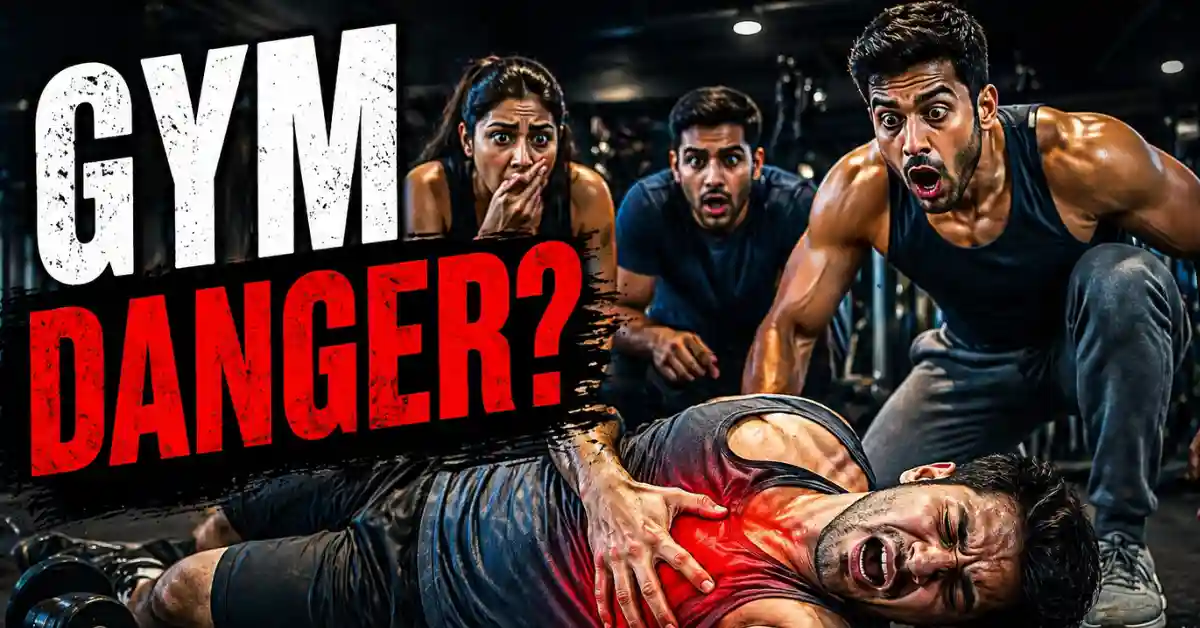
Nagpur Gym Collapse – सुबह की routine workout… headphones लगाए… energy high…
और अचानक — एक इंसान gym floor पर गिर जाता है।
Nagpur में Om Bhoyar का gym collapse case सिर्फ एक news नहीं है… ये warning है।
सबसे shocking बात?
वो perfectly healthy दिखते थे।
👉 तो क्या हम जो रोज gym जाते हैं… हम भी risk में हैं?
👉 क्या ये heart attack था… या कुछ और?
अगर आपने इन संकेतों को ignore किया… तो workout भी जानलेवा बन सकता है।
✔ Written by: Dr. Shabbir Hussain (BPT)
✔ Experience: 8+ Years | Physiotherapy & Rehabilitation
✔ Medically Reviewed: Evidence-based clinical review
✔ Last Updated: April 2026
✔ Sources: WHO, PubMed, Clinical Guidelines
Nagpur के Om Bhoyar gym collapse case में initial reports suggest करते हैं कि sudden cardiac event हुआ।
मेरे clinical experience में… ऐसे कई cases आए हैं जहां patient बोलते हैं:
“Sir, workout करते वक्त बस चक्कर आया… फिर कुछ याद नहीं।”
👉 ये अक्सर cardiac arrest या arrhythmia का संकेत होता है।
- Main risk: Sudden cardiac arrest during intense workout
- Key symptom: Chest tightness, dizziness, sudden collapse
- Best solution: Pre-screening + controlled exercise
- Prevention tip: Never ignore early warning signs
Hidden Danger: Exercise के दौरान मौत क्यों हो सकती है?
According to clinical evidence…
Sudden Cardiac Arrest (SCA) is the most common cause of gym collapse.
WHO के अनुसार:
👉 हर साल लाखों लोग अचानक cardiac events से मरते हैं
👉 इनमें कई physically active लोग भी शामिल होते हैं
Problem ये है:
Symptoms पहले subtle होते हैं… और ignore हो जाते हैं।
Causes & Risk Factors – Nagpur Gym Collapse
Lifestyle
High intensity workouts बिना preparation
Sleep deprivation
Steroid use
Medical
Undiagnosed heart disease
Hypertension
Arrhythmia
Modern Habits
Pre-workout stimulants
Energy drinks overload
Overtraining syndrome
Warning Signs – Please Don’t Ignore These
Early Signs
हल्का चक्कर
सीने में tightness
असामान्य थकान
Advanced Symptoms
दिल की धड़कन irregular
सांस फूलना
blackout
👉 अगर ये signs ignore किए… तो collapse हो सकता है।
Diagnosis & Medical Standards
Doctors usually recommend:
ECG (Electrocardiogram)
Stress Test
Echocardiography
NIH guidelines के अनुसार:
👉 High-risk individuals को exercise clearance लेना चाहिए
Proven Solution
Evidence-Based Approach
✔ Pre-exercise screening
✔ Gradual training progression
✔ Avoid stimulants
Physiotherapy Role
मैं personally patients को recommend करता हूँ:
👉 Controlled cardiovascular conditioning
👉 Breathing control training
👉 Load management
Prevention Strategy (Life-Saving Habits)
✔ Workout से पहले warm-up mandatory
✔ Sudden heavy lifting avoid करें
✔ Hydration maintain रखें
✔ Annual heart check-up
👉 खासकर अगर आप 30+ हैं… ये ignore मत करें।
When To See a Doctor
अगर ये symptoms दिखें:
✔ Chest pain
✔ Breathlessness
✔ Sudden dizziness
👉 तुरंत medical evaluation कराएं
Who Should Avoid Intense Gym Workouts
✔ Heart patients
✔ Hypertension uncontrolled
✔ Post-COVID complications
अगर आप gym जाते हैं…
तो ये article ignore मत करें।
क्योंकि अगला case… कोई भी हो सकता है।
FAQs
Q1: क्या healthy लोगों को भी gym में collapse हो सकता है?
हाँ, especially अगर hidden heart condition हो।
Q2: Workout से पहले heart check जरूरी है?
High-risk लोगों के लिए ज़रूरी है।
Q3: Pre-workout supplements safe हैं?
Excess use dangerous हो सकता है।
Q4: Gym में dizziness normal है?
नहीं — ये warning sign हो सकता है।
Q5: Sudden collapse का main कारण क्या होता है?
Most commonly cardiac arrest।
Q6: कौन सा test सबसे important है?
ECG + stress test।
Authority References
World Health Organization. (2023). Cardiovascular diseases.
National Institutes of Health. (2022). Sudden Cardiac Arrest.
PubMed Central. Exercise-related cardiac events.
Related Services
Physiotherapy services in Nagpur
Dr. Shabbir Hussain, BPT
Registered Physiotherapist | Clinical Rehabilitation Specialist
Maharashtra OTPT Council Reg. No.: PR-2021/08/PT/009532
Society of Onco Physiotherapists Reg. No.: SOP/00033/LM
Dr. Shabbir Hussain, BPT, Registered Physiotherapist with over 8 years of experience in physiotherapy, kidney rehabilitation, oncological rehabilitation, and lymphedema management. He specializes in balance disorders, pain management, musculoskeletal rehabilitation, strengthening programs, and VR-based rehabilitation.