
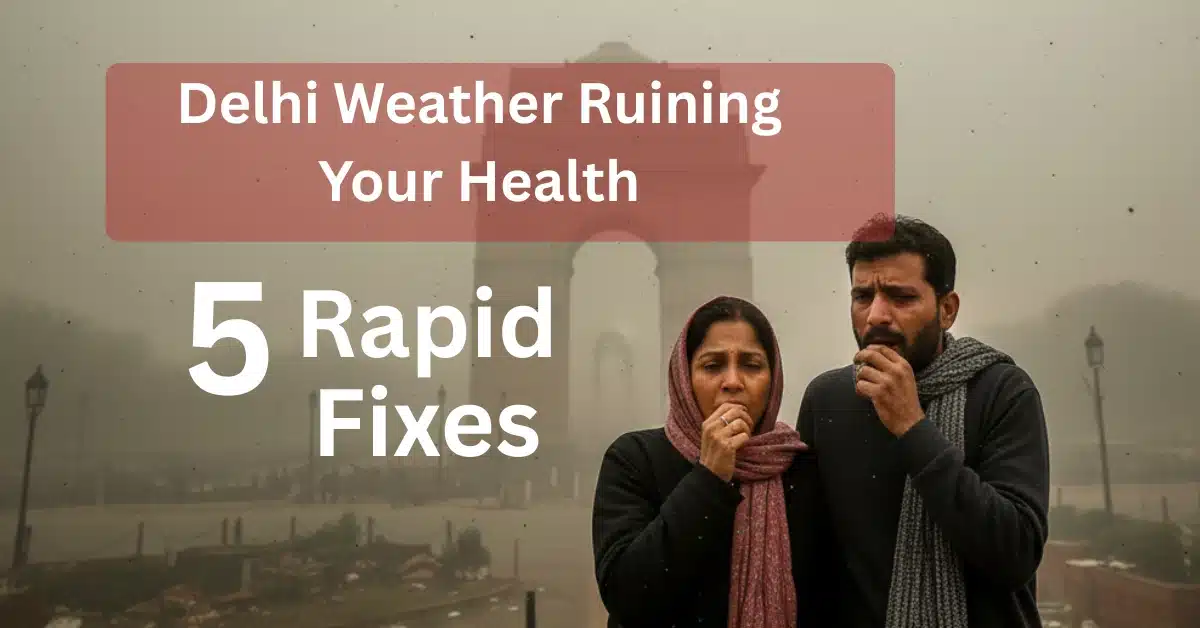
Delhi’s Weather Is Secretly Ruining Your Health – The air quality in Delhi has become a growing concern, with the city’s weather playing a significant role in exacerbating pollution-related issues.
Extreme temperatures and poor air quality can have devastating effects on one’s health. The combination of these factors can lead to a range of health problems, from respiratory issues to cardiovascular diseases.

Fortunately, there are effective ways to mitigate the negative impacts of Delhi’s weather on your well-being. Our article outlines 7 doctor-backed fixes to help you protect your health.
Key Takeaways
- Understand the health risks associated with Delhi’s weather
- Learn 7 doctor-recommended fixes to combat pollution-related health issues
- Discover simple preventive measures to safeguard your health
- Explore the connection between air quality and health in Delhi
- Find out how to minimize the impact of extreme temperatures on your well-being
Delhi’s Weather Is Secretly Ruining Your Health
The unique combination of air pollution and extreme temperatures in Delhi poses significant health risks to its inhabitants. Delhi’s weather is characterized by severe air pollution, especially during the winter months, coupled with extreme temperature fluctuations.
The Dangerous Combination of Air Pollution and Temperature Extremes
Delhi’s air pollution is notorious for its high levels of PM2.5, which can penetrate deep into the lungs, causing respiratory and cardiovascular issues. The situation worsens during temperature extremes, where heatwaves can lead to dehydration and heatstroke, while cold snaps can exacerbate respiratory conditions.
Silent Health Effects You Might Be Experiencing
Residents of Delhi may be experiencing silent health effects due to the weather, including:
- Increased respiratory issues: Air pollution can trigger asthma and other respiratory problems.
- Cardiovascular strain: Exposure to poor air quality can lead to cardiovascular disease.
- Mental health impacts: The stress of living in polluted conditions can affect mental well-being.
Understanding these risks is the first step towards mitigating the health impacts of Delhi’s weather.
How to fix it — 7 actions
The harsh weather in Delhi requires special precautions, and there are seven doctor-backed fixes that can help. Delhi’s climate, characterized by extreme temperatures and high pollution levels, demands a multi-faceted approach to protect one’s health.
Check AQI Daily Before Outdoor Activities
Monitoring the Air Quality Index (AQI) is crucial before stepping out. It helps in planning the day according to the pollution levels.
New Delhi Air Quality Index
Last Updated: 2025-12-15 02:53:03 AM
440 µg/m³
621 µg/m³
11°C
94%
Station-wise AQI
| Location | AQI | PM2.5 | PM10 | Status |
|---|---|---|---|---|
| Adarsh Enclave | 424 | 287 | 407 | Hazardous |
| Aerocity | 617 | 384 | 545 | Hazardous |
| Anand Vihar | 772 | 462 | 671 | Hazardous |
| Alipur | 826 | 489 | 691 | Hazardous |
24-Hour AQI Trend (Chart)
(Use Chart.js or similar to render here)
Using CPCB and Local Station Data Effectively
The Central Pollution Control Board (CPCB) and local air quality monitoring stations provide real-time data on air quality. Using this information, residents can decide whether to engage in outdoor activities or not.
When to Avoid Outdoor Exercise
On days when the AQI is ‘Poor’ or ‘Severe’, it’s advisable to avoid outdoor exercises to prevent health complications.

Use N95/KN95 Masks on High-Pollution Days
Wearing the right mask can significantly reduce exposure to harmful pollutants. N95 or KN95 masks are recommended for their effectiveness.
How Proper Masks Reduce PM2.5 Exposure
These masks filter out PM2.5 particles, which are particularly harmful as they can penetrate deep into the lungs.
When and Where Mask Protection Is Most Critical
Mask protection is crucial during peak traffic hours or in highly polluted areas.
Run Indoor Air Filtration Systems
Using indoor air filtration systems can help maintain a cleaner indoor environment.
HEPA Filter Benefits During Smog Episodes
HEPA filters are effective in removing particulate matter, including PM2.5, from the air, thus reducing indoor pollution.
Strategic Window Management Based on AQI
Keeping windows closed during high pollution episodes and opening them during cleaner periods can help manage indoor air quality.
| Action | Benefit |
|---|---|
| Check AQI Daily | Plan outdoor activities safely |
| Use N95/KN95 Masks | Reduce PM2.5 exposure |
| Run Air Filtration Systems | Improve indoor air quality |
Stay Hydrated and Plan for Extreme Heat
Staying hydrated is essential, especially during heatwaves. Planning outdoor activities around the heat can also mitigate risks.
Special Considerations for Older Adults
Older adults need to be particularly cautious during extreme heat, staying hydrated and avoiding strenuous activities.
Diabetes Management During Heat Waves
People with diabetes should monitor their condition closely during heatwaves, as extreme temperatures can affect blood sugar levels.
Adjust Your Daily Schedule Around Weather Patterns
Adjusting daily routines according to weather forecasts can help minimize exposure to extreme conditions.
Best Times for Essential Outdoor Activities
Early morning or late evening are generally better times for outdoor activities, avoiding peak sun hours.
Creating Protected Indoor Environments
Maintaining a cool and clean indoor environment can provide a safe haven from extreme weather.
Follow Seasonal Dietary Adjustments
Diet plays a crucial role in maintaining health during different seasons.
Anti-Inflammatory Foods That Combat Pollution Effects
Consuming anti-inflammatory foods can help counteract the negative health impacts of pollution.
Hydration Strategies Beyond Water
In addition to water, consuming hydrating foods and electrolyte-rich beverages can help maintain hydration.
Develop a Personal Weather Health Action Plan
Having a personalized plan based on individual health needs and weather forecasts can significantly enhance health protection.
Daily Monitoring Routine
Regularly checking weather and air quality forecasts helps in making informed decisions.
Emergency Preparations for Severe Weather Events
Being prepared for extreme weather events with necessary supplies and backup plans is crucial.
Quick prevention checklist
Check AQI daily and avoid outdoor exercise when AQI > 200; use CPCB / local station data.
Wear an N95/KN95 mask on high-pollution days and near traffic. (Reduces inhaled PM2.5.) PMC
Run indoor air filtration (HEPA) in bedrooms during smog episodes; keep windows closed when AQI is very poor. World Health Organization
Hydrate and plan for heat: older adults and people with diabetes must increase fluids and follow ADA sick-day guidance during heat/illness. American Diabetes Association+1
Limit outdoor exposure during heatwaves and seek cool spaces — heatwaves raise short-term mortality. PMC
If you have heart/lung disease, follow up quickly with your clinician after bad-AQI/heat days — pollutants and heat trigger CVD events. PMC
why this matters
Long- and short-term exposure to fine particles (PM2.5) and seasonal extremes (heatwaves, cold spells) are linked to increased respiratory and cardiovascular illness and higher mortality; WHO now recommends much lower PM2.5 targets than many cities currently experience.
World Health Organization+1 Local monitoring shows Delhi repeatedly hits “poor” to “severe” categories, making prevention guidance essential for public health. airquality.cpcb.gov.in
Conclusion: Thriving in Delhi Despite Weather Challenges
Delhi’s extreme weather conditions, coupled with high levels of air pollution, can be detrimental to your health.
By understanding the risks associated with delhi air pollution health and cold weather infections delhi, you can take proactive steps to protect yourself.
Staying informed about the weather today and delhi temperature can help you plan your daily activities.
On days with high pollution, using N95/KN95 masks and running indoor air filtration systems can significantly reduce your exposure.
By implementing the 7 doctor-backed fixes outlined earlier, you can minimize the negative impacts of Delhi’s weather on your health. Check the weather update and delhi temperature today regularly to stay ahead.
Take control of your health by making informed decisions based on the temperature delhi and air quality. With these simple steps, you can thrive in Delhi despite the weather challenges.
FAQ
How does Delhi’s weather affect my health?
Delhi’s weather can have a significant impact on your health due to the combination of air pollution and extreme temperatures, which can exacerbate respiratory issues, cardiovascular problems, and other health concerns.
What are the health risks associated with Delhi’s air pollution?
Delhi’s air pollution is linked to various health risks, including respiratory diseases, cardiovascular disease, and other health issues, particularly for vulnerable populations like older adults and those with pre-existing medical conditions.
How can I protect myself from Delhi’s pollution?
You can protect yourself by checking the Air Quality Index (AQI) daily, using N95/KN95 masks on high-pollution days, running indoor air filtration systems, staying hydrated, and adjusting your daily schedule according to weather patterns.
What are the benefits of using HEPA filters during smog episodes?
HEPA filters can help remove particulate matter, including PM2.5, from the air, reducing exposure to pollutants and alleviating respiratory issues during smog episodes.
How can I stay safe during extreme heat in Delhi?
To stay safe during extreme heat, stay hydrated by drinking plenty of water, avoid strenuous outdoor activities during peak heat hours, and plan your daily schedule around the weather.
Are there any specific dietary adjustments I can make to combat pollution effects?
Yes, incorporating anti-inflammatory foods into your diet can help combat the effects of pollution, and staying hydrated with fluids beyond water, such as coconut water or herbal teas, can also be beneficial.
How can I develop a personal weather health action plan?
To develop a personal weather health action plan, start by monitoring the AQI daily, having emergency preparations in place for severe weather events, and staying informed about weather forecasts to adjust your activities accordingly.
What precautions should older adults take during heatwaves in Delhi?
Older adults should take extra precautions during heatwaves, including staying hydrated, avoiding strenuous activities, staying in cool environments, and being aware of the signs of heat-related illnesses.
Can air purifiers really make a difference in reducing pollution exposure?
Yes, air purifiers, especially those with HEPA filters, can significantly reduce indoor pollution levels, making a difference in reducing exposure to harmful pollutants.
References
(World Health Organization). (2021). WHO global air quality guidelines: particulate matter (PM2.5 and PM10), ozone, nitrogen dioxide, sulfur dioxide and carbon monoxide. World Health Organization. https://www.who.int/publications/i/item/9789240034228. World Health Organization
Jaganathan, S., et al. (2024). Estimating the effect of annual PM2.5 exposure on mortality in India. [Article]. [journal]. https://pmc.ncbi.nlm.nih.gov/articles/PMC11790315/. PMC
Singh, A. K., et al. (2025). Respiratory deposition of particulate matter in Delhi: a five-year analysis (2019–2023). PubMed. https://pmc.ncbi.nlm.nih.gov/articles/PMC12663435/. PMC
de Bont, J., et al. (2024). Impact of heatwaves on all-cause mortality in India. PubMed Central. https://pmc.ncbi.nlm.nih.gov/articles/PMC11790314/. PMC
Islam, F., et al. (2025). Air pollution and cardiovascular disease: a systematic review. PubMed Central. https://pmc.ncbi.nlm.nih.gov/articles/PMC12049817/. PMC
Central Pollution Control Board (CPCB). (n.d.). Air quality monitoring — Central Control Room (Delhi CCR). https://www.airquality.cpcb.gov.in/ccr/. airquality.cpcb.gov.in
American Diabetes Association. (2024). Managing sick days / Standards of Care in Diabetes. https://diabetes.org/getting-sick-with-diabetes/sick-days and https://pubmed.ncbi.nlm.nih.gov/39651976/. American Diabetes Association+1

Dr. Shabbir Hussain, BPT Licensed Physiotherapist | Clinical Rehabilitation SpecialistMaharashtra OTPT Council Reg. No. PR-2021/08/PT/009532Society of Onco Physiotherapists Reg. No. SOP/00033/LM
He is a licensed physiotherapist with over 8 years of experience in physiotherapy, kidney rehabilitation, oncological rehabilitation, and lymphedema management. He specializes in balance disorders, pain management, musculoskeletal rehabilitation, strengthening programs, and VR-based rehabilitation.
Dr. Shabbir Hussain (BPT)