
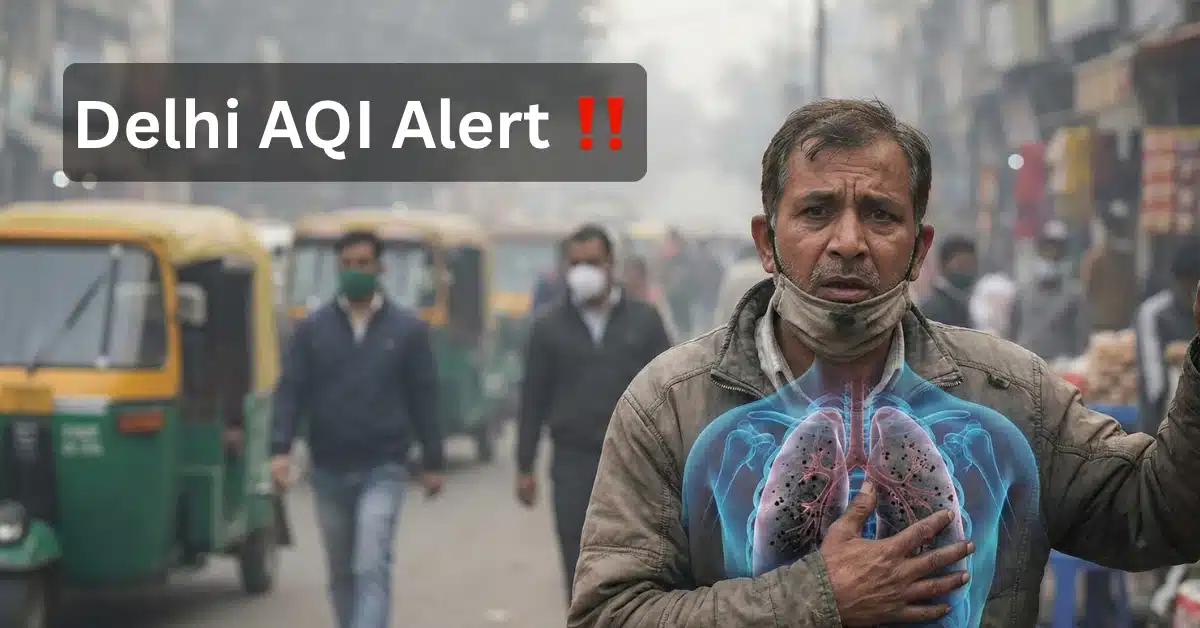
Delhi AQI Alert – The air quality in Delhi has been a growing concern, with the city’s air pollution levels reaching hazardous levels, especially during the smog season.
Prolonged exposure to such poor air quality can lead to respiratory issues, including coughing, wheezing, and breathlessness. However, there are proactive measures you can take to protect your lungs.
Delhi AQI Alert
A simple yet effective way to improve your lung health is by incorporating a daily 10-minute lung training routine. This routine includes breathing exercises and chest mobility exercises that can help strengthen your lungs and improve overall respiratory health.
Key Takeaways
- Delhi’s air pollution can cause respiratory issues like coughing and wheezing.
- A 10-minute daily lung training routine can improve lung health.
- Breathing exercises and chest mobility exercises are essential for lung health.
- Understanding the Air Quality Index (AQI) can help you take necessary precautions.
- Simple lifestyle changes can significantly reduce the impact of air pollution on your health.
Understanding Delhi AQI Alert and Its Impact on Lung Health
The Delhi AQI alert system is a vital tool for monitoring air quality, and its readings have significant implications for lung health. The Air Quality Index (AQI) measures the level of air pollution, providing insights into the quality of the air we breathe.
Delhi’s air quality is monitored through a network of stations that measure various pollutants, including particulate matter (PM2.5 and PM10), nitrogen dioxide (NO2), and ozone (O3). Understanding these readings is crucial for taking appropriate measures to protect one’s health.
What AQI Readings Mean for Your Respiratory System
AQI readings are categorized into different levels, ranging from ‘Good’ to ‘Severe’. When the AQI is ‘Poor’ or ‘Severe’, it indicates high levels of pollutants that can exacerbate respiratory conditions like asthma. Checking the AQI before outdoor activities is essential to minimize exposure to harmful air pollutants.
- Good (0-50): Minimal health risk
- Moderate (51-100): May cause breathing discomfort for sensitive groups
- Poor (101-200): May cause respiratory issues in healthy individuals
- Severe (401-500): Serious health risks for everyone
Why Lung Training Matters During High Pollution Days
Lung training exercises can help improve lung capacity and resilience against air pollution. During high pollution days, practicing diaphragmatic breathing and other lung exercises can mitigate the adverse effects of poor air quality on lung health.
By incorporating lung training into your daily routine, you can enhance your respiratory system’s ability to cope with air pollution, reducing the risk of respiratory problems.
10-Minute Daily Lung Training Routine
In the midst of Delhi’s pollution crisis, a 10-minute daily routine can be your shield against deteriorating lung health. This routine is designed to be simple, effective, and adaptable to your daily life, even on days when the air quality index (AQI) is concerning.
Safety First: Check AQI Before Outdoor Activity
Before starting any outdoor activity or exercise, it’s crucial to check the current AQI. This simple step can help you decide whether to proceed with your planned routine or modify it to suit the day’s air quality.
AQI Guidelines for Exercise Modification
If the AQI is above 300, consider postponing outdoor activities or modifying your routine to low-intensity exercises that can be done indoors. For AQI values between 200-300, you can proceed with caution, opting for lower intensity versions of your usual exercises.
Special Considerations for Sensitive Groups
Individuals with pre-existing respiratory conditions, such as asthma or COPD, should be particularly cautious. On high pollution days, it’s advisable to stay indoors and follow a pulmonary rehabilitation exercise routine that can help manage symptoms.
Diaphragmatic (Belly) Breathing — 5 Minutes
Diaphragmatic breathing, also known as belly breathing, engages your diaphragm, promoting efficient oxygen intake. To start, find a comfortable seated or lying position.
Technique: Proper Hand Placement and Breathing Pattern
Place one hand on your belly and the other on your chest. Inhale slowly through your nose, allowing your belly to rise as your diaphragm descends. Your chest should not move. Exhale slowly through your mouth, allowing your belly to fall as your diaphragm rises. Repeat this process for 5 minutes.
Diaphragmatic Breathing Technique
This technique improves breathing efficiency, reduces stress, and can help manage symptoms of respiratory conditions. Regular practice can lead to better lung capacity and overall respiratory health.
Pursed-Lip Breathing — 2–3 Minutes
Pursed-lip breathing is a simple technique that can help control breathlessness. It’s particularly beneficial for individuals with COPD or asthma.
Technique: Inhale-Exhale Counting Method
Inhale slowly through your nose for a count of 2. Then, pucker your lips as if you’re going to whistle, and exhale slowly through your pursed lips for a count of 4. Repeat this cycle for 2-3 minutes.
Benefits: Controlling Breathlessness
This technique helps control breathlessness by keeping airways open longer, making breathing easier. It can also help reduce the feeling of shortness of breath during periods of stress or exertion.
Thoracic Expansion + Rib Mobility — 2 Minutes
Thoracic expansion exercises help improve lung volume by increasing the mobility of your rib cage.
Technique: Expanding Chest Capacity
Stand or sit with good posture. Interlace your fingers behind your back. Gently pull your shoulders back and lift your chest, expanding your thoracic cavity. Hold for a few seconds, then release. Repeat for 2 minutes.
Benefits: Improving Lung Volume
This exercise improves lung volume by enhancing rib mobility and thoracic expansion. Regular practice can lead to more efficient oxygen intake and better overall respiratory function.
By incorporating this 10-minute daily lung training routine into your life, you can take proactive steps towards protecting your lung health amidst Delhi’s challenging air quality conditions.
Conclusion: Building Respiratory Resilience in Delhi’s Air
Delhi’s air pollution crisis demands proactive steps to protect lung health. The 10-minute daily lung training routine can be a game-changer in building respiratory resilience. By incorporating diaphragmatic breathing, pursed-lip breathing, and thoracic expansion exercises, individuals can improve oxygen saturation and reduce the risk of pollution-related health issues.
On highly polluted days, wearing an N95 mask can significantly reduce exposure to PM2.5, which is known to cause lung damage. Using an air purifier for asthma sufferers can also help maintain a healthy indoor environment. Following airnow aqi exercise guidelines and adhering to WHO air quality guidelines pm2.5 can further minimize the risks associated with delhi smog breathing problems.
By combining these strategies, individuals can alleviate symptoms like air pollution cough, wheezing due to pollution, and chest tightness in smog. Taking control of lung health is crucial in polluted environments, and with consistent practice, individuals can develop the resilience needed to navigate Delhi’s challenging air quality.
Key science points
- WHO tightened air quality guideline levels (e.g., PM2.5 annual mean 5 µg/m³) due to health risks even at low exposures. World Health Organization+2Iris+2
- Air pollution can exacerbate respiratory disease symptoms and reduce lung function, especially in vulnerable groups. ERS Publications+1
- Pulmonary rehabilitation guidelines support exercise training + breathing strategies to improve function and symptoms in chronic respiratory disease. ATS Journals+2ERS Publications+2
FAQ
What is the Delhi AQI Alert system and how does it impact lung health?
The Delhi AQI Alert system measures the air quality index in Delhi, providing information on the level of air pollution. High AQI readings can negatively impact lung health, exacerbating conditions like asthma and chronic obstructive pulmonary disease (COPD). Being aware of the AQI can help individuals take necessary precautions to protect their lungs.
How can I check the AQI before outdoor activities?
You can check the AQI through various online platforms, mobile apps, or government websites that provide real-time air quality updates. Some popular options include the AirNow app, the Delhi Pollution Control Board website, or other local weather apps that include AQI information.
What are some exercises that can help improve lung health during Delhi’s air pollution crisis?
Exercises like diaphragmatic breathing, pursed-lip breathing, and thoracic expansion can help improve lung health. These exercises can be done daily, even on highly polluted days, to help build respiratory resilience.
How can diaphragmatic breathing benefit my lung health?
Diaphragmatic breathing can improve breathing efficiency by engaging the diaphragm, the primary muscle used for breathing. This type of breathing can help slow down breathing rates, reduce stress, and increase oxygen saturation.
What is pursed-lip breathing and how can it help with breathlessness?
Pursed-lip breathing involves exhaling slowly through pursed lips, which can help control breathlessness and improve lung function. This technique can be particularly helpful for individuals with COPD or asthma.
Are there any additional tips for protecting lung health during Delhi’s air pollution crisis?
Yes, some additional tips include using air purifiers indoors, wearing N95 masks on highly polluted days, and avoiding strenuous outdoor activities when the AQI is high. Staying hydrated and maintaining a healthy lifestyle can also help support lung health.
Can lung training exercises be done indoors when the AQI is high?
Yes, lung training exercises can be done indoors when the AQI is high. In fact, it’s recommended to avoid strenuous outdoor activities during highly polluted days. Indoor exercises like diaphragmatic breathing, pursed-lip breathing, and thoracic expansion can be done safely and effectively.
How can I modify my exercise routine based on the AQI readings?
On highly polluted days, it’s recommended to reduce the intensity and duration of outdoor activities. You can also shift your workout routine indoors, focusing on low-impact exercises that don’t exacerbate respiratory issues.
Are there any specific considerations for sensitive groups, such as children or older adults?
Yes, sensitive groups like children, older adults, and individuals with pre-existing respiratory conditions may need to take extra precautions to protect their lung health. This includes avoiding outdoor activities during highly polluted days, using air purifiers, and wearing protective masks.
References
- World Health Organization. (2021). WHO global air quality guidelines: Particulate matter (PM2.5 and PM10), ozone, nitrogen dioxide, sulfur dioxide and carbon monoxide. World Health Organization+1
- Pai, S. J., et al. (2022). Updated World Health Organization air quality guidelines—review/summary article. [PMC article]. PubMed Central
- U.S. Environmental Protection Agency. (2021, September 20). Should you exercise outside in air pollution? Environmental Protection Agency
- AirNow. (2014). Air Quality and Outdoor Activity Guidance for Schools (PDF). AirNow Documents
- American Lung Association. (2024, September 18). Air Quality Index (AQI): What to know and how to protect your health. American Lung Association
- Spruit, M. A., et al. (2013). Key concepts and advances in pulmonary rehabilitation: An official ATS/ERS statement. American Journal of Respiratory and Critical Care Medicine. ATS Journals+1
- Rochester, C. L., et al. (2023). Pulmonary rehabilitation for adults with chronic respiratory disease: ATS clinical practice guideline/statement. American Journal of Respiratory and Critical Care Medicine. ATS Journals
- Sin, D. D., et al. (2023). Air pollution and COPD (GOLD committee report). European Respiratory Journal. ERS Publications

Dr. Shabbir Hussain, BPT Licensed Physiotherapist | Clinical Rehabilitation SpecialistMaharashtra OTPT Council Reg. No. PR-2021/08/PT/009532Society of Onco Physiotherapists Reg. No. SOP/00033/LM
He is a licensed physiotherapist with over 8 years of experience in physiotherapy, kidney rehabilitation, oncological rehabilitation, and lymphedema management. He specializes in balance disorders, pain management, musculoskeletal rehabilitation, strengthening programs, and VR-based rehabilitation.
Dr. Shabbir Hussain (BPT)