
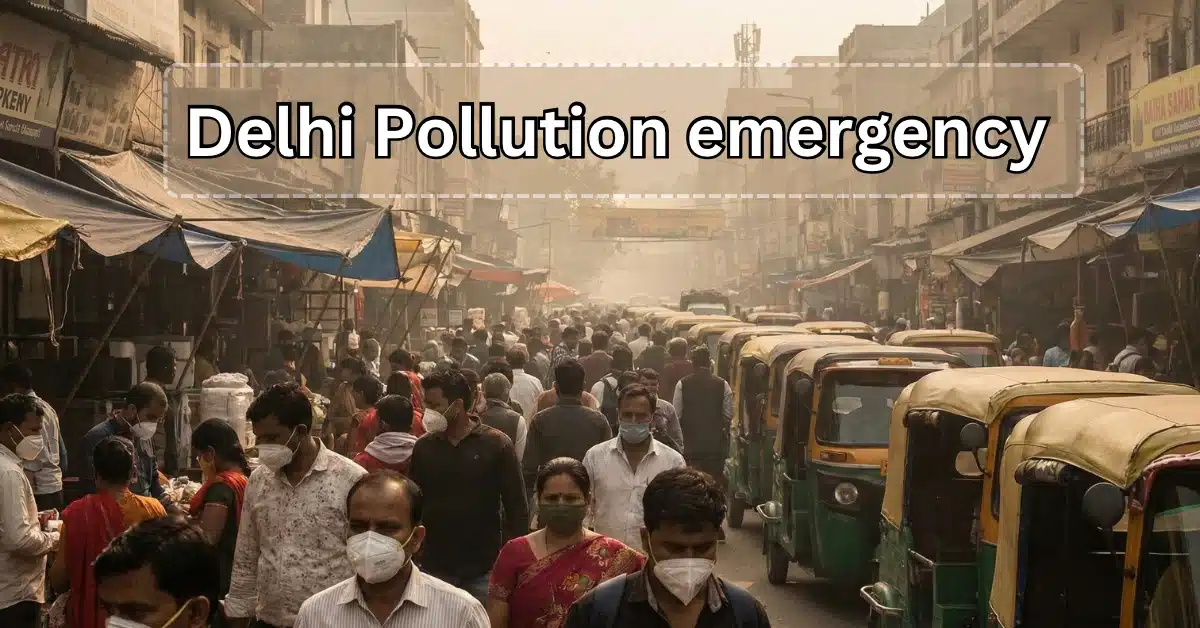
The Indian capital is grappling with a severe air quality crisis, prompting the state government to take drastic measures. In a bid to mitigate the health effects of pollution, the government has ordered a shift to work-from-home for employees.

This move comes as the air quality in the region continues to deteriorate, posing significant risks to the health and well-being of residents. The government’s response aims to reduce the exposure of citizens to the hazardous air quality.
Key Takeaways
- The state government has ordered work-from-home to combat the air quality crisis.
- The move aims to reduce the health risks associated with poor air quality.
- Residents are advised to take precautions to minimize exposure.
- The government’s measures are crucial in addressing the emergency.
- The air quality in delhi remains a significant concern.
The Delhi Pollution Emergency: Current Status
Delhi’s air quality has reached hazardous levels, prompting the government to declare a state of emergency. The city’s air pollution crisis is a pressing concern that requires immediate attention and action.
Record-Breaking Air Quality Index Readings
The air quality index in Delhi has hit record-breaking levels, with concentrations of particulate matter (PM2.5) exceeding safe limits by a significant margin. The current Air Quality Index (AQI) stands at 450, categorizing the air quality as ‘Severe’ and posing serious health risks to residents.
The pollution crisis in India is not new, but the severity of the situation in Delhi has prompted the government to take drastic measures. The record-breaking AQI readings are a result of a combination of factors, including vehicular emissions, industrial pollution, and crop burning in neighboring states.
Implementation of Emergency Protocols
In response to the crisis, the Delhi government has implemented various emergency protocols to mitigate the effects of the pollution. Key measures include:
- Work from home orders for government employees
- Restrictions on construction activities
- Closure of schools and colleges
- Ban on the use of diesel generators
These measures to reduce pollution are aimed at reducing the overall pollution load in the city. The government is also exploring long-term solutions, including Delhi government initiatives to promote cleaner energy and reduce vehicular emissions.
Government’s Work From Home Mandate
As Delhi struggles with alarming air quality, the government has taken a significant step by mandating work-from-home for various sectors. This decision aims to reduce the number of people commuting and potentially exposed to the hazardous air, thereby mitigating the health risks associated with the pollution crisis.
Details of the Official Order
The official order issued by the Delhi government outlines the specifics of the work-from-home mandate. It includes guidelines for employers to ensure that employees are able to work remotely without significant disruptions to their productivity. The order emphasizes the need for flexible working hours and the use of digital communication tools to facilitate remote work.
The order also highlights the importance of maintaining data security and confidentiality while working remotely. Employers are required to implement necessary measures to protect sensitive information and ensure compliance with existing data protection regulations.
| Sector | Work-from-Home Requirements | Exceptions |
|---|---|---|
| IT and ITES | 100% work-from-home | Essential services personnel |
| Finance and Banking | 50% work-from-home | Critical operations teams |
| Education | Online classes mandatory | Administrative staff |
Affected Sectors and Exceptions
The work-from-home mandate affects various sectors differently. For instance, the IT and ITES sectors are required to operate with 100% work-from-home arrangements, while the finance and banking sectors have a more flexible arrangement with 50% of their workforce working remotely.
Exceptions have been made for essential services personnel and critical operations teams. These exceptions are crucial to maintaining the continuity of vital services during the pollution emergency.
Timeline and Enforcement Measures
The work-from-home mandate is set to be enforced immediately, with a review scheduled after two weeks to assess its effectiveness. The government has put in place a monitoring system to track compliance, with penalties for non-compliance.
Employers are required to submit regular reports on their work-from-home arrangements and the challenges faced during the implementation. This will help the government to refine its policies and make necessary adjustments.
Understanding the Severity of Delhi’s Air Crisis
As Delhi grapples with its worst air quality in years, understanding the severity of the crisis is crucial. The city’s air pollution is not just a local issue but a complex problem with regional and national implications.
Comparison with Previous Pollution Episodes
Delhi’s air quality has been a concern for several years, but the current crisis has surpassed previous episodes in severity. Comparing the current air quality index readings with those of past years reveals a disturbing trend. The air quality index (AQI) has consistently crossed the 400 mark, categorizing it as ‘severe’ or ‘hazardous’.
| Year | Average AQI | Peak AQI |
|---|---|---|
| 2018 | 320 | 450 |
| 2019 | 330 | 480 |
| 2020 | 340 | 500 |
| 2023 | 420 | 520 |
Contributing Factors to the Current Emergency
Several factors contribute to Delhi’s air pollution crisis. Vehicular emissions, industrial pollution, and agricultural burning are among the primary sources. The city’s geographical location, surrounded by states with significant agricultural activities, exacerbates the issue due to stubble burning.
Pollution Monitoring Systems and Data Analysis
Delhi has a network of air quality monitoring stations that provide real-time data on various pollutants. Data analysis from these stations helps in understanding the patterns and sources of pollution. This information is crucial for policymakers to implement targeted interventions.
The severity of Delhi’s air crisis demands a multi-faceted approach to mitigate its effects. Understanding the contributing factors and leveraging data from pollution monitoring systems are key steps towards addressing this complex issue.
Health Implications of Prolonged Exposure
Prolonged exposure to Delhi’s toxic air poses significant health risks, necessitating immediate attention and action. The city’s air quality has deteriorated to alarming levels, with severe consequences for the health and well-being of its residents.
Immediate Health Risks for Vulnerable Populations
The most vulnerable populations, including children, the elderly, and those with pre-existing health conditions, are at a heightened risk of experiencing adverse health effects due to the poor air quality.Respiratory issues, such as asthma and bronchitis, are exacerbating, and there is an increased incidence of cardiovascular problems. These groups must take extra precautions to minimize their exposure to the polluted air.

Long-term Health Concerns for Delhi Residents
Beyond the immediate health risks, prolonged exposure to Delhi’s polluted air has long-term health implications for all residents. There is a growing concern about the potential forchronic respiratory diseases, neurological damage, and even cancerdue to the prolonged inhalation of toxic air. The cumulative effect of years of exposure to such poor air quality could lead to a significant increase in health problems in the future.
Medical Expert Insights and Recommendations
Medical experts emphasize the need for immediate action to mitigate the health impacts of the pollution crisis. They recommend that residents take measures to protect themselves, such as wearing masks, using air purifiers, and avoiding outdoor activities when pollution levels are high. Additionally, experts stress the importance of government initiatives to reduce pollution, includingenforcing stricter emissions controls and promoting cleaner transportation options.
By understanding the health implications of prolonged exposure to poor air quality and taking proactive steps, Delhi residents can reduce their risk of adverse health effects and work towards a healthier future.
Essential Safety Measures for Delhi Residents
As Delhi grapples with alarming air quality, residents must take immediate action to safeguard their health. The city’s air pollution crisis requires a multi-faceted approach to mitigate its adverse effects. By adopting essential safety measures, residents can reduce their exposure to harmful pollutants.
Indoor Air Quality Management
Effective indoor air quality management is crucial to minimizing exposure to pollutants. Residents can use air purifiers with HEPA filters to clean the air inside their homes. Keeping windows and doors closed, especially during peak pollution hours, can also help prevent polluted air from entering homes.
Personal Protection Recommendations
Wearing masks rated N95 or N100 can significantly reduce the inhalation of harmful particles. Residents should wear these masks when stepping out, especially during peak traffic hours or when outdoors. Additionally, avoiding strenuous outdoor activities can help minimize exposure to poor air quality.
Community-Level Precautions
Community-level precautions involve collective action to reduce pollution. Residents can participate in carpooling, using public transport, or cycling to work. These actions not only reduce the number of vehicles on the road but also contribute to a cleaner environment.
When to Seek Medical Attention
Residents should be aware of the health symptoms that necessitate medical attention. If experiencing difficulty breathing, persistent cough, or irritation in the eyes, nose, or throat, individuals should consult a healthcare professional. Timely medical intervention can prevent complications arising from prolonged exposure to poor air quality.
Conclusion: Looking Beyond the Emergency
The Delhi pollution emergency has brought the city’s severe air quality crisis to the forefront, prompting immediate actions such as the work-from-home mandate. However, addressing the delhi pollution emergency requires more than just temporary measures; it demands a comprehensive approach to tackle the root causes of the pollution crisis in India.
To effectively mitigate the crisis, it’s crucial to implement measures to reduce pollution on a long-term basis. This includes enhancing public transportation, promoting cleaner energy sources, and enforcing stricter emission controls on industries.
By adopting a multi-faceted strategy, Delhi can move towards a cleaner, healthier environment. The current emergency serves as a catalyst for change, encouraging collective efforts from the government, citizens, and stakeholders to create a sustainable future.
As the city navigates through this challenging period, the focus should remain on creating lasting solutions that benefit not just Delhi but also contribute to reducing the overall pollution crisis in India.
FAQ
What triggered the Delhi government’s decision to order work from home?
The Delhi government’s decision to order work from home was triggered by the alarming air quality index readings, which reached hazardous levels, posing a significant threat to the health and well-being of residents.
How does the work from home mandate affect different sectors in Delhi?
The work from home mandate affects various sectors in Delhi, including government offices, private companies, and educational institutions, with some exceptions for essential services and industries that cannot operate remotely.
What are the immediate health risks associated with Delhi’s poor air quality?
The immediate health risks associated with Delhi’s poor air quality include respiratory problems, cardiovascular issues, and other health concerns, particularly for vulnerable populations such as children, the elderly, and those with pre-existing medical conditions.
How can Delhi residents manage indoor air quality during the pollution emergency?
Delhi residents can manage indoor air quality by using air purifiers, sealing windows and doors, and avoiding strong chemicals or pollutants that can exacerbate indoor air pollution.
What personal protection measures can Delhi residents take to minimize exposure to poor air quality?
Delhi residents can take personal protection measures such as wearing masks rated for fine particulate matter (PM2.5), avoiding outdoor activities, especially during peak pollution hours, and using protective gear when outdoors.
What are the long-term health concerns for Delhi residents due to prolonged exposure to poor air quality?
The long-term health concerns for Delhi residents due to prolonged exposure to poor air quality include increased risk of chronic respiratory diseases, cardiovascular disease, and other health problems, as well as potential impacts on cognitive function and overall well-being.
How is the Delhi government monitoring and addressing the pollution crisis?
The Delhi government is monitoring the pollution crisis through a network of air quality monitoring stations and data analysis, and addressing it through measures such as the work from home mandate, restrictions on polluting activities, and other initiatives aimed at reducing emissions and improving air quality.
What role do pollution monitoring systems play in managing Delhi’s air quality?
Pollution monitoring systems play a crucial role in managing Delhi’s air quality by providing real-time data on air quality index readings, tracking pollution trends, and informing policy decisions and emergency responses.

Dr. Shabbir Hussain, BPT
Registered Physiotherapist | Clinical Rehabilitation Specialist
Maharashtra OTPT Council Reg. No.: PR-2021/08/PT/009532
Society of Onco Physiotherapists Reg. No.: SOP/00033/LM
Dr. Shabbir Hussain, BPT, Registered Physiotherapist with over 8 years of experience in physiotherapy, kidney rehabilitation, oncological rehabilitation, and lymphedema management. He specializes in balance disorders, pain management, musculoskeletal rehabilitation, strengthening programs, and VR-based rehabilitation.