Updated September 20, 2026 — Written by Dr. Shabbir Hussain, BPT, Registered Physiotherapist | Clinical Rehabilitation Specialist
Quick Answer – How to Get Rid of Lower Back Pain
Most mild-to-moderate nonspecific low back pain improves over time with appropriate activity, self-care, and a gradual return to normal activities. Gentle movement, comfortable exercise, and short-term heat or cold may help manage symptoms. Recovery time varies, and persistent, worsening, or severe pain—especially with new weakness, saddle numbness, or bladder or bowel changes—requires medical assessment.
Why Does Lower Back Pain Happen?
Lower back pain is one of the most common reasons people miss work or limit daily activity worldwide. It can stem from muscle strains, degenerative disc changes, poor posture, herniated discs, spinal stenosis, or less commonly from conditions like kidney stones, fibromyalgia, or pregnancy-related changes.
Lower back pain can develop for different reasons, including muscle or soft-tissue strain, spinal conditions, and other medical causes. Symptoms and contributing factors vary between individuals, so the cause cannot always be determined from pain location alone.
Before trying home remedies, it helps to rule out red-flag symptoms with a doctor — especially if pain follows an injury or comes with fever, unexplained weight loss, or leg weakness.
How Can I Get Short-Term Lower Back Pain Relief?
For quick, short-term relief:
- Child’s Pose: If comfortable, kneel and slowly reach your arms forward while keeping your breathing relaxed. Hold for 20–30 seconds and stop if the movement increases pain, leg symptoms, or discomfort.
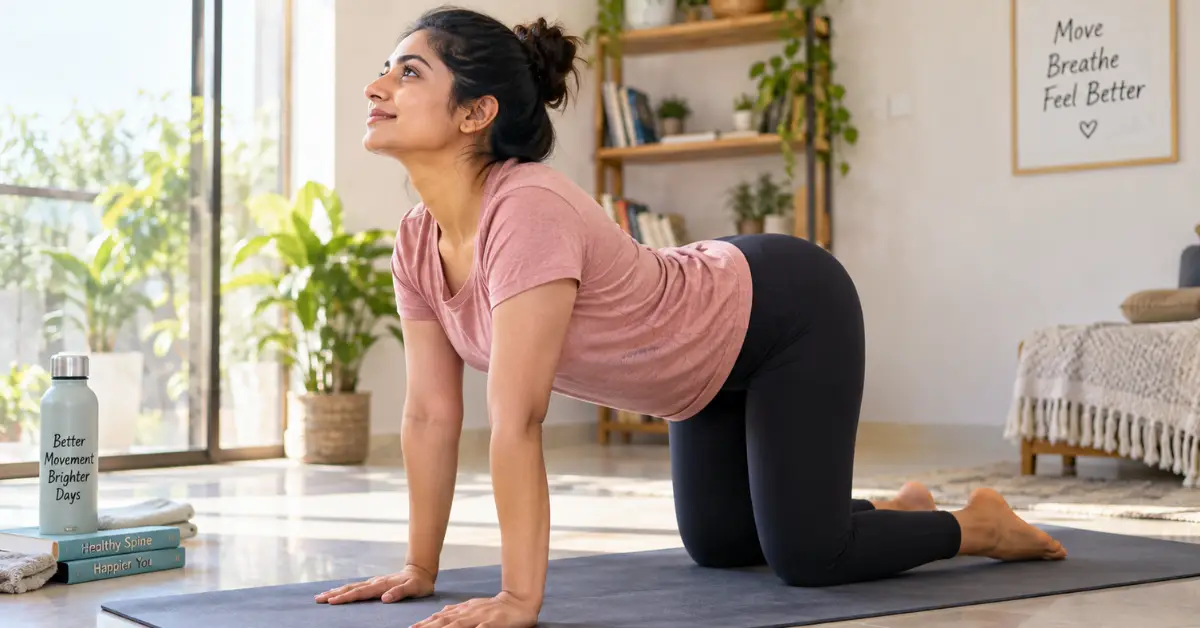
- Cat-Cow movement: Slowly alternate between rounding and gently extending your back within a comfortable range. This can help some people with stiffness, but stop if symptoms worsen or pain radiates into the leg.
- Heat or cold: Try a wrapped cold pack or a comfortable heat pack for around 10–20 minutes, protecting the skin. Use whichever feels more helpful, and avoid prolonged or direct contact. Seek medical advice if pain is severe, unexplained, or accompanied by warning signs.
- Slow diaphragmatic breathing for 2–3 minutes can reduce muscle guarding by calming the nervous system’s pain response.
These won’t cure the underlying cause, but they often take the edge off enough to move more comfortably.
How to Relieve Back Pain Quickly (Beyond the First Few Minutes)
- Stay gently active. Short walks and gentle movement can help maintain function and reduce stiffness. Avoid prolonged bed rest unless a healthcare professional advises otherwise.
- Change positions regularly: Adjust your sitting position, move frequently, and use a workstation that allows comfortable working. There is no single posture that prevents all back pain. Choose positions that feel comfortable and avoid staying in one position for long periods if it worsens your symptoms.
- Over-the-counter pain relief: Medication may be appropriate for some people, but the choice depends on your medical history, other medicines, and the type of pain. Ask a pharmacist or healthcare professional before using an anti-inflammatory medicine such as ibuprofen, particularly if you have kidney disease, stomach ulcers, heart disease, take blood thinners, or have other relevant medical conditions. Do not assume that an over-the-counter medicine is safe for everyone. Do not use anti-inflammatory medicines for prolonged periods without professional guidance, and follow the recommended dose and duration on the product label or provided by your healthcare professional.
- Review your mattress, shoes, and workstation. Review your sleeping arrangement, footwear, and workstation for comfort. Adjust your chair, screen, and working position to reduce discomfort, and change positions regularly. There is no single mattress, shoe type, or workstation arrangement that works for everyone with lower back pain.
Everyday Habits That Prevent Recurring Pain
Small daily changes add up:
Sleep position: Choose a sleeping position that feels comfortable and does not worsen your symptoms. A pillow under the knees when lying on your back, or between the knees when side-sleeping, may help some people feel more comfortable. Stomach sleeping is not automatically harmful, but you may want to change position if it increases discomfort.
Sleep duration: Adults generally need 7 or more hours nightly; chronic poor sleep is linked with a higher risk of persistent back pain.
Diet: A balanced diet that includes vegetables, fruits, whole grains, protein, and adequate fluids supports general health. However, no particular food or diet can be presented as a guaranteed treatment for lower back pain. If you have ongoing back pain, focus on appropriate movement, individualized rehabilitation, and evaluation of persistent or concerning symptoms.
Stress management: Mindfulness meditation, progressive muscle relaxation, and guided imagery have shown modest benefits for chronic low back pain in clinical studies.
Massage and topical creams: Massage may provide short-term symptom relief for some people, particularly when combined with an active rehabilitation programme. Avoid massage over an area with suspected infection, an unhealed fracture, or a possible blood clot, and seek medical advice when these conditions are suspected.
How Physiotherapy Can Help
A physiotherapist assesses your symptoms, movement tolerance, strength, functional limitations, and relevant medical history to help guide an individualized rehabilitation plan. Depending on your presentation, treatment may include exercise therapy, activity modification, education, and selected manual techniques. This typically includes:
- Selected manual therapy: Manual techniques may be considered for some people as part of a broader rehabilitation plan that includes exercise. Suitability depends on the clinical assessment and the individual’s response.
- Individualized exercise therapy, such as core stabilization, McKenzie extension exercises, or graded strengthening, based on your specific presentation
- Posture and ergonomic correction for desk-based work or repetitive lifting
- Guided return to activity, pacing exercise intensity to avoid flare-ups while rebuilding strength
Physiotherapy may be helpful for people with recurring episodes, movement-related limitations, reduced strength, or pain that continues to affect daily activities. It is not a substitute for urgent medical care when red-flag symptoms are present — sudden severe pain after trauma, progressive leg weakness, numbness in the groin area, or loss of bladder/bowel control require immediate medical attention, not physiotherapy alone.
When to See a Doctor
See a healthcare professional if:
- Pain persists beyond 2–4 weeks despite home care
- Pain is severe, worsening, or follows a fall or injury
- You notice numbness, tingling, or weakness in the legs
- Pain occurs alongside fever, unexplained weight loss, or bowel/bladder changes
A doctor can rule out serious causes and refer you to physiotherapy or further treatment if needed.
Key Takeaway
Many episodes of nonspecific low back pain improve with appropriate activity, self-care, and gradual return to normal activities. Gentle movement, comfortable exercise, and other symptom-management strategies may help, but recovery varies. Appropriate strengthening, adequate sleep, and stress management may support recovery and help some people manage recurring symptoms. Persistent or severe pain, or symptoms suggesting a serious condition, require professional medical evaluation.
Medical Sources
- NIH – National Institute of Arthritis and Musculoskeletal and Skin Diseases: Back Pain
Link: https://www.niams.nih.gov/health-topics/back-pain - Mayo Clinic – Back Pain: Diagnosis and Treatment
Link: https://www.mayoclinic.org/diseases-conditions/back-pain/diagnosis-treatment/drc-20369911 - Cleveland Clinic – Lower Back Pain
Link: https://my.clevelandclinic.org/health/diseases/7936-lower-back-pain - NHS – Back Pain
Link: https://www.nhs.uk/conditions/back-pain/
Medical Disclaimer
This article is for general educational and informational purposes only. It is not a substitute for professional medical diagnosis, treatment, or individualized medical advice. If you have persistent, severe, worsening, or concerning symptoms, consult a qualified healthcare professional. Seek urgent medical care for emergency symptoms.
Dr. Shabbir Hussain, BPT
Licensed Physiotherapist | Clinical Rehabilitation Specialist
Maharashtra OTPT Council Reg. No.: PR-2021/08/PT/009532
Society of Onco Physiotherapists Reg. No.: SOP/00033/LM
Dr. Shabbir Hussain is a licensed physiotherapist with over 8 years of experience in physiotherapy, kidney rehabilitation, oncological rehabilitation, and lymphedema management. He specializes in balance disorders, pain management, musculoskeletal rehabilitation, strengthening programs, and VR-based rehabilitation.