
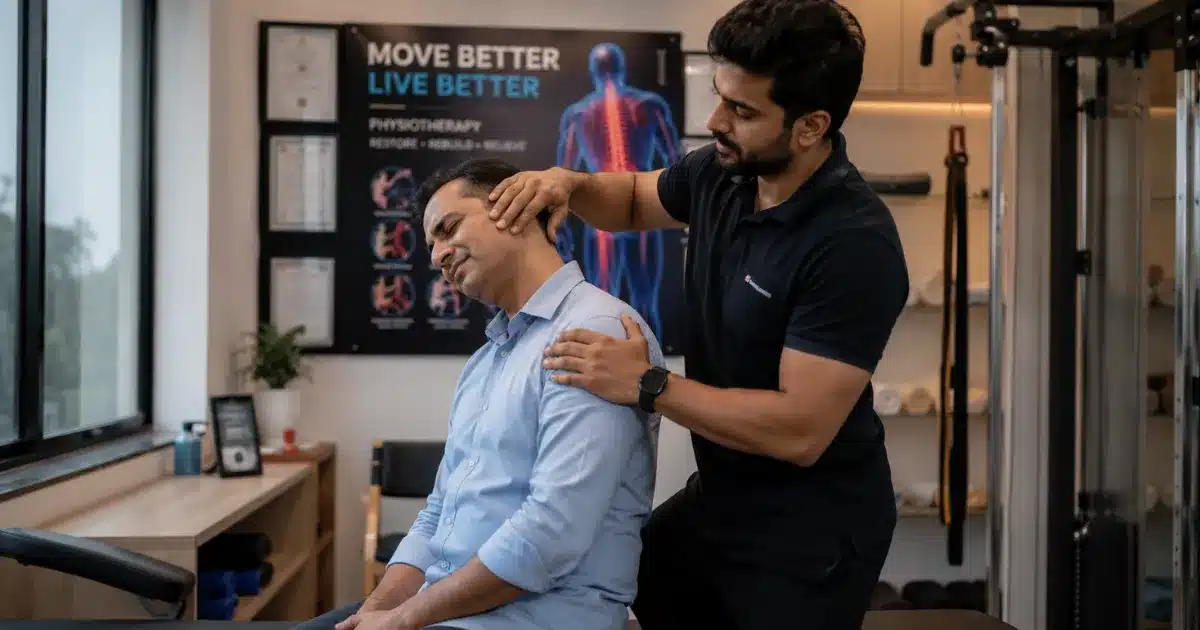
🩺 Medically Reviewed & Verified
Written & Reviewed By: Dr. SHABBIR BOHRA (BPT)
Specialization: Physiotherapy, Rehabilitation & Musculoskeletal Health
Expertise: Posture Correction, Pain Management, Exercise Rehabilitation & Public Health Education
Last Updated: June 1, 2026
This article has been medically reviewed for clinical accuracy, rehabilitation awareness, and evidence-based physiotherapy education. The information is designed to provide trustworthy, reader-friendly, and medically accurate health guidance based on modern rehabilitation principles and physiotherapy practice observations.
Most people visit a physiotherapist only after pain starts controlling their daily life.
That’s one of the biggest mistakes seen in modern healthcare.
A young office worker ignores neck stiffness for months. A father keeps taking painkillers for lower back pain before going to work. A college student continues spending 8–10 hours on a laptop despite recurring shoulder tightness. Slowly, the body starts adapting to poor movement patterns.
Then one day, even simple tasks become painful.
Clinically, many patients believe physiotherapy is only for fractures, paralysis, or post-surgery recovery. But in real rehabilitation practice, physiotherapists help people restore movement, reduce pain, improve posture, recover from injuries, prevent disability, and regain confidence in their body.
And today, because of sedentary lifestyle habits, smartphone overuse, stress, obesity, and long sitting hours, physiotherapists are becoming more important than ever before.
According to WHO, billions of people worldwide may require rehabilitation services during their lifetime.
Quick Summary
Main Risk: Ignoring stiffness, posture problems, or recurring pain may lead to chronic movement disorders and reduced quality of life. 1
Most Common Symptom: Neck pain, back pain, stiffness, muscle weakness, poor posture, and mobility problems.
Best Solution: Early physiotherapy assessment, guided rehabilitation, posture correction, and strengthening exercises.
Prevention Tip: Avoid prolonged sitting, improve ergonomics, stay physically active, and correct posture early.
What Is a Physiotherapist?
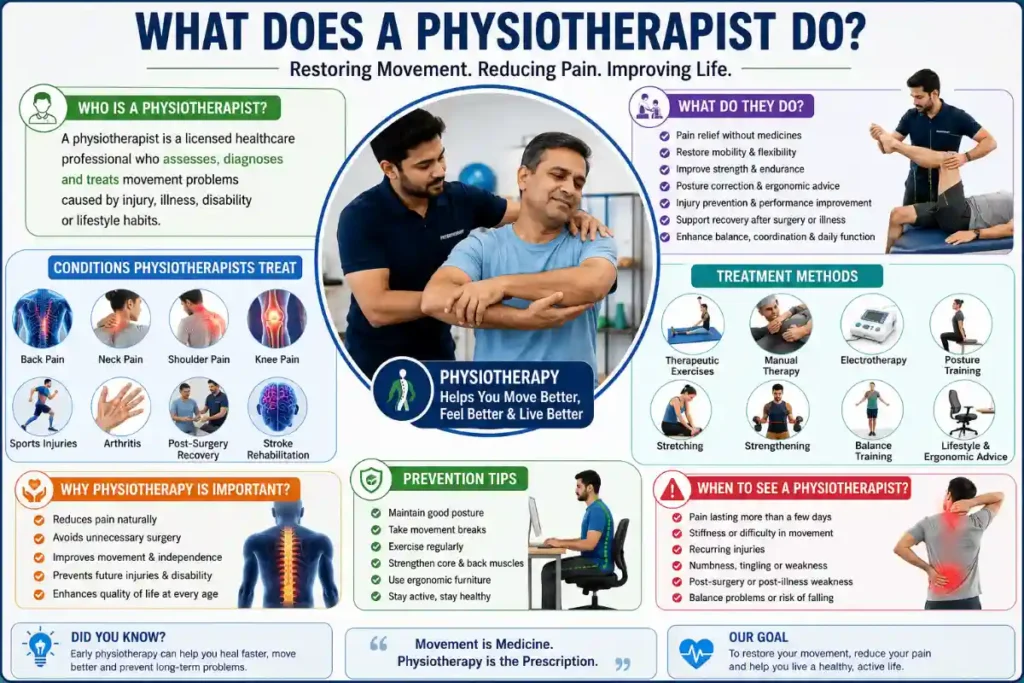
A physiotherapist is a healthcare professional who specializes in movement, rehabilitation, pain management, and physical recovery.
Unlike treatments that focus only on symptoms, physiotherapy focuses on how the body moves and functions.
Physiotherapists study muscles, joints, nerves, posture, balance, mobility, and biomechanics to identify why pain or movement problems develop.
In my physiotherapy practice, treatment is not limited to exercises alone. A physiotherapist evaluates how your body sits, walks, bends, lifts, climbs stairs, balances, and performs everyday activities.
The goal is simple:
Help the body move better, safer, and with less pain.
According to rehabilitation guidelines from the World Health Organization (WHO), physiotherapy plays a major role in improving quality of life and maintaining independence after illness, injury, or physical dysfunction.
Doctor Insight
Many patients ignore early symptoms until simple activities like sitting, bending, walking, or sleeping become painful. In physiotherapy practice, early rehabilitation often prevents chronic pain and long-term disability.
What Problems Do Physiotherapists Treat?
Many people are surprised to learn how many conditions physiotherapists actually manage.
In modern rehabilitation settings, physiotherapists commonly treat:
Lower back pain, cervical pain, frozen shoulder, sports injuries, arthritis, ligament injuries, muscle weakness, postural problems, knee pain, stroke recovery, Parkinson’s disease, spinal conditions, balance disorders, breathing rehabilitation, post-surgical stiffness, and chronic pain syndromes.
Personally, I’ve observed that younger patients are now visiting physiotherapy clinics more frequently because of lifestyle-related pain.
Earlier, posture-related neck pain was mostly seen in older adults. Today, even teenagers and college students complain of stiffness, headaches, and upper back tightness due to excessive screen exposure.
That shift is alarming.
Key Takeaways
- Physiotherapists help restore movement, reduce pain, and improve physical function.
- Modern lifestyle habits are increasing posture-related disorders in younger adults.
- Early physiotherapy intervention often prevents chronic pain complications.
- Physiotherapy is useful for much more than fractures or surgeries.
- Customized rehabilitation is safer than random online exercise routines.
- Good posture and regular movement are essential for long-term spinal health.
The Modern Lifestyle Crisis Behind Rising Physiotherapy Cases
The human body was designed for movement.
Unfortunately, modern life encourages the opposite.
Long office hours, continuous mobile scrolling, online classes, gaming, poor sleep habits, obesity, stress, and lack of exercise are silently damaging physical health.
One common pattern observed in physiotherapy clinics is “sitting fatigue syndrome.”
Patients sit for 8–12 hours daily with poor posture, weak muscles, and minimal movement. Over time, the spine, shoulders, hips, and knees start compensating.
Initially, symptoms are mild.
A little stiffness.
Occasional headaches.
Mild lower back pain after work.
But eventually, the body stops tolerating the stress.
That’s when chronic pain begins.
Indian urban lifestyles worsen this problem further. Long commuting hours, crowded transportation, poor ergonomic awareness, and physically inactive routines contribute heavily to musculoskeletal disorders.
Medical Disclaimer
This content is intended for educational and public awareness purposes only. It should not replace professional medical advice, diagnosis, or treatment. Always consult a qualified healthcare professional or licensed physiotherapist regarding your symptoms or medical condition.
Warning Signs Your Body Shouldn’t Ignore
The body usually sends early warning signs long before serious damage develops.
Unfortunately, many people normalize pain until movement becomes difficult.
Clinically, these are some of the most common early symptoms patients ignore:
Persistent neck stiffness, recurring headaches, shoulder tightness, lower back pain after sitting, reduced flexibility, morning stiffness, knee discomfort while climbing stairs, muscle fatigue, or tingling sensations.
As dysfunction progresses, symptoms may become more serious.
Patients may experience numbness, radiating pain, weakness, poor balance, walking difficulty, reduced grip strength, or disturbed sleep due to pain.
In my clinical experience, patients who seek treatment early usually recover faster and require less aggressive rehabilitation.
Ignoring symptoms often prolongs recovery.
Seek Immediate Medical Attention If You Notice:
- Sudden paralysis or severe weakness
- Loss of bladder or bowel control
- Chest pain with shoulder or arm discomfort
- Severe trauma after an accident or fall
- Unexplained fever with severe back pain
- Difficulty walking or sudden balance loss
How Physiotherapists Diagnose Problems
Physiotherapy assessment is far more detailed than most people expect.
A physiotherapist does not simply ask, “Where is the pain?”
Instead, they study how the entire body moves.
In real rehabilitation settings, physiotherapists analyze posture, joint mobility, muscle strength, flexibility, balance, coordination, gait patterns, and movement control.
Even basic actions like standing up from a chair, lifting an object, or climbing stairs can reveal important information.
Depending on the condition, imaging tests like MRI, X-rays, or CT scans may also be reviewed.
However, scans alone do not always explain symptoms completely.
Many patients show severe pain despite minimal imaging findings, while others have spinal degeneration with surprisingly little discomfort.
That’s why functional movement assessment is so important in physiotherapy.
Freshly Updated Medical Content
This article was medically reviewed and updated on June 1, 2026 based on current rehabilitation and physiotherapy awareness guidelines.
What Happens During Physiotherapy Treatment?
One of the biggest myths is that physiotherapy means “just doing exercises.”
In reality, evidence-based physiotherapy combines multiple rehabilitation strategies depending on the patient’s condition.
Treatment may include:
Posture correction, strengthening exercises, flexibility training, joint mobilization, balance rehabilitation, gait training, ergonomic advice, pain management techniques, breathing exercises, sports rehabilitation, neurological recovery exercises, and movement retraining.
The treatment plan is always personalized.
For example, the rehabilitation approach for a stroke patient is completely different from the treatment used for sports injuries or office-related neck pain.
In physiotherapy practice, education is also a major part of recovery.
Patients learn how their daily habits contribute to pain and what changes can protect their body long term.
Can Physiotherapy Prevent Surgery?
In some cases, yes.
Many patients improve significantly with proper rehabilitation before surgery becomes necessary.
Personally, I’ve observed that strengthening weak muscles, improving joint stability, correcting posture, and restoring mobility often reduce symptoms dramatically.
However, physiotherapy is not a replacement for every surgical condition.
Some cases still require orthopedic or neurological intervention.
The key is early evaluation.
The longer movement dysfunction continues untreated, the harder recovery may become.
Real Patient Scenario
A 29-year-old software engineer visited the clinic with severe neck pain and headaches that had been disturbing his sleep for almost six months.
Initially, he thought the problem was “just stress.”
He kept taking painkillers while continuing long working hours without breaks.
Assessment revealed forward-head posture, tight chest muscles, weak upper back muscles, reduced cervical mobility, and poor workstation ergonomics.
After six weeks of structured rehabilitation involving posture correction, strengthening exercises, ergonomic modifications, and movement retraining, his symptoms improved significantly.
More importantly, he understood that his body wasn’t “weak” — it was overloaded and poorly conditioned.
That realization changed his lifestyle permanently.
Why Early Physiotherapy Matters More Than Ever
Modern health problems are increasingly lifestyle-driven.
And lifestyle-related problems rarely improve with medicines alone.
Painkillers may temporarily reduce symptoms, but they do not correct posture, restore muscle strength, improve flexibility, or retrain movement patterns.
That’s why physiotherapy is becoming a core part of modern healthcare worldwide.
In rehabilitation medicine, movement is considered medicine.
And physiotherapists are movement specialists.
Prevention Tips That Actually Work
Preventing physical dysfunction is often easier than treating chronic pain later.
Simple daily habits can protect joints, muscles, and posture significantly.
Regular walking, stretching breaks during work, proper sitting posture, strength training, hydration, ergonomic workstation setup, maintaining healthy body weight, and reducing continuous screen time are extremely important.
Indian office workers should especially avoid sitting continuously for long periods without movement.
Even standing and walking for two minutes every 30–40 minutes can reduce spinal stress considerably.
Students and smartphone users should also avoid prolonged neck bending while using devices.
Small posture corrections today may prevent years of pain later.
When Should You See a Physiotherapist?
You should seek professional assessment if:
Pain persists for more than a few days, symptoms keep returning, stiffness affects daily activities, movement becomes difficult, weakness develops, or pain disturbs sleep.
Immediate medical attention is necessary if symptoms involve severe trauma, paralysis, sudden numbness, loss of bladder control, unexplained weight loss, chest pain, or high fever.
Early treatment is always safer than delayed rehabilitation.
Who Should Avoid Certain Exercises?
Not all exercises are safe for everyone.
Patients with fractures, severe osteoporosis, spinal instability, uncontrolled hypertension, heart disease, acute inflammation, or neurological disorders should avoid unsupervised exercise programs.
Pregnant women, elderly individuals with balance issues, and post-surgical patients should always consult qualified healthcare professionals before beginning rehabilitation exercises.
In physiotherapy practice, exercise prescription is highly individualized.
Random online workouts may worsen some conditions if performed incorrectly.
Why You Can Trust This Article
This article is based on clinical rehabilitation principles, physiotherapy practice observations, evidence-based guidelines, and medically reviewed educational content. The information is written in simple language to improve public awareness and help readers understand early warning signs before symptoms become severe.
Frequently Asked Questions
Do physiotherapists only treat back pain?
No. Physiotherapists treat many conditions including arthritis, sports injuries, neurological disorders, post-surgical recovery, balance problems, and respiratory conditions.
Is physiotherapy painful?
Some rehabilitation exercises may feel challenging initially, but physiotherapy is generally safe and gradually progresses according to patient tolerance.
Can physiotherapy help avoid surgery?
In some conditions, yes. Early rehabilitation can improve strength, mobility, and joint function significantly.
How long does physiotherapy take to work?
Recovery depends on the condition. Mild posture-related problems may improve within weeks, while neurological rehabilitation can take longer.
Is physiotherapy useful for elderly patients?
Absolutely. Physiotherapy improves balance, mobility, strength, and fall prevention in older adults.
Should I visit a physiotherapist for neck stiffness?
If stiffness keeps returning or affects daily life, early assessment is recommended.
References
- World Health Organization (WHO). (2024). Rehabilitation Fact Sheet. Retrieved from:
https://www.who.int/news-room/fact-sheets/detail/rehabilitation - World Health Organization (WHO). (2024). Rehabilitation Health Topic. Retrieved from:
https://www.who.int/health-topics/rehabilitation - World Health Organization (WHO). (2017). Rehabilitation in Health Systems. Geneva: WHO. Retrieved from:
https://www.who.int/publications/i/item/9789241549974 - National Institutes of Health (NIH). (2024). Physical Therapy – NIH Clinical Center. Retrieved from:
https://www.cc.nih.gov/rehab/pt - National Institutes of Health (NIH). (2024). Rehabilitation Medicine Department. Retrieved from:
https://www.cc.nih.gov/rehab
Evidence Review Statement: The information presented in this article has been cross-checked against current WHO rehabilitation guidance, NIH rehabilitation resources, NCBI Bookshelf educational materials, and peer-reviewed PubMed-indexed literature. These sources support the role of physiotherapy in improving mobility, reducing disability, restoring function, and enhancing quality of life across multiple health conditions.

Dr. Shabbir Hussain, BPT
Registered Physiotherapist | Clinical Rehabilitation Specialist
Maharashtra OTPT Council Reg. No.: PR-2021/08/PT/009532
Society of Onco Physiotherapists Reg. No.: SOP/00033/LM
Dr. Shabbir Hussain, BPT, Registered Physiotherapist with over 8 years of experience in physiotherapy, kidney rehabilitation, oncological rehabilitation, and lymphedema management. He specializes in balance disorders, pain management, musculoskeletal rehabilitation, strengthening programs, and VR-based rehabilitation.