
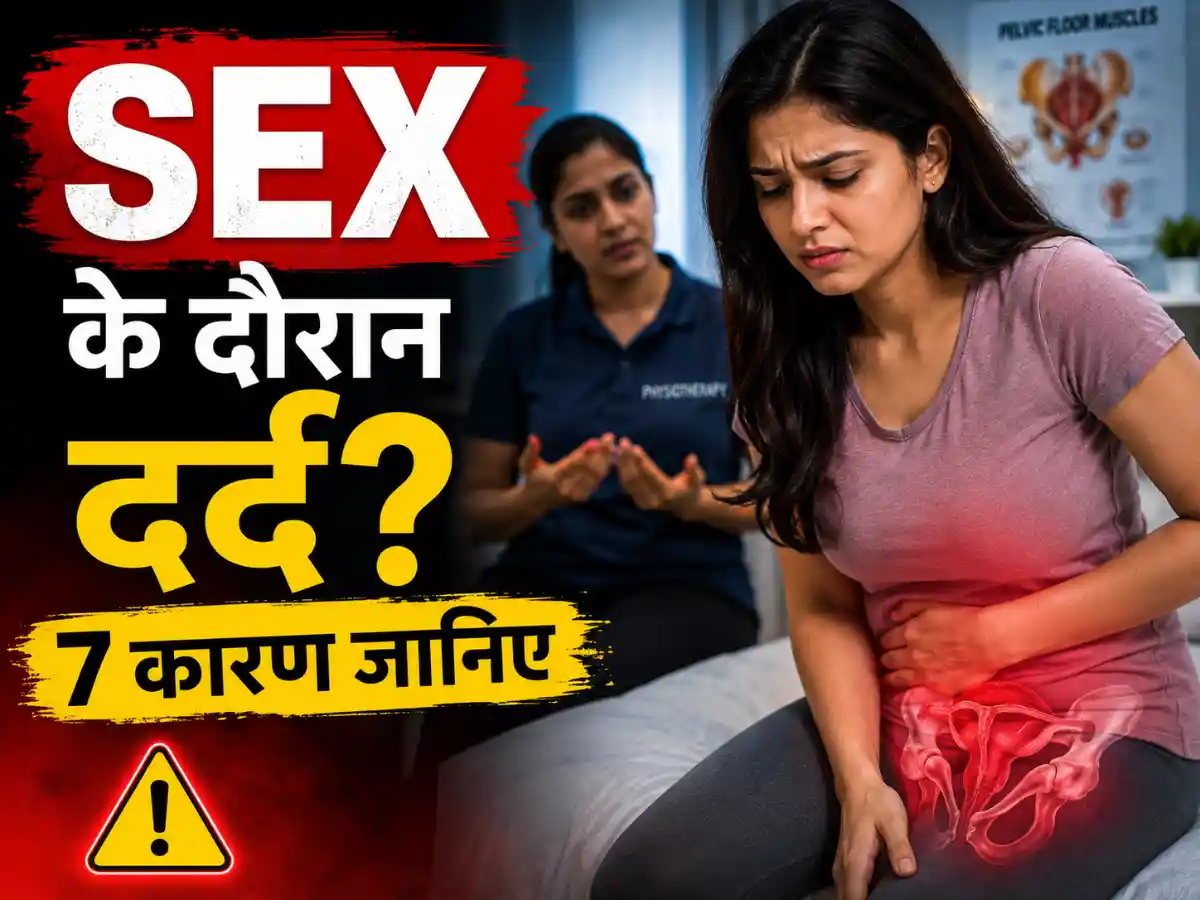
सेक्स के दौरान बार-बार होने वाले दर्द को सामान्य मानकर नजरअंदाज करना सही नहीं है
कई लोग सेक्स के दौरान दर्द होने पर इसे शर्म, पहली बार की समस्या, “शरीर कमजोर है” या “समय के साथ ठीक हो जाएगा” कहकर टाल देते हैं। यही वह गलती है जो समस्या को महीनों या कभी-कभी वर्षों तक खींच सकती है।
अगर penetration के समय जलन, खिंचाव, चुभन, tightness या deep pelvic pain बार-बार हो रहा है, तो शरीर किसी समस्या की ओर इशारा कर सकता है।
Clinical practice में एक common pattern यह देखा जाता है, sexual pain को लेकर सबसे बड़ी समस्या केवल दर्द नहीं होती—बल्कि उस दर्द के बारे में बात करने में झिझक होती है। कई patients डॉक्टर या physiotherapist को महीनों तक नहीं बताते।
मेडिकल भाषा में sexual intercourse के दौरान या उसके आसपास होने वाले recurrent genital/pelvic pain को dyspareunia कहा जाता है। इसके कारण केवल gynecological नहीं होते; pelvic floor muscles, lubrication, infection, hormonal changes, previous childbirth, surgery, stress और कुछ chronic pelvic conditions भी भूमिका निभा सकते हैं।
सेक्स के दौरान दर्द क्या होता है?
सरल शब्दों में, जब sexual activity के दौरान, penetration के समय या उसके बाद बार-बार दर्द महसूस हो, तो इसे painful intercourse या dyspareunia कहा जाता है।
दर्द दो प्रमुख स्थानों पर महसूस हो सकता है:
- Entry pain: penetration शुरू होते समय opening के आसपास दर्द, burning या tightness.
- Deep pain: penetration के दौरान अंदर pelvic region में deep aching या sharp pain.
कुछ लोगों में दर्द intercourse के बाद भी घंटों रह सकता है।
WHO sexual health को केवल disease की अनुपस्थिति नहीं मानता, बल्कि physical, emotional, mental और social well-being का हिस्सा मानता है। [1]
डॉक्टर की व्याख्या
Dr. Shabbir Hussain बताते हैं:
“सबसे पहले एक misconception दूर करना जरूरी है—sex के दौरान दर्द होना हमेशा pelvic floor की कमजोरी का संकेत नहीं है।”
कई बार समस्या इसका उल्टा होती है।
Pelvic floor muscles जरूरत से ज्यादा tight या overactive हो सकती हैं। जब penetration की कोशिश होती है, ये muscles अनजाने में और contract कर सकती हैं। इससे pain बढ़ता है, व्यक्ति डरता है, अगली बार muscles और tighten होती हैं और फिर दर्द और ज्यादा महसूस हो सकता है।
यह एक pain–fear–muscle tension cycle बन सकता है।
लेकिन हर sexual pain का इलाज physiotherapy नहीं है। Infection, endometriosis, ovarian cyst, pelvic inflammatory disease, hormonal dryness या अन्य gynecological conditions में पहले medical diagnosis और appropriate treatment जरूरी है।
सेक्स के दौरान दर्द के 7 प्रमुख कारण
1. Vaginal dryness या पर्याप्त lubrication न होना
यह सबसे common और अक्सर overlooked कारणों में से एक है।
जब पर्याप्त arousal या natural lubrication नहीं होती, friction बढ़ सकता है और penetration painful हो सकता है।
Breastfeeding, menopause/perimenopause और कुछ medicines के कारण estrogen या lubrication में बदलाव भी हो सकते हैं।
क्या मदद कर सकता है?
पर्याप्त arousal, जल्दबाजी न करना और appropriate lubricant का उपयोग कुछ लोगों में discomfort कम कर सकता है।
2. Pelvic floor muscles का ज्यादा tight होना
Pelvic floor केवल bladder और bowel control के लिए नहीं है। ये muscles sexual function में भी महत्वपूर्ण भूमिका निभाती हैं।
अगर muscles लगातार tight रहती हैं, तो penetration painful हो सकता है।
Stress, previous painful experiences, pelvic pain और fear response इस muscle tension को बढ़ा सकते हैं।
Clinically, many patients यह मानकर आते हैं कि उन्हें muscles को और मजबूत करने की जरूरत है, जबकि assessment में समस्या excessive tension और poor relaxation निकलती है।
इसलिए हर patient को blindly Kegel exercises करवाना सही approach नहीं है।
3. Vaginismus
Vaginismus में vaginal opening के आसपास की muscles penetration की कोशिश पर involuntarily tighten हो सकती हैं।
इससे penetration मुश्किल, painful या कभी-कभी लगभग असंभव हो सकता है।
ACOG के अनुसार vaginismus vaginal muscle tightening और pain के साथ जुड़ सकता है तथा treatment में अलग-अलग therapeutic approaches शामिल हो सकते हैं।[2]
Pelvic floor physiotherapy, relaxation training, graded exposure और multidisciplinary care कुछ patients में उपयोगी हो सकते हैं।
4. Infection या inflammation
Vaginal infection, urinary infection या कुछ sexually transmitted infections irritation, burning, discharge और pain पैदा कर सकते हैं।
अगर साथ में:
- unusual discharge
- बदबू
- itching
- burning
- genital sores
- urine करते समय दर्द
हो, तो केवल physiotherapy शुरू करने के बजाय medical evaluation जरूरी है।
5. Endometriosis या दूसरी pelvic conditions
अगर pain deep penetration के दौरान ज्यादा होता है, तो endometriosis, pelvic inflammatory disease, ovarian cysts, fibroids, adenomyosis, adhesions या अन्य pelvic conditions को consider किया जा सकता है।
यहां physiotherapy symptoms और musculoskeletal component में मदद कर सकती है, लेकिन underlying disease का diagnosis और treatment gynecologist द्वारा किया जाना आवश्यक हो सकता है।
6. Pregnancy, childbirth या pelvic surgery के बाद बदलाव
Childbirth के दौरान perineal tear या episiotomy, pelvic surgery और scar tissue कुछ लोगों में लंबे समय तक discomfort से जुड़े हो सकते हैं।
कुछ महिलाओं में delivery के बाद pelvic floor muscles weak होती हैं, जबकि कुछ में muscles tight और painful हो सकती हैं।
यही कारण है कि postpartum rehabilitation में केवल strengthening नहीं, बल्कि relaxation, breathing, scar management, mobility और functional retraining भी महत्वपूर्ण हो सकते हैं।
7. Stress, anxiety और previous painful experiences
यह कहना गलत होगा कि “दर्द सिर्फ दिमाग में है।”
Pain वास्तविक होता है।
लेकिन brain और pelvic floor muscles के बीच मजबूत connection होता है। Fear, anxiety और previous painful sexual experience muscle guarding को बढ़ा सकते हैं।
इससे pain cycle जारी रह सकती है। Mayo Clinic भी stress, anxiety और previous painful experiences को sexual pain में contributing factors के रूप में बताता है।[3]
क्यों यह समस्या अक्सर छिपी रहती है?
Indian society में sexual health पर खुलकर बात करना अभी भी कई लोगों के लिए मुश्किल है।
नई शादी, pregnancy का डर, family pressure, privacy की कमी, cultural expectations और “पति/partner को बताने में शर्म” जैसे factors treatment delay कर सकते हैं।
Students और working professionals में stress, poor sleep और sedentary lifestyle overall pelvic health को indirectly प्रभावित कर सकते हैं।
यह कहना सही नहीं होगा कि smartphone या laptop सीधे dyspareunia का कारण हैं। लेकिन लंबे समय तक sedentary behavior, physical inactivity, stress और poor body awareness pelvic floor dysfunction या chronic pelvic pain के context में relevant हो सकते हैं।
आम गलतियाँ
1. दर्द सहकर intercourse जारी रखना
Pain को “सहन करने की क्षमता” से ठीक नहीं किया जा सकता।
2. खुद से antibiotics या antifungal लेना
हर burning या pain infection नहीं होता। गलत medication diagnosis को delay कर सकती है।
3. Internet देखकर Kegel exercises शुरू करना
अगर pelvic floor पहले से hypertonic है, तो लगातार strengthening कुछ लोगों में symptoms बढ़ा सकती है।
4. Social media पर बताए गए oils या home remedies इस्तेमाल करना
Genital skin sensitive होती है। Irritating products समस्या बढ़ा सकते हैं।
5. डॉक्टर से बात करने में शर्म करना
Sexual pain medical problem है, character या morality का सवाल नहीं।
Recent Research
Sexual pain और pelvic floor physiotherapy पर हालिया research क्या बताती है?
Sexual Pain Disorders: Multifactorial Causes
2025 में प्रकाशित एक clinical review ने sexual pain disorders को multifactorial बताया। Review में overactive pelvic floor, hormonal और inflammatory factors तथा painful bladder syndrome सहित कई संभावित causes और individualized treatment approaches पर चर्चा की गई।
[7] View sourcePhysical Therapy & Dyspareunia
2023 की एक systematic review और meta-analysis में physical therapy interventions से dyspareunia में pain और quality-of-life outcomes में सुधार के संकेत मिले, हालांकि interventions और evidence quality में variation था।
[5] View sourcePelvic Floor Muscle Training
2024 की systematic review/meta-analysis में pelvic floor muscle training से female sexual function के कई domains, including pain, में improvement पाया गया, लेकिन evidence certainty low थी।
[6] View sourcePelvic-Floor Exercise Protocols में Variation
2025 की एक systematic review में dyspareunia के लिए pelvic-floor muscle training protocols की reporting और intervention approaches में काफी heterogeneity पाई गई। इससे एक ही exercise protocol को सभी patients पर लागू करने के बजाय individualized assessment की आवश्यकता पर जोर मिलता है।
[8] View sourcePelvic Floor Physical Therapy
2022 की systematic review ने pelvic-floor hypertonicity में pelvic floor physical therapy के potential benefits का समर्थन किया, लेकिन available studies में methodological limitations और intervention variability भी पाई गई।
[9] View sourceImportant: Research evidence promising है, लेकिन sexual pain के causes अलग-अलग हो सकते हैं। Physiotherapy या exercise का चुनाव individual assessment और underlying cause के अनुसार किया जाना चाहिए।
सही कारण पता करना सबसे जरूरी है
Diagnosis केवल “कहां दर्द है?” पूछकर नहीं किया जाता।
Healthcare professional आम तौर पर पूछ सकता है:
- दर्द कब शुरू हुआ?
- Entry पर होता है या deep?
- Burning, sharp या aching pain है?
- हर बार होता है या कुछ positions में?
- Periods से संबंध है?
- कोई discharge या itching है?
- Delivery या surgery हुई है?
जरूरत के अनुसार pelvic examination, infection testing, ultrasound या अन्य investigations की आवश्यकता हो सकती है।
कोई एक universal “gold-standard” test सभी patients में लागू नहीं होता। सही diagnosis history + clinical examination + जरूरत के अनुसार investigations से बनता है।
Physiotherapy से सेक्स के दौरान दर्द में कैसे राहत मिल सकती है?
Pelvic floor physiotherapy का उद्देश्य केवल muscles को मजबूत करना नहीं है।
Assessment के बाद treatment में शामिल हो सकते हैं:
1. Pelvic floor relaxation
अगर muscles overactive हैं, तो relaxation और down-training महत्वपूर्ण हो सकता है।
2. Breathing exercises
Diaphragmatic breathing और coordinated pelvic relaxation कुछ patients में muscle guarding कम करने में मदद कर सकते हैं।
3. Manual therapy
Selected patients में trained physiotherapist soft-tissue techniques और myofascial techniques का उपयोग कर सकता है।
Manual therapy कुछ selected patients में treatment approach का हिस्सा हो सकती है, लेकिन इसके evidence की quality और available studies की संख्या सीमित है।
4. Pelvic floor muscle training
जहां weakness या poor coordination मौजूद हो, वहां individualized strengthening उपयोगी हो सकती है।
लेकिन tight pelvic floor में पहले relaxation और control पर ध्यान देना जरूरी हो सकता है।
5. Biofeedback
Biofeedback patient को pelvic floor contraction और relaxation को समझने में मदद कर सकता है।
6. Graded exposure / dilator-based rehabilitation
कुछ carefully selected patients में progressive, supervised approaches उपयोगी हो सकती हैं। इन्हें दर्द के बावजूद forcefully नहीं करना चाहिए।
7. Posture और movement assessment
Pelvic, hip, lumbar spine और breathing mechanics की assessment rehabilitation plan का हिस्सा बन सकती है।
2022 की systematic review में pelvic floor hypertonicity के लिए pelvic floor physical therapy को first-line intervention के रूप में discuss किया गया, हालांकि उपलब्ध studies में methodological limitations और intervention variability थी। [9]
घर पर क्या कर सकते हैं?
अगर pain recurrent है, तो सबसे पहले evaluation कराना बेहतर है।
तब तक:
- दर्द होने पर intercourse रोकें।
- पर्याप्त arousal और lubrication का ध्यान रखें।
- partner से खुलकर communication करें।
- scented vaginal products, douches या irritating products से बचें।
- relaxation और slow diaphragmatic breathing सीखें।
- बिना assessment के aggressive Kegel exercises शुरू न करें।
- infection के symptoms हों तो medical evaluation कराएं।
ACOG और Mayo Clinic भी lubrication, communication, adequate arousal और comfortable positioning जैसे measures की सलाह देते हैं।[2,4]
Illustrative clinical scenario
यह एक illustrative clinical scenario है, किसी specific patient की पहचान या medical record का विवरण नहीं।
एक illustrative clinical scenario में एक महिला में pelvic discomfort और intercourse के दौरान pain की शिकायत लेकर आईं। शुरुआत में उन्होंने इसे “शादी के बाद normal adjustment” समझकर कई महीनों तक ignore किया था।
History लेने पर पता चला कि pain penetration के शुरुआती हिस्से में अधिक था और pain की anticipation के कारण वे पहले से pelvic muscles को अनजाने में tighten कर लेती थीं।
Assessment में excessive pelvic floor tension और poor relaxation pattern पर ध्यान गया। साथ ही medical causes को rule out करने के लिए gynecological evaluation की सलाह दी गई।
Rehabilitation में breathing, pelvic floor relaxation, graded exercises और education पर काम किया गया।
यह उदाहरण किसी एक व्यक्ति की medical prescription नहीं है। इसका उद्देश्य यह समझाना है कि sexual pain में केवल “एक exercise” नहीं, बल्कि cause-based assessment आवश्यक है।
विशेषज्ञ की clinical insights
Clinical practice में एक common pattern यह देखा जाता है, sexual pain वाले कई patients treatment से ज्यादा पहले reassurance चाहते हैं—कि “क्या यह ठीक हो सकता है?”
अक्सर जवाब होता है: हाँ, कई causes treatable हैं, लेकिन पहले सही कारण पता करना जरूरी है।
One common pattern observed in physiotherapy practice: patients internet से Kegel exercises शुरू कर लेते हैं। अगर उनका pelvic floor पहले से tight है, तो strengthening की जगह relaxation-based rehabilitation अधिक relevant हो सकती है।
Many patients delay treatment because उन्हें लगता है कि sexual health के बारे में healthcare professional से बात करना embarrassing होगा।
लेकिन trained clinician के लिए यह भी एक medical complaint है—ठीक वैसे ही जैसे back pain, knee pain या urinary symptoms।
किन लोगों को बिना assessment के कुछ exercises या treatments नहीं करने चाहिए?
बिना assessment के aggressive pelvic-floor strengthening या internal techniques शुरू नहीं करनी चाहिए, विशेषकर यदि:
- हाल में pelvic surgery हुई हो।
- severe unexplained pelvic pain हो।
- active infection का संदेह हो।
- unexplained vaginal bleeding हो।
- pregnancy-related complication हो।
Internal pelvic-floor assessment या treatment हमेशा informed consent, privacy और appropriate clinical training के साथ होना चाहिए।
कब डॉक्टर से जल्द संपर्क करना चाहिए?
Sexual pain के साथ निम्न symptoms हों तो medical evaluation को delay न करें:
- अचानक बहुत तेज pelvic/abdominal pain
- heavy या unexplained vaginal bleeding
- fever के साथ pelvic pain
- fainting, severe dizziness या weakness
- pregnancy की संभावना के साथ significant pelvic pain या bleeding
- genital ulcers/sores के साथ infection का संदेह
Frequent या severe pain during sex होने पर ACOG medical evaluation की सलाह देता है।[2]
Conclusion
सेक्स के दौरान दर्द केवल एक uncomfortable moment नहीं है। कई बार यह शरीर का ऐसा संकेत होता है जिसे समय रहते समझना जरूरी होता है।
सबसे महत्वपूर्ण बात यह है कि इस समस्या पर शर्म करने की जरूरत नहीं है।
Dryness, infection, pelvic floor tightness, vaginismus, childbirth-related changes या endometriosis—हर कारण का approach अलग हो सकता है।
और एक बात याद रखिए:
Healthy sexual activity में दर्द को सहना लक्ष्य नहीं है—comfort, safety, consent और well-being लक्ष्य हैं।
✅ Key Takeaways
- बार-बार सेक्स के दौरान दर्द को सामान्य मानकर ignore न करें।
- Dryness, infection, pelvic floor tightness, vaginismus और endometriosis जैसे कई कारण हो सकते हैं।
- हर patient को Kegel exercises की जरूरत नहीं होती।
- Pelvic floor physiotherapy selected patients में pain और function सुधारने में मदद कर सकती है।
- Underlying infection या gynecological disease होने पर medical treatment जरूरी है।
- Early assessment अक्सर लंबे समय तक चलने वाले pain cycle को रोकने में मदद कर सकता है।
FAQs
1. सेक्स के दौरान दर्द क्यों होता है?
इसके कई कारण हो सकते हैं, जैसे vaginal dryness, infection, pelvic floor muscle tightness, vaginismus, childbirth-related changes, endometriosis और अन्य pelvic conditions।
2. क्या सेक्स के दौरान दर्द होना normal है?
कभी-कभी temporary discomfort हो सकता है, लेकिन बार-बार या severe pain को normal मानकर ignore नहीं करना चाहिए।
3. क्या physiotherapy सेक्स के दर्द को ठीक कर सकती है?
Cause के अनुसार pelvic floor physiotherapy pain, muscle overactivity और functional problems में मदद कर सकती है। Evidence promising है, लेकिन हर patient का treatment individualized होना चाहिए।
4. क्या Kegel exercises painful sex में मदद करती हैं?
कुछ patients में pelvic floor training उपयोगी हो सकती है, लेकिन अगर pelvic floor पहले से tight है तो केवल strengthening सही approach नहीं हो सकती। Assessment जरूरी है।
5. क्या vaginal dryness से sex painful हो सकता है?
हाँ। कम lubrication friction और discomfort बढ़ा सकती है। Hormonal changes, breastfeeding, menopause और कुछ medicines इसके कारण हो सकते हैं।
6. क्या stress से सेक्स के दौरान दर्द बढ़ सकता है?
हाँ। Stress और fear pelvic floor muscles में involuntary tension बढ़ा सकते हैं, जिससे pain cycle worsen हो सकती है।
7. क्या childbirth के बाद दर्द सामान्य है?
Delivery के बाद कुछ समय discomfort हो सकता है, लेकिन persistent या severe pain को normal मानकर छोड़ना उचित नहीं है। Perineal injury, scar tissue और pelvic floor dysfunction जैसे factors assess किए जा सकते हैं।
⚕️ Medical Disclaimer
यह लेख केवल educational and public health awareness purposes के लिए है। यह किसी व्यक्ति के लिए diagnosis, prescription या individualized medical advice का विकल्प नहीं है। Sexual pain के कई अलग-अलग कारण हो सकते हैं और सही treatment के लिए medical history तथा clinical assessment आवश्यक हो सकता है।
यदि आपको recurrent, severe या worsening pain, unusual bleeding, fever, abnormal discharge या अन्य warning signs हैं, तो qualified healthcare professional से व्यक्तिगत सलाह लें। Physiotherapy treatment भी उचित assessment और informed consent के बाद ही किया जाना चाहिए।
References
- World Health Organization. (n.d.). Sexual health. WHO Sexual Health
- American College of Obstetricians and Gynecologists. (2024). When Sex Is Painful. ACOG — When Sex Is Painful
- Mayo Clinic Staff. (2024). Painful intercourse (dyspareunia): Symptoms and causes. Mayo Clinic — Painful Intercourse
- Mayo Clinic Staff. (2024). Painful intercourse: Diagnosis and treatment. Mayo Clinic — Diagnosis and Treatment
- Fernández-Pérez, P., et al. (2023). Effectiveness of physical therapy interventions in women with dyspareunia: A systematic review and meta-analysis. BMC Women’s Health, 23, 387. PubMed — Physical Therapy & Dyspareunia Meta-analysis
- Homsi Jorge, C., et al. (2024). Pelvic floor muscle training as treatment for female sexual dysfunction: A systematic review and meta-analysis. American Journal of Obstetrics and Gynecology, 231(1), 51–66.e1. PubMed — Pelvic Floor Muscle Training Meta-analysis
- Beckman, A., Moss, C., & Goldstein, A. T. (2025). Evaluation and treatment of sexual pain disorders. Clinical Obstetrics and Gynecology, 68(1), 21–31. doi:10.1097/GRF.0000000000000909. PubMed — Evaluation and Treatment of Sexual Pain Disorders
- Cavalcanti, I. R. S., Lunardi, A. C., Carro, D. F., da Silveira, L. T. Y., & Ferreira, E. A. (2025). Quality of descriptions of pelvic floor muscle training prescribed to women with dyspareunia: A systematic review. Journal of Manipulative & Physiological Therapeutics, 48(1–5), 550–559. doi:10.1016/j.jmpt.2025.10.039. PubMed — PFMT & Dyspareunia Systematic Review
- van Reijn-Baggen, D. A., Han-Geurts, I. J. M., Voorham-van der Zalm, P. J., Pelger, R. C. M., Hagenaars-van Miert, C. H. A. C., & Laan, E. T. M. (2022). Pelvic floor physical therapy for pelvic floor hypertonicity: A systematic review of treatment efficacy. Sexual Medicine Reviews, 10(2), 209–230. doi:10.1016/j.sxmr.2021.03.002. PubMed — Pelvic Floor Physical Therapy Systematic Review

Dr. Shabbir Hussain, BPT
Registered Physiotherapist | Clinical Rehabilitation Specialist
Maharashtra OTPT Council Reg. No.: PR-2021/08/PT/009532
Society of Onco Physiotherapists Reg. No.: SOP/00033/LM
Dr. Shabbir Hussain, BPT, Registered Physiotherapist with over 8 years of experience in physiotherapy, kidney rehabilitation, oncological rehabilitation, and lymphedema management. He specializes in balance disorders, pain management, musculoskeletal rehabilitation, strengthening programs, and VR-based rehabilitation.