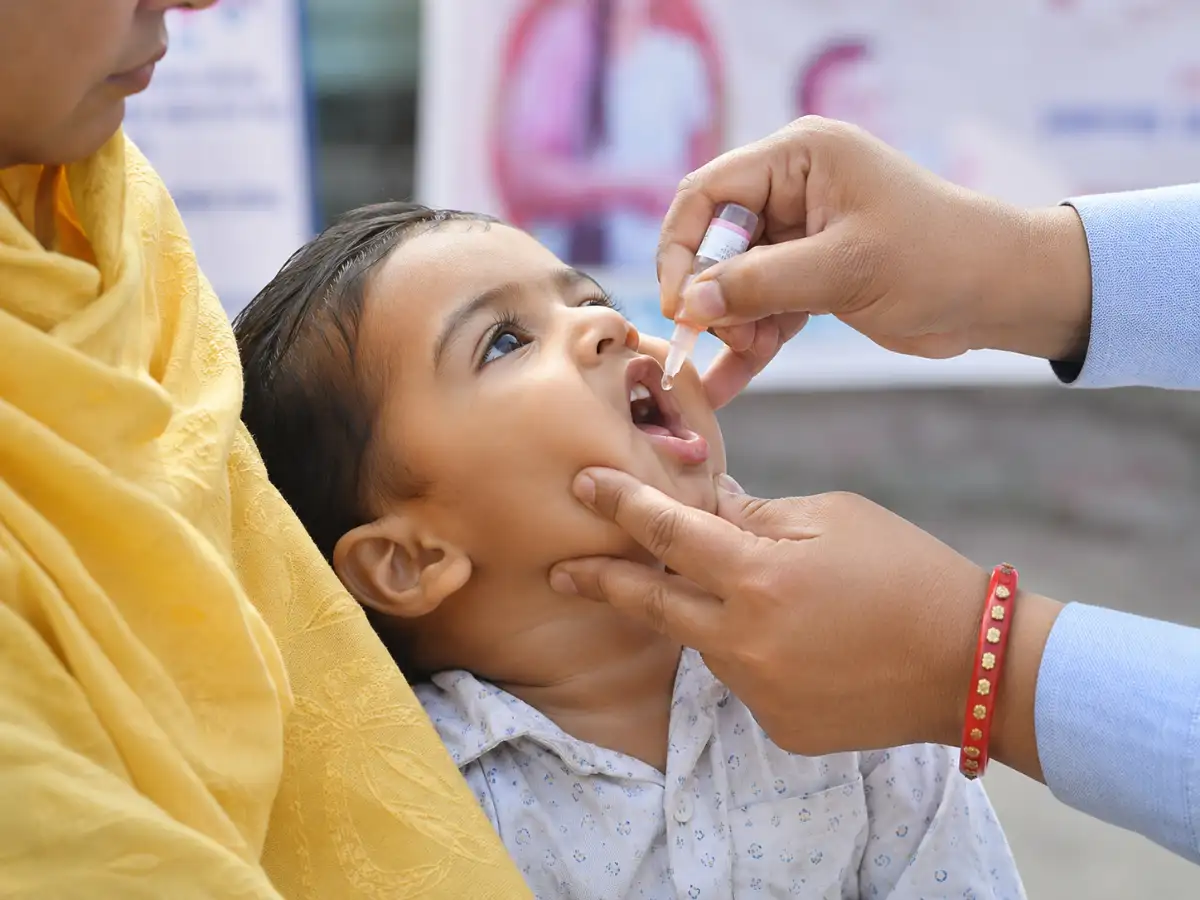
Polio Drops – Protecting your child from polio is a top priority for parents. One of the most effective ways to do this is by ensuring they receive their polio vaccine on schedule.
A single missed polio vaccination may seem harmless, but it could leave a child vulnerable to one of the world’s most devastating preventable diseases. Although India has eliminated wild poliovirus, vaccination remains essential to protect children, prevent outbreaks, and keep the country polio-free. Every scheduled dose matters.
The oral polio drops are a crucial part of a child’s vaccination schedule. Skipping these can have serious consequences, leaving your child vulnerable to this debilitating disease.
🛡️ Quick Facts About Polio Drops
- ✅ Protects children from lifelong paralysis caused by polio.
- ✅ Oral Polio Vaccine (OPV) is safe, effective, and WHO-recommended.
- ✅ Multiple doses are needed for complete protection.
- ✅ Available free under India’s Universal Immunization Programme.
- ✅ Even healthy children should never miss scheduled doses.
Key Takeaways – Don’t Skip Polio Drops
- Polio vaccine is crucial for preventing polio in children.
- Oral polio drops are a key part of a child’s vaccination schedule.
- Skipping polio immunization can leave children vulnerable to polio.
- Polio prevention starts with timely vaccination.
- Protecting your child from polio is a top priority.
Early Signs of Polio
Most children recover without complications, but early symptoms can include:
- Fever
- Sore throat
- Headache
- Fatigue
- Vomiting
- Neck stiffness
- Muscle weakness
Seek immediate medical care if a child develops sudden weakness or difficulty walking.
📊 Did You Know?
Since the launch of the Global Polio Eradication Initiative in 1988, worldwide polio cases have fallen by more than 99%, making vaccination one of the greatest public health achievements in history.
Understanding Polio and Its Dangers
Polio, a highly infectious disease, poses significant risks to children worldwide. It is essential to understand the nature of polio, its transmission, and its effects to appreciate the importance of vaccination.
What is Polio and How Does It Spread?
Polio, or poliomyelitis, is caused by the poliovirus, which spreads through contaminated food, water, or direct contact with an infected person. The virus can lead to paralytic polio, resulting in muscle weakness and paralysis.
The Devastating Effects of Polio on Children
The effects of polio on children can be devastating, leading to lifelong disabilities. Paralysis caused by polio can result in permanent disability, affecting a child’s quality of life and future opportunities.
Current Status of Polio in India and Globally
Despite significant progress in polio eradication efforts, the disease remains a threat in some parts of the world, including India. Continued vaccination efforts are crucial to achieving a polio-free world.
Current Status of Polio in India and Globally
India has remained free of indigenous wild poliovirus since 2011, marking one of the world’s greatest public health achievements. This success has been made possible through routine childhood immunization, Pulse Polio campaigns, strong disease surveillance, and rapid outbreak response.
However, polio has not been eradicated worldwide, and imported cases or vaccine-derived poliovirus outbreaks can still occur in some countries. Because of this, health authorities continue to recommend that every eligible child receives all scheduled doses of the polio vaccine, even in countries where wild poliovirus is no longer circulating.
Maintaining high vaccination coverage is essential to protect children, prevent outbreaks, and keep India polio-free for future generations.
✔ Parent’s Polio Protection Checklist
- ☑ Keep your child’s vaccination card updated.
- ☑ Never skip routine immunization appointments.
- ☑ Participate in every Pulse Polio campaign.
- ☑ Consult your doctor if any vaccine dose is missed.
- ☑ Encourage family and friends to vaccinate their children.
Why Polio Drops Are Essential for Your Child’s Health
Protecting your child from polio is a crucial step in ensuring their overall health and wellbeing. Polio, or poliomyelitis, is a highly infectious disease that can cause severe muscle weakness, paralysis, and even death. The oral polio vaccine (OPV) is a safe and effective way to safeguard your child’s health.
How Oral Polio Vaccine (OPV) Works
The OPV works by introducing a weakened form of the poliovirus to the body, which then triggers the production of antibodies. These antibodies help fight the virus, providing immunity against polio. The vaccine is administered orally, making it easy to administer to children.
The Recommended Vaccination Schedule
The polio vaccination schedule typically includes multiple doses of OPV at specific intervals. In India, the vaccine is administered at birth, and then at 6, 10, and 14 weeks of age. Additional doses are given during pulse polio campaigns to ensure maximum coverage.
Addressing Common Concerns About Vaccine Safety
Many parents have concerns about the vaccine safety. It’s essential to understand that the OPV has undergone rigorous testing and has been proven to be safe and effective.
Missed a Polio Dose?
Missing one dose does not always mean your child has lost protection, but it should never be ignored.
- Contact your pediatrician as soon as possible.
- Ask about the catch-up vaccination schedule.
- Do not restart the vaccination schedule unless advised.
- Continue all remaining vaccine doses on time.
Early catch-up vaccination helps maintain strong protection against polio.
Side Effects vs. Benefits
The benefits of OPV far outweigh the risks. While minor side effects like fever or rash can occur, the vaccine is generally well-tolerated.
Myths and Misconceptions
Some myths surrounding polio vaccination can be misleading. It’s crucial to rely on credible sources of information to make informed decisions about your child’s health.

By understanding how OPV works and the benefits of vaccination, parents can make informed decisions about their child’s health. Ensuring your child receives the recommended polio dosage on schedule is vital for their protection against polio.
⚠️ Which Children Are at Higher Risk?
Every child should receive polio vaccination, but the following children need extra attention:
- Children who missed previous vaccine doses
- Children living in crowded communities
- Children travelling internationally
- Children living in areas with poor sanitation
- Children with incomplete vaccination records
- Children who missed Pulse Polio campaigns
✅ Medical Review & Evidence
- ✔ Reviewed by Dr. Shabbir Hussain (BPT)
- ✔ Based on current WHO recommendations
- ✔ References from CDC and India’s National Immunization Programme
- ✔ Evidence-based educational content
- ✔ Updated according to current vaccination guidance
Conclusion: Ensuring a Polio-Free Future for India
As we strive towards a polio-free India, it’s crucial for parents to ensure their children receive polio vaccinations. The oral polio vaccine (OPV) has been instrumental in controlling polio, and continued efforts are needed to maintain this progress. You can find polio drops near me or pulse polio near me by visiting your local health center or checking with your pediatrician.
The World Health Organization (WHO) provides guidance on polio prevention, and the Centers for Disease Control and Prevention (CDC) also offers valuable resources on cdc polio. By working together, we can create a polio-free future for India. Parents can play a crucial role in this effort by ensuring their children receive the necessary polio vaccinations during pulse polio drives.
Let’s take the necessary steps to protect our children’s health and ensure a polio-free future for India. You can also check for polio drops in Andhra Pradesh 2025 and stay updated on the polio drive schedule in your area.
“One missed vaccine appointment today could have lifelong consequences tomorrow.”
— Protect every child. Never skip polio drops.
Key factual statements
OPV (oral polio vaccine) drops are still widely used globally in eradication campaigns because they’re safe, effective, and easy to deliver. GPEI+1
Some countries (for example the United States) use IPV (inactivated polio vaccine) instead of OPV to remove the small risk of vaccine-associated paralytic polio (VAPP). CDC+1
Vaccine-associated paralytic polio (VAPP) is rare but recognized; WHO documents the expected timing and low incidence and recommends surveillance and correct vaccine choices. WHO CDN+1
National pulse polio drives (door-to-door or booth days) are still run to maintain herd immunity — India’s immunization schedule includes OPV doses at birth and in infancy. National Health Mission+1
Related Health Guides
Looking for more trusted health information? Explore these expert-reviewed resources to learn more about vaccinations, nutrition, and preventive healthcare.
FAQ
What is the oral polio vaccine (OPV) and how does it work?
The oral polio vaccine (OPV) is a vaccine that is given orally to protect against poliomyelitis (polio). It contains a weakened form of the poliovirus, which helps the body’s immune system to develop antibodies against the virus, providing immunity against polio.
What is the recommended schedule for polio vaccination?
The World Health Organization (WHO) recommends that children receive multiple doses of OPV, starting at birth or at 6 weeks of age, followed by additional doses at 10 weeks, 14 weeks, and booster doses at 16-24 months and 5 years of age. The exact schedule may vary depending on the country’s immunization program.
Are polio drops safe for my child?
Yes, polio drops are considered safe for children. The oral polio vaccine has been extensively tested and has a proven track record of safety and efficacy. While there may be some minor side effects, such as fever or diarrhea, the benefits of vaccination far outweigh the risks.
What is the difference between OPV and inactivated poliovirus vaccine (IPV)?
OPV contains a weakened live virus, while IPV contains an inactivated (killed) virus. OPV provides mucosal immunity and is easier to administer, while IPV provides systemic immunity and is often used in countries where polio has been eradicated.
Can I get polio drops for my child near me?
Yes, polio drops are widely available at various healthcare centers, clinics, and hospitals. You can check with your local healthcare provider or visit the nearest immunization center to get your child vaccinated.
What is the pulse polio immunization campaign?
The pulse polio immunization campaign is a mass vaccination effort aimed at vaccinating children against polio. It involves vaccinating a large number of children in a short period, usually over a few days, to boost immunity and prevent the spread of polio.
How can I ensure my child is up-to-date on their polio vaccination schedule?
You can check with your child’s healthcare provider or visit a local immunization center to determine if your child is up-to-date on their polio vaccination schedule. You can also consult the recommended vaccination schedule to ensure your child receives the necessary doses.
What are the consequences of not vaccinating my child against polio?
Not vaccinating your child against polio can lead to serious health consequences, including paralysis, muscle weakness, and even death. Polio is a highly infectious disease, and unvaccinated children are at risk of contracting the disease.
Are there any specific guidelines for polio vaccination in Andhra Pradesh?
The immunization schedule and guidelines for polio vaccination in Andhra Pradesh may be available on the official website of the Andhra Pradesh government or through local healthcare providers. You can check with local authorities for specific information on polio vaccination drives and schedules in Andhra Pradesh for 2025.
References
World Health Organization. (n.d.). Poliomyelitis (polio). WHO. Retrieved December 21, 2025, from. World Health Organization
Global Polio Eradication Initiative. (n.d.). Oral Polio Vaccine (OPV): Types, use and advantages. GPEI. Retrieved December 21, 2025, from https://polioeradication.org/about-polio/the-vaccines/opv/. GPEI
Centers for Disease Control and Prevention. (2024, July 9). Polio Vaccination. CDC. Retrieved December 21, 2025, from https://www.cdc.gov/polio/vaccines/index.html. CDC
Document / Review on OPV in newborns: Mateen, F. J. et al. (2012). Oral and Inactivated Poliovirus Vaccines in the Newborn. Vaccine (review). Retrieved from National Health Mission (India). (n.d.). National Immunization Schedule. Retrieved December 21, 2025, from https://nhm.gov.in/New_Updates_2018/NHM_Components/Immunization/report/National_%20Immunization_Schedule.pdf. National Health Mission
Medical Disclaimer: This content is for general health education only and does not replace professional medical advice, diagnosis, or treatment. Polio vaccination schedules and recommendations may vary by country and individual health status. Always consult a qualified healthcare provider or follow official guidelines from the World Health Organization (WHO), national immunization programs, or your local health authority before making vaccination decisions.
❤️ Help Protect Every Child
If you found this article helpful, share it with parents, grandparents, teachers, and caregivers. One shared article could help protect another child from polio.

Dr. Shabbir Hussain, BPT
Registered Physiotherapist | Clinical Rehabilitation Specialist
Maharashtra OTPT Council Reg. No.: PR-2021/08/PT/009532
Society of Onco Physiotherapists Reg. No.: SOP/00033/LM
Dr. Shabbir Hussain, BPT, Registered Physiotherapist with over 8 years of experience in physiotherapy, kidney rehabilitation, oncological rehabilitation, and lymphedema management. He specializes in balance disorders, pain management, musculoskeletal rehabilitation, strengthening programs, and VR-based rehabilitation.