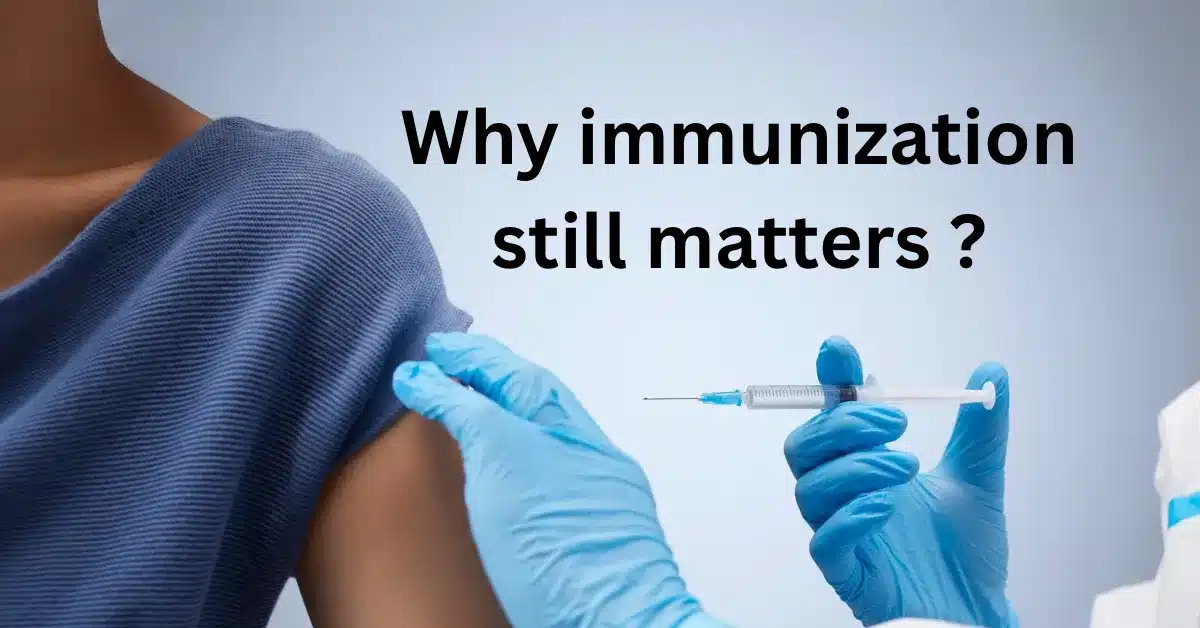
Why Immunization Still Matters – Vaccines don’t just prevent illness.
They prevent regret.
In recent years, outbreaks of measles, diphtheria, influenza, and COVID-19 have resurged—often in communities with low vaccination coverage. These are preventable diseases, yet they continue to hospitalize and kill.
According to the World Health Organization, immunization prevents 4–5 million deaths every year globally. Still, millions miss routine vaccines due to fear, misinformation, or delay.
Key Points – Why Immunization Still Matters More Than Ever
That gap can be dangerous.
The Hidden Risk of “I’ll Do It Later”
Many infections don’t give warnings.
They strike suddenly, progress rapidly, and cause permanent damage—especially in infants, pregnant women, older adults, and people with chronic disease.
Diseases like measles can suppress immunity for years.
Tetanus can be fatal even with treatment.
Hepatitis B can silently destroy the liver.
Vaccines stop these threats before exposure, not after damage is done.
How Immunization Actually Protects Your Body (The Science)
Vaccines train your immune system without causing disease.
They expose the body to a weakened, inactivated, or genetic piece of a pathogen. Your immune system responds by forming memory cells.
So when the real infection appears later, your body reacts faster and stronger, often stopping illness entirely.
Peer-reviewed studies indexed in PubMed and NCBI confirm that vaccines dramatically reduce infection severity, complications, and death rates.
Herd Immunity: Protection Beyond Yourself
Immunization isn’t only personal—it’s communal.
When enough people are vaccinated, disease spread slows or stops. This protects:
- Newborns too young for vaccines
- Cancer patients on chemotherapy
- Elderly people with weak immunity
This concept, called herd immunity, is endorsed by global public-health bodies and supported by decades of epidemiological data.
Proven Benefits of Immunization (Backed by Evidence)
✔ Prevents life-threatening infections
✔ Reduces hospitalization and ICU burden
✔ Protects future generations
✔ Saves healthcare costs
✔ Prevents long-term disability
A landmark review in The Lancet reported that childhood vaccination programs alone have prevented billions of disease cases worldwide.
Practical, Doctor-Backed Immunization Tips
- Follow national immunization schedules for children and adults
- Don’t skip booster doses—immunity can fade over time
- Pregnant women should receive recommended vaccines (e.g., influenza, Tdap)
- Adults over 60 should discuss pneumococcal, influenza, and shingles vaccines
- Travelers must update region-specific immunizations
⚠️ Early warning signs after vaccination (like mild fever or soreness) are normal and temporary. Severe reactions are extremely rare and monitored closely.
This content is for informational and educational purposes only and does not constitute medical advice. Immunization decisions should be made in consultation with a qualified healthcare professional. Do not delay or avoid medical care based on information provided on this website.
Frequently Asked Questions
1. Is immunization really necessary if diseases are rare?
Yes. Diseases become rare because of vaccines. When vaccination drops, outbreaks return.
2. Are vaccines safe for children?
Extensively tested. Serious side effects are rare. Benefits overwhelmingly outweigh risks.
3. Can adults skip vaccines taken in childhood?
No. Many vaccines require boosters, and adults need protection against new risks.
4. Do vaccines overload the immune system?
No. The immune system handles thousands of antigens daily—vaccines use only a tiny fraction.
5. Is natural immunity better than vaccine immunity?
Natural infection carries serious risks. Vaccines provide protection without disease damage.
6. Can vaccines cause infertility or chronic illness?
No credible scientific evidence supports this claim. Large population studies confirm safety.
References (APA Style)
World Health Organization. (2024). Immunization coverage. https://www.who.int
Andre, F. E., et al. (2008). Vaccination greatly reduces disease burden. The Lancet, 372(9649), 159–166.
Centers for Disease Control and Prevention. (2023). Principles of vaccination. https://www.cdc.gov
Plotkin, S. A. (2014). History of vaccination. Proceedings of the National Academy of Sciences, 111(34), 12283–12287.
PubMed & NCBI indexed peer-reviewed vaccine safety studies.

Dr. Shabbir Hussain, BPT
Licensed Physiotherapist | Clinical Rehabilitation Specialist
Maharashtra OTPT Council Reg. No.: PR-2021/08/PT/009532
Society of Onco Physiotherapists Reg. No.: SOP/00033/LM
Dr. Shabbir Hussain, BPT, Registered Physiotherapist with over 8 years of experience in physiotherapy, kidney rehabilitation, oncological rehabilitation, and lymphedema management. He specializes in balance disorders, pain management, musculoskeletal rehabilitation, strengthening programs, and VR-based rehabilitation.