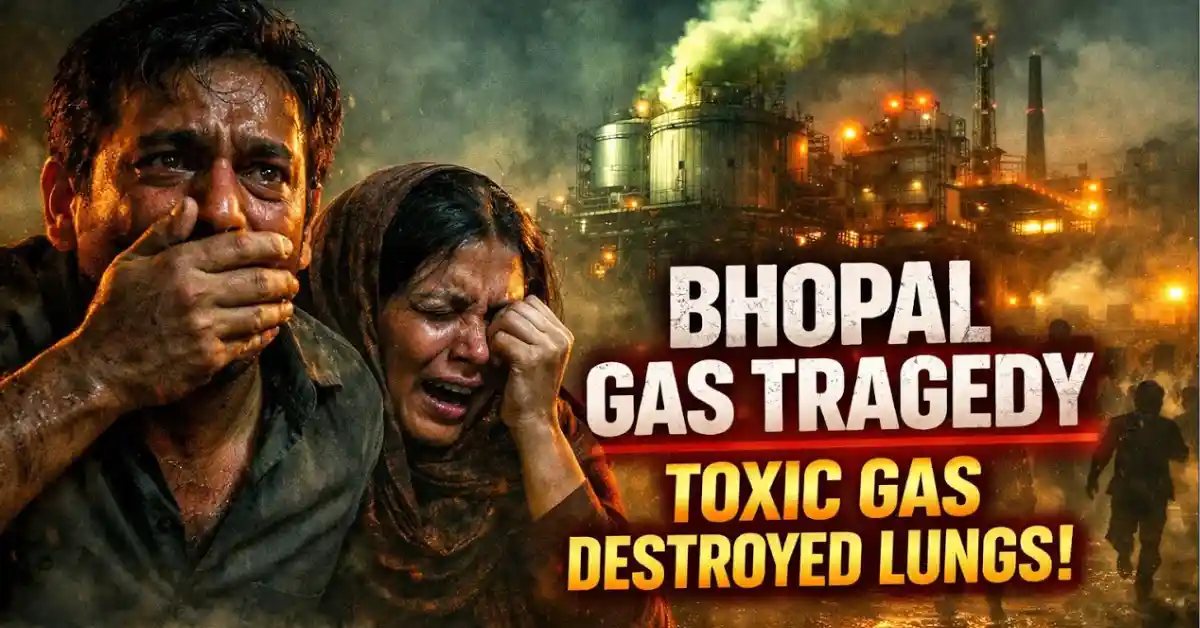
The Night Breathing Became Deadly
Bhopal Gas Tragedy – Imagine going to sleep in your home and waking up unable to breathe.
On the night of December 2–3, 1984, thousands of people in Bhopal, India inhaled a cloud of toxic industrial gas without warning. Within minutes, people began coughing violently, their eyes burned, lungs filled with fluid, and many collapsed on the streets.
The Bhopal Gas Tragedy remains the deadliest industrial disaster in history, and its impact on human lungs still affects survivors decades later.
Many people assume the damage ended after that night—but doctors and respiratory specialists say the truth is far more disturbing.
The toxic chemicals caused permanent lung injury, chronic respiratory diseases, and lifelong disability in thousands of survivors.
Understanding what happened medically is crucial—not only for history, but for preventing future environmental health disasters.
What Is the Bhopal Gas Tragedy?
The Bhopal Gas Disaster occurred when a pesticide plant owned by Union Carbide leaked methyl isocyanate (MIC) gas into the atmosphere.
MIC is an extremely toxic chemical used in pesticide manufacturing.
According to the World Health Organization (WHO), methyl isocyanate exposure causes severe irritation and damage to:
- lungs
- airways
- eyes
- skin
- nervous system
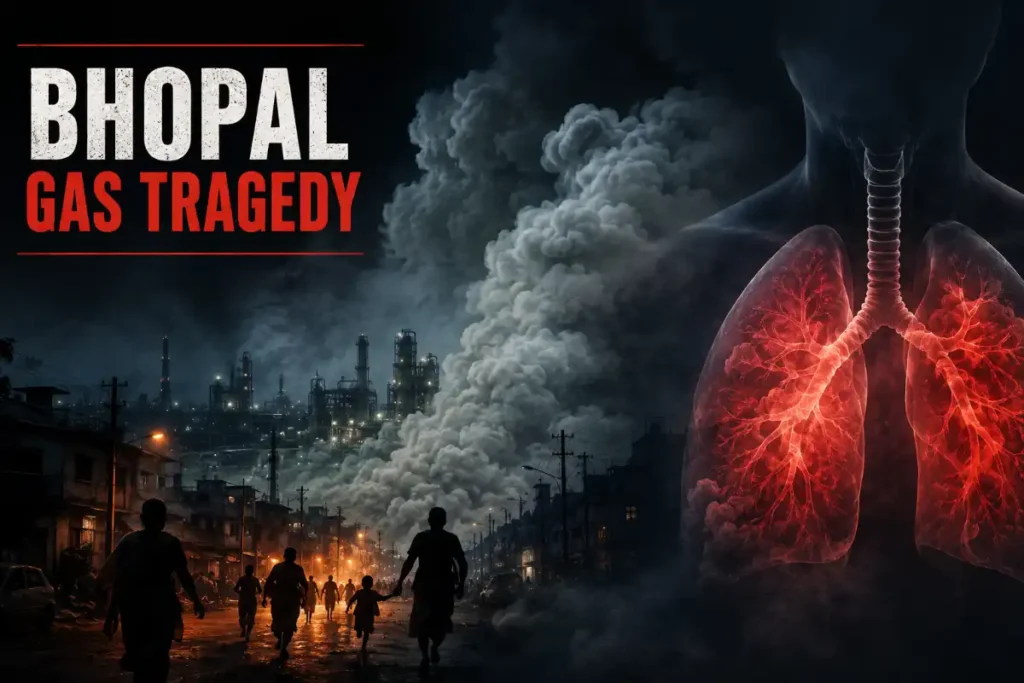
When inhaled, MIC reacts with water in the respiratory tract, producing toxic compounds that rapidly damage lung tissue.
The result was a massive toxic inhalation injury affecting hundreds of thousands of people.
Timeline of the Bhopal Gas Tragedy
📅 2 December 1984 (Evening)
Water accidentally entered a storage tank containing methyl isocyanate (MIC), triggering a dangerous chemical reaction and a rapid rise in pressure.
🌙 Around Midnight (2–3 December 1984)
A large cloud of toxic MIC gas escaped from the pesticide plant and spread across densely populated neighborhoods in Bhopal while most residents were asleep.
⏱️ Within Minutes
Thousands of people experienced severe coughing, burning eyes, breathlessness, and chest pain as the toxic gas damaged their airways and lungs.
🚑 First 24 Hours
Hospitals became overwhelmed as thousands required emergency medical care. Many people died from acute respiratory failure and severe toxic inhalation injuries.
🫁 Following Decades
Long-term studies found that many survivors continued to suffer from chronic respiratory diseases, reduced lung function, eye disorders, and other health complications linked to the gas exposure.
What Toxic Gas Actually Did to Human Lungs
The tragedy did not simply cause temporary breathing difficulty.
It caused acute chemical lung injury similar to what doctors see after exposure to chemical weapons.
Immediate Lung Damage
Within minutes of inhalation, victims experienced:
- severe airway inflammation
- bronchospasm (airway narrowing)
- pulmonary edema (fluid-filled lungs)
This made breathing extremely difficult.
According to research published in PubMed, MIC exposure caused rapid destruction of respiratory epithelial cells, leading to acute respiratory distress.
🫁 How Methyl Isocyanate (MIC) Damages the Lungs
Methyl isocyanate (MIC) is a highly reactive industrial chemical that rapidly dissolves in the moisture lining the nose, throat, and lungs after inhalation. This chemical reaction produces highly irritating compounds that injure the delicate cells of the respiratory tract within minutes.
As inflammation increases, the airways become swollen and narrowed, making breathing progressively more difficult. In severe exposure, fluid leaks into the tiny air sacs (alveoli), a condition known as pulmonary edema, which reduces the lungs’ ability to transfer oxygen into the bloodstream.
The intense inflammatory response can also trigger acute respiratory distress syndrome (ARDS), a life-threatening condition requiring urgent medical treatment. Survivors of significant MIC exposure may later develop chronic bronchitis, pulmonary fibrosis, COPD, reduced lung capacity, and persistent breathing difficulties due to permanent scarring of lung tissue.
Long-Term Respiratory Diseases
Even decades later, survivors continue to suffer from:
Chronic respiratory conditions including:
- Chronic obstructive pulmonary disease (COPD)
- Pulmonary fibrosis
- Chronic bronchitis
- Reduced lung capacity
- Asthma-like airway hyperreactivity
Studies show lung function in exposed survivors remains significantly lower than normal populations.
The Scale of the Disaster
Estimates vary, but public health data suggests:
- 500,000+ people exposed
- 3,000 immediate deaths
- 15,000–20,000 total deaths over time
- Thousands living with chronic respiratory disease
According to the Indian Council of Medical Research (ICMR), lung damage remains the most common long-term health complication among survivors.
💡 Did You Know?
More than 40 years after the Bhopal Gas Tragedy, many survivors continue to live with chronic breathing difficulties, reduced lung capacity, and other long-term health complications. Medical studies have found that exposure to methyl isocyanate (MIC) can cause lasting damage to the lungs, with some survivors experiencing chronic respiratory diseases decades after the disaster. Because of its long-term health consequences, the Bhopal Gas Tragedy remains one of the most extensively studied industrial disasters in medical history.
Causes & Risk Factors
While the disaster itself was a chemical leak, several factors worsened the health impact.
Chemical Exposure
Primary cause:
Methyl isocyanate (MIC) inhalation
MIC is highly reactive and causes chemical burns inside the lungs.
Environmental Factors
Risk increased because:
- the gas spread rapidly through densely populated neighborhoods
- people inhaled high concentrations while sleeping
- there was no early warning system
Biological Risk Factors
Some groups experienced worse damage:
- children
- elderly individuals
- people with pre-existing lung disease
- pregnant women
Warning Signs & Symptoms
Early Symptoms (Minutes to Hours)
Victims reported:
- severe coughing
- chest tightness
- burning throat
- breathlessness
- eye irritation
- nausea and vomiting
Advanced Symptoms
More severe cases developed:
⚠️ Pulmonary edema (fluid in lungs)
⚠️ Acute respiratory distress syndrome (ARDS)
⚠️ Severe oxygen deficiency
These conditions can become life-threatening within hours.
Diagnosis & Clinical Standards
Doctors diagnosed gas exposure primarily through:
Clinical Evaluation
Symptoms of toxic inhalation injury:
- acute respiratory distress
- chemical exposure history
- abnormal lung sounds
Medical Tests
Common diagnostic tools include:
- Chest X-ray
- Pulmonary Function Tests (PFTs)
- Arterial Blood Gas (ABG)
- CT scan of lungs
Pulmonary function testing became the gold standard for evaluating long-term lung damage among survivors.
WHO respiratory health guidelines emphasize lung function monitoring after chemical inhalation exposure.
Can the Lung Damage Be Treated?
While severe chemical lung injury cannot always be fully reversed, modern medicine provides several effective management strategies.
Medical Treatments
Doctors often prescribe:
- bronchodilators
- anti-inflammatory medications
- corticosteroids
- oxygen therapy
These help improve breathing and reduce airway inflammation.
Pulmonary Rehabilitation
Respiratory physiotherapy plays an important role.
Evidence shows pulmonary rehabilitation can:
- improve lung capacity
- reduce breathlessness
- enhance physical endurance
- improve quality of life
Techniques include:
- breathing exercises
- diaphragmatic breathing
- airway clearance therapy
- graded exercise therapy
Long-Term Monitoring
Doctors recommend survivors undergo:
- periodic lung function tests
- respiratory health monitoring
- chronic disease management
Early treatment reduces long-term complications.
Prevention & Public Health Lessons
The Bhopal disaster changed global industrial safety laws.
WHO and environmental health agencies now recommend:
Industrial Safety Measures
- strict chemical storage protocols
- community emergency warning systems
- environmental monitoring
Public Health Preparedness
Governments must implement:
- disaster response planning
- toxic exposure treatment systems
- medical surveillance for affected populations
Personal Protective Awareness
People living near industrial zones should understand:
- emergency evacuation procedures
- early symptoms of chemical exposure
- when to seek urgent medical care
Why Trust This Article?
This article has been medically reviewed by Dr. Shabbir Hussain, a licensed physiotherapist with over 8 years of clinical experience in musculoskeletal rehabilitation, pulmonary rehabilitation, oncology rehabilitation, kidney rehabilitation, and lymphedema management.
The information presented is based on current scientific evidence from peer-reviewed medical literature, guidance from the World Health Organization (WHO), and research published by the Indian Council of Medical Research (ICMR). Every effort has been made to ensure the content is accurate, evidence-based, and easy to understand for the general public.
Our goal is to provide trustworthy health education that helps readers better understand medical conditions while encouraging timely consultation with qualified healthcare professionals for personalized diagnosis and treatment.
⚠️ Medical Disclaimer
The information provided in this article is for educational and informational purposes only and is not intended as medical advice. It should not be used as a substitute for professional diagnosis, treatment, or medical guidance from a qualified healthcare provider.
Always consult a licensed doctor, physiotherapist, or healthcare professional if you have concerns about your health, symptoms, or medical conditions. Never ignore professional medical advice or delay seeking treatment because of something you have read on this website.
If you are experiencing a medical emergency, seek immediate medical attention or contact your local emergency services.
Key Takeaways
- The Bhopal Gas Tragedy was the world’s deadliest industrial gas disaster, exposing over 500,000 people to toxic methyl isocyanate (MIC) gas.
- Methyl isocyanate (MIC) can cause severe chemical injury to the lungs, leading to airway inflammation, pulmonary edema, and long-term respiratory disease.
- Many survivors continue to experience chronic breathing problems, including COPD, chronic bronchitis, pulmonary fibrosis, and reduced lung function decades after the disaster.
- Early medical treatment, pulmonary rehabilitation, breathing exercises, and regular lung function monitoring can help improve symptoms and quality of life for affected individuals.
- The tragedy led to major improvements in industrial safety regulations, disaster preparedness, and environmental health policies worldwide.
- The Bhopal Gas Tragedy remains an important reminder of the need for strict chemical safety standards and rapid public health response during industrial emergencies.
FAQs
1. What gas caused the Bhopal disaster?
The main toxic chemical released was methyl isocyanate (MIC), a highly reactive pesticide manufacturing chemical.
2. How does methyl isocyanate damage lungs?
MIC reacts with moisture in the lungs, causing chemical burns, inflammation, and destruction of lung tissue.
3. Are survivors still suffering today?
Yes. Many survivors continue to suffer from chronic lung disease and reduced respiratory capacity decades after the exposure.
4. Can lung damage from toxic gas heal?
Some mild injuries may improve over time, but severe lung damage often leads to lifelong respiratory disease.
5. Can physiotherapy help lung recovery?
Yes. Pulmonary rehabilitation and breathing exercises significantly improve lung efficiency and quality of life.
6. How many people died in the Bhopal disaster?
Estimates suggest 3,000 immediate deaths, with over 15,000 deaths over the following years due to exposure-related illness.
7. Why is the Bhopal disaster still important today?
It changed global chemical safety laws and remains a critical lesson in industrial safety and environmental health protection.
References
World Health Organization. (2023). Chemical safety and environmental health.
https://www.who.int
Indian Council of Medical Research. (2018). Health effects of the Bhopal gas disaster.
https://www.icmr.gov.in
Varma, D., & Guest, I. (1993). The Bhopal accident and methyl isocyanate toxicity. Journal of Toxicology and Environmental Health.
https://pubmed.ncbi.nlm.nih.gov
Dhara, V. R., & Dhara, R. (2002). The Union Carbide disaster in Bhopal. International Journal of Occupational and Environmental Health.
https://pubmed.ncbi.nlm.nih.gov

Dr. Shabbir Hussain, BPT
Registered Physiotherapist | Clinical Rehabilitation Specialist
Maharashtra OTPT Council Reg. No.: PR-2021/08/PT/009532
Society of Onco Physiotherapists Reg. No.: SOP/00033/LM
Dr. Shabbir Hussain, BPT, Registered Physiotherapist with over 8 years of experience in physiotherapy, kidney rehabilitation, oncological rehabilitation, and lymphedema management. He specializes in balance disorders, pain management, musculoskeletal rehabilitation, strengthening programs, and VR-based rehabilitation.