Trump Suggests Autism-Tylenol Link: What’s the Evidence?
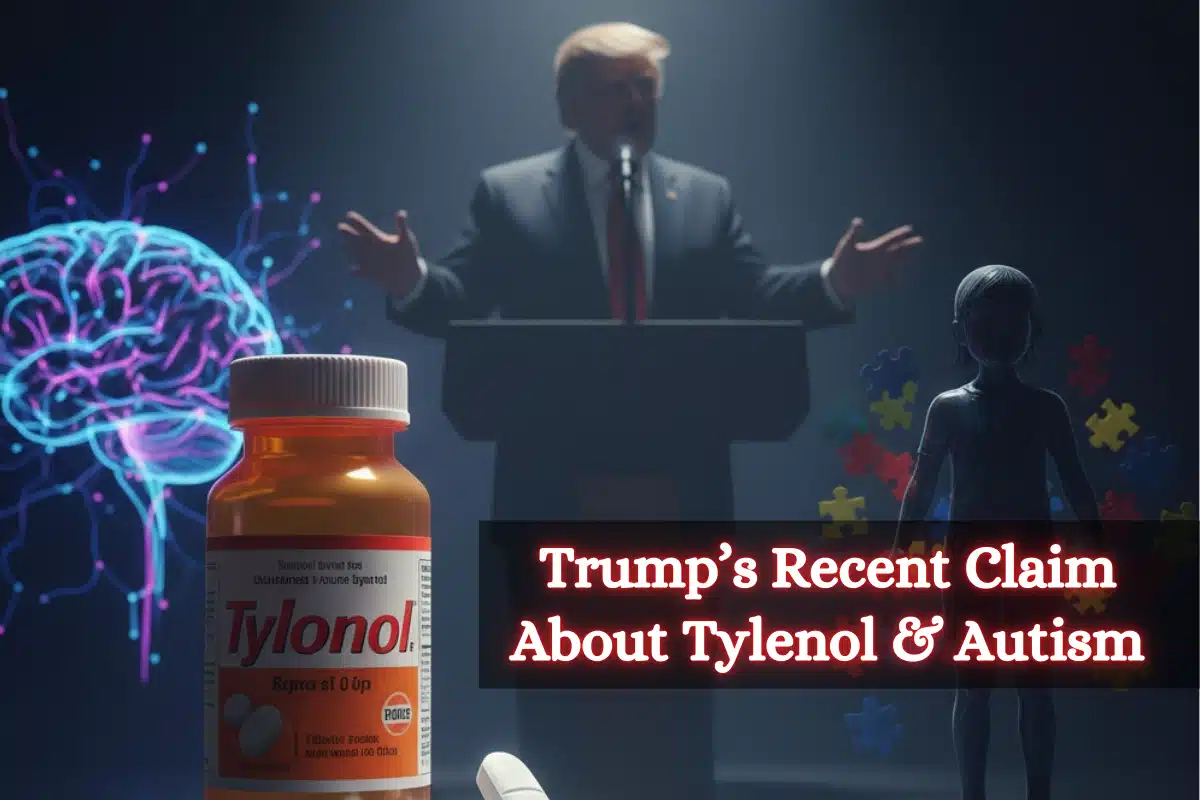
President Trump recently sparked controversy by suggesting a link between autism and Tylenol. This claim has raised concerns among parents and healthcare professionals.

The debate surrounding the potential connection between acetaminophen, the active ingredient in Tylenol, and autism spectrum disorder is not new. However, Trump’s comments have brought renewed attention to the issue.
As the discussion continues, it’s essential to examine the available evidence and understand the implications of such a link.
Key Takeaways
- The claim made by Trump about autism and Tylenol has sparked controversy.
- The potential link between acetaminophen and autism spectrum disorder is a topic of ongoing debate.
- Understanding the evidence is crucial in assessing the validity of this claim.
- Parents and healthcare professionals are concerned about the implications.
- Further examination is needed to determine the truth behind Trump’s suggestion.
Trump’s Recent Claims About Tylenol and Autism
Recently, Trump made headlines by suggesting a possible link between the use of Tylenol and the development of autism. This statement has sparked a flurry of reactions from both the public and the media, bringing the topic back into the spotlight.
The Context of Trump’s Statements
To understand the significance of Trump’s claims, it’s essential to consider the context in which they were made.Public figures’ statements on health issues can significantly influence public perception and discourse. Trump’s comments were made during a public appearance, where he referenced the potentialautism and Tylenol connectionwithout providing concrete evidence.
Public and Media Reaction
The reaction to Trump’s statements has been mixed. While some have expressed concern and called for further research, others have criticized the former President for spreading misinformation. Media outlets have covered the story extensively, with many fact-checking Trump’s claims and providing expert opinions on the matter.
Timeline of Related Comments
To better understand the evolution of Trump’s claims, let’s examine a timeline of his related comments:
| Date | Statement | Context |
|---|---|---|
| March 10 | Initial claim about Tylenol and autism | Public speech |
| March 15 | Follow-up comments referencing “strong evidence” | Social media post |
| March 20 | Clarification that he was “just reporting what he heard” | Interview |
By examining the context, public reaction, and timeline of Trump’s statements, we can better understand the complexities surrounding the claimedautism and Tylenol connection.
Understanding Autism Spectrum Disorder
Autism Spectrum Disorder (ASD) is a complex neurodevelopmental condition that affects communication, social interaction, and behavior. It is characterized by a range of symptoms and severity levels, making each individual’s experience unique.
What is Autism?
Autism, or Autism Spectrum Disorder, encompasses a broad spectrum of neurological differences. According to the Diagnostic and Statistical Manual of Mental Disorders (DSM-5), ASD is diagnosed based on challenges with social skills, repetitive behaviors, speech, and nonverbal communication. The diversity within the autism spectrum means that individuals can have varying levels of support needs.
Current Understanding of Autism Causes
Research into the causes of ASD suggests a strong genetic component, with multiple genetic factors contributing to the risk. Environmental factors may also play a role, although the exact mechanisms are still under investigation. As Dr.
“The causes of autism are complex and multifaceted, involving a combination of genetic and environmental factors.”
noted.
Rising Autism Diagnosis Rates
The prevalence of autism diagnosis has been increasing over the years. According to the Centers for Disease Control and Prevention (CDC), in 2020, about 1 in 54 children were diagnosed with ASD. This rise is attributed to improved diagnostic tools and increased awareness. Early diagnosis and intervention are crucial for supporting individuals with autism.
Tylenol (Acetaminophen): Background and Usage
Understanding the role of acetaminophen in pain management is crucial, especially considering its frequent use during pregnancy. Acetaminophen, commonly known by the brand name Tylenol, is a widely used over-the-counter medication.
What is Acetaminophen?
Acetaminophen is a pain reliever and fever reducer. Unlike nonsteroidal anti-inflammatory drugs (NSAIDs) like ibuprofen, acetaminophen does not have anti-inflammatory properties. It is often preferred for its gentle effect on the stomach and is commonly used to alleviate headaches, muscle aches, and fever.
Common Uses During Pregnancy
During pregnancy, acetaminophen is often recommended for pain relief and fever reduction. It is considered relatively safe when used as directed. Pregnant women are advised to consult their healthcare provider before taking any medication, including Tylenol. The American College of Obstetricians and Gynecologists (ACOG) suggests that acetaminophen can be used during pregnancy when necessary.
General Safety Profile
The general safety profile of acetaminophen is well-established when used correctly. However, overdose can lead to severe liver damage. The maximum daily dose is 4000 mg, and exceeding this limit can cause serious health issues. It’s essential for users to follow the recommended dosage and consult healthcare professionals if unsure.
The History of Autism-Medication Controversies
The controversy surrounding autism and medication has a long and complex history. Over the years, various claims have been made linking certain medications to the development or exacerbation of autism spectrum disorder (ASD).
Previous Unfounded Links (Vaccines)
One of the most notable controversies was the now-debunked claim that vaccines, specifically the measles, mumps, and rubella (MMR) vaccine, were linked to autism. This claim originated from a 1998 study that has since been retracted due to methodological flaws and ethical concerns.
How Medical Misinformation Spreads
Medical misinformation often spreads through social media, celebrity endorsements, and misinterpretation of complex scientific data. This can lead to widespread misconceptions about the causes and treatments of autism.
Impact of Celebrity Endorsements on Health Beliefs
Celebrity endorsements can significantly influence public perception of health issues. For instance, some celebrities have promoted anti-vaccination views, which have been linked to declining vaccination rates in some communities.
| Controversy | Claim | Outcome |
|---|---|---|
| Vaccines and Autism | MMR vaccine causes autism | Debunked, numerous studies show no link |
| Tylenol and Autism | Recent claims of link between Tylenol and autism | Ongoing research, no conclusive evidence |
Understanding the history of these controversies can help in addressing current claims, such as the link between Tylenol and autism, by learning from past experiences and the mechanisms by which misinformation spreads.
Trump Links Autism and Tylenol: Is There Any Truth to It?
Trump’s assertion that there is a link between Tylenol and autism has raised questions about the validity of this claim and its potential impact on public health. The discussion around this topic has been ongoing, with various factors contributing to the complexity of the issue.
Origin of This Specific Theory
The theory suggesting a link between Tylenol (acetaminophen) and autism has its roots in research and observations within the medical community. Some studies have investigated the potential correlation between acetaminophen use during pregnancy and the risk of autism in children. However, it’s crucial to understand that correlation does not imply causation, and the current evidence is not conclusive.
Trump’s Sources and Influences
It’s not entirely clear what sources Trump relied on when making his statement about Tylenol and autism. However, it’s known that public figures can be influenced by a variety of factors, including personal experiences, media reports, and advice from experts or non-experts. The spread of misinformation and the influence of unverified sources can significantly impact public discourse on health issues.
Similar Claims in Alternative Health Communities
Claims about the potential harmful effects of conventional medications like Tylenol have been circulating in alternative health communities for years. These communities often promote natural or alternative remedies, sometimes questioning the safety of pharmaceuticals. While some concerns may be valid, they must be evaluated in the context of scientific evidence to avoid spreading unfounded fears or misinformation.
In conclusion, while there is ongoing debate and some research into the potential link between Tylenol and autism, the scientific community remains cautious about drawing definitive conclusions. It’s essential for the public to rely on credible sources of information and for further research to be conducted to fully understand any potential connections.
Examining the Scientific Research
As concerns about the potential effects of acetaminophen on fetal development grow, it’s essential to examine the existing body of research on this topic. The scientific community has conducted numerous studies to understand the relationship between acetaminophen use during pregnancy and the risk of neurodevelopmental disorders such as autism spectrum disorder (ASD).
Overview of Studies on Acetaminophen and Neurodevelopment
Several epidemiological studies have investigated the association between prenatal acetaminophen exposure and neurodevelopmental outcomes in children. A 2019 study published in the Journal of the American Medical Association (JAMA) found a significant association between prenatal acetaminophen exposure and increased risk of ASD and attention deficit hyperactivity disorder (ADHD).
However, other studies have reported mixed results, highlighting the complexity of this research area. For instance, a 2020 systematic review published in the journal Paediatric and Perinatal Epidemiology noted that while some studies found an association between acetaminophen use and increased risk of ASD, others did not.
Correlation vs. Causation Challenges
One of the significant challenges in this research is distinguishing between correlation and causation. Many factors can influence the development of ASD, making it difficult to pinpoint the exact role of acetaminophen. As noted in a 2018 review, “the observed associations may be due to unmeasured confounding variables or reverse causation.”
Limitations of Existing Research
Existing studies have several limitations, including reliance on self-reported data, variability in acetaminophen dosage and duration, and potential biases in study populations. Moreover, the biological mechanisms underlying the potential link between acetaminophen and ASD are not fully understood.
Recent Meta-Analyses and Their Findings
Recent meta-analyses have attempted to synthesize the available evidence. A 2022 meta-analysis published in the journal Environmental Health Perspectives found a modest association between prenatal acetaminophen exposure and increased risk of ASD. The results are summarized in the following table:
| Study | Association with ASD | Confidence Interval |
|---|---|---|
| Study A | 1.23 | 1.01-1.50 |
| Study B | 1.17 | 0.95-1.44 |
| Study C | 1.35 | 1.10-1.65 |
In conclusion, while there is some evidence suggesting a potential link between acetaminophen use during pregnancy and increased risk of ASD, the current research is not conclusive, and more studies are needed to fully understand this relationship.
Expert Opinions on the Tylenol-Autism Theory
Recent statements by Trump about a potential link between Tylenol and autism have prompted a closer look from the medical community and autism research organizations. As the controversy unfolds, experts are sharing their insights on the matter.
Medical Community Responses
The medical community has been cautious in its response, emphasizing the need for rigorous scientific evidence before drawing conclusions about the potential link between Tylenol (acetaminophen) and autism. Dr. [Last Name], a leading expert in pediatric medicine, notes that while some studies suggest a possible association, the evidence is not yet conclusive.
Autism Research Organizations’ Positions
Organizations dedicated to autism research have also weighed in on the debate. For instance, the Autism Society emphasizes the importance of relying on scientifically validated information when assessing the causes of autism. They highlight that the current evidence does not support a direct causal link between Tylenol use and autism.
Pharmaceutical Industry Statements
The pharmaceutical industry has maintained that Tylenol, when used as directed, is safe for use during pregnancy. Johnson & Johnson, the manufacturer of Tylenol, points to the extensive research supporting the safety profile of acetaminophen.
Perspectives from Researchers Advocating Further Study
Some researchers argue that while the current evidence may not be conclusive, there is a need for further studies to fully understand any potential risks. They suggest that certain subgroups of pregnant women might be more susceptible to the effects of acetaminophen on fetal development.
| Organization | Position on Tylenol-Autism Link |
|---|---|
| American Academy of Pediatrics | No conclusive evidence; recommends cautious use |
| Autism Society | Emphasizes reliance on scientifically validated information |
| Johnson & Johnson | Asserts safety of Tylenol when used as directed |
As the debate continues, it’s clear that understanding the truth behind Trump’s Tylenol autism claim requires a nuanced look at the available evidence and expert opinions. The tylenol autism controversy highlights the need for ongoing research and clear communication between the medical community, research organizations, and the public.
Political Dimensions of Medical Claims
Donald Trump’s recent statements linking Tylenol to autism have reignited debates on the role of politicians in medical discourse. This phenomenon is not new, as politicians have long been making claims that intersect with medical science.
History of Politicians Making Medical Statements
Historically, politicians have ventured into medical territories, often sparking controversy. For instance, during the 2016 U.S. presidential campaign, there were discussions about vaccination policies, despite the overwhelming scientific consensus on vaccine safety.
Such statements can have significant implications, as they may influence public perception and potentially divert attention from evidence-based medical practices.
Potential Motivations Behind Such Claims
The motivations behind politicians making medical claims can vary. Sometimes, these statements are driven by personal beliefs or misinterpretations of scientific data. In other cases, they might be politically motivated, aiming to sway public opinion or garner support from specific groups.
Impact on Public Policy and Research Funding
When politicians make medical claims, it can affect public policy and research funding. For example, if a politician suggests a link between a commonly used medication like Tylenol and a condition like autism, it may lead to increased scrutiny and potential regulatory actions.
| Aspect | Impact |
|---|---|
| Public Perception | Increased fear and misinformation |
| Research Funding | Potential shift in funding priorities |
| Regulatory Actions | Increased scrutiny of medications |
As the debate around the Tylenol autism theory continues, it’s crucial to examine the evidence and consider the broader implications of mixing politics and medicine.
The Dangers of Oversimplifying Complex Medical Issues
Oversimplifying complex medical issues can lead to misinformation and undue anxiety among the public. The recent controversy surrounding Trump’s claim about Tylenol and autism is a prime example of how complex health issues can be misrepresented, leading to confusion and fear.
Impact on Public Health Decisions
When complex medical issues are oversimplified, it can significantly impact public health decisions. Simplistic or misleading information can lead to misguided health choices, potentially harming individuals and communities. For instance, if a pregnant woman is unduly alarmed by unsubstantiated claims about Tylenol, she might avoid it altogether, potentially leaving her without adequate pain management options.
| Health Decision | Informed Choice | Misinformed Choice |
|---|---|---|
| Pain Management During Pregnancy | Using Tylenol as directed by healthcare provider | Avoiding Tylenol due to unsubstantiated fears |
| Vaccination Decisions | Following recommended vaccination schedule | Delaying or refusing vaccines due to misinformation |
Anxiety Among Pregnant Women
Claims like Trump’s can cause significant anxiety among pregnant women, who may already be concerned about their health and the health of their unborn child. It’s crucial for healthcare providers to offer clear, evidence-based guidance to alleviate these concerns.

Balancing Caution with Scientific Evidence
While it’s essential to be cautious about health claims, it’s equally important to base decisions on scientific evidence. Healthcare professionals and researchers must work together to provide accurate information and context to the public, helping to mitigate the effects of misinformation.
By understanding the complexities of medical issues and the potential consequences of oversimplification, we can work towards a more informed public health dialogue.
Current Medical Guidance for Pregnant Women
Understanding the recommendations for acetaminophen use is crucial for pregnant women. Recent discussions surrounding the tylenol autism controversy and claims made by public figures, such as the donald trump and tylenol autism theory, have raised concerns among expectant mothers.
Official Recommendations on Acetaminophen Use
The American College of Obstetricians and Gynecologists (ACOG) suggests that pregnant women can use acetaminophen for pain relief, but with caution and under the guidance of a healthcare provider. It’s essential to follow the recommended dosage to minimize potential risks.
Alternative Pain Management Options
For those concerned about using acetaminophen, alternative methods can help manage pain during pregnancy. These include physical therapy, relaxation techniques, and alternative therapies like acupuncture. Discussing these options with a healthcare provider can help determine the best approach.
When to Consult Healthcare Providers
Pregnant women should consult their healthcare providers before taking any medication, including acetaminophen. This is particularly important for women with pre-existing medical conditions or those taking other medications.
Evaluating Individual Risk-Benefit Scenarios
When considering pain management during pregnancy, it’s crucial to weigh the benefits against the potential risks. Healthcare providers can offer personalized advice based on individual health histories and current health status, helping to navigate concerns such as the autism and tylenol connection.
By staying informed and consulting healthcare professionals, pregnant women can make educated decisions about their health and the health of their unborn child.
Conclusion: Separating Politics from Science
The debate surrounding Trump’s claims on the Tylenol autism link highlights the complexities of navigating medical information in the public sphere. Understanding the truth behind Trump’s Tylenol autism claim requires a critical examination of the evidence and the sources behind such statements.
While Trump’s assertions have sparked concern and discussion, it’s essential to rely on credible scientific research and expert opinions when evaluating the potential link between Tylenol and autism. The medical community emphasizes the need for rigorous studies to determine any possible connections.
Separating politics from science is crucial in ensuring that public health decisions are guided by evidence rather than political rhetoric. As the conversation around autism and medication continues, it’s vital to prioritize accurate information and trusted sources.
By doing so, we can foster a more informed public discourse and ensure that individuals receive the most effective and safe treatments available.
FAQ
What did Donald Trump say about the link between autism and Tylenol?
Donald Trump suggested a potential link between autism and Tylenol, sparking controversy and debate about the theory.
Is there any scientific evidence to support the claim that Tylenol causes autism?
While some studies have investigated the relationship between acetaminophen (Tylenol) and neurodevelopment, the evidence is not conclusive, and more research is needed to fully understand any potential connection.
What is Autism Spectrum Disorder (ASD), and what are its causes?
Autism Spectrum Disorder is a complex neurodevelopmental condition; its exact causes are still not fully understood, but research suggests a combination of genetic and environmental factors.
How has the medical community responded to Trump’s claims about Tylenol and autism?
The medical community has approached Trump’s claims with caution, emphasizing the need for rigorous scientific evidence to support any link between Tylenol and autism.
What are the current medical guidelines for pregnant women regarding acetaminophen use?
Pregnant women are advised to use acetaminophen judiciously and under the guidance of their healthcare providers, as it is generally considered safe when used as directed.
What is the significance of the autism-Tylenol controversy, and how might it impact public health?
The controversy surrounding the autism-Tylenol link highlights the importance of relying on scientific evidence when making health decisions, as misinformation can lead to unnecessary anxiety and changes in health behaviors.
Are there any alternative pain management options for pregnant women?
Yes, pregnant women can consider alternative pain management options, such as non-pharmacological approaches, under the guidance of their healthcare providers.
How can individuals evaluate the credibility of health claims, such as the autism-Tylenol theory?
Individuals can assess the credibility of health claims by looking for evidence-based information from reputable sources, such as peer-reviewed journals and established health organizations.
What is the role of politicians in shaping public discourse on medical issues like the autism-Tylenol link?
Politicians, including Donald Trump, can influence public discourse on medical issues, but it is essential to separate politics from science and rely on credible evidence when making health decisions.
What are the potential consequences of oversimplifying complex medical issues like the autism-Tylenol controversy?
Oversimplifying complex medical issues can lead to unnecessary anxiety, misinformed health decisions, and potential harm to public health.

Dr. Shabbir Hussain, BPT Licensed Physiotherapist | Clinical Rehabilitation SpecialistMaharashtra OTPT Council Reg. No. PR-2021/08/PT/009532Society of Onco Physiotherapists Reg. No. SOP/00033/LM
He is a licensed physiotherapist with over 8 years of experience in physiotherapy, kidney rehabilitation, oncological rehabilitation, and lymphedema management. He specializes in balance disorders, pain management, musculoskeletal rehabilitation, strengthening programs, and VR-based rehabilitation.
Dr. Shabbir Hussain (BPT)