
🔄 Last Updated: July 11, 2026
✔️ Evidence-Based Review: Based on the latest WHO Global Status Report on Cancer 2026 and current international cancer guidelines.
⏱️ Reading Time: Approximately 12 minutes
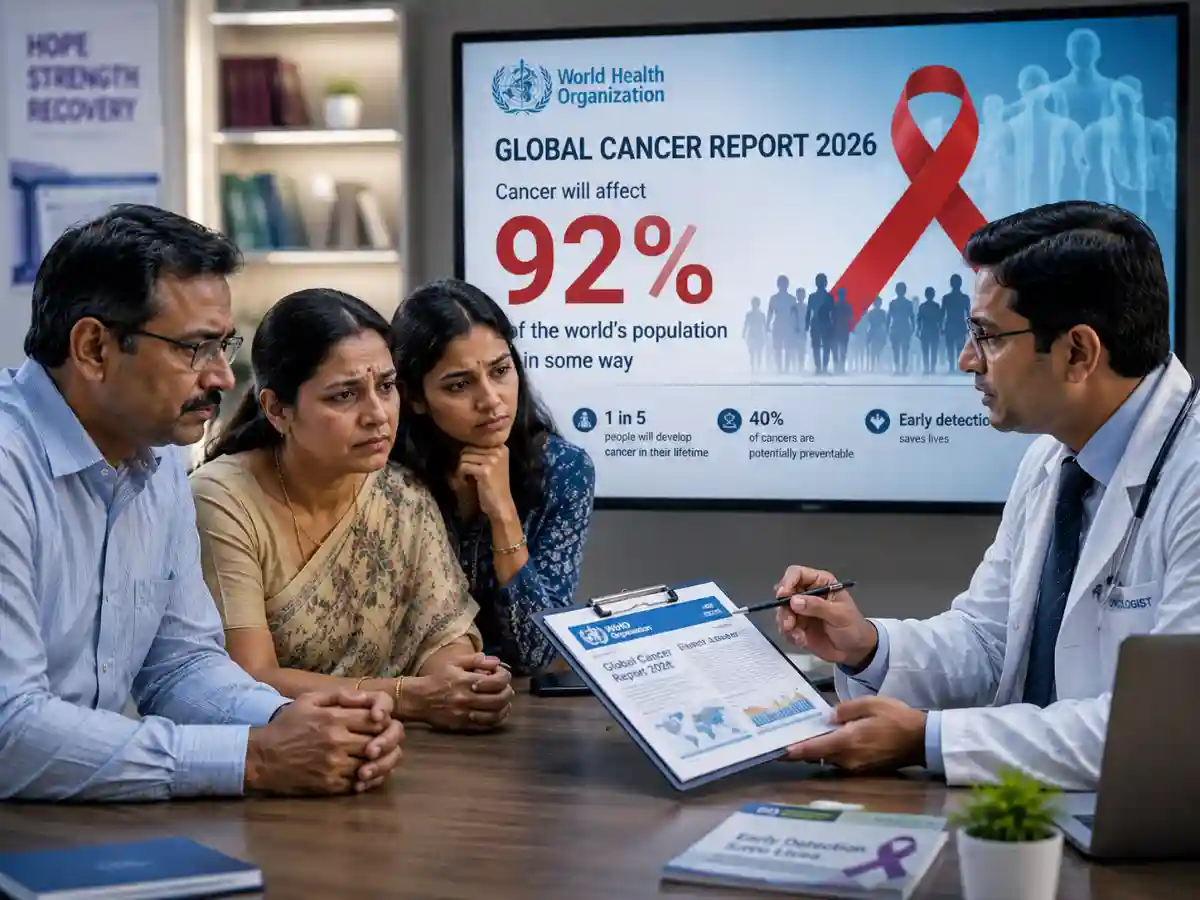
WHO Cancer Report Says – 92% Cancer Will Affect 92% of the World’s Population in Some Way
📊 Global Cancer Statistics at a Glance
The latest WHO and International Agency for Research on Cancer (IARC) data show that cancer remains one of the world’s leading health challenges. These key figures help explain why prevention, early detection, and timely treatment are more important than ever.
Cancer is no longer a disease that affects only “someone else.” In my clinical experience, one of the biggest misconceptions I hear is, “Cancer doesn’t run in my family, so I don’t need to worry.” Unfortunately, that belief can delay healthy lifestyle changes and even postpone lifesaving screening.
92% Cancer Statistic – A recent report from the World Health Organization (WHO) has attracted global attention after stating that 92% of the world’s population will be affected by cancer in some way. At first glance, the number sounds frightening. Many people assume it means that almost everyone will eventually develop cancer. That interpretation is incorrect.
What the report actually highlights is something equally important: cancer’s impact extends far beyond the individual diagnosed. It affects spouses, children, parents, caregivers, friends, workplaces, healthcare systems, and entire communities. According to WHO estimates, about one in five people will develop cancer during their lifetime, while 92% of people will experience cancer either through their own diagnosis or that of a close family member.
As a physiotherapist involved in rehabilitation, I have personally seen how cancer influences every aspect of a patient’s life—from mobility and strength to emotional well-being and family dynamics. This report serves as an important reminder that cancer prevention, early diagnosis, and rehabilitation deserve far greater attention.
⚡ Quick Summary
Main Risk: Rising global cancer burden and increasing lifestyle-related risk factors.
Key Message: The “92%” figure refers to people affected directly or through a close family member—not that 92% will develop cancer.
Best Prevention: Avoid tobacco, stay physically active, maintain a healthy weight, and participate in recommended cancer screening.
Expert Tip: Early detection remains one of the most powerful ways to improve survival.
⚡ Quick Facts
What Is This WHO 92% Cancer Statistic Report About?
The WHO Global Status Report on Cancer 2026 provides one of the most comprehensive assessments of cancer worldwide. Rather than focusing only on new treatments, the report evaluates prevention, diagnosis, access to care, survival, and the lived experiences of patients and families.
The report highlights several important findings:
- Nearly 20.6 million new cancer cases occur every year globally.
- Almost 10 million people die from cancer annually.
- Cancer cases may approach 35 million per year by 2050 if current trends continue.
- Approximately one in five people will develop cancer during their lifetime.
- 92% of people will be affected either directly or through a close family member’s diagnosis.
This distinction matters because it helps readers understand that the 92% statistic reflects the widespread social and family impact of cancer—not a 92% lifetime risk of developing the disease.
Why This Problem Is Becoming More Common
Several factors are contributing to the growing global cancer burden.
India, like many developing countries, is experiencing rapid urbanization. Long office hours, sedentary jobs, work-from-home routines, increased screen time, unhealthy eating habits, poor sleep, obesity, and reduced physical activity have become common. These lifestyle changes not only increase the risk of cardiovascular disease but are also linked to several cancers.
Tobacco remains the single largest preventable cause of cancer worldwide. Meanwhile, rising obesity, diabetes, alcohol consumption, chronic inflammation, air pollution, and persistent viral infections such as HPV and hepatitis B continue to contribute significantly to cancer incidence.
As life expectancy increases, more people are also living long enough to develop age-related cancers. This partly explains why the number of cancer cases is projected to rise substantially over the coming decades.
Hidden Dangers Most People Don’t Realize
Most discussions focus only on diagnosis and treatment, but cancer affects nearly every dimension of life.
The physical effects may include chronic pain, muscle weakness, weight loss, fatigue, reduced mobility, nerve damage, swallowing problems, breathing difficulties, and balance disorders.
Emotionally, anxiety, depression, fear of recurrence, and caregiver stress can become overwhelming.
Financially, prolonged treatment often creates a heavy burden on families, particularly where insurance coverage is limited. WHO notes that access to cancer diagnosis and treatment remains highly unequal across countries, and in some regions many patients discontinue treatment because of cost.
From a rehabilitation perspective, delayed intervention can lead to prolonged disability. Patients who become inactive during treatment may experience significant muscle loss, reduced cardiovascular fitness, joint stiffness, and difficulty returning to normal daily activities.
Cancer affects far more people than those who receive the diagnosis—it changes the lives of families, caregivers, workplaces, healthcare systems, and entire communities.
Common Mistakes People Make
One of the biggest mistakes is assuming that cancer symptoms will disappear on their own. Persistent unexplained weight loss, unusual bleeding, long-lasting cough, a breast lump, difficulty swallowing, or changes in bowel habits should never be ignored.
Another common mistake is relying solely on social media remedies or unverified herbal treatments while delaying professional evaluation.
Some individuals also avoid recommended cancer screening because they feel healthy. However, several cancers—including breast, cervical, and colorectal cancer—can often be detected before symptoms become severe.
Finally, many patients believe physical activity should stop completely after cancer treatment. In reality, appropriately supervised rehabilitation and exercise are increasingly recognized as important components of recovery, helping reduce fatigue, improve physical function, and enhance quality of life.
Research Highlights
The WHO’s 2026 Global Status Report paints a sobering picture of the future of cancer care.
Researchers estimate that annual global cancer cases could rise from 20.6 million today to nearly 35 million by 2050, driven by population growth, aging, and persistent exposure to preventable risk factors.
The report also highlights a striking inequality in survival. In high-income countries, more than 80% of children with cancer survive, while outcomes remain far poorer in many low-income settings because of delayed diagnosis and limited access to treatment.
Perhaps the most important message is also the most hopeful: WHO and the International Agency for Research on Cancer estimate that around four in ten cancer cases could potentially be prevented through measures such as tobacco control, HPV vaccination, hepatitis B vaccination, healthy weight management, reduced alcohol use, regular physical activity, and early detection.
📊 WHO: Major Preventable Cancer Risk Factors
According to the World Health Organization (WHO) and the International Agency for Research on Cancer (IARC), several lifestyle and infectious risk factors contribute significantly to the global cancer burden. The chart below provides an easy visual comparison of their relative public health impact.
Causes and Risk Factors
Cancer is not caused by a single factor. Instead, it usually develops over many years due to a complex interaction between genetics, lifestyle, environmental exposures, infections, and aging. Understanding these risk factors is one of the most effective ways to reduce cancer risk.
One of the strongest preventable risk factors is tobacco use, which remains responsible for millions of cancer deaths worldwide. Smoking and smokeless tobacco significantly increase the risk of lung, oral, throat, esophageal, bladder, pancreatic, and several other cancers.
Another growing concern is physical inactivity. In my clinical experience, many patients spend 8–10 hours sitting at a desk, followed by long commutes and additional screen time at home. This sedentary lifestyle contributes to obesity, insulin resistance, chronic inflammation, and hormonal changes that can increase the risk of colorectal, breast, endometrial, and other cancers.
Diet also plays a crucial role. Highly processed foods, excessive sugar intake, low fruit and vegetable consumption, and frequent intake of processed meat have all been linked to higher cancer risk. Conversely, diets rich in whole grains, legumes, vegetables, fruits, and healthy fats appear to offer protective benefits.
Early Warning Signs
Cancer symptoms often begin subtly, which is why many people dismiss them as minor health problems.
Early warning signs may include unexplained fatigue, persistent pain, changes in bowel or bladder habits, unexplained weight loss, loss of appetite, persistent cough, hoarseness, unusual bleeding, non-healing ulcers, difficulty swallowing, or a lump anywhere in the body.
As cancer progresses, symptoms become more noticeable depending on the organ involved. Individuals may develop severe weakness, persistent bone pain, chronic cough with blood, enlarged lymph nodes, abdominal swelling, jaundice, neurological symptoms, or difficulty breathing.
🚨 Don’t Ignore These Signs
Seek medical evaluation promptly if you notice:
- A breast lump or persistent swelling
- Blood in stool, urine, or sputum
- Persistent mouth ulcers lasting more than three weeks
- Difficulty swallowing
- Rapid, unexplained weight loss
- Persistent fever without infection
- Long-lasting cough lasting over three weeks
- New skin lesions or changes in moles
Diagnosis of cancer
Diagnosing cancer requires a systematic medical evaluation rather than relying on symptoms alone.
Doctors begin with a detailed medical history and physical examination. Depending on the suspected cancer, laboratory tests, imaging studies such as ultrasound, CT scan, MRI, PET scan, or mammography may be recommended.
The gold standard for confirming most cancers is a biopsy, where a small tissue sample is examined under a microscope by a pathologist.
From a physiotherapy perspective, assessment extends beyond diagnosis. We evaluate:
- Muscle strength
- Balance
- Walking ability
- Fatigue levels
- Joint mobility
- Functional independence
- Lymphedema risk
- Pain severity
- Respiratory function when required
This baseline assessment helps tailor rehabilitation throughout cancer treatment.
Treatment & Physiotherapy Management
Cancer treatment depends on the type, stage, and overall health of the patient.
Common treatment options include surgery, chemotherapy, radiotherapy, immunotherapy, targeted therapy, hormone therapy, or a combination of these approaches.
However, treatment should not stop with cancer control alone.
In my clinical experience, rehabilitation is often overlooked despite its significant impact on recovery.
Physiotherapy helps patients:
- Improve muscle strength
- Reduce treatment-related fatigue
- Improve shoulder mobility after breast cancer surgery
- Prevent joint stiffness
- Improve walking ability
- Reduce pain
- Improve breathing after thoracic surgery
- Manage cancer-related lymphedema
- Restore independence in daily activities
Evidence suggests that appropriately prescribed exercise during and after cancer treatment can improve physical function, reduce fatigue, and enhance quality of life.
Myth vs Fact
| Myth | Fact |
|---|---|
| Cancer always means death. | Many cancers are treatable, especially when diagnosed early. |
| Only older people get cancer. | Cancer can occur at any age, although risk increases with aging. |
| Cancer surgery causes cancer to spread. | There is no scientific evidence supporting this belief. |
| If nobody in my family has cancer, I cannot get it. | Most cancers are not caused by inherited genes alone. |
| Exercise is unsafe during cancer treatment. | Supervised exercise is often recommended and supported by evidence. |
| Herbal remedies can replace cancer treatment. | Herbal products should never replace evidence-based medical care. |
Real Patient Story
A 46-year-old school teacher came to rehabilitation after completing breast cancer surgery and chemotherapy. She was frightened to move her shoulder because she believed exercise might worsen her condition.
She had severe shoulder stiffness, fatigue, and difficulty lifting everyday objects.
After a carefully supervised rehabilitation program involving gentle mobility exercises, progressive strengthening, breathing exercises, posture correction, and education, she gradually regained confidence and function over several months.
This experience reinforced an important lesson: recovery is not only about surviving cancer—it is about restoring quality of life.
Expert Clinical Insights
In my clinical experience, one surprising pattern is that many patients expect recovery to happen automatically after surgery or chemotherapy.
Unfortunately, prolonged inactivity often leads to muscle weakness, joint stiffness, poor endurance, and reduced confidence.
Clinically, I often observe that patients who stay physically active within their doctor’s recommendations recover functional abilities more quickly than those who remain completely inactive.
Many patients delay rehabilitation because they believe weakness is “normal” and unavoidable. While fatigue is common during cancer treatment, targeted rehabilitation can make a meaningful difference in physical function, balance, mobility, and emotional well-being.
When to See a Doctor Immediately
Seek urgent medical attention if you experience:
Persistent unexplained bleeding
Sudden weakness on one side of the body
Severe difficulty breathing
Chest pain
Persistent vomiting
Rapidly enlarging lump
Blood in stool or urine
Persistent high fever during chemotherapy
🌿 What You Can Do Today
Although not every cancer can be prevented, making healthy choices today can lower your risk and improve your long-term health. Even small lifestyle changes can make a meaningful difference over time.
Tobacco remains the leading preventable cause of cancer worldwide.
Regular physical activity supports overall health and may reduce the risk of several cancers.
Choose a balanced diet rich in whole grains, fruits, and vegetables.
Healthy weight management can help lower the risk of several types of cancer.
Early detection through screening can improve treatment outcomes.
HPV vaccination helps protect against several HPV-related cancers.
Vaccination can reduce the risk of chronic hepatitis B infection and liver cancer.
Don’t ignore persistent symptoms such as unexplained weight loss, unusual bleeding, or new lumps. Seek medical advice promptly.
Conclusion
Cancer is becoming one of the greatest health challenges of our generation, but the latest WHO report also carries an important message of hope. While millions of people worldwide will be affected by cancer—either personally or through someone they love—not every cancer is unavoidable, and not every diagnosis leads to a poor outcome.
In my clinical experience, the patients who fare best are often those who seek medical advice early, follow evidence-based treatment, remain physically active within safe limits, and embrace rehabilitation as part of recovery.
Every healthy choice matters. Quitting tobacco, staying active, eating a balanced diet, getting recommended vaccinations, and participating in cancer screening can collectively lower risk and improve long-term health.
If you notice persistent or unusual symptoms, don’t wait for them to worsen. Early evaluation can make a significant difference, and timely rehabilitation can help restore strength, confidence, and independence.
Cancer care is not only about treating disease—it is about helping people live better before, during, and after treatment.
✅ Key Takeaways
- Understand that the “92%” statistic reflects cancer’s broad impact on individuals and families, not that 92% of people will develop cancer.
- Many cancers are preventable through healthy lifestyle choices, vaccination, and avoiding tobacco.
- Early diagnosis greatly improves treatment outcomes and survival.
- Physiotherapy and rehabilitation are essential parts of cancer recovery.
- Don’t ignore persistent symptoms such as unexplained weight loss, bleeding, or new lumps.
- Regular screening and timely medical consultation can save lives.
Frequently Asked Questions
1. Does the WHO report mean 92% of people will develop cancer?
No. The statistic refers to people who will be affected either personally or through a close family member or loved one with cancer.
2. Can cancer be prevented?
Not all cancers are preventable, but many cases can be avoided by quitting tobacco, maintaining a healthy lifestyle, getting vaccinated, and attending recommended screenings.
3. Is exercise safe during cancer treatment?
For many patients, yes. Exercise should be tailored to the individual’s condition and guided by the healthcare team.
4. What is the biggest risk factor for cancer?
Tobacco use remains the leading preventable cause of cancer worldwide.
5. Why is physiotherapy important after cancer treatment?
Physiotherapy helps improve strength, mobility, balance, endurance, pain management, and overall quality of life.
Medical Disclaimer
This article is intended for educational and public health awareness purposes only. It should not be considered a substitute for professional medical advice, diagnosis, or treatment. Every patient’s condition is unique. Always consult a qualified healthcare professional for personalized evaluation and treatment recommendations. If you experience persistent or concerning symptoms, seek prompt medical attention.
References
- World Health Organization. (2025). Cancer Fact Sheet. https://www.who.int/news-room/fact-sheets/detail/cancer
- World Health Organization. (2024). Global Cancer Initiative. https://www.who.int/initiatives/global-initiative-for-cancer
- International Agency for Research on Cancer. (2024). Global Cancer Observatory (GLOBOCAN). https://gco.iarc.who.int/
- Sung, H., Ferlay, J., Siegel, R. L., et al. (2024). Global Cancer Statistics. CA: A Cancer Journal for Clinicians. https://acsjournals.onlinelibrary.wiley.com/journal/15424863
- National Cancer Institute. (2025). What Is Cancer? https://www.cancer.gov/about-cancer/understanding/what-is-cancer
- National Institutes of Health. (2025). Cancer Prevention Overview. https://www.cancer.gov/about-cancer/causes-prevention

Dr. Shabbir Hussain, BPT Licensed Physiotherapist | Clinical Rehabilitation SpecialistMaharashtra OTPT Council Reg. No. PR-2021/08/PT/009532Society of Onco Physiotherapists Reg. No. SOP/00033/LM
He is a licensed physiotherapist with over 8 years of experience in physiotherapy, kidney rehabilitation, oncological rehabilitation, and lymphedema management. He specializes in balance disorders, pain management, musculoskeletal rehabilitation, strengthening programs, and VR-based rehabilitation.
Dr. Shabbir Hussain (BPT)