

Have you recently noticed white patches spreading on your skin? Although vitiligo isn’t contagious or dangerous, it can affect confidence and emotional well-being. Fortunately, several modern treatments can slow progression and even restore skin color in many people.
Vitiligo is a common skin condition in which patches lose pigment, creating lighter areas that can appear on the hands, face, feet, or any part of the body.
Medical Review: This article is for educational purposes and does not replace consultation with a dermatologist.
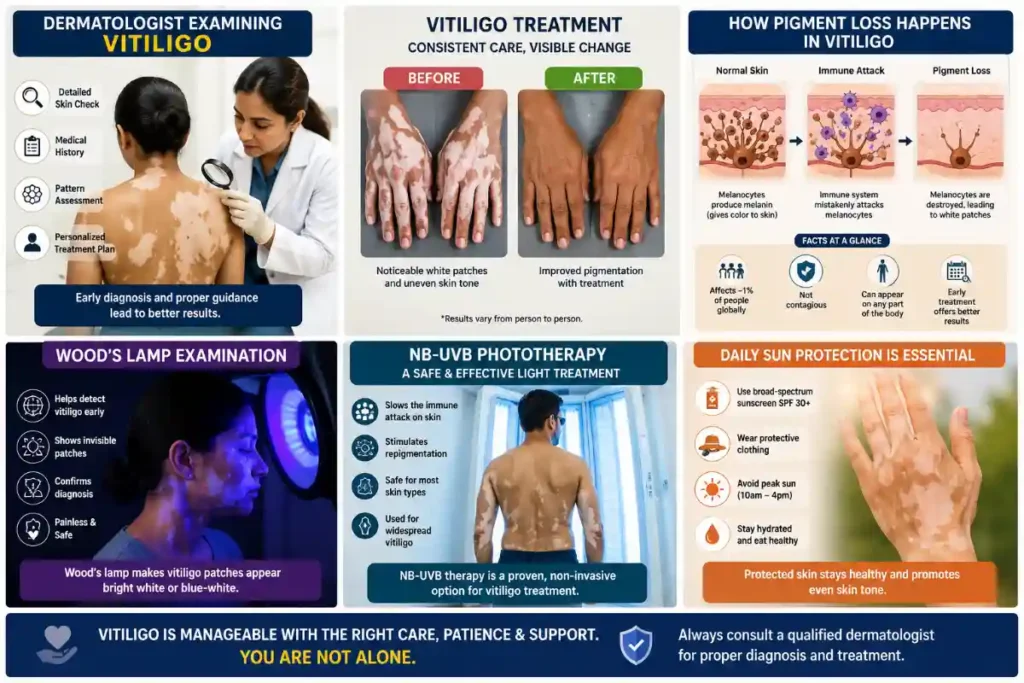
Vitiligo affects approximately 0.5–2% of the global population. Although it is not contagious or life-threatening, its visible skin changes can affect confidence, emotional well-being and quality of life.
Treatment is optional. Some people choose medical approaches to restore tone, while others use camouflage makeup or self-tanners. Repigmentation often takes time and may need ongoing care.
Decisions depend on age, the size and location of patches, how fast skin changes, and personal goals. A doctor, ideally a dermatologist, can confirm the diagnosis and suggest options that fit your lifestyle.
In sunny countries like India, daily sun-smart habits help protect affected areas and support a more even skin tone. You are not alone—millions find a path that suits their needs and choices.
Key Statistics
| Statistic | Value |
|---|---|
| Global prevalence | 0.5–2% |
| Contagious | No |
| Life-threatening | No |
| Autoimmune condition | Yes |
| Permanent cure | No |
| Effective treatments available | Yes |
Key Takeaways – can vitiligo be cured
- Vitiligo causes lighter patches when pigment is lost; it can appear anywhere on the body.
- It affects about 1% of people globally and is neither contagious nor life-threatening.
- Treatment is optional; options include medical therapy, light-based care, and cosmetic cover-ups.
- A board-certified doctor can confirm diagnosis and guide tailored care plans.
- Sun-smart routines are important in India to protect skin and help tone remain even.
- Mental health support can be valuable while deciding the best approach.
Understanding vitiligo today: what it is and who it affects in India
When the immune system mistakes pigment cells for threats, loss of melanocytes follows and visible light patches form on the skin. This creates areas with a lighter skin color while the surface stays smooth and not scaly.
These patches often show up first on the face, neck, hands, and feet, but any part of the body can be involved. Some people see symmetric areas on both sides, while others get a single clustered pattern.
How pigment loss creates lighter areas
There are different type patterns, such as non-segmental and segmental, which affect where patches appear and how they change over time. Darker tones may make contrast more obvious in India’s sunny climate, since surrounding skin tans and affected zones stay pale.
While this autoimmune disease can feel upsetting, it is not infectious and does not spread by touch. Treatment choices are personal: some people opt for observation or cosmetic cover-up, and others seek medical therapy to encourage repigmentation.
| Common areas | Typical features | First steps |
|---|---|---|
| Face, neck | Small, smooth pale patches; noticed early | See dermatologist for diagnosis and photos |
| Hands, feet | Visible with wear; contrast increases in sun | Use sun protection and consider camouflage |
| Trunk or limbs | May be symmetric or single-sided | Discuss type and treatment goals with a dermatologist. |
Talk with a dermatologist to learn your pattern and plan next steps. Understanding the type and course helps match expectations, emotional support, and possible treatment.
Causes and risk factors: the immune system, pigment cells, and related diseases
A mix of genetic and environmental factors can set off an immune response that harms the pigment-making cells in the skin. This immune system error causes targeted damage to melanocytes and leads to color loss in small or larger patches.
Other diseases often occur with this condition. People have higher rates of autoimmune disorders, and thyroid problems are the most common link.
A qualified dermatologist may suggest blood tests to check thyroid function if you have rapid changes or fatigue, weight shifts, or other signs. Share any family history so clinicians can consider screening or monitoring.
Triggers, types, and practical steps
- Chemicals: rare workplace exposure to certain phenols can cause chemical-associated loss of pigment; wear protective gear.
- Sun and contrast: sunlight doesn’t cause the condition, but tanning of surrounding skin makes patches more visible, so sun protection matters.
- Types: non-segmental often appears on both sides and may progress; segmental tends to affect one side and can stabilize earlier.
There’s no single cure, but therapies can restore color or slow new patches. See a dermatologist if you notice fast spread or symptoms of thyroid disease so you can get timely evaluation and a tailored treatment plan.
Signs, symptoms, and types: where patches appear and how they change over time
Look for smooth, pale patches with clear edges that stand out from nearby skin. These macules are usually not itchy or scaly and may be most visible on the face and neck.
There are two main patterns. Non-segmental type often appears on both sides of the body and looks symmetric. Segmental type is usually limited to one side or one area and may show early white hair (poliosis).
Patches can change over months. Some grow or new areas appear; other zones stay stable for long periods. Lips, fingertips, and toes tend to be slower to regain color even after successful treatment.
Skin in affected spots feels normal, which helps tell this condition apart from fungal rashes. Children and adults show similar signs, though plans for care may differ by age.
| Feature | Common areas | Clinical note |
|---|---|---|
| Smooth, pale patches | Face, neck, hands | Well-defined; no scaling |
| Symmetric pattern | Trunk, limbs | Non-segmental type; often bilateral |
| Unilateral pattern | One side of body | Segmental type; may include white hair |
Tip: Photograph areas every few weeks and show images to your doctor if new patches appear quickly. Early attention can help set realistic goals for repigmentation and ongoing care.
Getting the right diagnosis: tests, tools, and when to see a doctor
Early assessment of changing skin patches makes diagnosis and care decisions much easier. See a dermatology specialist when you notice new or expanding light patches, especially on the face, hands, or other visible areas of the body.
Clinical exam and Wood’s lamp
During the visit, the clinician performs a careful clinical exam and uses a Wood’s lamp. This special light highlights depigmented areas and helps map the full extent of patches.
Blood tests and related diseases
Your doctor may order blood work to screen for autoimmune conditions, most commonly thyroid disease. Sharing a brief medical history and current medications helps tailor which tests are needed.
Ruling out other conditions
Diagnosis also rules out look-alikes such as tinea versicolor or post-inflammatory hypopigmentation, which require different care. A skin biopsy is rarely needed if exam and lamp findings are clear.
- Together you will review the area, type, and goals.
- Options may include watchful waiting, topical medications, phototherapy, or cosmetic camouflage like makeup or self-tanner.
- Combining treatments is common; your doctor will monitor for side effects and safety, including any skin cancer concerns with long-term light therapy.
Treatments you apply or take: from corticosteroids to JAK inhibitor creams
Early treatment can improve the chance that pale areas regain color. Options include topical creams, short oral courses, and newer targeted drugs. Most approaches need time and consistent use, often over several months.
Topical corticosteroids and combination therapy
Topical corticosteroid creams are often the first step for small, recent patches. Short-term use helps nudge pigment cells while lowering the risk of skin thinning.
Combining a steroid with calcipotriene can speed repigmentation and improve results versus either alone. Discuss strength and duration with your dermatologist.
Calcineurin inhibitors for delicate areas
Tacrolimus or pimecrolimus creams suit the face and neck and can be used longer than steroids for maintenance. The FDA has issued safety notes about possible lymphoma and skin cancer risks, so review benefits and monitoring with your clinician.
Ruxolitinib cream and systemic options
Ruxolitinib (a JAK inhibitor) is approved for non-segmental cases in people aged 12 and older for limited areas. It offers a new targeted option for skin repigmentation.
For rapidly spreading patches, short courses of oral corticosteroids may slow progression. These systemic medications require careful monitoring for side effects.
| Treatment | Typical use | How it helps | Notes |
|---|---|---|---|
| Topical corticosteroids | Early, small areas | Reduces inflammation to allow color return | Short-term to limit thinning |
| Steroid + calcipotriene | Localized patches | Faster and greater repigmentation | Discuss combination plan with doctor |
| Calcineurin inhibitors | Face, neck maintenance | Supports repigmentation without steroid atrophy | FDA safety warning; monitor use |
| Ruxolitinib cream / systemic steroids | Limited areas / fast-spread cases | Targeted immune modulation; slows spread | Age limits and side-effect checks needed |
Practical tip: Medications often pair with phototherapy to improve outcomes. Your plan should match your age, daily life, and which body areas matter most.
Light therapy and procedures: phototherapy, laser, surgery, and depigmentation
Light-based approaches and minor procedures offer options when topical medicine alone is not enough. These treatments vary by how much skin is affected, whether patches are stable, and your schedule and age.

Narrowband UVB for widespread areas
Narrowband UVB phototherapy treats large areas and is often the first light therapy choice for widespread patches.
Sessions are typically 2–3 times per week. You may see initial change after 1–3 months and fuller results over 6+ months.
Combining phototherapy with topical meds can speed or strengthen repigmentation for many people.
Targeted laser for small patches
Targeted excimer laser concentrates light on small areas. This reduces exposure of unaffected skin and is useful for stubborn, limited patches.
Why PUVA is less used today
PUVA (psoralen + UVA) works but is now less common. It needs more complex prep and carries higher side effects than narrowband UVB.
Surgical options for stable areas
When patches are stable, surgical choices include small skin grafts or cellular suspension transplants.
These can restore color for selected areas, but surgery is not suitable for active, rapidly changing disease.
Risks include scarring or uneven color, so candid expectations are essential before proceeding.
Depigmentation as a deliberate choice
When most of the body has lost pigment and repigmentation isn’t desired, depigmentation can even skin tone. This is permanent and may take 1–4 years to complete.
| Procedure | Best for | Timeline | Key risks/notes |
|---|---|---|---|
| Narrowband UVB | Widespread areas | 2–3 sessions/week; 1–3 months to start, 6+ months for effect | Redness, itching; long-term dosing monitored to limit skin cancer risk |
| Excimer laser | Small, focal patches | Fewer sessions; faster focal response | Local irritation; less exposure to unaffected skin |
| PUVA | Widespread but less favored | Varied; more complex prep | Higher side-effect burden; less commonly used |
| Grafts / cellular transplants | Stable, limited areas | Single procedure; healing over weeks–months | Scarring, uneven color; not for active disease |
| Depigmentation | Extensive, long-standing loss | 1–4 years to complete | Permanent; careful counseling required |
Practical tip: Face and neck respond best to light therapy; fingertips and toes often have the weakest response. Discuss your age, daily routine, and body distribution with your dermatologist to choose the right treatment path.
When to Seek Immediate Medical Care
Vitiligo itself is not a medical emergency. However, you should seek prompt medical evaluation if:
- White patches appear suddenly after a severe burn, chemical exposure, or significant skin injury.
- Skin changes are accompanied by widespread blistering, severe rash, fever, or signs of infection.
- You notice rapidly spreading depigmentation or develop symptoms that may suggest an associated autoimmune condition, such as unexplained fatigue, weight changes or thyroid-related symptoms.
- You are unsure whether the white patches are vitiligo or another skin condition requiring different treatment.
Daily care in India’s sun: sunscreen, skin protection, and cosmetic camouflage
A short daily care plan can reduce contrast between pale spots and surrounding skin and lower sun damage risk. Protecting the skin helps prevent sunburn and keeps overall skin tone more even.
Broad-spectrum sunscreen habits: Use a broad-spectrum, water-resistant SPF 30+ applied generously. Reapply every two hours and right after swimming or heavy sweating. Seek shade and wear UPF clothing and a wide-brim hat. Avoid tanning beds to reduce long-term skin cancer risk.
Camouflage makeup and self-tanners
Makeup and self-tanner are practical options to even color. Choose waterproof, sweat-resistant camouflage foundations and test shades to match your undertone. FDA-approved self-tanners with DHA last about 3–5 days and work well in India’s heat when layered correctly.
Avoiding skin damage and other tips
Avoid tattoos and unnecessary skin injury; cuts or tattoos can trigger new patches in some people (Koebner phenomenon). Keep a small sunscreen and concealer stick in your bag and plan reapplication around commutes and outdoor time.
Diet, supplements, and home devices
Evidence for supplements like Ginkgo biloba or vitamins is limited. Talk with your clinician before trying supplements or home light therapy devices. Your dermatologist can help blend medical treatment with cosmetics so your routine fits daily life.
Living well with vitiligo: maintenance therapy, mental health, and doctor visits
Many people find that a simple maintenance routine preserves color and reduces surprise setbacks. Even after good repigmentation, some color can fade within months if treatment stops. A gentle plan helps keep gains and protects the skin long term.
Maintenance treatments to help keep repigmentation over time
Common approaches include intermittent topical tacrolimus or other calcineurin inhibitors used a few times per week. Low-frequency phototherapy sessions may be advised as a maintenance option by your doctor.
Why this matters: Studies show about 40% of people may lose some color within a year after stopping active treatment, so sticking to a mild regimen can matter.
- Schedule regular follow-ups so your doctor can adjust therapy and spot new areas early.
- Track photos monthly at the same light and distance to note subtle changes at home.
- Seek emotional support—counseling or support groups helps many people cope.
Practical tip: Align your plan with school, work, or travel so maintenance feels doable. Tell your clinician about any new diseases or symptoms—integrated care gives the best long-term results.
🧬 Latest Advances in Vitiligo Treatment (2026)
Research into vitiligo treatment continues to evolve, giving patients more options than ever before. While there is still no permanent cure, several modern therapies can improve repigmentation and help slow disease progression under specialist care.
- JAK Inhibitor Therapy: Topical JAK inhibitors, including ruxolitinib cream, continue to show encouraging results for restoring skin pigment in selected patients with non-segmental vitiligo.
- Improved NB-UVB Phototherapy: Narrowband UVB remains the gold-standard light treatment, with newer treatment protocols improving safety, comfort, and treatment outcomes.
- Combination Therapy: Dermatologists increasingly combine topical medications with phototherapy to achieve better and faster repigmentation than either treatment alone.
- Artificial Intelligence (AI): AI-assisted skin imaging is being explored to monitor disease progression and evaluate treatment response more accurately during follow-up visits.
- Personalized Treatment Plans: Modern dermatology focuses on individualized treatment based on age, skin type, disease activity, affected body areas, and patient preferences.
Current evidence suggests that early diagnosis, consistent treatment, sun protection, and regular follow-up with a qualified dermatologist provide the best chance of achieving successful repigmentation.
Medical Note: Research on vitiligo is rapidly evolving. Treatment recommendations may change as new clinical studies and international dermatology guidelines become available.
Conclusion
Summary, the journey with vitiligo is personal but manageable with clear steps.
Many people find that small, steady steps bring the biggest gains when managing changing skin color. A clinical exam and Wood’s lamp guide diagnosis, and many treatment and therapy options exist to restore tone or reduce contrast.
Sun-smart habits, camouflage, and regular follow-ups help protect results in India’s strong light. Some areas repigment faster than others, so patience and realistic goals matter.
For widespread loss, permanent depigmentation is an option for those who prefer an even appearance. Book a dermatology visit, list your questions, and build a plan that fits your body and life.
✅ Why You Can Trust This Article
This article is based on current dermatology guidelines, peer-reviewed medical literature, and evidence-based clinical recommendations. It is reviewed periodically to reflect the latest advances in vitiligo diagnosis and treatment.
FAQ
What causes the loss of skin pigment and who is affected?
The condition happens when pigment-producing cells called melanocytes stop working or die, leaving lighter patches on the body. It can start at any age and affects people of all skin tones, including many in India. Autoimmune factors, family history, and certain chemical exposures can raise the risk. Thyroid disease and other immune conditions are commonly linked, so doctors often check for those.
How do doctors confirm a diagnosis and rule out other skin problems?
Diagnosis begins with a clinical exam and visual mapping of affected areas. A Wood’s lamp helps highlight lighter patches that are hard to see in normal light. Blood tests may screen for autoimmune disorders such as thyroid disease. Tests or scrapings can exclude infections like tinea versicolor when the cause is unclear.
What treatment options are available to restore color?
Topical medications include corticosteroids and calcineurin inhibitors like tacrolimus for delicate sites such as the face and neck. Combination therapy with calcipotriene can help. For some people, newer JAK inhibitor creams such as ruxolitinib offer targeted benefit. Systemic steroids may be used short-term to control rapidly spreading patches. Treatment choice depends on age, extent, and location of patches.
Is light therapy effective, and what types exist?
Narrowband UVB phototherapy is a widely used option for larger or widespread areas and often gives good repigmentation with repeated sessions. Targeted laser treatments suit small spots. PUVA is used less often now. For stable, localized loss, surgical grafting or cellular suspension transplants may restore pigment. Depigmentation is an option when achieving a uniform tone is preferred and repigmentation isn’t possible.
How should I protect my skin and even out tone day to day?
Use broad-spectrum sunscreen daily to shield lighter patches that burn easily and to reduce contrast with surrounding skin. Camouflage makeup, self-tanners, or medical dyes can even out color temporarily. Avoid tattoos, sunburns, and skin trauma that can trigger new patches. A balanced diet and certain supplements may support skin health, but discuss these with your doctor.
What are the side effects and safety concerns of treatments?
Topical steroids can thin skin and cause stretch marks if overused; calcineurin inhibitors may cause local irritation. Phototherapy increases long-term sun exposure, so clinicians monitor risk and use protective measures. Systemic drugs carry higher risk and require blood tests. Newer topical JAK inhibitors have shown promise but may have side effects, so follow your dermatologist’s guidance.
How long does repigmentation take and will it last?
Response varies. Some people see improvement in months with consistent therapy; others need longer or may not regain full pigment. Maintenance treatment often keeps results stable. Regular follow-up with a dermatologist helps adjust therapy and watch for new or returning patches.
When should I see a doctor about new or spreading patches?
Consult a dermatologist if you notice new patches, rapid spread, or involvement of the face, hands, or genital area. Early evaluation helps identify underlying autoimmune conditions, start treatment sooner, and discuss options like phototherapy or topical agents.
Are there mental health supports for people dealing with visible skin changes?
Changes in appearance can affect self-esteem and well-being. Many benefit from counseling, support groups, or talking with a mental health professional. Dermatologists can often refer patients to local resources and patient organizations that offer community and coping strategies.
Can lifestyle changes reduce the chance of new patches?
While not all triggers are preventable, protecting skin from sun damage, avoiding harsh chemicals and unnecessary trauma, and managing coexisting autoimmune conditions like thyroid disease can help lower risk. Regular skin checks and prompt treatment of injuries or infections also reduce potential triggers.
References
The information in this article is based on current clinical practice guidelines, evidence-based dermatology resources, and peer-reviewed medical literature. Readers seeking more detailed information may refer to the following trusted sources:
- American Academy of Dermatology (AAD). Vitiligo: Diagnosis and treatment. https://www.aad.org/public/diseases/a-z/vitiligo-treatment
- British Association of Dermatologists (BAD). Vitiligo Patient Information Leaflet. https://www.bad.org.uk/pils/vitiligo/
- European Academy of Dermatology and Venereology (EADV). Clinical guidance and patient information on vitiligo. https://eadv.org/
- Indian Association of Dermatologists, Venereologists and Leprologists (IADVL). Clinical Practice Guidelines. https://www.iadvl.org/
- PubMed. Peer-reviewed research on vitiligo diagnosis and treatment. https://pubmed.ncbi.nlm.nih.gov/?term=vitiligo+treatment
- Cochrane Library. Systematic reviews on vitiligo interventions. https://www.cochranelibrary.com/
Editorial Policy: Every medical article on Physio Talk Official is reviewed for accuracy, evidence quality, and clinical relevance before publication and updated periodically as new research becomes available.

Dr. Shabbir Hussain, BPT
Registered Physiotherapist | Clinical Rehabilitation Specialist
Maharashtra OTPT Council Reg. No.: PR-2021/08/PT/009532
Society of Onco Physiotherapists Reg. No.: SOP/00033/LM
Dr. Shabbir Hussain, BPT, Registered Physiotherapist with over 8 years of experience in physiotherapy, kidney rehabilitation, oncological rehabilitation, and lymphedema management. He specializes in balance disorders, pain management, musculoskeletal rehabilitation, strengthening programs, and VR-based rehabilitation.