Updated: 27 November 2026 – By Dr. Shabbir Hussain, BPT, Registered Physiotherapist | Clinical Rehabilitation Specialist
Quick Answer
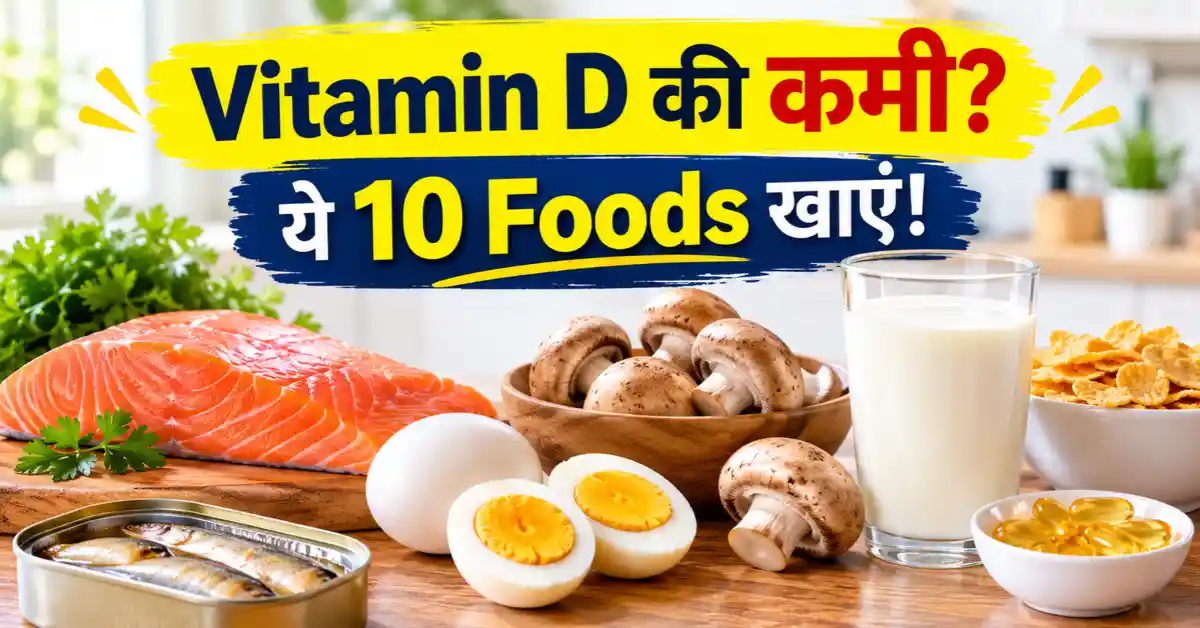
Vitamin D Rich Foods में fatty fish जैसे salmon, trout और sardines सबसे अच्छे प्राकृतिक स्रोतों में शामिल हैं। इसके अलावा egg yolk, UV-exposed mushrooms और Vitamin D-fortified milk भी आपकी डाइट में Vitamin D की मात्रा बढ़ा सकते हैं। हालांकि, भोजन से पर्याप्त Vitamin D पाना मुश्किल हो सकता है। जरूरत पड़ने पर डॉक्टर की सलाह से supplementation की आवश्यकता हो सकती है।
Vitamin D की कमी दूर करने के लिए क्या खाना चाहिए?
Vitamin D शरीर में कैल्शियम के absorption, हड्डियों की मजबूती और सामान्य muscle function के लिए जरूरी है। इसकी गंभीर कमी बच्चों में rickets और वयस्कों में osteomalacia का कारण बन सकती है।
अगर आप अपनी डाइट में Vitamin D के अच्छे स्रोत शामिल करना चाहते हैं, तो नीचे दिए गए 10 खाद्य पदार्थों के बारे में जानें।
10 Best Vitamin D Rich Foods
1. Salmon (सैल्मन)
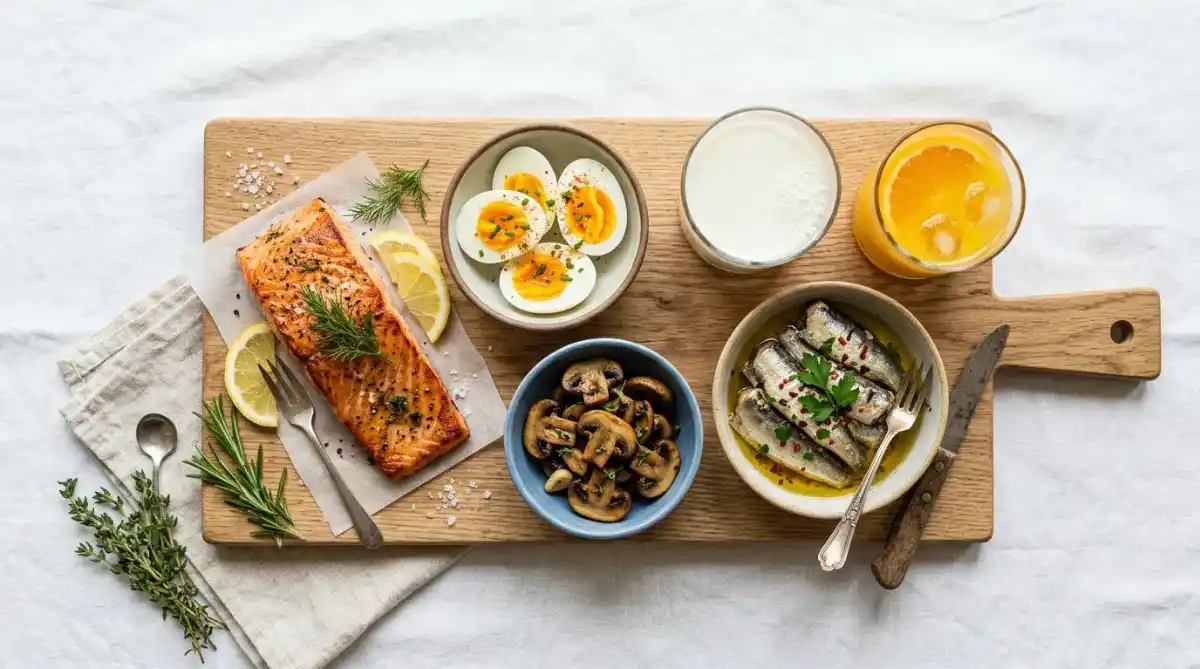
Salmon एक fatty fish है और Vitamin D के अच्छे प्राकृतिक स्रोतों में शामिल है। इसकी मात्रा fish की किस्म और preparation के अनुसार बदल सकती है।
2. Rainbow Trout (ट्राउट)
Rainbow trout Vitamin D के सबसे अच्छे प्राकृतिक food sources में से एक है। इसे grilled या baked रूप में डाइट में शामिल किया जा सकता है।
3. Sardines (सार्डिन)
Sardines में Vitamin D के साथ omega-3 fatty acids भी पाए जाते हैं। Canned sardines भी एक सुविधाजनक विकल्प हो सकती हैं।
4. Tuna Fish (टूना)
Tuna में Vitamin D पाया जाता है, लेकिन इसकी मात्रा fish के प्रकार और canned या fresh होने के अनुसार अलग हो सकती है।
5. Egg Yolk (अंडे की जर्दी)
अंडे के पीले हिस्से में Vitamin D की थोड़ी मात्रा होती है। दो अंडे खाने से आमतौर पर किसी वयस्क की पूरी दैनिक जरूरत पूरी नहीं होती।
6. UV-Exposed Mushrooms (UV-treated मशरूम)
कुछ मशरूम को ultraviolet light के संपर्क में रखने से उनमें Vitamin D2 की मात्रा बढ़ जाती है। खरीदते समय UV-treated या Vitamin D-enriched होने की जानकारी देखें।
7. Fortified Milk (Vitamin D युक्त दूध)
कुछ दूध उत्पादों में Vitamin D मिलाया जाता है। भारत में हर दूध Vitamin D-fortified नहीं होता, इसलिए पैकेट पर nutrition label जरूर जांचें।
8. Fortified Plant-Based Milk
कुछ soy milk, almond milk और oat milk में Vitamin D मिलाया जाता है। इनकी मात्रा ब्रांड के अनुसार अलग-अलग हो सकती है।
9. Fortified Breakfast Cereals
कुछ breakfast cereals में Vitamin D मिलाया जाता है। खरीदते समय nutrition label पर Vitamin D की मात्रा और serving size देखें।
10. Fortified Orange Juice
कुछ brands Vitamin D-fortified orange juice बेचते हैं। सामान्य संतरे या उनके जूस में Vitamin D की महत्वपूर्ण मात्रा नहीं होती।
ध्यान दें: Cod liver oil भी Vitamin D का concentrated source है, लेकिन इसमें Vitamin A भी अधिक हो सकता है। इसे नियमित रूप से लेने से पहले डॉक्टर से सलाह लें।
How Can You Increase Vitamin D Naturally?
Vitamin D के स्तर को बनाए रखने के लिए तीन बातों पर ध्यान दें:
- Vitamin D-rich foods खाएं: Salmon, trout, sardines और egg yolk जैसे खाद्य पदार्थ शामिल करें।
- Fortified foods चुनें: Vitamin D-fortified milk, plant-based milk और cereals के nutrition labels जांचें।
- सुरक्षित तरीके से धूप लें: त्वचा पर direct sunlight पड़ने से शरीर Vitamin D बना सकता है। हालांकि, इसका उत्पादन skin tone, मौसम, समय, कपड़ों और sunscreen जैसे कई कारकों पर निर्भर करता है।
ध्यान दें कि खिड़की के कांच से आने वाली धूप त्वचा में Vitamin D production नहीं करती। धूप में रहने के दौरान sunburn और UV damage से बचाव भी जरूरी है।
How Much Vitamin D Do You Need Daily?
Vitamin D की दैनिक जरूरत उम्र के अनुसार बदलती है। NIH Office of Dietary Supplements के अनुसार सामान्य recommended intake इस प्रकार है:
| Age Group | Recommended Daily Intake |
|---|---|
| Birth–12 months | 400 IU |
| Children 1–18 years | 600 IU |
| Adults 19–70 years | 600 IU |
| Adults 71 years and older | 800 IU |
| Pregnancy and breastfeeding | 600 IU |
ये सामान्य स्वस्थ लोगों के लिए recommended intake हैं। पहले से Vitamin D deficiency होने पर इलाज की खुराक अलग हो सकती है और डॉक्टर तय करते हैं।
How Can You Get 100% of Your Daily Vitamin D?
19–70 वर्ष के वयस्कों के लिए सामान्य recommended intake 600 IU (15 mcg) प्रतिदिन है।
इसे पूरा करने के लिए fatty fish, Vitamin D-fortified foods और अन्य dietary sources मदद कर सकते हैं। उदाहरण के लिए, कुछ fortified milk products में प्रति कप लगभग 120 IU Vitamin D होता है, लेकिन यह मात्रा हर देश और ब्रांड में समान नहीं होती।
केवल दो अंडे या सामान्य दूध से 600 IU की जरूरत पूरी होने की उम्मीद नहीं करनी चाहिए। यदि आपकी Vitamin D की कमी blood test में पाई गई है, तो केवल भोजन में बदलाव पर्याप्त नहीं हो सकता। डॉक्टर supplementation की सलाह दे सकते हैं।
Is Eating 2 Eggs a Day Enough for Vitamin D?
No. Two large eggs provide approximately 88 IU of Vitamin D (around 44 IU per egg).
This is much less than the recommended daily intake of 600 IU for most adults aged 19–70 years. Eggs are nutritious, but they should not be your only dietary source of Vitamin D.
What Is a Normal Vitamin D Level?
Vitamin D status जानने के लिए डॉक्टर आमतौर पर 25-hydroxyvitamin D [25(OH)D] blood test की सलाह देते हैं।
NIH और National Academies of Sciences, Engineering, and Medicine (NASEM) के अनुसार:
| 25(OH)D Level | General Interpretation |
|---|---|
| Below 12 ng/mL | Vitamin D deficiency का जोखिम |
| 12–20 ng/mL | कुछ लोगों में inadequate हो सकता है |
| 20 ng/mL or above | अधिकांश स्वस्थ लोगों के लिए पर्याप्त |
Vitamin D levels above 50 ng/mL may be associated with potential adverse health effects. Do not take high-dose supplements without medical guidance.
What should you drink for Vitamin D?
Some drinks can contribute to your daily Vitamin D intake:
- Vitamin D-fortified cow’s milk.
- Fortified soy milk.
- Fortified almond milk.
- Fortified oat milk.
- Vitamin D-fortified orange juice.
Important: Ordinary milk, fruit juices and plant-based drinks do not necessarily contain Vitamin D. Always check the nutrition label.
Vitamin D in Different Foods: How Much Do They Provide?
The amount of Vitamin D varies depending on the food, serving size, preparation and fortification. Here are some approximate values:
| Food | Serving Size | Vitamin D |
|---|---|---|
| Rainbow trout, cooked | 3 oz (85 g) | 645 IU |
| Sockeye salmon, cooked | 3 oz (85 g) | 570 IU |
| UV-exposed mushrooms | ½ cup | 366 IU |
| Fortified cow’s milk | 1 cup | 120 IU |
| Fortified plant-based milk | 1 cup | 100–144 IU |
| Fortified breakfast cereal | 1 serving | 80 IU |
| Sardines, canned | 2 sardines | 46 IU |
| Large egg | 1 egg | 44 IU |
| Canned light tuna | 3 oz (85 g) | 40 IU |
Note: These are approximate reference values from NIH food-source data, not guaranteed values for every product available in India. Always check the nutrition label of fortified foods.
How Physiotherapy Can Help
Vitamin D हड्डियों और सामान्य muscle function के लिए महत्वपूर्ण है। इसकी कमी से कुछ लोगों में muscle weakness और bone pain जैसी समस्याएं हो सकती हैं।
ऐसी स्थिति में physiotherapy व्यक्ति की functional capacity बेहतर करने में मदद कर सकती है:
- Strengthening exercises: मांसपेशियों की ताकत और endurance बेहतर करने के लिए।
- Weight-bearing exercises: व्यक्ति की क्षमता के अनुसार bone-loading activity को बढ़ावा देने के लिए।
- Balance training: संतुलन और stability सुधारने के लिए।
- Functional exercises: चलने-फिरने और रोजमर्रा के काम करने की क्षमता बेहतर करने के लिए।
हालांकि, physiotherapy अपने आप Vitamin D deficiency को ठीक नहीं करती। इसकी पुष्टि होने पर medical management, उचित nutrition और जरूरत के अनुसार supplementation महत्वपूर्ण हैं।
Conclusion
Vitamin D Rich Foods में salmon, trout, sardines, egg yolk और UV-exposed mushrooms जैसे खाद्य पदार्थ शामिल हैं। इसके अलावा fortified milk और breakfast cereals भी Vitamin D intake बढ़ाने में मदद कर सकते हैं।
हालांकि, केवल भोजन से पर्याप्त Vitamin D पाना हर व्यक्ति के लिए आसान नहीं होता। यदि आपको Vitamin D deficiency का संदेह है या लगातार bone pain और muscle weakness जैसी समस्याएं हैं, तो healthcare professional से सलाह लें। जरूरत पड़ने पर 25(OH)D blood test और उचित treatment की मदद ली जा सकती है।
बिना medical advice के high-dose Vitamin D supplements न लें।
Vitamin D की कमी के लक्षणों, कारणों और संभावित प्रभावों को समझना भी जरूरी है। इसके बारे में विस्तार से पढ़ें: 7 Signs of Vitamin D Deficiency.
MEDICAL SOURCES
1. NIH Office of Dietary Supplements — Vitamin D: Fact Sheet for Consumers
2. NHS — Vitamin D: Vitamins and Minerals
3. NIH Office of Dietary Supplements — Vitamin D: Health Professional Fact Sheet
Read NIH Health Professional Fact Sheet
4. U.S. Dietary Guidelines — Food Sources of Vitamin D
MEDICAL DISCLAIMER
This article is for general educational and informational purposes only. It is not a substitute for professional medical diagnosis, treatment, or individualized medical advice. If you have persistent, severe, worsening, or concerning symptoms, consult a qualified healthcare professional. Seek urgent medical care for emergency symptoms.

Dr. Shabbir Hussain, BPT
Registered Physiotherapist | Clinical Rehabilitation Specialist
Maharashtra OTPT Council Reg. No.: PR-2021/08/PT/009532
Society of Onco Physiotherapists Reg. No.: SOP/00033/LM
Dr. Shabbir Hussain, BPT, Registered Physiotherapist with over 8 years of experience in physiotherapy, kidney rehabilitation, oncological rehabilitation, and lymphedema management. He specializes in balance disorders, pain management, musculoskeletal rehabilitation, strengthening programs, and VR-based rehabilitation.