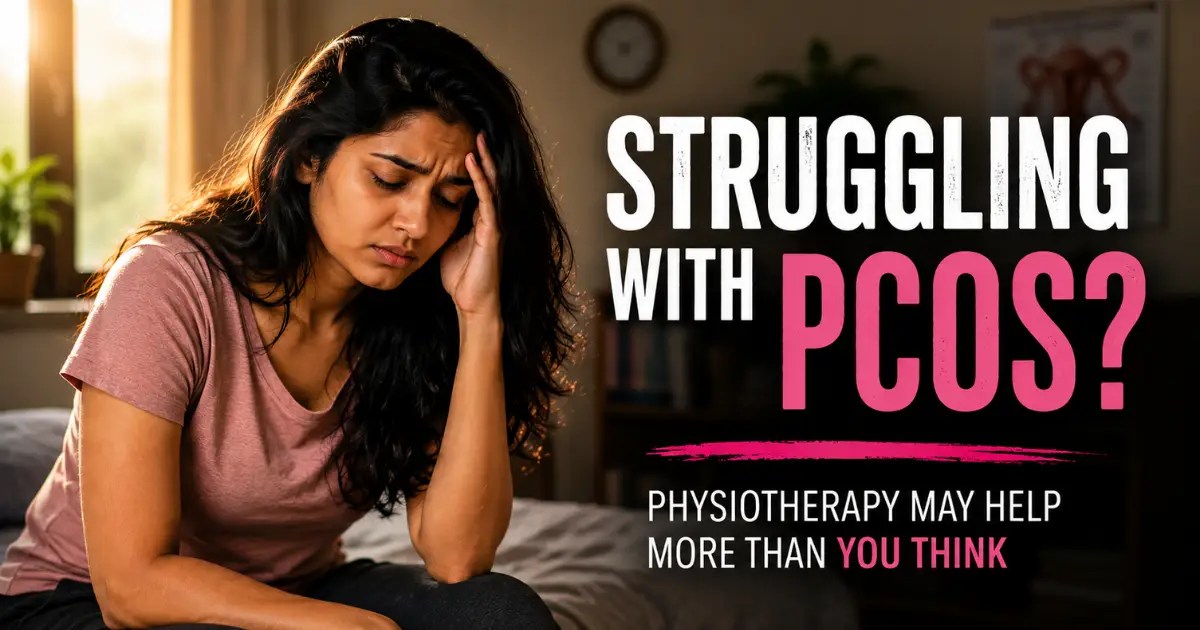
For many women, PCOS doesn’t begin dramatically.
It starts with exhaustion that never fully goes away.
Then come irregular periods, unexplained weight gain, acne, poor sleep and frustration after trying “everything.”
Many women don’t realize PCOS can also affect stress levels, movement, posture, pain, and long-term metabolic health.
What many women don’t realize is that PCOS is not only a hormonal condition. In real rehabilitation settings, it often affects posture, movement, sleep quality, stress levels, metabolism, and even pain sensitivity.
Written & Reviewed for Public Health Awareness
Written By: Physio Talk Editorial Team
Reviewed By: Dr. SHABBIR HUSSAIN (BPT)
Clinical Experience: Musculoskeletal & Lifestyle Rehabilitation
Published: May 13, 2026
Last Updated: May 13, 2026
This article has been reviewed by a qualified physiotherapist for medical accuracy and public health awareness.
Struggling With PCOS? Physiotherapy May Help More Than You Think
For many women, PCOS begins quietly.
A few irregular periods. Sudden weight gain. Constant fatigue that doesn’t improve even after sleeping. Then comes acne, hair fall, mood swings, and frustration after trying “everything” from diet plans to supplements.
What many women don’t realize is that PCOS is not only a hormonal condition. In real rehabilitation settings, it often affects posture, movement, sleep quality, stress levels, metabolism, and even pain sensitivity.
Clinically, many patients come to physiotherapy clinics complaining of back pain, knee pain, fatigue, or weight gain — only to later discover that poorly managed PCOS is contributing to the cycle.
Ignoring these signs early can slowly affect long-term metabolic health, fertility, emotional wellbeing, and daily function.
What Is PCOS?
Polycystic Ovary Syndrome, commonly called PCOS, is a hormonal condition that affects millions of women worldwide.
It is usually associated with irregular menstrual cycles, excess androgen hormones, weight gain, acne, difficulty losing weight, and fertility-related concerns.
According to global health research, PCOS is also strongly linked with insulin resistance, inflammation, stress, poor sleep, and sedentary lifestyle habits.
One common pattern observed in physiotherapy practice is that many women with PCOS experience reduced physical activity because of fatigue, low confidence, body pain, or emotional stress. Over time, this inactivity worsens metabolic function even further.
Contrary to popular belief, PCOS is not “just a gynecological issue.” It often affects the entire body.
The Hidden Dangers Many Women Ignore
In my clinical experience, one of the biggest problems with PCOS is delayed attention.
Many young women normalize symptoms for years.
They assume irregular periods are caused by stress. They blame themselves for weight gain. Some avoid exercise because they feel constantly exhausted.
But untreated PCOS can gradually increase the risk of:
Insulin resistance, type 2 diabetes, obesity, sleep disturbance, infertility, anxiety, depression, chronic inflammation, and cardiovascular problems later in life.
Personally, I’ve observed that prolonged inactivity creates another hidden issue — musculoskeletal pain.
Women with PCOS who work long hours at desks or spend excessive time on smartphones often develop neck pain, low back stiffness, pelvic tightness, and knee discomfort due to deconditioning and reduced physical endurance.
The emotional impact can also be severe.
Many patients report social withdrawal, low self-esteem, emotional eating, and frustration after repeated failed attempts at weight loss.
Why PCOS Is Becoming More Common
Modern lifestyle patterns are playing a major role.
Indian urban lifestyles have changed dramatically in the last decade. Long office sitting, online classes, food delivery culture, poor sleep timing, stress, and reduced outdoor activity are contributing to metabolic dysfunction at younger ages.
Clinically, many women with PCOS also report:
Late-night screen exposure, skipped breakfasts, minimal sunlight exposure, high stress jobs, and inconsistent exercise routines.
For students and office workers, prolonged sitting itself becomes a metabolic problem.
One common pattern observed among Indian IT professionals and healthcare workers is “weekend exercise syndrome” — staying inactive all week and suddenly overexercising on weekends. This often leads to fatigue, poor adherence, and injury risk rather than sustainable recovery.
Genetics also plays a role, but lifestyle strongly influences symptom severity.
Warning Signs You Should Not Ignore
PCOS symptoms can vary from person to person.
Some women mainly experience menstrual irregularity, while others struggle more with fatigue, weight gain, acne, or emotional changes.
Early warning signs may include:
Irregular periods, excessive facial hair, acne, bloating, unexplained fatigue, increased belly fat, sleep problems, mood swings, and difficulty losing weight despite dieting.
Advanced symptoms may include:
Darkening around the neck or underarms, infertility concerns, chronic tiredness, persistent pelvic discomfort, severe stress, and metabolic complications.
⚠️ Many patients ignore early symptoms until daily movement becomes painful or exhausting.
How PCOS Is Diagnosed
Diagnosis usually involves a combination of medical history, symptom evaluation, blood tests, and imaging.
Doctors may assess hormone levels, insulin resistance markers, thyroid function, and menstrual history. Ultrasound imaging is commonly used to examine ovarian changes.
Gold-standard diagnosis often follows the Rotterdam Criteria, where at least two major features are typically considered:
Irregular ovulation, excess androgen signs, or polycystic ovaries on ultrasound.
From a physiotherapy perspective, assessment may also include:
Posture evaluation, physical endurance, movement capacity, body composition, breathing pattern, flexibility, stress response, and activity tolerance.
This is important because rehabilitation is not only about exercise — it is about restoring sustainable body function.
How Physiotherapy May Help Women With PCOS
Many people are surprised when physiotherapy is recommended for PCOS.
But physiotherapy plays a much larger role than most expect.
In real rehabilitation settings, physiotherapy helps improve movement efficiency, physical conditioning, insulin sensitivity, stress regulation, posture, sleep quality, and long-term exercise adherence.
Unlike aggressive internet workouts, physiotherapy-based rehabilitation is usually structured, gradual, and individualized.
Clinically, many women improve when exercise programs focus on consistency rather than intensity.
2 Physiotherapy Secrets That May Help
1.Exercise Rehabilitation
Evidence-based exercise remains one of the most effective non-pharmacological interventions for PCOS.
This may include:
Aerobic training, strength exercises, mobility work, breathing exercises, pelvic stability training, and low-impact endurance conditioning.
Many patients improve faster when exercise is sustainable and adapted to their energy levels.
Walking programs, resistance band training, yoga-based mobility, cycling, and supervised strength training are often useful.
In my clinical experience, women who combine progressive exercise with sleep correction and stress management usually report better long-term outcomes than those focusing only on crash dieting.
2.Stress & Nervous System Regulation
Stress hormones can significantly worsen PCOS symptoms.
Many women unknowingly stay in a constant “fight or flight” state due to work stress, academic pressure, emotional burnout, and sleep deprivation.
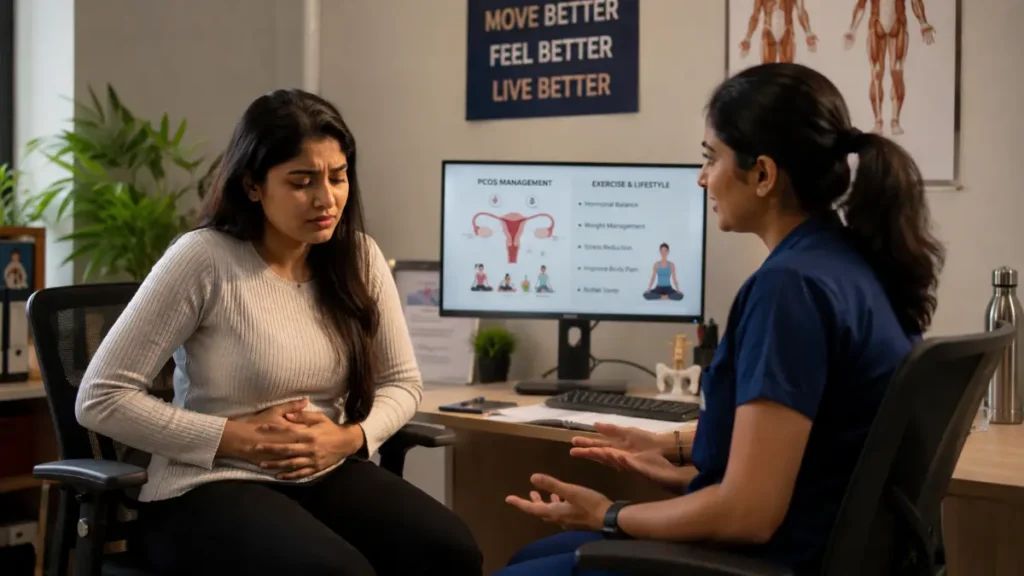
Physiotherapy-based breathing exercises, relaxation training, posture correction, and movement therapy can help regulate the nervous system and improve recovery.
Many women with PCOS struggle to stay consistent with exercise not because of laziness, but because chronic fatigue, poor sleep, and stress make recovery harder than expected.
Myth vs Fact
Many women believe they must perform intense workouts daily to “reverse” PCOS.
This is not always true.
Overtraining may worsen fatigue, increase stress hormones, and reduce adherence.
Another common myth is that weight gain in PCOS is caused only by “lack of discipline.” In reality, hormonal imbalance, insulin resistance, sleep disturbance, and stress all influence metabolism.
A Real Patient Scenario
A 27-year-old software engineer visited the clinic after struggling with persistent fatigue, irregular periods, weight gain, and low back pain for nearly two years.
She had already tried multiple online workout challenges but stopped repeatedly because of exhaustion and knee discomfort.
During rehabilitation assessment, prolonged sitting posture, poor endurance, shallow breathing patterns, and severe activity inconsistency were identified.
Instead of aggressive exercise, her rehabilitation program began with gradual walking, mobility training, breathing exercises, posture correction, and progressive strength work.
Within three months, she reported improved energy, reduced pain, better sleep quality, and more consistent menstrual cycles alongside medical management.
This is a common example of how sustainable rehabilitation often works better than extreme short-term routines.
Clinical Observation: Many women with PCOS report that exhaustion and stress make regular exercise difficult long before weight gain becomes severe.
Key Takeaways
✔ PCOS affects more than hormones — it can influence energy, pain, posture, and mental wellbeing.
✔ Sustainable exercise works better than extreme workout routines.
✔ Physiotherapy can help improve movement, endurance, stress regulation, and lifestyle consistency.
✔ Long sitting hours and poor sleep habits may worsen symptoms.
✔ Early intervention often leads to better long-term metabolic health.
Prevention Strategies That Actually Help
Prevention does not require perfection.
Small daily changes are often more effective than temporary “fitness challenges.”
In physiotherapy practice, sustainable habits usually produce the best long-term outcomes.
Women with PCOS are often encouraged to:
Maintain regular movement throughout the day, reduce prolonged sitting, improve sleep timing, manage stress, include strength training, stay hydrated, and avoid excessive dependence on processed foods.
For Indian office workers and students, even simple habits like standing breaks, evening walks, sunlight exposure, and reducing late-night screen time can make a noticeable difference.
Consistency matters far more than intensity.
When Should You See a Doctor?
You should seek medical evaluation if you experience:
Irregular periods lasting several months, unexplained weight gain, severe fatigue, fertility concerns, excessive facial hair growth, pelvic pain, or symptoms affecting daily life.
Early diagnosis can help prevent long-term metabolic complications.
Who Should Avoid Certain Exercises?
Not every exercise suits every patient.
Women with severe obesity, uncontrolled diabetes, joint pain, dizziness, cardiovascular issues, or pelvic pain should avoid high-impact or unsupervised intense workouts without professional guidance.
In my clinical experience, overly aggressive fitness plans often lead to burnout and inconsistency rather than recovery.
A supervised rehabilitation approach is usually safer and more sustainable.
Medical Disclaimer
This article is for educational and public health awareness purposes only and should not replace professional medical advice, diagnosis, or treatment. Always consult a qualified healthcare professional or physiotherapist before starting any exercise or rehabilitation program.
FAQs
Can physiotherapy really help with PCOS?
Yes. Physiotherapy may help improve physical activity tolerance, insulin sensitivity, posture, stress regulation, and exercise adherence.
Is walking enough for PCOS?
Walking helps, especially for beginners, but long-term improvement usually requires a combination of aerobic activity, strength training, and lifestyle correction.
Why do women with PCOS feel tired all the time?
Fatigue may be linked with hormonal imbalance, insulin resistance, poor sleep, stress, inflammation, and reduced physical conditioning.
Can stress worsen PCOS symptoms?
Yes. Chronic stress may influence hormonal balance, sleep quality, metabolism, and eating behavior.
Which exercises are best for beginners with PCOS?
Low-impact exercises like walking, cycling, mobility training, yoga-based movement, and gradual strength training are often recommended initially.
Can PCOS cause body pain?
Indirectly, yes. Weight changes, inactivity, poor posture, fatigue, and reduced conditioning can contribute to musculoskeletal discomfort.
References
- World Health Organization. Polycystic Ovary Syndrome (PCOS). Available at:
https://www.who.int/news-room/fact-sheets/detail/polycystic-ovary-syndrome - National Institutes of Health (NIH). Polycystic Ovary Syndrome Information Page.
https://www.nichd.nih.gov/health/topics/pcos - Teede HJ, et al. International Evidence-Based Guideline for the Assessment and Management of PCOS. Hum Reprod. 2018.
https://pubmed.ncbi.nlm.nih.gov/37983875/

Dr. Shabbir Hussain, BPT
Registered Physiotherapist | Clinical Rehabilitation Specialist
Maharashtra OTPT Council Reg. No.: PR-2021/08/PT/009532
Society of Onco Physiotherapists Reg. No.: SOP/00033/LM
Dr. Shabbir Hussain, BPT, Registered Physiotherapist with over 8 years of experience in physiotherapy, kidney rehabilitation, oncological rehabilitation, and lymphedema management. He specializes in balance disorders, pain management, musculoskeletal rehabilitation, strengthening programs, and VR-based rehabilitation.