

👨⚕️ Written by: Dr. Shabbir Hussain (BPT)
🧠 Clinical Experience: 8+ Years in Physiotherapy, Electrotherapy & Rehabilitation
🏥 Specialization: Neuro Rehab, Musculoskeletal Therapy, Pain Management
📚 Medical Review: This article is based on clinical experience, standard physiotherapy textbooks, and peer-reviewed research.
🔄 Last Updated: 12, MAY 2026
📖 Sources: WHO Guidelines, PubMed Research Papers, Evidence-Based Physiotherapy Protocols
⚠️ Disclaimer: This content is for educational purposes only and should not replace professional medical advice or treatment.
Rheobase and Chronaxie – Understanding the fundamental principles of electrical stimulation is crucial for physiotherapists to deliver effective treatment. Two key concepts, rheobase and chronaxie, play a significant role in determining the efficacy of electrical stimulation therapy.
Physiotherapists in India and around the world need to grasp these concepts to optimize patient outcomes. By understanding the relationship between the intensity and duration of electrical impulses, therapists can tailor treatments to individual patient needs.
The significance of chronaxie lies in its ability to help therapists determine the minimum time required for an electrical impulse to stimulate a muscle effectively. This knowledge enables physiotherapists to design more efficient treatment protocols.
Updated in April 2026 with latest clinical insights and exam-focused explanations.
Key Takeaways
- Understanding rheobase is crucial for determining the minimum intensity required for muscle stimulation.
- Chronaxie helps physiotherapists determine the optimal duration for electrical impulses.
- Knowledge of these concepts enables therapists to create personalized treatment plans.
- Effective application of rheobase and chronaxie principles enhances patient outcomes.
- Physiotherapists can optimize electrical stimulation therapy by grasping these fundamental concepts.
The Science Behind Nerve Stimulation
Nerve stimulation techniques are grounded in the electrical properties of nerves and their response to different stimuli. To effectively apply these techniques, physiotherapists must understand the underlying science.
Electrical Properties of Nerve Tissue
Nerve tissue has unique electrical properties that allow it to transmit signals. The rheobase definition is crucial here, as it represents the minimum intensity of an electrical stimulus required to elicit a response. Understanding these properties is fundamental to applying nerve stimulation effectively.
Stimulus-Response Relationships
The relationship between the stimulus and the nerve response is not linear. Factors such as the duration and intensity of the stimulus play significant roles. Rheobase in neuroscience is a key concept that helps in understanding this relationship, as it defines the threshold below which a nerve cannot be stimulated, regardless of the duration.
Why Threshold Concepts Matter in Clinical Practice
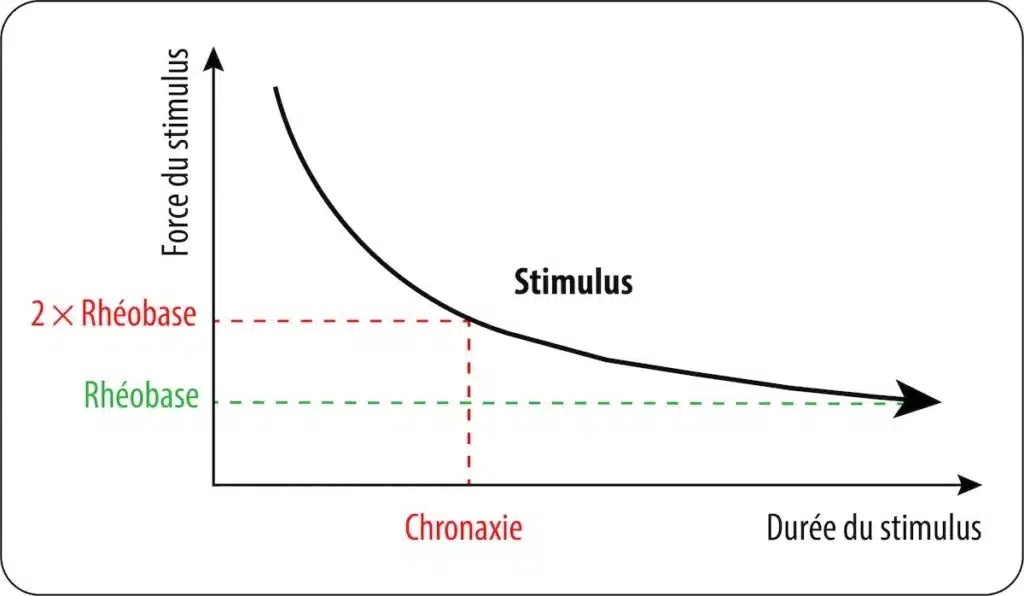
Threshold concepts, including chronaxie measurement, are vital in clinical practice. Chronaxie, which is the minimum time required for an electrical stimulus to elicit a response at twice the rheobase intensity, helps in assessing nerve excitability. Understanding these concepts enables physiotherapists to optimize electrotherapy protocols.
Understanding Rheobase and Chronaxie
In the realm of physiotherapy, understanding rheobase and chronaxie is essential for optimizing electrotherapy outcomes. These two concepts are fundamental to the application of electrical stimulation in clinical settings.
Rheobase: Definition, Units, and Measurement
Rheobase refers to the minimum intensity of an electrical current required to stimulate a nerve or muscle. It is typically measured in milliamperes (mA). The rheobase value is crucial because it indicates the threshold below which no excitation occurs, regardless of the duration of the stimulus.
Rheobase units are usually expressed in mA. To calculate rheobase, one must gradually increase the intensity of the electrical stimulus until a response is observed.
Chronaxie: Time-Intensity Relationship
Chronaxie is the duration of the stimulus required to elicit a response when the intensity is twice the rheobase. It is a measure of the excitability of the nerve or muscle. The chronaxie formula is derived from the strength-duration curve, which plots the intensity of the stimulus against its duration.
The Strength-Duration Curve Explained
The strength-duration curve illustrates the relationship between the intensity of a stimulus and its duration necessary to cause excitation. It is a graphical representation that helps in understanding how rheobase and chronaxie are related.
Practical Calculation Methods
To calculate rheobase and chronaxie, specific protocols are followed. The table below summarizes the steps involved:
| Parameter | Measurement Steps | Units | |
|---|---|---|---|
| Rheobase | 1. Gradually increase stimulus intensity. | 2. Note the intensity at which response is observed. | mA |
| Chronaxie | 1. Set intensity to twice the rheobase. | 2. Adjust stimulus duration until response is noted. | milliseconds (ms) |
Understanding and applying these concepts can significantly enhance the effectiveness of electrotherapy treatments in physiotherapy practice.
Chronaxie increases in denervated muscles because more stimulation time is required to excite damaged tissue.
Clinical Applications for Indian Physiotherapy Practice
The clinical application of rheobase and chronaxie in Indian physiotherapy settings offers a promising avenue for improving patient outcomes. By understanding and applying these concepts, physiotherapists can enhance their treatment protocols and diagnostic capabilities.
Electrotherapy Protocol Optimization
Optimizing electrotherapy protocols is crucial for effective treatment. By determining the rheobase and chronaxie of a patient’s muscle tissue, physiotherapists can tailor the intensity and duration of electrical stimulation to achieve the best results.
Diagnostic Applications in Neuromuscular Conditions
Rheobase and chronaxie measurements can also be used to diagnose neuromuscular conditions. Abnormal values may indicate nerve damage or muscle disease, allowing for early intervention.
Case Examples from Indian Clinical Settings
Several case studies in Indian clinical settings have demonstrated the effectiveness of using rheobase and chronaxie in physiotherapy practice. For instance, a patient with facial paralysis showed significant improvement after electrotherapy was optimized based on rheobase and chronaxie measurements.
Common Misconceptions and Troubleshooting
One common misconception is that rheobase and chronaxie are only relevant in research settings. In reality, these concepts have practical applications in everyday physiotherapy practice.
| Condition | Rheobase Value | Chronaxie Value |
|---|---|---|
| Normal Muscle | Low | Short |
| Denervated Muscle | High | Long |
| Nerve Damage | Variable | Variable |
Conclusion: Elevating Your Practice Through Neuroscience Principles
Understanding rheobase in neuroscience and chronaxie measurement can significantly enhance your physiotherapy practice. By grasping these fundamental concepts, you can optimize electrotherapy protocols and improve diagnostic accuracy in neuromuscular conditions.
Integrating the principles of nerve stimulation and the strength-duration curve into your clinical practice can lead to more effective treatment outcomes. As a physiotherapist, applying this knowledge will enable you to provide more personalized and efficient care to your patients.
By embracing these neuroscience principles, you can elevate your professional capabilities and stay at the forefront of best practices in physiotherapy. This expertise will not only benefit your patients but also contribute to the advancement of the field.
⚠️ Most students memorize this… but fail in viva because they can’t explain it clinically.
FAQ
What is Rheobase?
Rheobase is the minimum intensity of an electric current required to stimulate a nerve or muscle, regardless of the duration of the stimulus.
How is Rheobase measured?
Rheobase is measured by gradually increasing the intensity of an electric current until a muscle contraction is observed, then noting the intensity at which this occurs.
What are the units of Rheobase?
Rheobase is typically measured in milliamps (mA) or volts (V), depending on the specific device and protocol used.
What is Chronaxie?
Chronaxie is the minimum duration of an electric current at twice the Rheobase intensity required to stimulate a nerve or muscle.
How is Chronaxie related to Rheobase?
Chronaxie is directly related to Rheobase, as it is measured by doubling the Rheobase intensity and determining the minimum duration required to elicit a response.
What is the significance of the Strength-Duration Curve?
The Strength-Duration Curve illustrates the relationship between the intensity and duration of an electric stimulus required to activate a nerve or muscle, providing valuable information for electrotherapy protocols.
How can understanding Rheobase and Chronaxie improve electrotherapy protocols?
By understanding Rheobase and Chronaxie, physiotherapists can optimize electrotherapy protocols to effectively stimulate nerves and muscles, enhancing treatment outcomes.
Can Rheobase and Chronaxie be used for diagnostic purposes?
Yes, Rheobase and Chronaxie can be used to diagnose neuromuscular conditions by assessing the excitability of nerves and muscles.
Reviewed By
Dr. Shabbir Hussain (PT)
Consultant Physiotherapist & Founder of Physio Talk
Special Interest: Electrotherapy, Neuro Physiotherapy & Rehabilitation

Dr. Shabbir Hussain, BPT
Registered Physiotherapist | Clinical Rehabilitation Specialist
Maharashtra OTPT Council Reg. No.: PR-2021/08/PT/009532
Society of Onco Physiotherapists Reg. No.: SOP/00033/LM
Dr. Shabbir Hussain, BPT, Registered Physiotherapist with over 8 years of experience in physiotherapy, kidney rehabilitation, oncological rehabilitation, and lymphedema management. He specializes in balance disorders, pain management, musculoskeletal rehabilitation, strengthening programs, and VR-based rehabilitation.