

Updated October 3, 2026 — Written by Dr. Shabbir Hussain, BPT, Registered Physiotherapist | Clinical Rehabilitation Specialist
Quick Answer
Nushrratt Bharuccha has been brought back to Mumbai by air ambulance after suffering a spinal fracture in an accident in Bali. Her team previously said she was hospitalised in Bali, kept under medical observation and is expected to undergo spine surgery in Mumbai following further evaluation. Reports on October 2 showed her arriving in Mumbai on a stretcher, while further details about the exact spinal injury have not been publicly disclosed.
What happened to Nushrratt Bharuccha in Bali?
Nushrratt Bharuccha was in Bali for a work-cum-holiday trip when she suffered an accident resulting in a spinal fracture. Her team confirmed that she was hospitalised in Bali and kept under medical observation.
Initial reports said an air ambulance was being arranged to bring her back to Mumbai. By October 2, reports confirmed that Bharuccha had arrived in Mumbai after the air transfer and was taken onward for medical care.
The public details about Bharuccha’s injury remain limited. Her team has confirmed a spinal fracture and planned surgery, but has not publicly identified the injured vertebra, fracture pattern or whether the spinal cord or nerve roots were affected. Those details matter because spinal fractures range from stable injuries managed conservatively to unstable injuries that may require surgical stabilisation.
Nushrratt Bharuccha Health Update: What Happened So Far?
October 2: Her team confirmed the spinal fracture, medical observation and planned spine surgery, with arrangements for an air ambulance to Mumbai.
October 3: Reports confirmed that she had been brought back to Mumbai and was seen being transported on a stretcher. Spine surgery was still being reported as planned, while detailed clinical information remained undisclosed.
What is a spinal fracture?
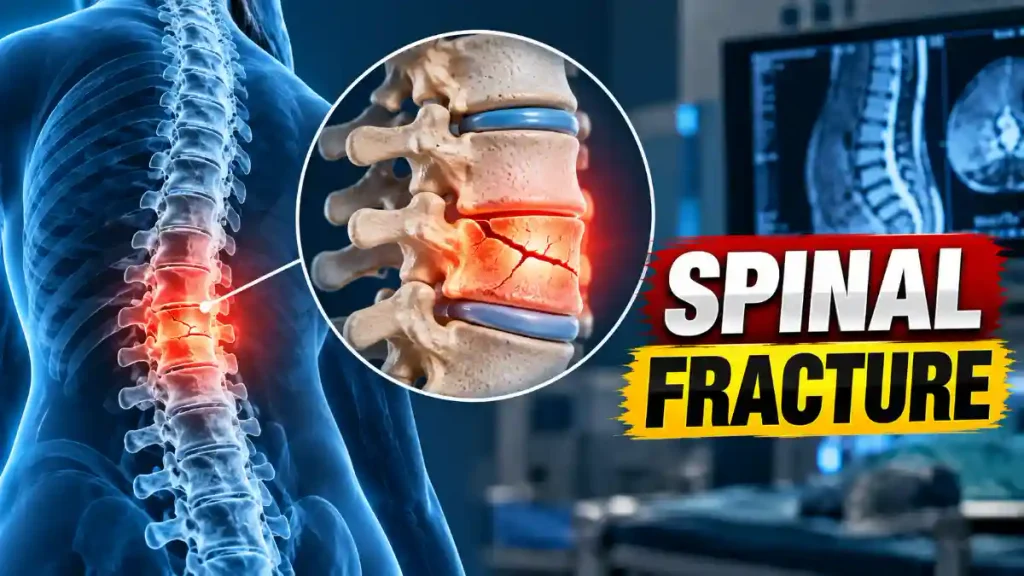
A spinal fracture means that one or more of the vertebrae—the bones forming the spinal column—has been cracked or broken. The severity varies considerably depending on the location and type of fracture and whether nearby nerves or the spinal cord are affected.
Traumatic spinal fractures can occur after falls, road accidents, sports injuries or other forces that place excessive stress on the spine. Some fractures are stable and can be managed without surgery, while unstable or more complicated fractures may require surgical stabilisation.
Importantly, a spinal fracture does not automatically mean paralysis. Neurological damage depends on factors including the location and severity of the injury and whether the spinal cord or nerves have been affected.
Why Was Nushrratt Bharuccha Brought to Mumbai by Air Ambulance?
Her team said that after evaluation in Bali, she would require spine surgery and arrangements were made to transfer her to Mumbai by air ambulance. Reports later confirmed that she had arrived in Mumbai.
The exact medical reason for choosing air transport rather than commercial travel has not been publicly explained by her doctors, so it would be inappropriate to infer that the decision necessarily indicates spinal-cord damage or a particular fracture severity.
What symptoms can occur with a spinal fracture?
Possible symptoms include:
- Sudden or severe back or neck pain
- Difficulty standing or walking
- Numbness or tingling in the arms or legs
- Weakness
- Muscle spasms
- Loss of bladder or bowel control in serious neurological injuries
After significant trauma, a suspected spinal injury should be treated as an emergency. Unnecessary movement can potentially worsen spinal damage.
How is a spinal fracture diagnosed?
Doctors may use X-rays, CT scans and, when appropriate, MRI to determine the fracture and assess surrounding structures, including the spinal cord and nerves. The exact imaging required depends on the injury and clinical findings.
How are spinal fractures treated?
Treatment depends on the fracture type, location, stability and neurological involvement. Depending on the injury, treatment may involve pain management, activity restrictions, bracing or surgery to stabilise the spine.
How Physiotherapy Can Help
Physiotherapy generally becomes important after the treating spine specialist confirms that movement and rehabilitation are safe. Rehabilitation may later include carefully progressed mobility, posture, muscle strengthening, balance and functional training.
After surgery or fracture management, rehabilitation is usually progressed in stages. Early goals may include safe bed mobility, transfers, breathing exercises where appropriate and maintaining mobility within surgical restrictions. Later stages can involve strengthening, balance, gait and functional training.
Exercises should not be started solely on the basis of a news report. The treating spine surgeon or rehabilitation team should determine when and how movement can begin.
The exact rehabilitation programme should not be assumed from news reports. It must be based on the fracture, surgery if performed, neurological status and the surgeon’s restrictions.
Key Takeaway
Nushrratt Bharuccha’s spinal fracture was confirmed by her team following an accident in Bali. She has since been brought back to Mumbai for further treatment and planned spine surgery. Until her doctors release more clinical information, the exact vertebra, fracture type, neurological status and expected recovery period should not be speculated about.
News Sources
- Indian Express — Nushrratt Bharuccha spinal fracture and Mumbai transfer
- Hindustan Times — Nushrratt Bharuccha spine fracture and surgery update
Medical Sources
- Cleveland Clinic — Fractured Spine (Vertebrae): Types, Effects & Treatment
- Mayo Clinic — Spinal Cord Injury: Symptoms and Causes
- Mayo Clinic — Spinal Injury First Aid
Medical Disclaimer
This article is for general educational and informational purposes only. It is not a substitute for professional medical diagnosis, treatment, or individualized medical advice. If you have persistent, severe, worsening, or concerning symptoms, consult a qualified healthcare professional. Seek urgent medical care for emergency symptoms.

Dr. Shabbir Hussain, BPT
Registered Physiotherapist | Clinical Rehabilitation Specialist
Maharashtra OTPT Council Reg. No.: PR-2021/08/PT/009532
Society of Onco Physiotherapists Reg. No.: SOP/00033/LM
Dr. Shabbir Hussain, BPT, Registered Physiotherapist with over 8 years of experience in physiotherapy, kidney rehabilitation, oncological rehabilitation, and lymphedema management. He specializes in balance disorders, pain management, musculoskeletal rehabilitation, strengthening programs, and VR-based rehabilitation.