

✍️ ⏱️ Reading Time: 5 Minutes
✓ Medically Reviewed Content
Written & Reviewed By: Dr. SHABBIR HUSSAIN (BPT)
Clinical Expertise: Physiotherapy, Musculoskeletal Rehabilitation & Spine Care
Evidence-Based Review: This article has been reviewed by a qualified physiotherapist for medical accuracy and public health awareness.
Neck Stiffness Explained: What’s Really Causing Your Pain
You wake up, try turning your head, and suddenly feel a sharp pull in your neck. Most people blame their pillow, but the real cause may be something completely different.
The Neck stiffness is a common complaint which affects Lakhs of people worldwide. Neck Stiffness Explained: What’s Really Causing Your Pain
It will be caused by a variety of factors, ranging from poor posture to underlying medical conditions.
Understanding the causes of neck stiffness is crucial for finding effective relief and maintaining overall neck health.
Many individuals experience neck stiffness at some point in their lives, often due to lifestyle factors or age-related changes.
Quick Answer: Neck stiffness is commonly caused by poor posture, muscle strain, stress, prolonged screen use, or sleeping in an awkward position. In some cases, it may signal an underlying medical condition requiring professional evaluation.The good news is that by identifying the root causes, individuals can take the first step towards alleviating their discomfort and improving their quality of life.
In my physiotherapy practice, prolonged mobile phone use and poor sleeping posture are among the most common reasons patients report neck stiffness.
Quick Summary
Main Risk: Progressive wear and tear in the neck can irritate nerves and affect daily activities.
Key Symptom: Persistent neck stiffness, headaches, or tingling in the arms.
Best Solution: Early physiotherapy, posture correction, and targeted exercises.
Prevention Tip: Avoid prolonged mobile phone and laptop use without breaks.
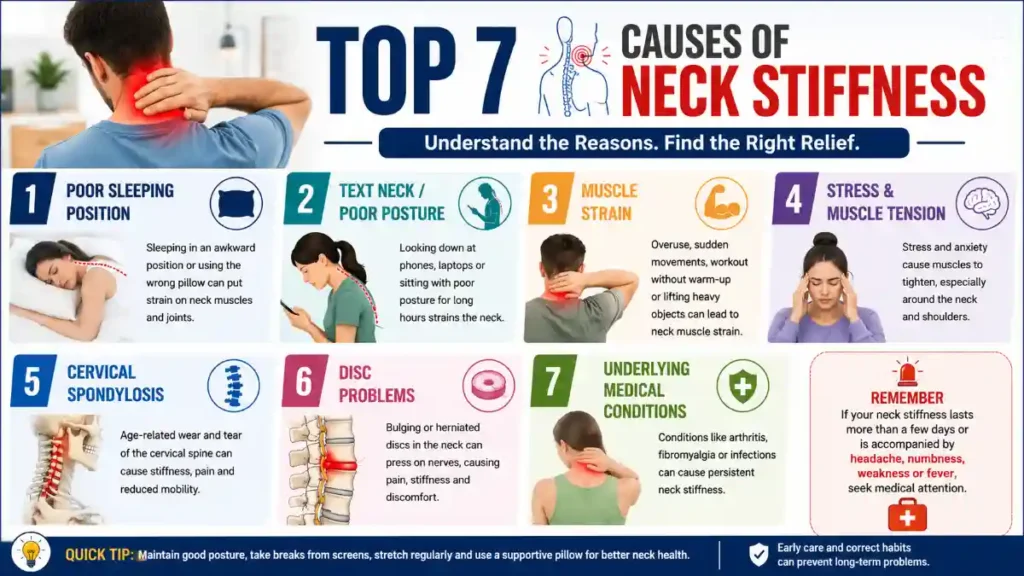
This article aims to explore the various causes of neck muscle stiffness and provide insights into how to manage and prevent it.
By the end of this article, readers will have a better understanding of the factors contributing to neck stiffness and the steps they can take to address it.
Key Takeaways – Neck Stiffness Explained: What’s Really Causing Your Pain
- Common causes of neck muscle stiffness
- The importance of posture in neck health
- Effective strategies for relieving neck stiffness
- Preventive measures to maintain neck health
- The role of lifestyle changes in managing neck stiffness
🚨 Don’t Ignore These Warning Signs
While neck stiffness is often caused by muscle strain or poor posture, certain symptoms may indicate a more serious underlying condition that requires prompt medical attention.
- 🌡️ Neck stiffness accompanied by fever
- 🤕 Severe headache that does not improve
- ⚡ Numbness or tingling in the arms or hands
- 💪 Weakness in the arms or legs
- 🚗 Recent accident, fall, or neck injury
- 🚶 Difficulty walking, maintaining balance, or coordination
- 😖 Persistent pain that continues to worsen despite rest
Important: If you experience any of these warning signs, seek medical evaluation as soon as possible to rule out serious neurological, infectious, or spinal conditions.
Common Causes of Neck Muscle Stiffness
Understanding the causes of neck muscle stiffness is crucial for effective relief.
Several factors contribute to this condition, ranging from daily habits to acute injuries.
Poor Posture and Ergonomic Issues
Poor posture is a significant contributor to neck muscle stiffness.
When you slouch or lean forward, you’re putting extra strain on your neck muscles.
Ergonomic issues, such as an improperly set up workstation or using a computer monitor that’s too low, can also lead to neck stiffness.
Ensuring your workspace is set up to promote good posture can help alleviate this issue.
Stress and Emotional Tension
Stress and emotional tension can cause muscle tightness, including in the neck. When we’re in stress, we tend to tense up, leading to stiffness.
Practicing stress-reducing techniques like meditation or deep breathing can help manage this type of neck stiffness.
Physical Injuries and Trauma – Neck Stiffness Explained: What’s Really Causing Your Pain
Physical injuries, such as those sustained in a car accident or during sports, can directly cause neck muscle stiffness.
=LIPLLIPEven minor injuries can lead to significant discomfort if not properly treated. It’s essential to seek medical attention if you experience persistent neck stiffness after an injury.
By understanding these common causes, individuals can take the first step towards finding relief from neck muscle stiffness.
📌 Key Takeaways
- Early neck stiffness should never be ignored.
- Frequent headaches can sometimes originate from the neck.
- Poor smartphone posture increases cervical spine stress.
- Physiotherapy is highly effective when started early.
- Regular movement breaks reduce neck strain.
- Most patients improve without surgery.
गर्दन की मांसपेशियों में अकड़न क्यों आती है? (Why Does Stiffness Occur in Neck Muscles?)
Stiffness in the neck muscles can be attributed to several factors, including medical conditions, daily habits, and age-related changes. Understanding these causes is essential for developing effective strategies to alleviate neck stiffness and improve overall neck health.
Underlying Medical Conditions
Certain medical conditions can significantly contribute to neck muscle stiffness. These include:
- Arthritis and degenerative disorders that affect the joints and discs in the neck.
- Muscle strains and sprains resulting from injury or overuse.
Arthritis and Degenerative Disorders
Arthritis and other degenerative disorders can cause the joints in the neck to become inflamed and painful, leading to stiffness.
Conditions like osteoarthritis can lead to the wear and tear of the joints, while rheumatoid arthritis can cause inflammation and pain.
Muscle Strains and Sprains
Muscle strains occur when the muscle fibers are stretched or torn, often due to overuse or sudden injury.
Sprains affect the ligaments, which connect bones to each other, and can also lead to significant discomfort and stiffness in the neck.
Lifestyle Factors Affecting Neck Health
Daily habits and lifestyle choices play a crucial role in neck health. Factors such as technology use and sleep habits can significantly impact the stiffness experienced in the neck muscles.
Technology Use and “Text Neck”
The widespread use of smartphones and other devices has led to a condition known as “Text Neck.”
This occurs when the neck is consistently positioned in a forward leaning posture, straining the muscles and leading to stiffness.
Sleep Habits and Pillow Support
Sleep habits and the support provided by pillows can also affect neck health. Sleeping in an awkward position or using a pillow that does not adequately support the neck can lead to strain and stiffness.

Age-Related Changes in Neck Muscles
As people age, various changes occur that can affect the neck muscles.
These include the degeneration of discs, changes in posture, and a decrease in muscle mass and strength, all of which can contribute to increased stiffness.
By understanding these factors, individuals can take proactive steps to mitigate neck muscle stiffness, such as maintaining good posture, exercising regularly, and ensuring proper sleep habits.
Finding Relief: Effective Solutions for Neck Stiffness
Neck muscle stiffness can be debilitating, but there are several effective solutions to alleviate the discomfort.
Simple exercises and stretches can help relieve tension and improve flexibility.
For instance, gently tilting the head from side to side or rolling the shoulders can provide relief from neck stiffness.
In addition to exercises, maintaining good posture and ergonomic practices can prevent neck stiffness.
Ensuring that your workspace is set up to promote good posture, with a monitor at eye level and a chair that supports your back, can make a significant difference in neck health.
Stress management techniques, such as meditation or deep breathing, can also help reduce neck stiffness caused by emotional tension.
Furthermore, incorporating neck health solutions into your daily routine, such as taking regular breaks to stretch, can provide long-term benefits.
For persistent neck stiffness, exploring how to fix neck stiffness fast or neck stiffness remedies like physical therapy or massage therapy can be beneficial.
These treatments can help identify and address underlying issues contributing to neck stiffness, providing relief and improving overall neck health.
🔍 Fact Checked
This article is based on current evidence from:
- World Health Organization (WHO)
- National Institutes of Health (NIH)
- PubMed Indexed Research
- International Physiotherapy Guidelines
FAQ
What are the most common causes of neck muscle stiffness?
Neck muscle stiffness can be caused by a variety of factors, including poor posture, stress, physical injuries, underlying medical conditions, and lifestyle factors such as technology use and sleep habits.
How does poor posture contribute to neck stiffness?
Poor posture can lead to neck stiffness by putting strain on the muscles in the neck, causing them to become fatigued and inflamed. This can be due to ergonomic issues, such as a poorly positioned computer monitor or chair.
Can stress and emotional tension cause neck muscle stiffness?
Yes, stress and emotional tension can contribute to neck muscle stiffness by causing the muscles in the neck to become tight and contracted. This can be managed through stress-reducing techniques, such as meditation and deep breathing.
What are some effective ways to alleviate neck stiffness?
There are several ways to alleviate neck stiffness, including exercises, stretches, and lifestyle changes. Stretching the neck and shoulder muscles, improving posture, and taking regular breaks to move around can help to reduce stiffness.
How can I prevent neck stiffness from occurring in the first place?
Preventing neck stiffness can be achieved by maintaining good posture, taking regular breaks to stretch and move around, managing stress, and avoiding heavy lifting or bending.
Are there any underlying medical conditions that can cause neck muscle stiffness?
Yes, underlying medical conditions such as arthritis, degenerative disorders, and muscle strains can cause neck muscle stiffness. It’s essential to consult with a healthcare professional to rule out any underlying conditions.
How does technology use affect neck health?
Technology use, particularly with mobile devices, can lead to “text neck,” a condition characterized by strain on the neck muscles due to prolonged periods of looking down. Taking regular breaks and maintaining good posture can help mitigate this.
Can age-related changes contribute to neck muscle stiffness?
Yes, age-related changes can contribute to neck muscle stiffness. As we age, the muscles and joints in the neck can become less flexible and more prone to strain, leading to stiffness.
⚠️ Medical Disclaimer
This content is intended for educational and public health awareness purposes only. It should not be used as a substitute for professional medical advice, diagnosis, or treatment. Always consult a qualified healthcare professional regarding any health concerns.

Dr. Shabbir Hussain, BPT
Registered Physiotherapist | Clinical Rehabilitation Specialist
Maharashtra OTPT Council Reg. No.: PR-2021/08/PT/009532
Society of Onco Physiotherapists Reg. No.: SOP/00033/LM
Dr. Shabbir Hussain, BPT, Registered Physiotherapist with over 8 years of experience in physiotherapy, kidney rehabilitation, oncological rehabilitation, and lymphedema management. He specializes in balance disorders, pain management, musculoskeletal rehabilitation, strengthening programs, and VR-based rehabilitation.