🩺 Reviewed By Dr. SHABBIR HUSSAIN (BPT)
Senior Physiotherapist | Orthopedic & Spine Rehabilitation
This article has been medically reviewed for clinical accuracy, rehabilitation guidance, and evidence-based public health awareness.
Roz neck crack karne ki aadat harmless lag sakti hai…
Lekin kuch cases me ye cervical joints aur muscles par extra stress daal sakti hai.
Har neck sound dangerous nahi hota — lekin kuch warning signs ignore nahi karne chahiye.
Aaj kal stress ho, boredom ho ya neck stiffness — bahut log bina soche samjhe “Neck crack” kar dete hain. Kuch seconds ke liye halka feel hota hai… aur phir ye aadat ban jaati hai.
Lekin clinically, ek common pattern observe kiya gaya hai — jo log roz baar-baar neck crack karte hain, unmein cervical stiffness, muscle imbalance aur chronic neck pain zyada dekhne ko milta hai.
Sabse dangerous baat?
Shuruat mein body warning signs deti hai, lekin log unhe normal samajh kar ignore kar dete hain.
Quick Summary
Kya Neck Crack Karna Dangerous Hai?
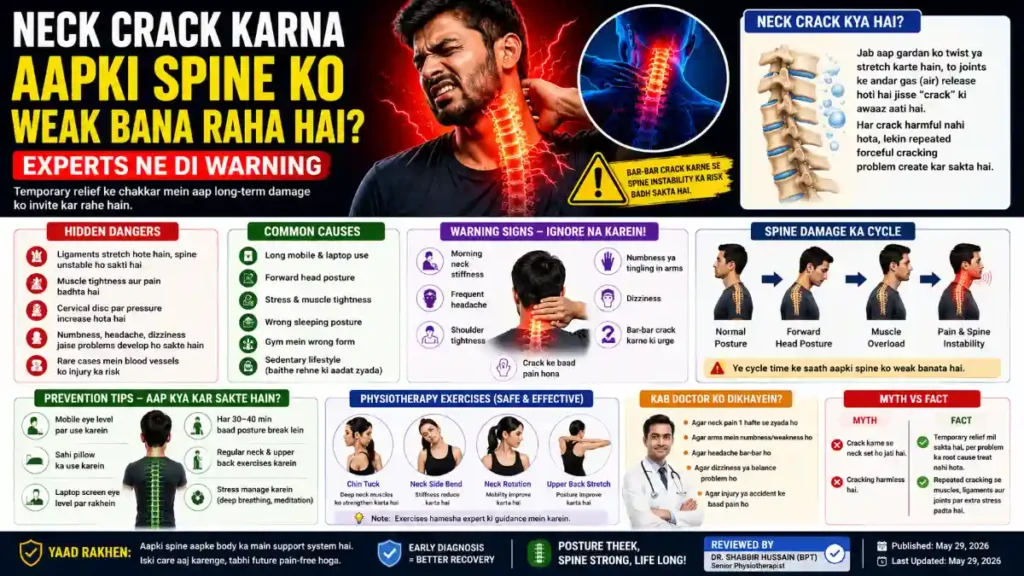
Medical language mein neck cracking ko cervical joint cavitation kaha jaata hai. Jab aap gardan ko suddenly twist ya stretch karte hain, toh joints ke andar gas bubbles release hote hain jisse “click” ya “pop” sound aati hai.
Har crack dangerous nahi hota.
Lekin problem tab shuru hoti hai jab:
- Aapko baar-baar crack karne ki urge aaye
- Crack ke bina stiffness feel ho
- Pain ya headache develop hone lage
- Numbness ya dizziness ho
In physiotherapy practice, bahut patients initially sirf “habitual cracking” ke saath aate hain, lekin assessment mein unmein muscle tightness, posture imbalance aur cervical instability milti hai.
Cervical Spine Itni Sensitive Kyun Hoti Hai?
Cervical spine sirf neck ko move nahi karti. Ye spinal cord, nerves, blood vessels aur head support ka major center hoti hai.
Agar baar-baar aggressive twisting ki jaye, toh muscles aur ligaments par unnecessary stress pad sakta hai.
Personally, maine clinically observe kiya hai ki smartphone overuse aur work-from-home culture ke baad neck cracking habit young adults mein kaafi badh gayi hai.
Particularly Indian IT professionals, students aur long commuting workers mein ye issue rapidly common ho raha hai.
Hidden Dangers Jo Log Ignore Kar Dete Hain
Shuru mein neck crack karne se relief milta hai. Isi wajah se brain us habit ko repeat karna shuru karta hai.
Lekin long-term mein kuch hidden problems develop ho sakti hain.
Repeated forceful cracking cervical ligaments ko overstretch kar sakta hai. Isse joints unstable feel hone lagte hain aur neck muscles continuously tight rehne lagte hain.
Clinically, mene dekha mere clinic me many patients complain karte hain:
“Sir gardan heavy lagti hai.”
“Bar-bar crack kiye bina relief nahi milta.”
“Headache neck se start hota hai.”
Kuch cases mein dizziness, radiating pain aur arm numbness bhi develop ho sakti hai — especially agar already cervical disc issue present ho.
Rare but serious situations mein aggressive neck manipulation blood vessels ko bhi affect kar sakta hai.
Modern Lifestyle Ka Kitna Role Hai?
Ye sirf ek “habit” ka issue nahi hai.
Ye modern posture crisis ka symptom bhi hai.
Aaj ke urban Indian lifestyle mein:
- 8–10 ghante laptop use
- Continuous mobile scrolling
- Bed par phone chalana
- Long driving
- Gym mein wrong form
- Poor pillow support
Ye sab cervical spine par constant load daalte hain.
Forward head posture ki wajah se neck muscles overload ho jaate hain.
Fir body stiffness reduce karne ke liye cracking behavior develop karti hai.
In real rehabilitation settings, ye pattern bahut frequently dekhne ko milta hai.
9 Warning Signs — In Symptoms Ko Ignore Mat Karein
Agar neck crack karne ke saath ye symptoms bhi ho rahe hain, toh assessment zaruri ho sakta hai:
- Morning neck stiffness
- Frequent headaches
- Shoulder tightness
- Clicking ke baad pain
- Arm heaviness
- Tingling sensation
- Dizziness
- Reduced neck movement
- Crack karne ki addiction-like feeling
Advanced cases mein pain upper back aur arms tak travel kar sakta hai.
Real Patient STory
Ek 29-year-old software engineer clinic mein aaye jinko roz 15–20 baar neck crack karne ki habit thi.
Initially unhe temporary relief milta tha. Lekin 6 months baad unhe headaches, trapezius tightness aur arm fatigue start ho gayi.
Assessment mein severe forward-head posture, deep neck flexor weakness aur cervical muscle imbalance mila.
Interesting baat ye thi ki MRI majorly normal tha — matlab issue mainly muscular dysfunction aur posture-related overload tha.
4 weeks ki physiotherapy, ergonomic correction aur exercise rehabilitation ke baad symptoms kaafi reduce hue.
Ye scenario aaj urban India mein bahut common hota ja raha hai.
Diagnosis Kaise Kiya Jaata Hai?
Diagnosis sirf X-ray se nahi hota.
Ek proper physiotherapy aur clinical assessment bahut important hota hai.
Doctor ya physiotherapist usually evaluate karte hain:
- Neck posture
- Muscle tightness
- Cervical range of motion
- Nerve involvement
- Muscle weakness
- Trigger points
Agar severe symptoms ho — jaise numbness, weakness, dizziness ya trauma history — tab MRI ya imaging advised ho sakti hai.
Gold-standard diagnosis usually symptoms + physical assessment + imaging correlation par based hota hai.
Treatment Aur Physiotherapy Management
Sabse pehla step hota hai root cause identify karna.
Sirf cracking stop karna enough nahi hota.
Agar posture aur muscle imbalance correct nahi hua, toh stiffness wapas aati rahegi.
Physiotherapy management generally include karta hai:
Neck stabilization exercises, posture retraining, ergonomic education aur muscle release techniques.
Many patients improve faster when:
- Screen height correct hoti hai
- Mobile eye-level par use hota hai
- Deep neck flexor exercises regularly kiye jaate hain
- Upper back strengthening add ki jaati hai
Kuch patients ko manual therapy aur dry needling se bhi relief mil sakta hai — but aggressive self-manipulation avoid karna chahiye.
Recovery Kitne Time Mein Hoti Hai?
Mild muscular issues 2–6 weeks mein improve ho sakte hain.
Lekin chronic posture-related dysfunction mein longer rehabilitation lag sakta hai.
Consistency yahan sabse important factor hota hai.
Myth vs Fact
Bahut log sochte hain:
“Jab tak crack nahi hota tab tak neck set nahi hoti.”
Ye medically correct nahi hai.
Temporary popping sound ka matlab permanent correction nahi hota.
Actually, kai baar excessive cracking underlying instability ka sign ho sakta hai.
WHO ke according musculoskeletal disorders globally disability ka leading cause hain.
Prevention Strategy
Daily habits hi sabse powerful treatment hote hain.
Agar aap long sitting job karte hain toh har 30–40 minutes mein posture break lena helpful hota hai.
Indian office workers aur students mein ek major issue hai — bed par mobile use karna.
Ye cervical spine par abnormal stress daalta hai.
Ek proper medium-height pillow, screen ergonomics aur regular stretching long-term protection de sakte hain.
Walking, thoracic mobility exercises aur upper-back strengthening bhi beneficial hote hain.
Doctor Insight
Kab Doctor Ya Physiotherapist Ko Dikhana Chahiye?
Agar neck cracking ke saath:
- Arm numbness ho
- Headache frequent ho
- Dizziness aaye
- Pain shoulder ya arm mein jaye
- Weakness feel ho
- Sleep disturb ho
Toh professional evaluation delay nahi karna chahiye.
Especially agar symptoms continuously worsen ho rahe hain.
Kin Logon Ko Certain Exercises Avoid Karne Chahiye?
Har neck exercise sabke liye safe nahi hoti.
Jin logon ko:
- Cervical slip disc
- Severe osteoporosis
- Recent trauma
- Vertigo
- Rheumatoid arthritis
- Nerve compression
Ho, unhe aggressive neck rotations ya self-manipulation avoid karni chahiye.
Exercise selection hamesha assessment-based hona chahiye.
Final Thoughts
Har neck cracking dangerous nahi hoti. Lekin jab body repeatedly cracking demand kare, toh usually wo kisi deeper dysfunction ka signal hota hai.
Aaj ki sedentary lifestyle mein cervical spine problems young age mein rapidly badh rahi hain.
Isliye sirf symptoms suppress karne ke bajaye, root cause ko samajhna aur correct karna zaruri hai.
Early posture correction, physiotherapy guidance aur healthy movement habits future cervical problems ko kaafi had tak prevent kar sakte hain.
FAQs
Kya neck crack karna normal hai?
Kabhi-kabhi mild popping sound normal ho sakti hai, lekin baar-baar forcefully crack karna ideal nahi maana jaata.
Neck crack karne se paralysis ho sakta hai?
Ye extremely rare hai, lekin aggressive manipulation kuch serious complications ka risk badha sakti hai.
Crack karne ke baad relief kyun milta hai?
Temporary pressure release aur muscle relaxation ki wajah se halka feel ho sakta hai.
Mobile use se cervical problem ho sakti hai?
Haan, prolonged forward-head posture cervical stress increase karta hai.
Kya physiotherapy neck cracking habit ko reduce kar sakti hai?
Yes. Root cause treat karne se repeated cracking urge kaafi reduce ho sakti hai.
References
- World Health Organization. Musculoskeletal Conditions.
https://www.who.int/news-room/fact-sheets/detail/musculoskeletal-conditions - National Institutes of Health (NIH). Neck Pain Overview.
https://www.ncbi.nlm.nih.gov/books/NBK338120/ - PubMed. Cervical Spine Manipulation and Associated Risks.
https://pubmed.ncbi.nlm.nih.gov/9920191/
✍️ About The Author
PhysioTalk Editorial Team creates evidence-based physiotherapy and rehabilitation content focused on posture correction, pain management, orthopedic awareness, and preventive healthcare for Indian readers.
🕒 Last Updated Information
This medical article was last updated on May 29, 2026 according to current physiotherapy rehabilitation practices and modern cervical pain research.
✔️ Fact Checked Medical Content
This article follows evidence-based physiotherapy principles and trusted medical references including WHO, NIH, PubMed, and rehabilitation guidelines.

Dr. Shabbir Hussain, BPT Licensed Physiotherapist | Clinical Rehabilitation SpecialistMaharashtra OTPT Council Reg. No. PR-2021/08/PT/009532Society of Onco Physiotherapists Reg. No. SOP/00033/LM
He is a licensed physiotherapist with over 8 years of experience in physiotherapy, kidney rehabilitation, oncological rehabilitation, and lymphedema management. He specializes in balance disorders, pain management, musculoskeletal rehabilitation, strengthening programs, and VR-based rehabilitation.
Dr. Shabbir Hussain (BPT)