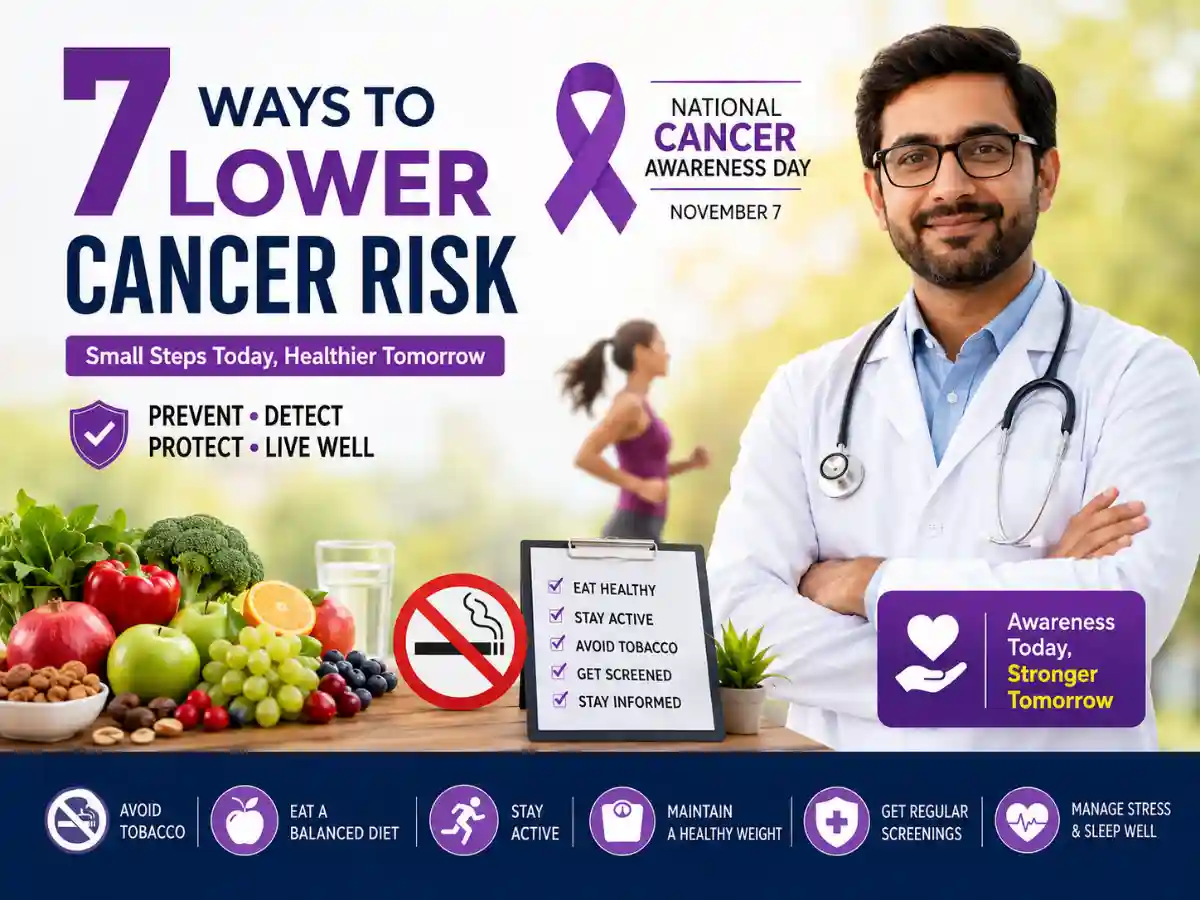
Every year, millions of people are diagnosed with cancer, yet many cases may be linked to preventable lifestyle factors. National Cancer Awareness Day reminds us that small daily habits—such as quitting tobacco, eating healthier, staying active, and attending regular screenings—can make a meaningful difference. This guide explains evidence-based ways to reduce cancer risk and when to seek medical advice.
Cancer prevention is a critical aspect of reducing the global burden of this disease. By making informed lifestyle choices and staying informed about the latest research, individuals can significantly lower their risk of developing cancer.
📌 Quick Facts
- 📅 National Cancer Awareness Day is observed every year on November 7 in India.
- 🚭 Tobacco use is one of the leading preventable causes of cancer and quitting at any age lowers future risk.
- 🔬 Early detection through regular screening can significantly improve treatment success and survival.
- 🏃 Regular physical activity and maintaining a healthy weight may help reduce the risk of several types of cancer.
- 💉 HPV and Hepatitis B vaccines can help prevent certain cancers, including cervical and liver cancer.
💡 Did You Know?
According to global cancer experts, an estimated 30–50% of cancers may be preventable by reducing exposure to known risk factors such as tobacco use, harmful alcohol consumption, obesity, physical inactivity, unhealthy diet, excessive UV exposure, and certain infections. Adopting healthier lifestyle habits, staying up to date with recommended vaccinations, and participating in appropriate cancer screening programs can help lower your risk and support better long-term health.

This Awareness Day serves as a reminder of the progress made in cancer research and the work still needed to combat this disease. It’s an opportunity to ignite hope by discovering the amazing secrets that could save lives.
Key Takeaways
- Understanding the importance of cancer prevention
- The role of awareness campaigns in education
- Lifestyle changes to reduce cancer risk
- The significance of early detection
- Staying updated with the latest cancer research
Dr. Shabbir Hussain’s Clinical Insight
During my clinical practice in physiotherapy and cancer rehabilitation, I’ve seen how early diagnosis and timely treatment can make a meaningful difference in recovery and quality of life. While not every cancer can be prevented, avoiding tobacco, maintaining a healthy weight, staying physically active, eating a balanced diet, and participating in recommended cancer screenings are among the most effective ways to reduce risk. National Cancer Awareness Day is a reminder that small preventive steps taken today can have a lasting impact on your future health.
Understanding National Cancer Awareness Day in India
As India observes National Cancer Awareness Day, it’s crucial to understand the significance behind this day. National Cancer Awareness Day is observed on November 7th every year, marking a significant effort in the fight against cancer.
The Origin and Significance of November 7th
November 7th was chosen as National Cancer Awareness Day to commemorate the birthday of the renowned Indian cancer surgeon, Dr. Santosh Kumar Mukherjee, though the exact origin is linked to global cancer awareness efforts. The day aims to raise awareness about the risks of cancer and promote its prevention, detection, and treatment.
Current Cancer Statistics and Trends in India
India faces a significant cancer burden, with cancer statistics indicating a rising trend. According to recent data, India reports over a million new cancer cases annually. The most common cancers in India include breast, cervical, and oral cancers. Cancer research is critical in understanding these trends and developing targeted interventions.
| Cancer Type | Estimated New Cases | Prevalence |
|---|---|---|
| Breast Cancer | 1,62,468 | High |
| Cervical Cancer | 97,000 | Moderate to High |
| Oral Cancer | 1,02,804 | High |
Understanding these cancer statistics and trends is vital for policymakers, healthcare professionals, and the general public to work together towards cancer control.
🩺 Recommended Cancer Screening Tests
Regular cancer screening can help detect certain cancers before symptoms appear or at an early stage when treatment is often more effective. Screening recommendations vary based on your age, sex, personal risk factors, and family history. Always consult your healthcare provider to determine which screening tests are appropriate for you.
| Cancer Type | Recommended Screening |
|---|---|
| 🎗️ Breast Cancer | Mammography (for eligible individuals based on age and risk) |
| 🎗️ Cervical Cancer | HPV test and/or Pap (Pap smear) test |
| 🎗️ Oral Cancer | Regular oral examination, especially for tobacco or alcohol users |
| 🎗️ Colorectal Cancer | Stool-based tests or colonoscopy (for eligible individuals) |
| 🎗️ Lung Cancer | Low-dose CT (LDCT) for eligible high-risk individuals |
Note: Screening recommendations differ by age, family history, lifestyle, and other risk factors. These tests should be performed according to current medical guidelines and your healthcare provider’s advice.
Early Warning Signs of Cancer You Should Never Ignore
While these symptoms do not always mean cancer, they should never be ignored—especially if they persist for more than two weeks. Early diagnosis often improves treatment outcomes, so consult a healthcare professional if you notice any of the following warning signs.
- Unexplained weight loss
- Persistent cough or hoarseness
- Blood in the stool or urine
- A non-healing mouth ulcer or sore
- A new breast lump or changes in breast shape
- Unusual bleeding or abnormal discharge
- Difficulty swallowing that persists
- Persistent fatigue or extreme weakness
- A mole or skin lesion that changes in size, shape, or color
- Persistent pain without a clear cause
When to See a Doctor
Seek medical evaluation promptly if any of the following symptoms persist for more than two weeks, worsen over time, or occur without an obvious cause:
- Unexplained weight loss
- Persistent or unusual bleeding
- A long-lasting cough or persistent hoarseness
- A mole or skin lesion that changes in size, shape, or color
- A breast lump or noticeable breast changes
- Difficulty swallowing that does not improve
Remember: These symptoms do not necessarily mean cancer, but early medical assessment is essential to identify the cause and, if needed, begin treatment as early as possible.
7 Life-Saving Cancer Prevention Secrets
As we observe National Cancer Awareness Day, it’s crucial to uncover the secrets that can significantly reduce the risk of cancer. Cancer prevention is a multifaceted approach that involves dietary changes, regular physical activity, avoiding environmental toxins, and early detection methods. By understanding and implementing these strategies, individuals can significantly lower their risk of developing cancer.
Ancient Indian Wisdom Meets Modern Science: Dietary Approaches
Ancient Indian wisdom emphasizes the importance of a balanced diet rich in whole foods, such as fruits, vegetables, whole grains, and legumes. Modern science supports this approach, showing that a diet high in processed foods and low in fiber can increase cancer risk. Incorporating cancer-fighting foods like turmeric, green tea, and cruciferous vegetables into your diet can be beneficial.
“The food you eat can either be the safest and most powerful form of medicine or the slowest form of poison.”
The Power of Movement: Exercise Protocols That Reduce Cancer Risk
Regular physical activity is a crucial component of cancer prevention. Exercise helps maintain a healthy weight, reduces inflammation, and improves immune function. Aim for at least 150 minutes of moderate-intensity exercise or 75 minutes of vigorous-intensity exercise per week. Activities like yoga, brisk walking, and cycling are excellent options. Exercise not only reduces cancer risk but also improves overall well-being.
Environmental Toxins to Eliminate From Your Daily Life
Reducing exposure to environmental toxins is vital for cancer prevention. Common toxins are found in household products, plastics, and pesticides. Being aware of these dangers can help you make informed choices.
Hidden Household Dangers
Many household cleaning products contain harmful chemicals that can increase cancer risk. Opt for natural or eco-friendly alternatives to minimize exposure.
Digital-Age Exposures
The digital age brings its own set of exposures, including radiation from smartphones and Wi-Fi devices. Using devices responsibly and following safety guidelines can help mitigate risks.
Early Detection Methods You Should Know About
Early detection is critical in cancer treatment. Regular screenings and check-ups can help identify cancer at an early stage when it’s more treatable. Be aware of the recommended screening guidelines for various types of cancer, such as breast, cervical, and colorectal cancer.
By embracing these seven life-saving cancer prevention secrets, you can take proactive steps towards a healthier life. Remember, cancer prevention is a journey that involves making informed choices about your diet, physical activity, and environment. On this National Cancer Awareness Day, let’s commit to empowering ourselves and our loved ones with the knowledge to prevent cancer.
⚠️ Note: Having one or more of these symptoms does not necessarily mean cancer. Many non-cancerous conditions can cause similar signs and symptoms. However, if any symptom persists, worsens, or is unexplained, consult a qualified healthcare professional for a proper medical evaluation. Early assessment can help identify the underlying cause and improve treatment outcomes when needed.
Conclusion
Cancer prevention begins with everyday choices. Avoid tobacco, stay physically active, maintain a healthy weight, eat a balanced diet, protect yourself from excessive sun exposure, and follow recommended screening schedules. National Cancer Awareness Day is an opportunity to turn awareness into action—for yourself and your loved ones.
✅ Medical Review
Reviewed by:
Dr. Shabbir Hussain (BPT)
Licensed Physiotherapist
Clinical Rehabilitation Specialist
Medical Review Date: July 1, 2026
Content Reviewed For: Medical accuracy, evidence-based recommendations, readability, and alignment with current public health guidance.
FAQ
What is National Cancer Awareness Day?
National Cancer Awareness Day is observed on November 7th to raise awareness about cancer, its causes, and prevention methods, promoting a collective effort to combat the disease.
Why is cancer awareness important?
Cancer awareness is crucial as it educates people about the risks, symptoms, and prevention strategies, ultimately leading to early detection and improved treatment outcomes, saving lives through cancer research and support.
How can I reduce my risk of getting cancer?
You can reduce your cancer risk by adopting a healthy lifestyle, including a balanced diet, regular exercise, avoiding environmental toxins, and getting regular check-ups for early detection, utilizing cancer awareness resources.
What are some common cancer prevention secrets?
Some cancer prevention secrets include incorporating ancient Indian wisdom and modern science into your lifestyle, such as dietary approaches, exercise protocols, and eliminating environmental toxins, as highlighted in various cancer awareness campaigns.
How can I get involved in cancer awareness efforts?
You can get involved in cancer awareness efforts by participating in cancer awareness events, supporting cancer support organizations, sharing cancer survivor stories, and spreading awareness about cancer statistics and cancer research.
What are some reliable sources for cancer information?
Reliable sources for cancer information include reputable cancer research institutions, cancer support organizations, and government health websites, which provide accurate and up-to-date cancer awareness resources.
📢 Help Spread Cancer Awareness
If you found this article helpful, consider sharing it with your family, friends, and colleagues. Raising awareness about cancer prevention, healthy lifestyle choices, and early detection can encourage timely screening and potentially save lives.
❤️ One share today could inspire someone to take an important step toward better health.
References
-
World Health Organization (WHO).
Cancer – Key Facts.
https://www.who.int/news-room/fact-sheets/detail/cancer -
International Agency for Research on Cancer (IARC).
Global Cancer Observatory (GLOBOCAN).
https://gco.iarc.who.int/ -
National Cancer Institute (NCI).
Cancer Prevention Overview.
https://www.cancer.gov/about-cancer/causes-prevention -
Indian Council of Medical Research (ICMR).
National Centre for Disease Informatics and Research (NCDIR) – National Cancer Registry Programme.
https://ncdirindia.org/

Dr. Shabbir Hussain, BPT
Registered Physiotherapist | Clinical Rehabilitation Specialist
Maharashtra OTPT Council Reg. No.: PR-2021/08/PT/009532
Society of Onco Physiotherapists Reg. No.: SOP/00033/LM
Dr. Shabbir Hussain, BPT, Registered Physiotherapist with over 8 years of experience in physiotherapy, kidney rehabilitation, oncological rehabilitation, and lymphedema management. He specializes in balance disorders, pain management, musculoskeletal rehabilitation, strengthening programs, and VR-based rehabilitation.