
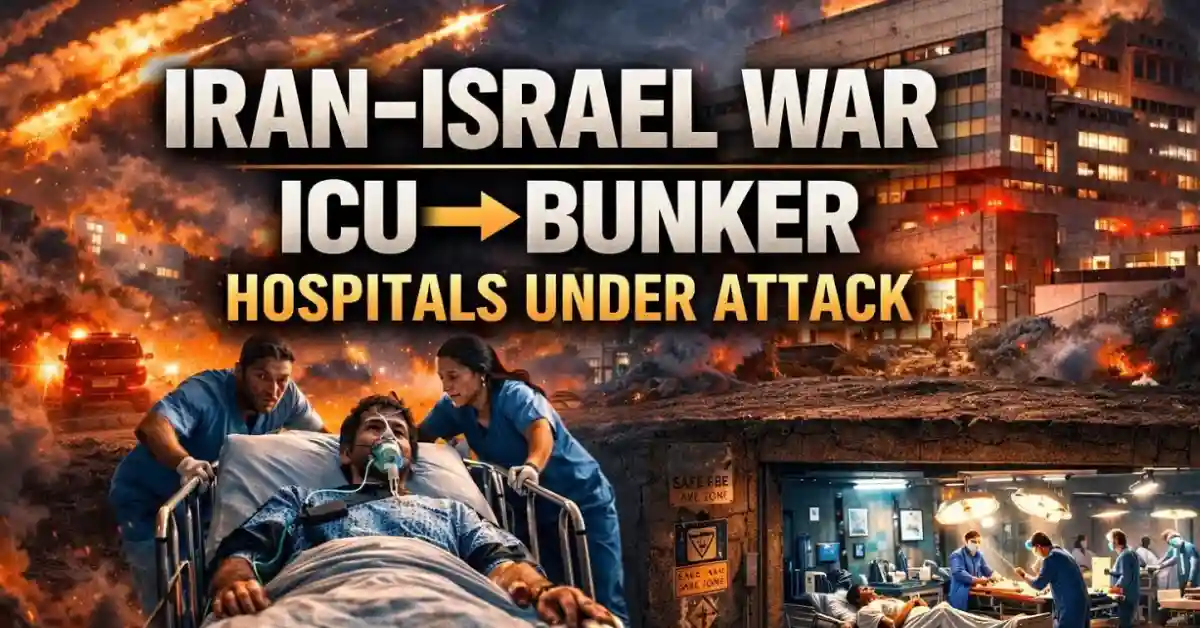
Iran–Israel War : The Hidden Danger Most People Don’t See
When people imagine war, they think of soldiers, missiles, and destroyed buildings.
But behind the headlines lies a terrifying medical reality.
In parts of the Iran–Israel conflict, hospitals are reportedly moving critically ill patients from Intensive Care Units (ICUs) into underground bunkers to protect them from missile strikes and air attacks.
For doctors, this is a nightmare scenario.
ICU patients depend on life-support machines, oxygen systems, ventilators, and continuous monitoring. Moving them—even for a few minutes—can be life-threatening.
Yet in war zones, hospitals must make an impossible choice:
Risk a missile strike… or risk moving fragile patients.
The result is a hidden healthcare crisis that few outside the conflict truly understand.
What Is a War-Zone Hospital Emergency?
In medical disaster management, hospitals operating during armed conflict are considered high-risk critical infrastructure.
According to the World Health Organization (WHO), attacks on healthcare facilities disrupt essential services such as:
- Emergency surgery
- Intensive care
- Trauma care
- Neonatal support
- Oxygen supply
When hospitals are threatened, they may activate emergency relocation protocols, moving patients into:
- underground bunkers
- reinforced basements
- protected treatment areas
These facilities are designed to protect patients from bomb blasts, missile strikes, and structural collapse.
However, relocating critically ill patients carries serious medical risks.
The Hidden Health Crisis
While war casualties receive global attention, hospital disruption creates a second wave of deaths.
A major PubMed analysis of conflict healthcare systems found that hospital damage can increase mortality from treatable diseases by up to 30–50% (Rubenstein et al., 2020).
Why?
Because critically ill patients depend on stable hospital infrastructure.
Iran–Israel War Potential consequences include:
1. Life-Support Interruptions
Moving ventilated patients risks:
- oxygen drops
- cardiac instability
- sudden respiratory failure
2. Equipment Failure
Portable ICU systems may not match full hospital support.
This can affect:
- dialysis machines
- cardiac monitors
- infusion pumps
3. Delayed Emergency Care
When hospitals operate inside bunkers:
- surgeries may be delayed
- emergency response slows
- diagnostic imaging becomes limited
4. Psychological Trauma
Both patients and healthcare workers face extreme stress.
Studies show war-zone healthcare workers experience high rates of PTSD and burnout (NIH).
5. Long-Term Public Health Collapse
If hospitals shut down or are damaged:
- maternal deaths increase
- chronic disease care stops
- rehabilitation services disappear
These indirect deaths can exceed battlefield fatalities in prolonged conflicts.
Causes & Risk Factors
Several factors force hospitals to move ICU patients underground during war.
Military Risks
- Missile attacks
- Air strikes
- Rocket fire
- Drone warfare
Infrastructure Damage
- Power outages
- oxygen supply disruption
- water system failure
Hospital Location
Hospitals located in:
- dense cities
- strategic areas
- near military zones
are especially vulnerable.
Vulnerable Patient Groups
Highest risk patients include:
- ventilated ICU patients
- premature infants
- dialysis patients
- trauma victims
- elderly patients with heart disease
Warning Signs of Healthcare System Collapse
Public health experts say several warning signs indicate a medical crisis in war zones.
Early Signs
- Hospitals relocating departments
- Emergency bunkers activated
- Reduced surgical capacity
- Limited ICU beds
Advanced Crisis Signs
- Oxygen shortages
- Medicine supply disruption
- Doctors fleeing conflict areas
- Increased deaths from treatable conditions
These signals often appear before a full healthcare collapse.
How Doctors Protect Patients in War Zones
Despite the dangers, modern medicine has developed strategies to protect patients even during active conflict.
1. Underground Hospital Units
Some hospitals now build permanent underground medical centers with:
- reinforced concrete walls
- blast-proof doors
- independent oxygen systems
Countries such as Israel and Ukraine have expanded this model.
Physiotherapy & Rehabilitation
War injuries often cause:
- limb amputations
- spinal injuries
- neurological damage
Physiotherapists play a crucial role in:
- early mobilization
- respiratory physiotherapy
- trauma rehabilitation
- prosthetic training
Studies in Physiotherapy Journal (2021) show rehabilitation significantly improves long-term survival and quality of life after war injuries.
Prevention & Public Health Strategies
Although war cannot always be prevented, global health organizations emphasize preparedness.
Key strategies include
1. Protect Healthcare Infrastructure
International humanitarian law prohibits attacks on hospitals.
2. Build Resilient Hospitals
Modern war-zone hospitals are designed with:
- underground ICUs
- backup power
- protected oxygen systems
3. Strengthen Emergency Response
Countries must maintain:
- disaster medicine teams
- trauma response units
- emergency evacuation plans
4. Global Monitoring
The WHO Surveillance of Attacks on Healthcare program tracks hospital damage worldwide.
This helps governments respond faster.
Medical Disclaimer
The information provided in this article is intended for educational and informational purposes only. It should not be considered a substitute for professional medical advice, diagnosis, or treatment. Always seek the guidance of a qualified healthcare professional or licensed physician regarding any medical condition or health concern. Never disregard professional medical advice or delay seeking it because of something you have read on this website. The authors and publishers of this content do not assume responsibility for any health decisions made based on the information presented here.
FAQs
Is treating ICU patients in bunkers safe?
It can be safe if hospitals use portable ICU systems and protected facilities, but it still carries significant risks compared to standard ICU environments.
Why do hospitals move patients underground during war?
Underground areas protect patients from missile strikes, air attacks, and structural collapse.
How does war affect healthcare systems?
War can cause:
- hospital destruction
- staff shortages
- medicine shortages
- increased deaths from treatable diseases.
Can physiotherapy help war injury survivors?
Yes. Physiotherapy helps restore mobility, lung function, and independence after trauma, amputations, or neurological injuries.
How long does recovery from war injuries take?
Recovery varies widely.
Minor injuries may heal in weeks, while severe trauma or amputations may require months to years of rehabilitation.
References
World Health Organization. (2023). Surveillance of Attacks on Healthcare.
https://www.who.int
Rubenstein, L., et al. (2020). Impacts of attacks on healthcare facilities in conflict zones. PubMed.
https://pubmed.ncbi.nlm.nih.gov
National Institutes of Health. (2022). Mental health effects of war on healthcare workers.
https://www.nih.gov
Physiotherapy Journal. (2021). Rehabilitation outcomes following conflict-related injuries.
International Committee of the Red Cross. (2023). Health Care in Danger initiative.
https://www.icrc.org

Dr. Shabbir Hussain, BPT
Registered Physiotherapist | Clinical Rehabilitation Specialist
Maharashtra OTPT Council Reg. No.: PR-2021/08/PT/009532
Society of Onco Physiotherapists Reg. No.: SOP/00033/LM
Dr. Shabbir Hussain, BPT, Registered Physiotherapist with over 8 years of experience in physiotherapy, kidney rehabilitation, oncological rehabilitation, and lymphedema management. He specializes in balance disorders, pain management, musculoskeletal rehabilitation, strengthening programs, and VR-based rehabilitation.