
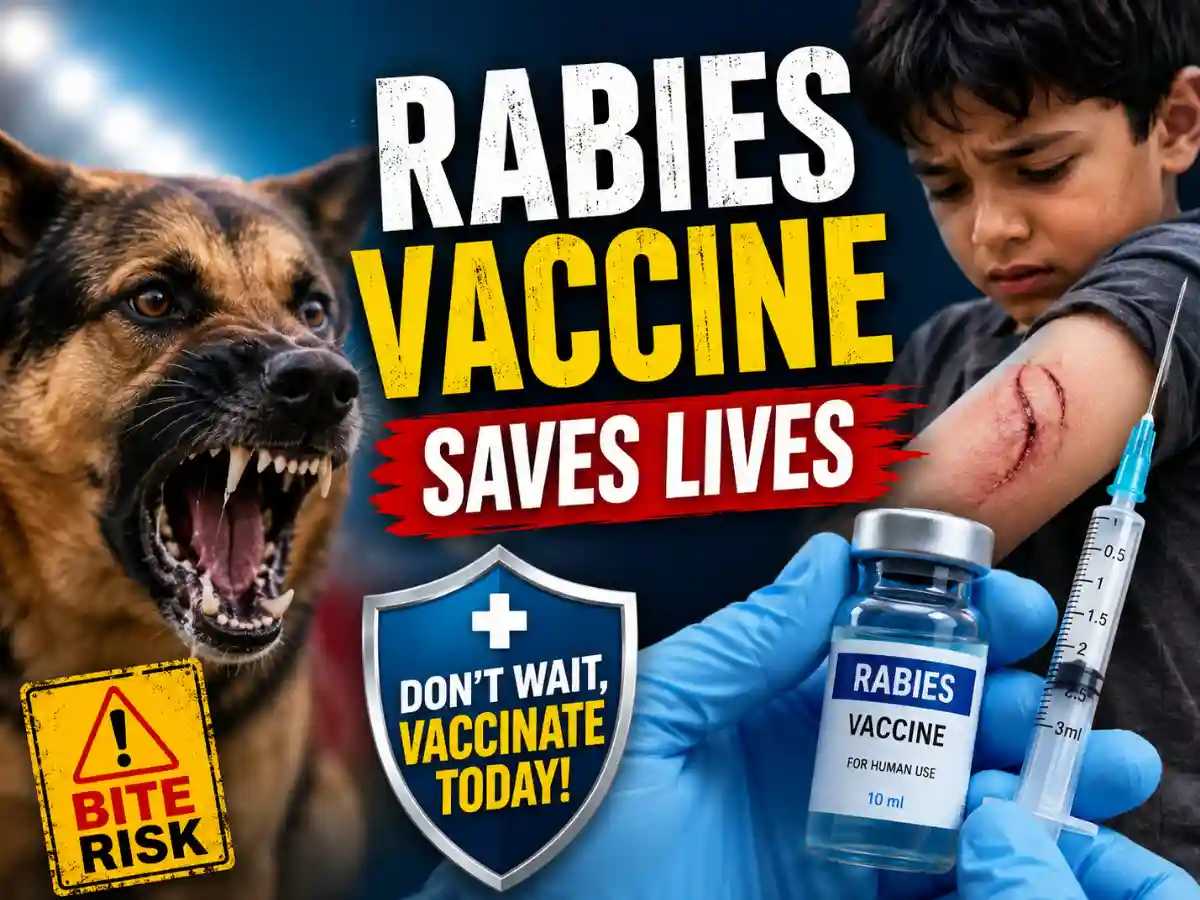
Every year, thousands of people lose their lives to rabies, even though the disease is almost completely preventable with timely Rabies Vaccination . A few missed hours after an animal bite can make the difference between life and death.
Rabies, a deadly viral disease, poses a constant threat to both humans and animals worldwide.
Fortunately, rabies is one of the few viral diseases that is almost entirely preventable through timely vaccination.
In my clinical practice, many people believe that a small scratch is harmless. Unfortunately, rabies virus can enter the body even through minor scratches if contaminated saliva reaches broken skin.
⚠ Rabies Emergency Warning
Rabies is almost always fatal once symptoms appear. If you are bitten or scratched by a dog, cat, monkey, bat, or any suspected rabid animal, do not wait for symptoms.
- ✔ Wash the wound immediately with soap and running water for at least 15 minutes.
- ✔ Apply an antiseptic.
- ✔ Visit the nearest hospital or anti-rabies clinic immediately.
- ✔ Start rabies vaccination if advised by your healthcare provider.
- ✔ Rabies Immunoglobulin (RIG) may be required for severe exposures.
Early treatment can save your life.
Understanding Rabies
Rabies is caused by the rabies virus, which primarily affects mammals, including humans.
The virus spreads through the saliva of infected animals, typically through bites or scratches.
Once symptoms appear, rabies is almost always fatal, making it a serious concern for both human and animal populations.
How Rabies Symptoms May Progress
- Day to Weeks: Usually no symptoms.
- Early Symptoms: Fever, headache, weakness, tingling or pain around the bite.
- Progressive Symptoms: Anxiety, confusion, agitation, excessive salivation.
- Advanced Stage: Difficulty swallowing, hydrophobia (fear of water), muscle spasms.
- Late Stage: Paralysis, coma and death.
Important: Once symptoms begin, rabies is almost always fatal.
The Threat to Human Health
Rabies is a zoonotic disease, meaning it can be transmitted from animals to humans.
The virus primarily infects wild animals like bats, raccoons, and skunks, but domesticated animals, such as dogs and cats, can also become carriers.
Without prompt and appropriate medical intervention, the disease progresses rapidly, leading to paralysis, seizures, and ultimately death.
Rabies poses a significant threat in regions where vaccination programs are inadequate or nonexistent.
Developing countries, in particular, bear the brunt of rabies-related fatalities, with an estimated 59,000 human deaths annually.
Most of these cases result from dog bites, emphasizing the importance of rabies vaccination in pets.
✅ What Should You Do Immediately After an Animal Bite?
❌ Myth vs ✅ Fact
| Myth | Fact |
|---|---|
| Small scratches cannot cause rabies. | Even minor scratches may require medical evaluation. |
| Wait for symptoms before treatment. | Treatment must begin before symptoms appear. |
| Healthy-looking dogs cannot spread rabies. | Appearance alone cannot rule out rabies. |
| Stop vaccines if you feel fine. | Complete the full vaccine schedule. |
Protecting Pets and Communities
Vaccinating pets, particularly dogs and cats, is one of the most effective ways to prevent the spread of rabies to humans.
Regular vaccinations not only safeguard our beloved animal companions but also contribute to the broader community’s safety.
Here are some key reasons why rabies vaccination for pets is crucial:
- Human Safety: Vaccinated pets are less likely to contract rabies, reducing the risk of transmission to humans. This not only protects pet owners but also prevents potential outbreaks in communities.
- Legal Requirements: Many countries and regions have mandatory rabies vaccination laws for pets. Compliance with these laws is not only a legal obligation but also an ethical responsibility to prevent the spread of the disease.
- Animal Welfare: Vaccination is a vital component of responsible pet ownership. It ensures the well-being of animals and prevents them from suffering the devastating effects of rabies.
- Community Health: By vaccinating pets, we contribute to the overall health of our communities. Reducing the prevalence of rabies in domesticated animals also helps in controlling the disease in wild animal populations.
- Global Efforts: Rabies vaccination campaigns for pets are an integral part of global efforts to eliminate rabies by 2030, as outlined by the World Health Organization (WHO). These campaigns are critical in high-risk areas to break the transmission cycle.
Why Rabies Vaccination Still Matters in 2026
Updated Global Rabies Burden (2026)
Despite being almost entirely preventable through timely vaccination, rabies continues to cause a substantial global health burden. According to the latest estimates from the World Health Organization (WHO), rabies causes approximately 59,000 human deaths every year, with the overwhelming majority occurring in Asia and Africa. Nearly all human rabies deaths are linked to dog bites, making dog vaccination and rapid post-exposure treatment the most effective prevention strategies.
WHO “Zero by 30” Campaign
To eliminate this preventable disease, the WHO, the World Organisation for Animal Health (WOAH), the Food and Agriculture Organization (FAO), and the Global Alliance for Rabies Control (GARC) launched the “Zero by 30” Global Strategic Plan. The initiative aims to achieve zero human deaths from dog-mediated rabies by the year 2030 through:
- Mass vaccination of dogs
- Universal access to rabies vaccines and immunoglobulin
- Improved surveillance and reporting
- Community awareness and education
- A coordinated One Health approach involving both human and animal health sectors.
India’s Rabies Burden
India remains one of the countries most affected by rabies. WHO estimates indicate that India contributes roughly one-third of the global rabies burden, with approximately 18,000–20,000 human deaths each year based on available information, although the true number may be higher because of underreporting. Rabies remains endemic across much of the country, and access to timely post-exposure prophylaxis is still a challenge in many areas.
India’s National Action Plan
India has adopted the National Action Plan for Dog-Mediated Rabies Elimination (NAPRE), which aligns with the global Zero by 30 strategy. The plan focuses on strengthening rabies surveillance, expanding access to post-exposure prophylaxis, increasing mass dog vaccination, improving public awareness, and implementing a One Health approach across the country to eliminate dog-mediated human rabies by 2030.
💉 Rabies Vaccine Timeline After an Animal Bite
🦮 Animal Bite
⬇
🧼 Wash Wound (15 Minutes)
⬇
🏥 Visit Hospital Immediately
⬇
💉 Start Rabies Vaccine
⬇
🩸 Rabies Immunoglobulin (If Needed)
⬇
📅 Complete All Vaccine Doses
⬇
✅ Protection Against Rabies
Clinical Tip from Dr. Shabbir Hussain: Even a tiny scratch should never be ignored if there is a possibility of exposure to saliva from a suspected rabid animal. When in doubt, seek medical evaluation immediately rather than waiting for symptoms.
Conclusion
Rabies vaccination is a life-saving measure for both humans and animals.
It not only protects our pets but also helps safeguard entire communities from the threat of this deadly disease.
By adhering to vaccination schedules and supporting rabies control programs, we can contribute to the global effort to eliminate rabies and ensure a safer and healthier future for all.
Remember, when it comes to rabies, prevention through vaccination is the key to saving lives.
📌 Key Takeaways
- Rabies is preventable through timely vaccination.
- Do not wait for symptoms after an animal bite.
- Immediate wound washing significantly reduces infection risk.
- Dog vaccination protects both animals and humans.
- Complete every dose of the rabies vaccine as recommended.
- Early treatment saves lives.
👨⚕️ Expert Clinical Advice
Dr. Shabbir Hussain (BPT), Licensed Physiotherapist
During patient education, I frequently meet people who believe that a small scratch or a bite from a healthy-looking dog is harmless. This misconception can be dangerous. If saliva from a rabid animal enters broken skin, rabies transmission is possible. Seeking medical care immediately after any suspected exposure is the safest approach.
Never delay medical evaluation because the wound appears minor.
🛡 Why You Can Trust This Article
- Written by Dr. Shabbir Hussain (BPT), Licensed Physiotherapist.
- Reviewed using current recommendations from WHO and India’s National Centre for Disease Control (NCDC).
- Based on evidence from peer-reviewed medical literature and international public health guidelines.
- Updated regularly to reflect the latest rabies prevention recommendations.
- This content is intended for educational purposes and does not replace professional medical advice.
Frequently Asked Questions
1. Can the rabies vaccine be taken after 2 days of a dog bite?
Yes. If you have not yet started treatment, you should seek medical care immediately, even if 2 days have passed since the bite. Rabies post-exposure prophylaxis (PEP) should be started as soon as possible after a potential exposure. Do not wait for symptoms to appear, as rabies is almost always fatal once symptoms develop.
2. Can a vaccinated dog still spread rabies?
A dog that has been properly vaccinated has a much lower risk of carrying and transmitting rabies. However, no vaccine provides 100% protection, and the vaccination history or health status of the animal should always be evaluated by a healthcare professional. If you are bitten, consult a doctor promptly to determine whether rabies vaccination is needed.
3. Is the rabies vaccine painful?
Modern rabies vaccines are generally well tolerated. They are given in the upper arm (or thigh for small children) rather than in the abdomen, as was common decades ago. Most people experience only mild pain, redness, or swelling at the injection site, and serious side effects are uncommon.
4. What if the dog looks healthy after biting me?
A healthy-looking dog can still require medical evaluation after a bite. Do not decide on your own to skip treatment based on the animal’s appearance. The dog may need to be observed for 10 days if appropriate, and your healthcare provider will determine whether rabies vaccination should be started or continued.
5. Is a rabies vaccine necessary after a minor scratch?
It can be. Even a small scratch may expose you to rabies if contaminated saliva comes into contact with broken skin. Wash the wound thoroughly with soap and running water for at least 15 minutes and seek medical advice immediately. A healthcare professional will assess the type of exposure and recommend the appropriate treatment.
References
- World Health Organization (WHO). Rabies Fact Sheet and Zero by 30 Strategy.
- National Centre for Disease Control (NCDC), Government of India. National Rabies Control Programme.
- National Action Plan for Dog-Mediated Rabies Elimination (NAPRE), Ministry of Health & Family Welfare, Government of India.
- Centers for Disease Control and Prevention (CDC). Rabies Prevention Guidelines.
- World Organisation for Animal Health (WOAH). Rabies Disease Information.
This article is intended for educational purposes only and should not replace professional medical advice, diagnosis, or treatment. If you have been bitten or scratched by an animal, seek immediate medical care.

Dr. Shabbir Hussain, BPT
Registered Physiotherapist | Clinical Rehabilitation Specialist
Maharashtra OTPT Council Reg. No.: PR-2021/08/PT/009532
Society of Onco Physiotherapists Reg. No.: SOP/00033/LM
Dr. Shabbir Hussain, BPT, Registered Physiotherapist with over 8 years of experience in physiotherapy, kidney rehabilitation, oncological rehabilitation, and lymphedema management. He specializes in balance disorders, pain management, musculoskeletal rehabilitation, strengthening programs, and VR-based rehabilitation.