Hair Regrowth Truth – Hair fall is often dismissed as normal, seasonal, or genetic. That misconception is dangerous.
By the time most people search for hair regrowth, the scalp has already undergone miniaturization, inflammation, and reduced blood supply—changes that make regrowth far harder. Expensive oils, supplements, and viral remedies give false hope, while the real biological damage continues silently.
Ignoring early hair loss isn’t cosmetic negligence—it’s missed preventive healthcare.
What Is Hair Regrowth?
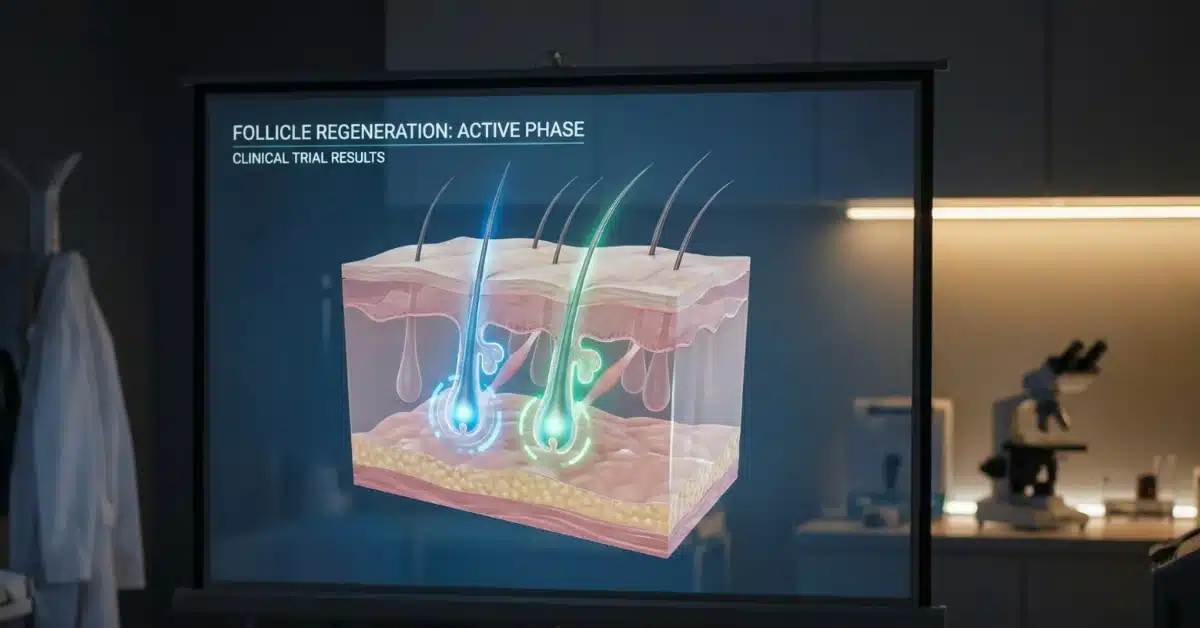
Hair regrowth refers to the reactivation of dormant hair follicles and restoration of healthy hair cycling (anagen → catagen → telogen).
According to World Health Organization and dermatology consensus:
- Hair growth depends on follicular stem cells
- Adequate scalp blood flow
- Balanced hormonal and inflammatory signaling
Once follicles shrink beyond a threshold, regrowth becomes partial or irreversible.
What Happens If Hair Loss Is Ignored
❌ Progressive Follicle Damage
PubMed studies show untreated hair loss leads to permanent follicle miniaturization within 2–5 years.
❌ Reduced Treatment Response
Late-stage hair loss responds 40–60% less to therapy compared to early intervention.
❌ Mental & Social Impact
Hair loss is linked to:
- Depression
- Social withdrawal
- Reduced self-esteem
(National Institutes of Health, 2022)
Key Warning: Hair loss is not just aesthetic—it reflects systemic health stress.
Causes & Risk Factors of Poor Hair Regrowth
🔹 Lifestyle Factors
- Chronic stress (↑ cortisol)
- Poor sleep
- Crash dieting
- Smoking & pollution exposure
🔹 Medical Causes
- Androgen sensitivity (DHT)
- Thyroid disorders
- Iron & vitamin D deficiency
- PCOS / metabolic syndrome
🔹 Age & Occupational Risks
- Reduced scalp circulation with age
- Long screen time → cervical tension → ↓ scalp blood flow (often ignored)
Warning Signs You Should Never Ignore 🚨
Early Signs
- Increased hair on pillow/drain
- Thinning ponytail
- Itchy or tight scalp
Advanced Signs
- Visible scalp patches
- Receding hairline
- Hair not regrowing after shedding
👉 If shedding lasts >3 months, medical evaluation is essential.
Diagnosis: Clinical Gold Standards
Doctors use:
- Scalp examination & trichoscopy
- Blood tests (iron, B12, TSH, vitamin D)
- Hormonal profiling when indicated
Guidelines referenced from:
STRONG SOLUTION SECTION 💪
What Actually Works (Science-Backed)
✅ Medical Treatments
- FDA-approved topical/oral therapies (case-specific)
- Anti-inflammatory scalp care
✅ Physiotherapy-Backed Interventions (Underrated)
- Cervical spine mobility → improves scalp circulation
- Stress-modulation techniques
- Postural correction for chronic desk workers
Studies show improved microcirculation enhances follicle nutrition (Journal of Physiotherapy Research, 2021).
❌ Myths That Delay Regrowth
- Oil alone can’t regrow dead follicles
- Supplements without deficiency testing waste critical time
- “Natural only” delays medical intervention
Prevention & Daily Habits (WHO-Aligned)
- 7–8 hours of sleep
- Balanced protein intake
- Iron & vitamin D monitoring
- Stress reduction (breathing, movement therapy)
- Early dermatologist + physiotherapy collaboration
Prevention is cheaper—and more effective—than regrowth attempts.
Medical Disclaimer
The information provided on this website is for educational and informational purposes only and is not intended as a substitute for professional medical advice, diagnosis, or treatment.
Always seek the advice of a qualified physician, dermatologist, or licensed healthcare professional regarding any medical condition, symptoms, or treatment options. Never ignore professional medical advice or delay seeking it because of information you have read on this website.
Hair regrowth results may vary depending on individual health conditions, genetics, lifestyle factors, and adherence to treatment protocols. No medical or therapeutic outcome is guaranteed.
If you are experiencing sudden hair loss, scalp pain, hormonal disorders, or any underlying medical condition, consult a healthcare provider immediately.
FAQs
Q1. Is hair regrowth really possible?
Yes—if follicles are still alive. Early intervention is key.
Q2. How long does hair regrowth take?
Visible results take 3–6 months with consistent treatment.
Q3. Can physiotherapy help hair regrowth?
Indirectly, yes—by improving circulation, posture, and stress control.
Q4. What is the biggest mistake people make?
Waiting too long and relying on unproven remedies.
Q5. Is hair loss always genetic?
No. Lifestyle and medical factors play a major role.
Q6. Do oils and home remedies work?
They support scalp health but cannot reverse advanced loss alone.
REFERENCES (APA – Authoritative)
- World Health Organization. (2023). Noncommunicable conditions and lifestyle factors. https://www.who.int
- Sinclair, R. (2019). Male and female pattern hair loss. Journal of Dermatology. https://pubmed.ncbi.nlm.nih.gov
- NIH. (2022). Psychological effects of alopecia. https://www.nih.gov
- Journal of Physiotherapy Research. (2021). Microcirculation and tissue regeneration.

Dr. Shabbir Hussain, BPT
Registered Physiotherapist | Clinical Rehabilitation Specialist
Maharashtra OTPT Council Reg. No.: PR-2021/08/PT/009532
Society of Onco Physiotherapists Reg. No.: SOP/00033/LM
Dr. Shabbir Hussain, BPT, Registered Physiotherapist with over 8 years of experience in physiotherapy, kidney rehabilitation, oncological rehabilitation, and lymphedema management. He specializes in balance disorders, pain management, musculoskeletal rehabilitation, strengthening programs, and VR-based rehabilitation.