
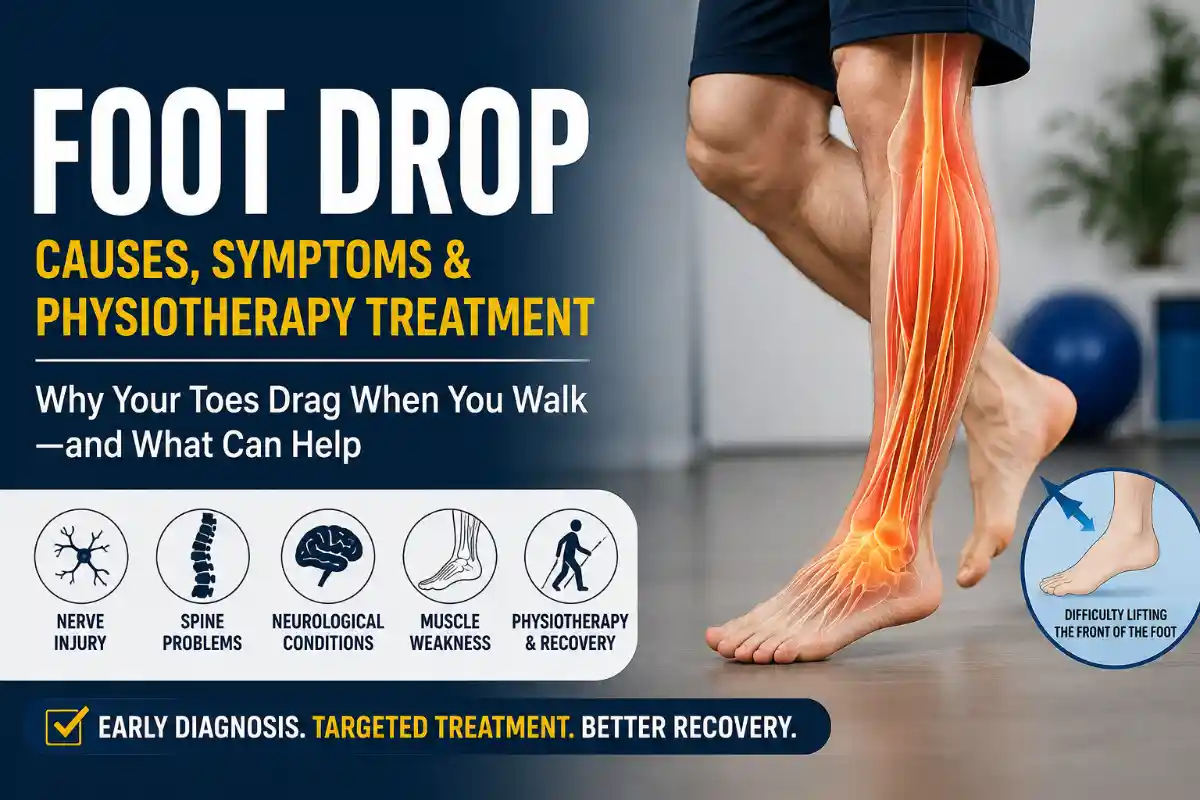
Have you noticed your toes dragging on the ground while walking or found yourself lifting your knee unusually high just to keep from tripping? What may seem like simple leg weakness could actually be a warning sign called foot drop—and the underlying cause is not always the same.
Foot drop can develop when the nerves, muscles, brain, spinal cord, or lower-back pathways responsible for lifting the foot are affected. In some cases, it may follow a nerve injury or back problem; in others, it can be linked to neurological or medical conditions that require prompt evaluation. The key question is not just how to lift the foot again, but why did the foot become weak in the first place?
The good news is that treatment and rehabilitation can help many people improve walking safety, mobility, and independence. From targeted physiotherapy exercises and gait training to ankle-foot orthoses and functional electrical stimulation, the right approach depends on the underlying cause.
But which treatment is most appropriate—and can foot drop fully recover? Let’s explore what really causes foot drop, the symptoms you should not ignore, and the treatment options that may help.
What is Foot Drop?
It is characterized by the inability to lift the front part of the foot, causing it to drag along the ground while walking.
This condition typically affects one foot, but in some cases, it can occur bilaterally.
The primary muscles involved in lifting the foot are the tibialis anterior, extensor hallucis longus, and extensor digitorum longus, which are collectively responsible for dorsiflexion of the ankle.
Causes of Foot Drop
Foot drop is a sign of weakness affecting the muscles that lift the front of the foot, rather than a disease on its own. The weakness can develop when a problem affects the peripheral nerves, nerve roots, spinal cord, brain, muscles, or the pathways that control ankle dorsiflexion. Identifying the exact location of the problem is important because treatment and recovery can vary depending on the underlying cause.
The common fibular, also called the common peroneal nerve, is one of the most common peripheral nerves involved in foot drop. It travels around the outside of the knee near the fibular head, where it can be vulnerable to compression or injury. Trauma around the knee, prolonged pressure, certain leg positions, or injuries affecting the nerve may weaken the muscles responsible for lifting the foot and toes.
Foot drop can occur when the L5 nerve root is affected. This may happen with conditions involving the lower back, including nerve-root compression from certain lumbar spine disorders. Symptoms may include weakness when lifting the foot or big toe, along with back pain, leg pain, numbness, or tingling depending on the structures involved.
The sciatic nerve supplies branches that are important for movement and sensation in the lower leg and foot. Injury to the sciatic nerve can therefore cause weakness affecting foot and ankle movement, including foot drop. The pattern and severity of weakness depend on which part of the nerve has been affected.
Diseases that damage peripheral nerves can sometimes cause foot drop. Peripheral neuropathy may be associated with conditions such as diabetes and other medical, metabolic, toxic, nutritional, inflammatory, or inherited disorders. In some cases, weakness may occur together with numbness, tingling, burning sensations, or symptoms affecting both feet.
Problems affecting the brain or spinal cord can interfere with the signals that control leg and foot movement. Conditions such as stroke, multiple sclerosis, cerebral palsy, spinal cord injury, or other neurological disorders may lead to weakness and an abnormal walking pattern that includes foot drop.
Certain muscle diseases and neuromuscular conditions can weaken the muscles involved in ankle and toe movement. Depending on the condition, the weakness may gradually progress and may affect one or both legs.
Some inherited neurological or neuromuscular disorders can predispose a person to progressive weakness and foot drop. The symptoms, age of onset, and pattern of progression can vary considerably depending on the underlying condition.
Symptoms of Foot Drop
The primary symptoms include:
- Difficulty lifting the front part of the foot while walking
- Dragging of the toes on the ground
- High steppage gait (lifting the knee higher than normal to clear the foot)
- Numbness or tingling sensation in the lower foot or leg
- Weakness in the ankle or foot muscles
- Increased risk of tripping or falling
🚨 When Foot Drop Needs Urgent Medical Attention
Foot drop can sometimes be a sign of a serious nerve, spinal, or neurological problem. Seek urgent medical evaluation if foot weakness is sudden, rapidly worsening, or accompanied by other neurological symptoms.
- Sudden new weakness in the foot, ankle, or leg
- Foot drop occurring with possible stroke symptoms, such as facial drooping, speech difficulty, confusion, or weakness on one side of the body
- Rapidly worsening leg weakness, especially with severe back pain
- New difficulty controlling your bladder or bowels
- Numbness around the groin, buttocks, or inner thighs (saddle area)
- Foot drop after a significant head, back, hip, or leg injury
- Rapid progression of weakness or difficulty walking safely
🔍 How Is Foot Drop Diagnosed?
Foot drop is a clinical sign rather than a diagnosis itself. Finding the underlying cause is important because weakness may originate from a peripheral nerve, nerve root, muscle, spinal cord, brain, or another neurological condition. A healthcare professional may use the following assessments to help identify the cause.
The clinician may ask when the weakness began, whether it developed suddenly or gradually, and whether there has been recent injury, prolonged pressure on the leg, back pain, numbness, surgery, or symptoms suggesting an underlying neurological condition.
Strength in the muscles responsible for lifting the foot and toes may be assessed. Other muscles in the leg may also be tested to help determine the pattern and possible location of weakness.
The clinician may check for numbness, tingling, or changes in sensation in different parts of the leg and foot. The pattern of sensory changes can provide clues about whether a nerve or nerve root may be involved.
Walking may be observed to identify features such as toe dragging, a high-stepping gait, difficulty clearing the foot, or compensatory movements used to avoid tripping.
Reflexes may be examined along with muscle strength and sensation to provide additional information about the nervous system and the possible source of the weakness.
When appropriate, electromyography (EMG) and nerve conduction studies can help evaluate nerve and muscle function and may assist in identifying the location and severity of nerve-related problems.
Imaging may be recommended when a problem affecting the brain, spinal cord, lower back, or another structure is suspected. The type of imaging depends on the person’s symptoms and clinical findings.
Physiotherapy Treatment for Foot Drop
Physiotherapy can play an important role in improving walking safety, mobility, strength, and functional independence in people with foot drop. However, the most appropriate rehabilitation plan depends on the underlying cause, severity of weakness, affected muscles and nerves, and the individual’s overall neurological and functional status.
Not every treatment is appropriate for every person. Rehabilitation is usually individualized and may combine the following approaches.
1. Primary Rehabilitation Strategies
These strategies generally focus on restoring or maximizing functional movement, maintaining mobility, improving walking, and reducing the risk of falls.
Addressing the Underlying Cause
Foot drop is a clinical sign rather than a diagnosis. Rehabilitation should be based on the underlying cause. Depending on the condition, medical, neurological, surgical, or other treatment may be required alongside physiotherapy.
Strengthening Appropriate Weak Muscles
When appropriate, exercises may be used to improve the strength and control of muscles involved in lifting the foot and toes.
- Toe raises while keeping the heel supported
- Active ankle dorsiflexion exercises
- Resistance exercises using an elastic band when appropriate
- Exercises targeting the tibialis anterior and other affected muscles
Maintaining Ankle Range of Motion
Maintaining ankle mobility may help prevent stiffness and support more efficient movement.
- Active ankle movements
- Passive movement when clinically appropriate
- Gentle calf stretching
- Exercises designed to maintain ankle flexibility
Gait and Task-Specific Training
Gait training can help improve foot clearance, walking safety, and functional mobility. The approach may vary depending on the person’s abilities and the cause of foot drop.
- Practicing safe walking patterns
- Task-specific walking practice
- Treadmill training in selected patients
- Obstacle negotiation and functional mobility practice when safe
Balance Training and Fall Prevention
Foot drop can increase the risk of tripping. Balance training and fall-prevention strategies may therefore be an important part of rehabilitation.
- Balance exercises appropriate to the individual’s ability
- Weight-shifting activities
- Functional standing exercises
- Education about home and environmental fall hazards
2. Assistive Technologies
Ankle-Foot Orthosis (AFO)
An ankle-foot orthosis (AFO) may be recommended by a qualified healthcare professional to help support foot and ankle positioning, improve toe clearance during walking, and enhance stability in appropriate patients. The type of AFO should be selected according to the individual’s needs and underlying condition.
Functional Electrical Stimulation (FES)
Functional electrical stimulation may be used in selected individuals to stimulate muscles involved in lifting the foot during walking. Electrodes are typically positioned to activate the relevant nerve or muscle pathway at an appropriate phase of the gait cycle.
FES is not suitable for every cause of foot drop, and suitability should be assessed by a qualified healthcare professional.
3. Adjunctive Rehabilitation Approaches
These approaches may be included when they address a specific impairment or functional goal. They should not necessarily be considered substitutes for cause-specific management, gait training, strengthening, or appropriate assistive technology.
Manual and Soft-Tissue Techniques
Manual therapy or soft-tissue techniques may be considered when muscle tightness, restricted movement, or other specific impairments are present.
- Soft-tissue mobilization
- Muscle stretching
- Other individualized manual techniques
Neuromuscular Re-education
Exercises may be used to improve movement awareness, muscle activation, coordination, and motor control. Depending on the individual’s condition, rehabilitation may include task-specific practice or feedback-based training.
Aquatic Therapy
Water-based rehabilitation may be useful for selected individuals because buoyancy can reduce weight-bearing demands while allowing movement and walking practice in a controlled environment.
Individualized Home Exercise Programme
A home programme may help patients continue appropriate exercises between rehabilitation sessions. The exercises, frequency, and progression should be individualized according to the person’s diagnosis, ability, and treatment goals.
Key Point About Physiotherapy Treatment
The best treatment for foot drop depends on its cause. A rehabilitation programme for a temporary peroneal nerve injury may differ significantly from treatment for foot drop caused by stroke, L5 radiculopathy, peripheral neuropathy, or another neurological condition. A thorough assessment helps determine which interventions are appropriate.
Can Foot Drop Get Better? Recovery and Prognosis
Foot drop can improve in some people, but recovery varies considerably from person to person. The outlook depends largely on what is causing the foot drop and the extent of damage or dysfunction affecting the nerves, muscles, spinal cord, or brain.
For some people, foot and ankle strength may gradually improve as the underlying condition recovers or responds to treatment. In other cases, weakness may persist and long-term rehabilitation, an ankle-foot orthosis (AFO), functional electrical stimulation, or other assistive strategies may be needed to improve walking safety and independence.
Factors That Can Affect Recovery
- The underlying cause: Recovery may differ significantly between foot drop caused by nerve compression, nerve injury, lumbar radiculopathy, stroke, peripheral neuropathy, or a progressive neurological condition.
- The severity of nerve or neurological injury: More severe weakness or extensive nerve damage may require a longer recovery period and may have a different prognosis.
- How long the weakness has been present: The duration of symptoms and the timing of appropriate assessment and treatment can influence rehabilitation planning and potential recovery.
- Whether the underlying problem is reversible: Some causes may improve when the underlying problem is successfully treated, while progressive or permanent neurological conditions may require long-term management.
- Response to treatment and rehabilitation: Improvements in strength, walking ability, balance, and daily function can vary depending on the individual and their response to medical treatment and rehabilitation.
Conclusion
Foot drop can be a challenging condition, but proper physiotherapy treatment and appropriate medical evaluation may help improve walking safety, mobility, and functional independence in many people.
The extent of recovery, however, depends on the underlying cause of the foot drop, the severity of the nerve or neurological impairment, how long the weakness has been present, and whether the underlying problem is reversible or responds to treatment.
A comprehensive and individualized rehabilitation approach may address appropriate muscle strengthening, ankle range of motion, gait training, balance and fall prevention, and overall functional ability. Depending on the individual’s needs, assistive technologies such as an ankle-foot orthosis (AFO) or functional electrical stimulation (FES) may also be considered.
By combining appropriate rehabilitation strategies, assistive devices when needed, and an individualized home exercise programme, people with foot drop may work towards improving mobility, safety, independence, and confidence in daily activities.
If you or someone you know develops new foot weakness or symptoms of foot drop, it is important to seek appropriate medical assessment to identify the underlying cause. A tailored physiotherapy programme may then form part of the overall management plan when appropriate.
Medical References
This article is based on clinical and scientific literature relating to the causes, diagnosis, management, rehabilitation, orthotic treatment, and functional electrical stimulation approaches used for foot drop.
-
Stewart JD.
Foot drop: where, why and what to do?
Practical Neurology.
2008;8(3):158–169.
DOI: 10.1136/jnnp.2008.149393
PMID: 18502948 -
Carolus AE, Becker M, Cuny J, Smektala R, Schmieder K, Brenke C.
The Interdisciplinary Management of Foot Drop.
Deutsches Ärzteblatt International.
2019;116(20):347–354.
DOI: 10.3238/arztebl.2019.0347
PMID: 31288916 -
Tyson SF, Kent RM.
Effects of an ankle-foot orthosis on balance and walking after stroke: A systematic review and pooled meta-analysis.
Archives of Physical Medicine and Rehabilitation.
2013;94(7):1377–1385.
DOI: 10.1016/j.apmr.2012.12.025 -
Tyson SF, Sadeghi-Demneh E, Nester CJ.
A systematic review and meta-analysis of the effect of an ankle-foot orthosis on gait biomechanics after stroke.
Clinical Rehabilitation.
2013;27(10):879–891.
DOI: 10.1177/0269215513486497 -
Prenton S, Hollands KL, Kenney LPJ, Onadipe C, Barnett C, van Deursen RWM.
Functional electrical stimulation versus ankle foot orthoses for foot-drop: A meta-analysis of orthotic effects.
Journal of Rehabilitation Medicine.
2016;48(8):646–656.
DOI: 10.2340/16501977-2118 -
Johnston TE, Keller S, Denzer-Weiler C, Brown L.
Ankle-foot orthoses and continuous functional electrical stimulation improve walking speed after stroke: A systematic review and meta-analyses of randomized controlled trials.
Physiotherapy.
2021;109:43–53.
DOI: 10.1016/j.physio.2020.08.002
Important: The research cited above may involve specific populations and causes of foot drop. Treatments such as ankle-foot orthoses (AFOs) and functional electrical stimulation (FES) may not be appropriate for every person or every underlying condition.

Dr. Shabbir Hussain, BPT
Licensed Physiotherapist | Clinical Rehabilitation Specialist
Maharashtra OTPT Council Reg. No.: PR-2021/08/PT/009532
Society of Onco Physiotherapists Reg. No.: SOP/00033/LM
Dr. Shabbir Hussain, BPT, Registered Physiotherapist with over 8 years of experience in physiotherapy, kidney rehabilitation, oncological rehabilitation, and lymphedema management. He specializes in balance disorders, pain management, musculoskeletal rehabilitation, strengthening programs, and VR-based rehabilitation.