Last Medically Reviewed: 17 June 2026 by Dr. Shabbir Hussain, BPT (Licensed Physiotherapist)
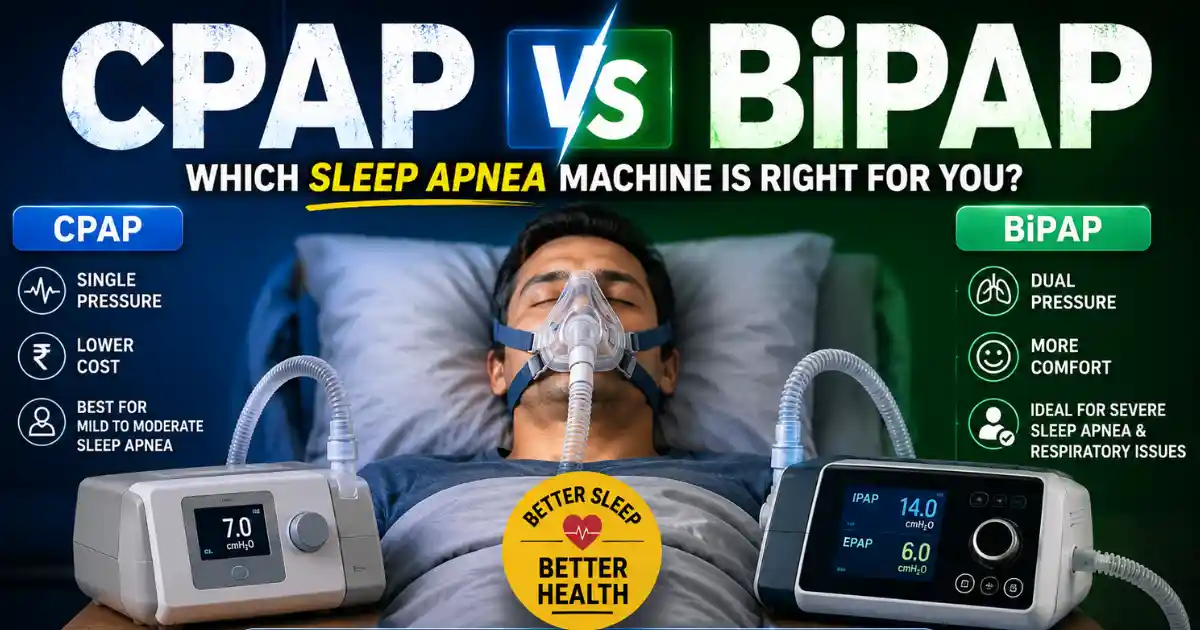
Every night, millions of people stop breathing repeatedly without realizing it. Left untreated, sleep apnea can increase the risk of high blood pressure, heart disease, stroke, and daytime exhaustion. The good news is that CPAP and BiPAP therapy can help—but choosing the wrong device may make treatment uncomfortable and less effective.
Sleep apnea is a serious sleep disorder that affects millions of people worldwide, including in India. It is characterized by pauses in breathing or shallow breathing during sleep, leading to poor sleep quality and related health issues. Positive Airway Pressure (PAP) therapy is a common treatment for sleep apnea.
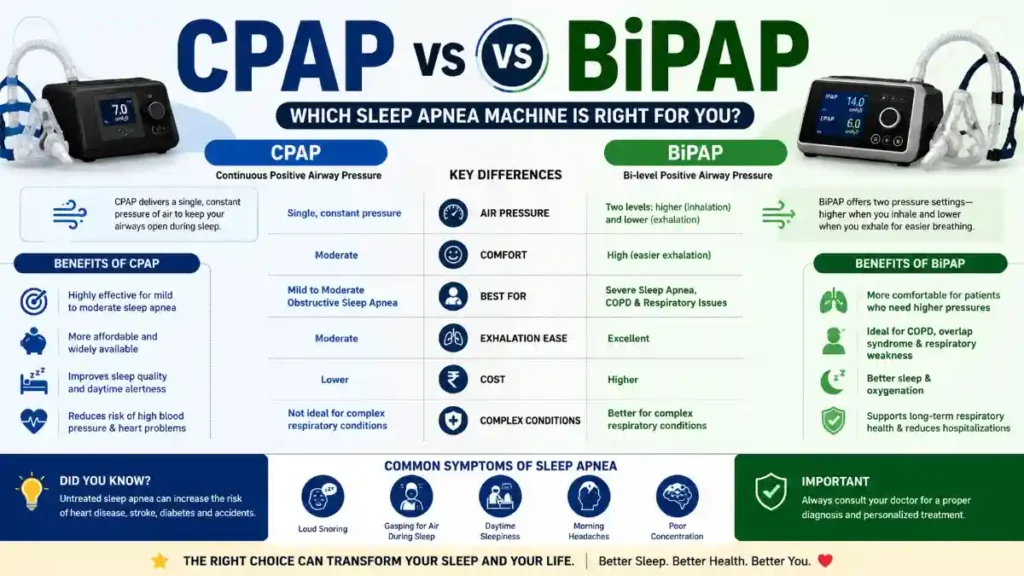
The two most common types of PAP therapy are CPAP and BiPAP. While both are designed to keep airways open during sleep, they operate differently and are suited for different needs. Understanding the differences between them is crucial for effective sleep apnea management.
| Feature | CPAP | BiPAP |
|---|---|---|
| Air Pressure | Single | Dual |
| Comfort | Moderate | High |
| Mild Sleep Apnea | ✅ | ✅ |
| Severe Sleep Apnea | ⚠️ | ✅ |
| Cost | Lower | Higher |
| Exhalation Ease | Moderate | Excellent |
Key Takeaways
- Sleep apnea is a serious sleep disorder that requires proper treatment.
- Positive Airway Pressure therapy is a common treatment for sleep apnea.
- CPAP and BiPAP are two types of PAP therapy with different operational modes.
- Choosing the right PAP therapy is crucial for effective sleep apnea management.
- Understanding the differences between CPAP and BiPAP can transform your sleep health.
👨⚕️ Doctor’s Advice
If you have mild to moderate obstructive sleep apnea, CPAP is usually the first-line treatment. Patients who struggle to exhale against continuous pressure or have complex respiratory conditions may benefit more from BiPAP therapy after medical evaluation.
⚠️ Common Sleep Apnea Symptoms
- Loud snoring
- Morning headaches
- Daytime sleepiness
- Waking up gasping for air
- Poor concentration
Understanding Sleep Apnea and Respiratory Therapy Basics
Understanding sleep apnea is crucial for maintaining overall health and well-being. Sleep apnea is a serious sleep disorder where breathing is interrupted during sleep. These interruptions, which can occur multiple times a night, are caused by a partial or complete blockage of the airway.
Sleep apnea is not just a simple snoring issue; it’s a condition that requires medical attention. The consequences of untreated sleep apnea can be severe, including cardiovascular problems, daytime fatigue, and decreased productivity.
What is Sleep Apnea and Its Prevalence in India
Sleep apnea affects millions of people worldwide, and India is no exception. Studies suggest that the prevalence of sleep apnea in India is significant, with a substantial number of cases remaining undiagnosed. The condition is often associated with obesity, age, and other health factors.
A study on sleep apnea prevalence in India highlighted that approximately 19% of the population suffers from obstructive sleep apnea (OSA), with a higher prevalence among men.
📊 Research Snapshot
Studies estimate that nearly 1 billion adults worldwide may have obstructive sleep apnea, yet a large proportion remain undiagnosed and untreated.
| Category | Prevalence of Sleep Apnea |
|---|---|
| General Population | 19% |
| Males | 22% |
| Females | 15% |
How Positive Airway Pressure Therapy Works
Positive Airway Pressure (PAP) therapy is a common treatment for sleep apnea. It involves wearing a mask over the nose and/or mouth during sleep, which delivers a continuous flow of pressurized air to keep the airway open.
CPAP (Continuous Positive Airway Pressure) therapy is the most commonly prescribed PAP therapy. It provides a constant flow of air pressure into the airways, preventing the collapse that causes sleep apnea.
The effectiveness of CPAP therapy lies in its ability to significantly reduce sleep interruptions, thereby improving sleep quality and overall health. However, compliance can be an issue due to discomfort or claustrophobia associated with wearing the mask.
Respiratory therapy, including CPAP, has revolutionized the treatment of sleep apnea, offering patients a chance to manage their condition effectively. By understanding how these therapies work, individuals can make informed decisions about their sleep health.
CPAP vs BiPAP: Key Differences and Functionalities
CPAP and BiPAP machines are both used to treat sleep apnea, but they operate in distinct ways. Understanding these differences is crucial for patients to make informed decisions about their sleep health.
CPAP Machines: Operation and Benefits
Continuous Positive Airway Pressure (CPAP) machines deliver a steady stream of pressurized air through a mask that covers the nose and sometimes the mouth. This constant pressure helps keep the airway open, preventing the pauses in breathing that characterize sleep apnea.
The benefits of CPAP machines include:
- Effective treatment for mild to moderate sleep apnea
- Wide availability and a range of models to choose from
- Cost-effective compared to more advanced therapies
However, some users find the constant pressure uncomfortable, and it can be challenging to adjust to wearing the mask.
BiPAP Machines: Dual-Pressure Advantage
Bi-level Positive Airway Pressure (BiPAP) machines offer a more advanced solution by providing two different pressure settings: a higher pressure for inhalation and a lower pressure for exhalation. This dual-pressure system can make breathing more comfortable, especially for those who require higher pressures.
The advantages of BiPAP machines include:
- Enhanced comfort due to the dual-pressure setting
- Better suited for patients with more severe sleep apnea or those who require higher pressures
- Improved compliance as users find it easier to exhale against a lower pressure

Comparing Comfort, Adaptation, and Effectiveness
When comparing CPAP and BiPAP machines, comfort, adaptation, and effectiveness are key factors to consider. While CPAP machines are effective for many, some users find BiPAP machines more comfortable due to the dual-pressure feature.
Adaptation to either machine requires a period of adjustment, during which users may experience discomfort or difficulty adjusting to the mask and the pressure settings.
In terms of effectiveness, both machines can significantly improve sleep quality and reduce symptoms of sleep apnea. The choice between them often depends on the severity of the condition and individual patient needs.
Key considerations include:
- The severity of sleep apnea
- Comfort with the mask and pressure settings
- Any additional features required, such as humidification or data tracking
Ultimately, consulting with a healthcare provider is essential to determine the most appropriate therapy based on individual needs and medical history.
Choosing the Right Device for Your Sleep Health Journey
The journey to improved sleep health begins with understanding the differences between CPAP and BiPAP devices. Making an informed decision is crucial for effective management of sleep apnea.
Medical Conditions and Their Ideal Therapy Match
Different medical conditions require different approaches to therapy. For instance, CPAP therapy is often recommended for patients with mild to moderate sleep apnea. On the other hand, BiPAP therapy is typically suggested for those with more severe sleep apnea or those who require higher pressures.
Here’s a comparison of ideal therapy matches for various conditions:
| Medical Condition | Ideal Therapy |
|---|---|
| Mild Sleep Apnea | CPAP |
| Moderate to Severe Sleep Apnea | BiPAP |
| Complex Sleep Apnea | BiPAP or Adaptive Servo-Ventilation (ASV) |
Cost and Availability Considerations in India
The cost of CPAP and BiPAP machines can vary significantly in India, depending on the brand, model, and features. It’s essential to consider not only the initial cost but also ongoing expenses such as mask replacements and maintenance.
Availability is another critical factor; both CPAP and BiPAP machines are available in major cities across India, but accessibility might be limited in rural areas.
Consulting Healthcare Providers for Personalized Solutions
Consulting with healthcare providers is a crucial step in choosing the right device. They can provide personalized recommendations based on individual health needs and conditions.
Before making a decision, it’s advisable to:
- Discuss your sleep apnea diagnosis and treatment options with your healthcare provider.
- Try out different masks and devices to find the most comfortable fit.
- Consider factors such as noise level, ease of use, and data tracking features.
CPAP vs BiPAP: Quick Decision Guide
- Choose CPAP if: You have mild to moderate obstructive sleep apnea and can tolerate continuous pressure.
- Choose BiPAP if: You require high airway pressures, have severe sleep apnea, COPD, or struggle exhaling against CPAP pressure.
Conclusion
Understanding the differences between CPAP and BiPAP therapy is crucial for making informed decisions about sleep health. Both therapies offer unique benefits, with CPAP machines providing a consistent airflow to keep airways open, while BiPAP machines offer a dual-pressure advantage.
CPAP benefits include improved sleep quality and reduced sleep apnea symptoms. BiPAP benefits are particularly notable for individuals with complex respiratory needs or those who require higher pressure settings. Choosing the right device can significantly enhance sleep health and overall well-being.
Consulting healthcare providers is essential to determine the most suitable therapy based on individual needs. With the right guidance, individuals can explore these therapeutic options and take the first step towards restful and rejuvenating sleep, enjoying the cpap benefits and bipap benefits that suit their condition.
FAQ
What is the main difference between CPAP and BiPAP machines?
The primary difference lies in the pressure delivery mechanism. CPAP machines provide a continuous flow of air pressure, whereas BiPAP machines deliver two different levels of pressure – a higher pressure when inhaling and a lower pressure when exhaling.
How do I know if I need a CPAP or BiPAP machine for sleep apnea treatment?
The choice between CPAP and BiPAP depends on the severity of your sleep apnea, your comfort level with the device, and your specific medical needs. Consulting a healthcare provider is essential to determine the most suitable therapy for your condition.
Are BiPAP machines more effective than CPAP machines for treating sleep apnea?
BiPAP machines can be more effective for some patients, especially those with more severe sleep apnea or those who require higher pressures. However, CPAP machines are often sufficient for mild to moderate sleep apnea cases.
Can I use a CPAP machine if I have respiratory issues other than sleep apnea?
While CPAP machines are primarily used for sleep apnea, they can also be used for other respiratory conditions. However, it’s crucial to consult with a healthcare provider to determine the best course of treatment for your specific condition.
How do I choose the right CPAP or BiPAP machine for my needs?
Consider factors such as the severity of your sleep apnea, your budget, and the features you need (e.g., ramp function, humidifier). Consulting with a healthcare provider or a respiratory therapist can help you make an informed decision.
Are there any cost and availability considerations for CPAP and BiPAP machines in India?
The cost of CPAP and BiPAP machines in India can vary depending on the brand, model, and features. Availability is generally good in major cities, but it’s essential to consult with a healthcare provider to find a reputable supplier and to discuss any insurance or financing options.
Can I travel with my CPAP or BiPAP machine?
Yes, both CPAP and BiPAP machines are designed to be portable, making them suitable for travel. Look for machines with travel cases and consider investing in a battery pack for extra convenience.
How can I ensure I’m using my CPAP or BiPAP machine correctly?
Proper usage involves correctly fitting the mask, setting the right pressure, and maintaining the machine. Regular follow-ups with a healthcare provider or respiratory therapist can help ensure you’re using the device effectively.
REFERENCES
- Benjafield AV, et al. Estimation of the global prevalence of obstructive sleep apnoea. Lancet Respir Med. 2019.
- American Academy of Sleep Medicine Clinical Practice Guidelines.
- National Heart, Lung, and Blood Institute. Sleep Apnea Overview.

Dr. Shabbir Hussain, BPT
Registered Physiotherapist | Clinical Rehabilitation Specialist
Maharashtra OTPT Council Reg. No.: PR-2021/08/PT/009532
Society of Onco Physiotherapists Reg. No.: SOP/00033/LM
Dr. Shabbir Hussain, BPT, Registered Physiotherapist with over 8 years of experience in physiotherapy, kidney rehabilitation, oncological rehabilitation, and lymphedema management. He specializes in balance disorders, pain management, musculoskeletal rehabilitation, strengthening programs, and VR-based rehabilitation.