


Published
June 2, 2026
Last Updated
June 2, 2026
Reading Time
7 Min Read
This article has been medically reviewed by a qualified physiotherapist for accuracy, rehabilitation guidance, and public health awareness.
Walking After Meals – Most people finish lunch or dinner and immediately sit down with their phone, television, or laptop. It feels harmless. In fact, for many office workers, students, and busy Indian families, it has become a daily routine.
⚠️ A Common Habit Many People Ignore
Many people sit, scroll on their phone, or lie down immediately after eating without realizing it may affect digestion, energy levels, and post-meal blood sugar responses.
Many people sit or lie down immediately after eating without realizing it may affect digestion, blood sugar, and energy levels. Research suggests that even a short walk after meals may help your body process food more efficiently and support overall health.
But clinically, one common pattern observed in rehabilitation settings is that people struggling with bloating, sluggish digestion, weight gain, poor sugar control, and low energy often spend long periods sitting immediately after meals.
In my clinical experience, many patients are surprised when small lifestyle corrections produce noticeable improvements. One of the simplest changes is walking gently after eating.
⏰ When Is the Best Time to Walk?
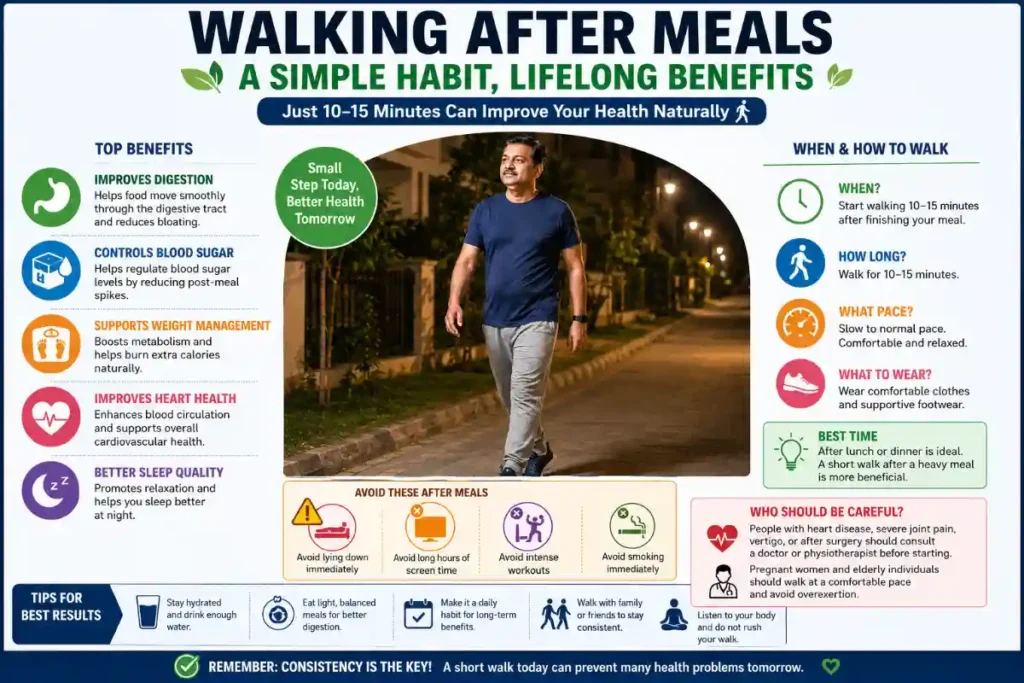
Experts generally recommend starting a gentle walk about 5–15 minutes after eating. Walking too intensely immediately after a heavy meal may feel uncomfortable for some people.
It may sound too basic to matter. Yet emerging research and practical physiotherapy observations suggest that even a short walk after meals can positively influence digestion, blood sugar response, metabolism, circulation, and long-term health.
The problem is not that people never exercise. The bigger issue is prolonged inactivity throughout the day.
And that silent habit is becoming increasingly common in urban Indian lifestyles.
⚡ Quick Summary
Main Concern: Sitting immediately after meals may worsen digestion, bloating, and inactivity-related health problems.
Early Signs: Heaviness after eating, acidity, sluggishness, and post-meal sleepiness.
Best Habit: A gentle 10–15 minute walk after meals may support digestion and blood sugar control.
Prevention Tip: Avoid lying down or scrolling on your phone immediately after dinner.
What Is Walking After Meals?
Walking after meals simply means taking a slow or moderate walk shortly after eating. It is not intense cardio or heavy exercise. Usually, a relaxed walk lasting 10 to 20 minutes is considered ideal for most healthy adults.
From a medical perspective, post-meal movement helps stimulate digestion, improve blood circulation, and support glucose regulation. Research linked to organizations like the NIH and PubMed suggests that light activity after eating may reduce sudden blood sugar spikes, especially after high-carbohydrate meals.
In my physiotherapy practice, this habit is often recommended alongside lifestyle correction programs for people with sedentary routines, obesity, metabolic syndrome, digestive discomfort, or mild stiffness from prolonged sitting.
Importantly, walking after meals is not meant to replace structured exercise. Instead, it acts like a “metabolic reset” during the day.
🚨 Sitting Immediately After Eating vs Light Walking
- Sitting for long periods may increase sluggishness in some people.
- Light walking may support digestion and movement.
- Gentle activity may help reduce feelings of heaviness after meals.
Why Modern Lifestyle Is Making This Habit More Important
Today’s lifestyle is very different from how previous generations lived.
Many Indian professionals now spend 8–12 hours sitting. Long commuting, work-from-home culture, food delivery apps, late-night eating, and constant smartphone usage have dramatically reduced daily movement.
Personally, I’ve observed that younger adults in their 20s and 30s are reporting symptoms once commonly seen in older age groups. Fatigue, acidity, weight gain, stiffness, and poor endurance are appearing earlier.
One common pattern observed is this:
People eat large meals and immediately return to screens.
The body receives calories but very little movement.
Over time, this mismatch can affect digestion, metabolism, posture, and overall health.
Walking after meals introduces small but meaningful movement into an otherwise sedentary routine.
⚠️ One Common Habit After Meals
Many people immediately lie down, scroll on their phone, or sit for long periods after eating. Over time, this habit may contribute to bloating, heaviness, and sluggishness.
What Most People Don’t Know
Research suggests that even a short 2–10 minute walk after meals may help reduce post-meal blood sugar spikes. The timing of the walk may be just as important as the duration.
Hidden Dangers of Sitting Immediately After Eating
Many people think the only consequence is feeling sleepy after meals. But the effects may go deeper over time.
When the body remains inactive after eating, digestion may become slower in some individuals. Clinically, many patients complain of heaviness, bloating, gas formation, and acid reflux after repeatedly lying down or sitting for prolonged periods post meals.
In people with diabetes or prediabetes, inactivity after eating may also contribute to sharper glucose spikes. Over months and years, poor glucose handling can increase the risk of metabolic complications.
Another overlooked issue is reduced circulation.
🚶 How Long Should You Walk?
- 5 minutes: helpful for digestion
- 10 minutes: may support blood sugar control
- 15–20 minutes: useful for overall metabolism and activity goals
Office workers who sit continuously after meals often report stiffness around the hips, lower back, and neck. Combined with weak muscles and poor posture, prolonged inactivity can contribute to musculoskeletal discomfort.
In real rehabilitation settings, many patients do not connect these small daily habits with their long-term symptoms.
But lifestyle patterns matter.
💬 Why Many People Feel Better After Walking
Many people report feeling lighter, less sleepy, and more refreshed after taking a short walk following meals, especially after dinner.
Warning Signs You Shouldn’t Ignore
The body often gives subtle signs before bigger problems develop.
Frequent bloating after meals, excessive sleepiness after lunch, acidity at night, unexplained fatigue, and gradual belly fat accumulation are common complaints.
Some people notice they feel unusually heavy after eating or experience discomfort when lying down immediately after dinner.
Advanced warning signs may include persistent indigestion, poor stamina, fluctuating blood sugar levels, worsening obesity, or reduced mobility due to inactivity.
⚠️ Many patients ignore these early symptoms until daily movement starts feeling difficult.
⚠️ Common Mistakes People Make
- Walking too fast immediately after eating
- Lying down right after dinner
- Skipping post-meal walks after heavy meals
- Expecting instant weight loss results
- Walking for less than 2 minutes and stopping
How Doctors & Physiotherapists Evaluate Lifestyle-Related Health Problems
Walking after meals itself does not require diagnosis. However, if someone experiences ongoing digestive issues, obesity, severe fatigue, or metabolic concerns, proper evaluation becomes important.
A doctor may assess blood sugar levels, digestive health, body weight, sleep quality, and cardiovascular risk factors.
Physiotherapists usually evaluate posture, mobility, physical endurance, muscle tightness, and sedentary behavior patterns.
In my clinical experience, many patients underestimate how deeply inactivity affects their physical function. Sometimes the solution is not aggressive treatment — it is consistent movement.
🔬 What Research Says
Studies suggest that walking for 2–15 minutes after meals may help lower post-meal blood sugar spikes, improve digestion, and reduce bloating compared with remaining seated.
Gold-standard evaluation may include blood investigations, HbA1c testing for diabetes, BMI assessment, dietary review, and activity analysis.
📌 Medical Disclaimer
This content is intended for educational and awareness purposes only and should not be considered medical advice, diagnosis, or treatment. Always consult a qualified healthcare professional or physiotherapist for personalized medical guidance.
Treatment & Physiotherapy Management
Walking after meals is often included as part of a broader lifestyle correction strategy.
For healthy adults, gentle walking for 10–20 minutes after meals is generally considered safe. The pace should remain comfortable. Heavy running or intense workouts immediately after eating are usually not recommended because they may interfere with digestion.
Physiotherapy management focuses on restoring movement efficiency throughout the day.
This includes posture correction, mobility exercises, stretching, breathing control, core strengthening, and ergonomic modification.
Many patients improve faster when post-meal walking is combined with:
Better hydration, reduced late-night eating, sleep correction, reduced screen time, and regular exercise routines.
One important myth needs clarification.
Many people believe they must walk aggressively after meals for benefits. That is incorrect. A relaxed walk is often enough.
Consistency matters more than intensity.
Recovery timelines vary depending on the individual’s health condition. Some people notice lighter digestion and improved energy within days, while metabolic changes may take weeks or months.
Physiotherapist’s Perspective
From a physiotherapy standpoint, post-meal walking is a low-impact activity that encourages circulation, gentle movement, and long-term physical activity adherence. For many people, consistency matters more than intensity.
Real Patient Story
A 34-year-old IT employee visited the clinic complaining of fatigue, bloating after dinner, mild lower back stiffness, and gradual weight gain.
His routine was extremely common.
He worked long hours, ate dinner late, and immediately watched videos in bed before sleeping.
After assessment, the rehabilitation plan included posture correction, mobility work, hydration changes, and a simple 15-minute post-dinner walk.
Within six weeks, he reported improved digestion, better energy levels in the morning, less bloating, and reduced stiffness.
The change was not dramatic or extreme.
It was sustainable. And that often matters more.
✅ A Small Daily Habit That Requires No Gym
Walking after meals is one of the easiest movement habits to add into daily life because it does not require equipment, intense workouts, or major lifestyle changes.
Prevention Strategy for Long-Term Health
Modern health problems are increasingly linked to prolonged inactivity.
One of the most practical prevention strategies is introducing movement naturally throughout the day.
In Indian households, even small habits help:
Walking while talking on the phone, using stairs, taking short evening walks with family, reducing screen time after meals, and avoiding lying down immediately after dinner.
Personally, I’ve observed that patients who treat movement as a daily lifestyle habit usually maintain results longer than those depending only on temporary fitness motivation.
Walking after meals is not a magic cure.
But it is a practical step toward healthier living.
When Should You See a Doctor?
Medical evaluation is important if you experience:
Persistent acidity, chest discomfort, unexplained weight gain, severe fatigue, dizziness after meals, uncontrolled diabetes symptoms, breathlessness, or digestive pain.
People with heart disease, uncontrolled diabetes, severe arthritis, or neurological disorders should also consult healthcare professionals before beginning new activity routines.
Who Should Avoid Certain Exercises or Be More Careful?
Not everyone should start vigorous walking immediately after meals.
People recovering from surgery, severe gastric disorders, balance problems, uncontrolled cardiac conditions, or advanced joint pain may need personalized guidance.
Pregnant women, elderly individuals with fall risk, and patients with severe diabetic complications should follow medically supervised activity plans.
In physiotherapy practice, exercises are always adjusted according to individual tolerance, mobility, and overall health condition.
Final Thoughts
Health problems rarely appear overnight.
Most develop slowly through repeated daily habits that seem harmless at first.
Walking after meals is one of those small lifestyle changes that sounds simple — yet may quietly influence digestion, metabolism, posture, circulation, and long-term wellbeing.
In real rehabilitation settings, sustainable habits almost always outperform extreme routines.
And sometimes, healing starts with something as basic as getting up and walking for a few minutes after dinner.
FAQs
Is walking after meals really beneficial?
Yes. Research suggests light walking after meals may support digestion, circulation, and blood sugar regulation.
How long should I walk after eating?
Most healthy adults benefit from 10–20 minutes of gentle walking.
Should I walk immediately after dinner?
A slow walk shortly after dinner is usually considered safe for most people.
Can walking after meals reduce belly fat?
It may support weight management when combined with proper diet and regular activity.
Is fast walking better after meals?
Not necessarily. Gentle walking is often more comfortable for digestion.
Can diabetic patients benefit from post-meal walking?
Many studies suggest post-meal walking may help improve glucose control. Medical advice is still recommended.
REFERENCES
- National Institutes of Health (NIH). Physical Activity and Health.
https://www.nia.nih.gov/health/exercise-and-physical-activity - World Health Organization (WHO). Physical Activity Guidelines.
https://www.who.int/news-room/fact-sheets/detail/physical-activity - Colberg SR et al. Exercise and Type 2 Diabetes. American Diabetes Association.
https://pubmed.ncbi.nlm.nih.gov/27926890/ - DiPietro L et al. Walking After Meals and Glycemic Control.
https://pubmed.ncbi.nlm.nih.gov/23033244/
Dr. Shabbir Hussain, BPT
Licensed Physiotherapist | Clinical Rehabilitation Specialist
Maharashtra OTPT Council Reg. No.: PR-2021/08/PT/009532
Society of Onco Physiotherapists Reg. No.: SOP/00033/LM
Dr. Shabbir Hussain, BPT, Registered Physiotherapist with over 8 years of experience in physiotherapy, kidney rehabilitation, oncological rehabilitation, and lymphedema management. He specializes in balance disorders, pain management, musculoskeletal rehabilitation, strengthening programs, and VR-based rehabilitation.