
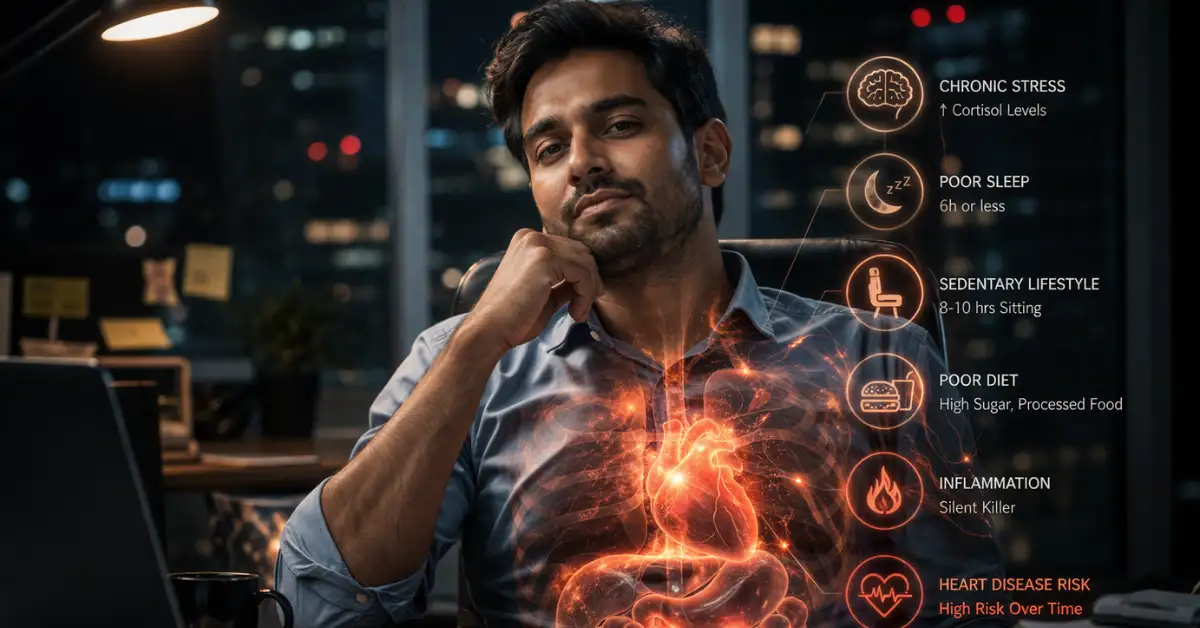
Shocking Truth
“HEALTH” – Most people believe that “not being sick = being healthy.”
That assumption is not just wrong — it’s dangerous.
You might feel fine, go to work, eat regularly… and still be silently unhealthy.
Across India and globally, millions are living with hidden inflammation, poor mobility, stress overload, and early metabolic disorders — all without obvious symptoms.
Ignoring the true meaning of healthy life doesn’t just reduce your energy —
👉 it increases your risk of heart disease, diabetes, mental burnout, and early aging.
So the real question is:
Are you truly healthy… or just symptom-free?
Disclaimer: This content is for educational purposes only and does not replace professional medical advice, diagnosis, or treatment. Always consult a qualified healthcare provider or physician for personalized medical guidance.
What Is Health?
According to the World Health Organization:
“It is a state of complete physical, mental, and social well-being, and not merely the absence of disease or infirmity.”
This definition highlights three core pillars:
- 🧍♂️ Physical – Body functioning, strength, mobility
- 🧠 Mental – Emotional balance, stress control
- 🤝 Social – Relationships, community well-being
Similarly, the Centers for Disease Control and Prevention emphasizes that health is dynamic, meaning it constantly changes based on lifestyle, environment, and habits.
👉 In simple terms:
Healthy Life = How well your body, mind, and life function together — not just the absence of illness.
Why This Misconception Is Dangerous
🚨 What Happens If You Ignore ?
Ignoring can lead to:
- Silent lifestyle diseases (diabetes, hypertension)
- Chronic pain and poor mobility
- Mental burnout and anxiety disorders
- Reduced immunity
- Early aging and fatigue
📊 Real-World Impact
- WHO reports that non-communicable diseases (NCDs) cause ~74% of global deaths
- Sedentary lifestyle increases mortality risk by 20–30%
- Chronic stress is linked to heart disease, obesity, and depression
👉 Many of these begin without symptoms
⚠️ The Biggest Myth:
“If I feel okay, I must be healthy.”
Reality:
You can feel normal while your body is slowly deteriorating.
Causes & Risk Factors
🧬 Lifestyle Factors
- Sedentary routine
- Poor diet (high sugar, processed food)
- Lack of sleep
- Screen overuse
🏥 Medical Factors
- Genetic predisposition
- Hormonal imbalance
- Chronic inflammation
👴 Age-Related Factors
- Muscle loss (sarcopenia)
- Joint degeneration
- Reduced metabolism
💼 Occupational Factors
- Long sitting hours (IT, desk jobs)
- Repetitive strain injuries
- High stress professions
Warning Signs & Symptoms
⚠️ Don’t Ignore These Early Signs:
- Constant fatigue
- Poor posture or stiffness
- Frequent headaches
- Low mood or irritability
- Sleep disturbances
🚨 Advanced Warning Signs:
- Weight gain or loss without reason
- Breathlessness on minimal activity
- Chronic pain (neck, back, knees)
- High blood pressure or sugar levels
👉 These are not “normal” — they are early warnings
Diagnosis & Clinical Standards
assessment is not just one test — it’s a combination:
🧪 Common Evaluations:
- Blood tests (glucose, cholesterol)
- BMI & body composition
- Blood pressure monitoring
- Mental health screening
🧍♂️ Physiotherapy Assessment:
- Posture analysis
- Muscle strength testing
- Mobility & flexibility screening
📚 Clinical Guidelines:
- WHO: Holistic model
- ADA: Metabolic screening
- NIH: Lifestyle disease prevention protocols
👉 Gold standard approach: Multidimensional assessment
What Actually Works
✅ Evidence-Based Approach
🏃♂️ 1. Movement is Medicine
- 150 minutes/week of moderate activity (WHO recommendation)
- Strength training 2–3 times/week
🧘♂️ 2. Mental Care
- Mindfulness, meditation
- Stress management techniques
🥗 3. Nutrition Reset
- Whole foods, high fiber
- Reduce ultra-processed foods
🧍♀️ 4. Physiotherapy Role (Underrated but Powerful)
- Correct posture & movement patterns
- Prevent chronic pain
- Improve functional strength
😴 5. Sleep Optimization
- 7–8 hours daily
- Fixed sleep schedule
❌ Common Myths to Avoid:
- “Gym = healthy life” ❌
- “No pain = no problem” ❌
- “Supplements fix everything” ❌
👉 True healthy life = consistent lifestyle, not shortcuts
Prevention & Daily Habits
🌿 Daily Healthy life Checklist:
- Walk at least 8,000–10,000 steps
- Stretch daily (especially spine & joints)
- Hydrate properly
- Limit screen time
- Maintain social connections
🧠 Public Perspective:
Preventive care is cheaper, safer, and more effective than treatment.
👉 The goal is not just to live longer —
but to live better
FAQs (Discover Friendly)
1. Is healthy life just the absence of disease?
No. Healthy life includes physical, mental, and social well-being.
2. Can you be unhealthy without symptoms?
Yes. Many diseases develop silently without early symptoms.
3. Is health reversible?
In many cases, yes — especially with lifestyle changes and physiotherapy.
4. How long does it take to improve?
Noticeable changes can occur within 4–12 weeks with consistent effort.
5. Can physiotherapy improve overall healthy life?
Yes. It improves mobility, reduces pain, and enhances physical function.
6. What is the biggest mistake people make?
Ignoring early warning signs and relying only on medication.
7. How do I know if I’m truly healthy?
Through a combination of physical, mental, and clinical assessments.
References
World Health Organization. (2023). Constitution of the WHO. https://www.who.int
Centers for Disease Control and Prevention. (2024). Health and Wellness Overview. https://www.cdc.gov
National Institutes of Health. (2023). Lifestyle and Disease Prevention. https://www.nih.gov
Booth, F. W., et al. (2012). Lack of exercise is a major cause of chronic diseases. Comprehensive Physiology. https://doi.org/10.1002/cphy.c110025
Warburton, D. E. R., et al. (2006). Health benefits of physical activity. CMAJ. https://pubmed.ncbi.nlm.nih.gov/16534088
Dr. Shabbir Hussain, BPT
Licensed Physiotherapist | Clinical Rehabilitation Specialist
Maharashtra OTPT Council Reg. No.: PR-2021/08/PT/009532
Society of Onco Physiotherapists Reg. No.: SOP/00033/LM
Dr. Shabbir Hussain, BPT, Registered Physiotherapist with over 8 years of experience in physiotherapy, kidney rehabilitation, oncological rehabilitation, and lymphedema management. He specializes in balance disorders, pain management, musculoskeletal rehabilitation, strengthening programs, and VR-based rehabilitation.